|
Having trouble viewing this email? View it as a Web page.
|
|
 Volume 13, Issue 2 September 2022 educateiowa.gov
|
|
Inside this issue
Jeremy Varner
Administrator, Division of Community Colleges and Workforce Preparation
515-281-8260
jeremy.varner@iowa.gov
Dennis Harden
Chief, Bureau of Career and Technical Education
515-281-4716
dennis.harden@iowa.gov
Amy Gieseke
Chief, Bureau of Community Colleges
515-858-2234
amy.gieseke@iowa.gov
Alison Jepsen
Executive Officer, Division of Community Colleges and Workforce Preparation
515-314-8328
alison.jepsen@iowa.gov
|
|
An article published last week in The Chronicle of Higher Education, "The Mystery of Short-Term Credentials" lauds the Iowa's noncredit outcomes data reporting as decades ahead of other states, crediting the community colleges and the Department for working together to shine a light on outcomes for noncredit students. The article highlights the experiences of students in noncredit programs as well as how tracking noncredit data is a game changer for the state and the community colleges to provide invaluable information to community stakeholders.
"Just a head count wasn't cutting it, says Paula Nissen, who started work at the Iowa Department of Education as an education program consultant in 2014. When considering the state's work-force needs, there was no way to zoom in on truck drivers or other occupations, she says, and "no accountability, no way to know how many there were, where they were, if they were employed, whether the training programs do anything good." She and her colleague Vladimir Bassis, also then an education program consultant, soon started work on gathering more and better data on noncredit students."
|
 |
For more information, contact Vlad Bassis, Administrative Consultant (vladimir.bassis@iowa.gov or (515) 326-1718) or Paula Nissen, Administrative Consultant (paula.nissen2@iowa.gov or (515) 210-9465).
|
|
|

The Department of Education has responded to the need for certified paraeducators by offering two competitive grant opportunities (summer and fall) through the use of Every Student Succeeds Act Title IIA professional development funds making it possible for students to acquire paraeducator certification.
As a result of this effort, 803 Iowans were trained as certified paraeducators throughout the state as a result of $837,604 in grants being awarded to the following training providers:
- Great Prairie AEA
- Heartland AEA
- Indian Hills Community College
- Iowa Central Community College
- Iowa Western Community College
- Kirkwood Community College
- Mississippi Bend AEA
- Northwest AEA
- Prairie Lakes AEA
- Upper Iowa University
Those who participated in this professional development program have many options. They will qualify to participate in the Governor’s Teacher-Paraeducator Registered Apprenticeship (TPRA) grant pilot, work at one of Iowa’s school districts as a certified paraeducator, or continue their education to become a teacher.
In Iowa, paraeducators are required to have such certification so in order for the paraeducators to participate in the TPRA, it was imperative that paraeducators receive their certification. In order to support the requirement for the registered apprenticeship model, designed to help high school students and working adults begin a career as a paraeducator while also working toward an associate degree, these grants were used to pay for tuition and fees for paraeducator certification programs in addition to costs associated with licensing (background checks and licensure).
For more information, contact Kelly Faga, Education Program Consultant (kelly.faga@iowa.gov or 515-205-4697) or visit the Department's website here.
|
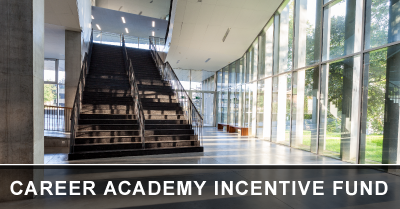
The Career Academy Incentive Fund is now accepting proposals for the first round of funding for fiscal year 2023. Grant submissions will be accepted through Nov. 3.
Partnerships between Iowa school districts and local community colleges that promote equitable access to high-quality career and technical education (CTE) programs are strongly encouraged to apply. Priority consideration will be given to applicants who focus on programming delivered through a regional center, a central location that offers high school students from several school districts the opportunity to explore career options while earning both high school and college credit.
The Career Academy Incentive Fund is provided through the 2019 reauthorization of Secure an Advanced Vision for Education (SAVE), and individual grant programs can be awarded up to $1 million for career academy development and expansion. The number of grant awards is based on the amount of funds available and the scope of projects submitted.
Last year, six grants were awarded to partnerships across the state totaling $5.5 million. Recent recipients include Indian Hills Community College, Western Iowa Tech Community College, Des Moines Area Community College, Iowa Lakes Community College, Iowa Western Community College and North Iowa Area Community College.
Career academies play an important role in expanding access to CTE programs for Iowa’s students. Valuable skill development, career exploration, work-based learning and professional training for high-demand careers are provided through career academies.
Application materials for the 2022-23 Career Academy Incentive Fund have been updated. To find the most recent grant materials and resources, visit the Department’s Career Academy Incentive Fund webpage.
For more information, contact Jen Rathje, Education Program Consultant (jennifer.rathje@iowa.gov or (515) 326-5389).
|

Iowa community colleges and school districts interested in creating a college and career transition counselor (CCTC) position are invited to attend an upcoming information session via Zoom on October 6th at 2:00 p.m. Attendees of the training sessions will learn more about the benefits of the CCTC position, program best practices and how to apply for financial support.
Up to five recipients will be awarded the grant funding to support and expand the CCTC model to more high schools. School districts may also be able to access operational sharing dollars to support CCTC positions.
CCTCs provide a necessary link between secondary schools and community colleges for students and their families. They begin working with juniors and seniors in high school on career exploration and college preparation and continue assisting them after graduation through their first year of attending a partnering community college. By having the continued support of a CCTC, students are better prepared to persist and succeed in their postsecondary educational pursuits.
All interested community colleges and school districts will need to register for the training sessions prior to October 5th. If interested but unable to attend, please complete the registration form and indicate that you would like the recording sent to you following the meeting.
For more information, contact Erica Woods-Schmitz, Education Program Consultant (erica.woods-schmitz@iowa.gov or (515) 330-0185).
|
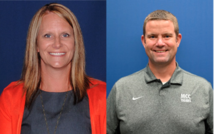
For 16 years as a school counselor, Pete Drury saw it all, providing students at the East Marshall Community School District with the support and guidance to navigate their classes and young lives. Now serving as one of Iowa’s college and career transition counselors at the Iowa Valley Community College District, Drury plays a special role in helping high school seniors prepare for life after graduation and tackling career exploration head on.
College and career transition counselors, known as CCTCs, are a recent addition to Iowa’s cadre of support for high school seniors. They assist with all things related to postsecondary preparation and career readiness, such as college applications, the Free Application for Federal Student Aid (FAFSA), individual career and academic plans, career assessments and other needed assistance.
“As the CCTC, I can focus my energy on helping kids understand what next steps they need to take,” Drury said. “I’m glad to be a part of their journey and help make it a reality.”
Each CCTC role is unique, depending upon the school district’s needs. Some CCTCs work with anyone from the senior class while others work specifically with identified student populations who may need more support such as first-generation students, English language learners, military families, students with disabilities and more.
“CCTCs can really customize their services to the school district and students’ needs,” said Erica Woods-Schmitz, CCTC consultant at the Iowa Department of Education. “They will work in tandem with the school counselors and administrators to see where their resources and efforts need to be placed based upon the district data and goals.”
|
|
For more information about college and career transition counselors, contact Erica Woods-Schmitz, Education Program Consultant (erica.woods-schmitz@iowa.gov or (515) 330-0185). For more information about the Intermediary Network, contact Kristy Volesky, Education Program Consultant (kristy.volesky@iowa.gov or (515) 971-0669).

The Governor’s Emergency Education Relief Fund, commonly known as GEER II Gap Expansion, supplies nearly $2.9 million to Iowa’s 15 community colleges through June 2023. This limited funding provides additional tuition support for students pursuing short-term credential programs in high-demand fields who may not qualify for other financial assistance through Gap Tuition Assistance or Last Dollar Scholarship. With GEER II Gap Expansion, more Iowa students have the opportunity to upskill and eventually fill in-demand jobs within their communities.
“GEER II Gap Expansion has allowed community members who are working full-time and have families and children to have opportunities that may not have been available to them through other pathways,” said Chris Hannan, director of workforce training and community development at Hawkeye. “It gives students opportunities for education that may have passed them by previously.”
|
|
For more information, contact Paula Nissen, Administrative Consultant (paula.nissen2@iowa.gov or (515) 210-9465).
Iowa’s Career Coach is a free online, interactive resource that assists individuals with identifying a career path based on personal interests and skill sets. As part of a collaborative effort between the Iowa Department of Education, Iowa Workforce Development and the 15 community colleges across the state, Iowa’s Career Coach provides a one-stop shop for students and adults alike who are looking for a career and education direction.
“It’s a great and easy-to-use resource for students as well as academic advisors,” said Paula Nissen, administrative consultant for the Iowa Department of Education. “It connects students with skill and interest assessments, required education and training resources and current job market information.”
Over the last year, an estimated 69,000 people have visited the career coach site where they can link directly with community colleges for further education and training needed for specific career paths. Students and adults can find detailed information on job openings, salary ranges and sample daily tasks on the site. Popular career searches have included jobs in mental health, agriculture, physical therapy, nursing, computer programming and skilled trades.
“There have been a variety of interests and users on the site, which is what we intended,” Nissen said. “Some people are looking at careers that require short-term certificate training programs. Others are looking into those that require an associate or bachelor’s degree. It’s a little bit of everything with interest in many different high demand occupations.”
|
|
For more information, contact Paula Nissen, Administrative Consultant (paula.nissen2@iowa.gov or (515) 210-9465).
The Iowa Department of Education has released an updated Senior Year Plus Guide for Educators and Educational Administrators to assist in supporting Iowa school districts, accredited nonpublic schools and postsecondary institutions with the implementation of the state’s Senior Year Plus programs. This comprehensive guide is designed to assist educators, counselors, advisors and administrators in understanding the requirements and expectations of the Senior Year Plus programs. The guide contains program descriptions, requirements, timelines and a frequently asked questions section, including other useful resources. The Senior Year Plus guide is available on the Department’s website.
For more information, contact Jen Rathje, Education Program Consultant (jennifer.rathje@iowa.gov or (515) 326-5389).
|

The Department recently released the fiscal year 2023 Tuition and Fees Report, which provides information about the tuition and fees charged at each of Iowa's 15 community colleges. This report also provides trends in tuition and fees among Iowa’s community colleges, sources of general operating revenue and comparisons among states and institutions.
According to the report, average in-state tuition for students attending Iowa’s community colleges is $191.18 per credit hour, a 3.7 percent increase from last year, and average mandatory fees are $14.90 per credit hour, up 0.2 percent from last year. Therefore, the average total in-state cost of enrollment (tuition plus fees) is $1206.08 per credit hour, which represents a 3.4 percent increase from last year.
For more information, contact Dan Li, Education Program Consultant, (dan.li@iowa.gov or (515) 281-3503).
|

This week, the Department of Education and Iowa Workforce Development announced the move of the Sector Board program to IWD. As Governor Reynolds discussed in the Condition of the State speech in January, IWD is building a “One Stop Shop” for businesses and employers. As part of that initiative, it was determined that sector partnerships/boards align well with these efforts and the move will provide opportunities for employers to utilize the entire workforce spectrum including local workforce boards, education, economic and community development partners. Effective September 19, the Iowa Department of Education’s sector partnership efforts were transferred to IWD through intergovernmental agreement.
For more information, please contact Kathy Anderson, Deputy Division Administrator, Business Engagement (kathy.Anderson@iwd.iowa.gov).
|
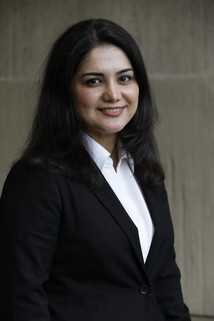
The Division of Community Colleges and Workforce Preparation is proud to announce that Dr. Maryam Rod Szabo has been promoted to administrative consultant for educator preparation. She joined the Department in 2020 as an education program consultant for the educator preparation team. Rod Szabo's new role took effect on Friday, September 16.
For more information, contact Maryam Rod Szabo (maryam.rodszabo@iowa.gov or (515) 360-7369).
|

The Division of Community Colleges and Workforce Preparation is proud to announce that Joe Collins is now the education program consultant for Health Sciences. Joe's primary responsibilities will be to oversee Health Science programs in secondary schools and postsecondary institutions providing technical assistance and leadership in this key career and technical education service area. He will continue to work with strengthening career pathways to be inclusive of middle school, high school and postsecondary opportunities as well as strengthening ties with business and industry and CTE programs through local advisory committees.
For more information, contact Joe Collins (joe.collins@iowa.gov or (515) 419-5190).
|
|
|
Iowa Department of Education
400 E 14th Street
Grimes State Office Building
Des Moines, Iowa 50319
Ph: 515-281-5294
www.educateiowa.gov
|
|
|
|



