|
FOR IMMEDIATE RELEASE
March 22, 2022
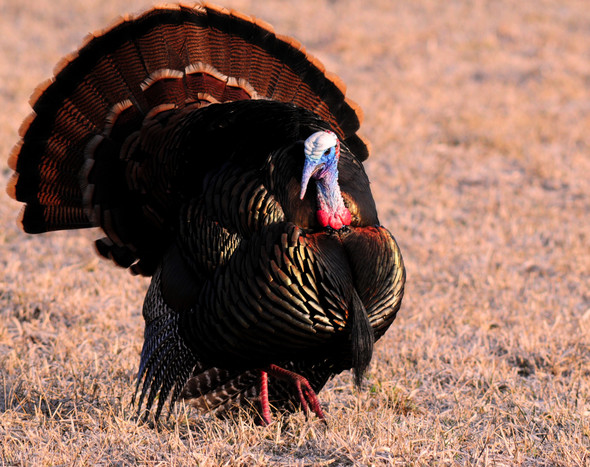 It happens each spring - Iowa’s timber echo with the sounds of male turkeys gobbling and preparing to do battle in an attempt to establish their territories in anticipation of the breeding season. With each passing day, the competition gets fiercer, and hunters, more excited.
“Turkey hunting is a passion with our hunters who enjoy it for its intimacy and for its setting,” said Jim Coffey, forest wildlife research biologist with the Iowa Department of Natural Resources. “It’s a great time of year to be out experiencing the timber’s springtime awakening.”
Turkey hunting participation has returned to pre-pandemic levels, and for the hunters heading to the timber each spring, success is measured by the pursuit of the birds, hearing them gobble and the opportunity to see them come in. Only around 20 to 22 percent of the tags are filled each year, which equates to a harvest of around 11,500 birds.
“Turkey hunting is an intimate sport done at close range,” Coffey said. “Research indicates that shots of less than 30 yards are the most successful.”
Because it is so intimate, it’s important for hunters to give each other space. If a hunter sees another hunter close to them they should say in a loud, clear voice ‘Hey – turkey hunter over here,’ Coffey said.
“Don’t wave at them to get their attention, don’t create movement. The person should then turn and walk directly away,” he said. “This is turkey hunter courtesy and we all just want to enjoy the woods.”
Other safety tips include not wearing red, white or blue (colors on a male turkey head area), avoiding tunnel vision, and properly identifying the target and what’s behind it. Hunters should also write out their hunting plan that identifies the hunt location, who’s on the hunt and outlines their role, describes how the hunt will unfold and when the hunters are expected to return home. Hunters are encouraged to leave a copy of the plan with someone or somewhere easy to find, in the event of an emergency.
Iowa’s turkey population is fairly stable, with a successful 2021 reproduction year led by the southeast part of the state, followed by the north-central and northeast regions.
“The two-year-old birds are the most likely to gobble and the most likely to move and make up the bulk of the hunter harvest,” he said. This time of year, turkeys focus on food sources like waste grain, fresh greens (grasses, clover, new green tips on shrubs) and insects and it’s why most are seen scratching in old leaf litter.
Iowa allows for male or bearded turkeys to be harvested during the spring season. Hunters who bag a turkey are required to report their harvest on the DNR’s website at www.iowadnr.gov, by phone on the toll-free number listed on the tag, through a license vendor, by texting the registration number to 1-800-771-4692 or through the Go Iowa Outdoors app, then write the confirmation number on harvest report tag that is attached to the leg of the turkey. Harvest must be reported by midnight on the day after it is tagged, or before taking it to a locker or taxidermist, or before processing it for consumption.
“Reporting the harvest is important because it provides information on our bird population, and where and when these birds are being harvested,” Coffey said.
Hunters may purchase up to two tags for Iowa’s four spring turkey seasons as long as at least one of the tags is for the fourth season. Each year it all begins with the youth only season.
The purpose of the youth season is for adults to mentor the youth without any pressure or competition from other hunting adults.
“Adults serve as a guide, make suggestions and keep the youth focused on the hunt,” he said. “It’s an opportunity to pass along some woodsmanship skills as the youth build knowledge of the outdoors.”
Youth turkey licenses purchased before the youth season closes and are not filled during the youth season may be used in any of the subsequent seasons until filled or the season ends.
2022 Iowa Spring Turkey Seasons (Gun/Bow)
- Youth-only: April 8-10 (Iowa residents only)
- Season 1: April 11-14
- Season 2: April 15-19
- Season 3: April 20-26
- Season 4: April 27-May 15
- Resident archery-only season: April 11-May 15
Licenses and Fees needed (not including landowners/tenants)
- Hunting license (age 16 and older)
- Habitat fee
- Wild turkey license
Need a place to hunt?
Check out the Iowa DNR’s Public Hunting Atlas online at https://www.iowadnr.gov/Hunting/Places-to-Hunt-Shoot
Media Contact: Jim Coffey, Forest Wildlife Research Biologist, Iowa Department of Natural Resources, 515-979-8033
The Iowa Department of Natural Resources (DNR) is seeking people who enjoy the outdoors, camping and meeting new people, to consider becoming volunteer campground hosts for the upcoming recreation season.
Volunteer campground hosts live in state parks from one to five months assisting DNR staff with light maintenance duties, checking in campers, and being a resource for visitors enjoying state parks and forests.
Campground hosts are provided a free campsite while they are actively hosting during the camping season. Hosts volunteer 20 – 40 hours per week, including weekends and holidays, while living on site in their own camper.
Host positions are available at:
- Beeds Lake
- Green Valley (after Labor Day)
- Lewis and Clark
- McIntosh Woods
- Springbrook
- Stephens Forest
Information about campgrounds and state parks is available online at www.iowadnr.gov/stateparks. To discuss the host position, contact the state park directly, or call 515-443-2533.
Staff with the Iowa Department of Natural Resources (DNR) are currently conducting their annual nighttime spring spotlight surveys across the state, collecting information on Iowa’s deer and furbearer populations.
The annual survey is conducted from mid-March to mid-April in each county, beginning an hour after sunset, preferably on nights with low wind, good visibility and high humidity. The routes cover different habitats from river bottoms, to farm fields, prairies, woodlots, pastures and timber stands.
The 50-mile routes – two per county - are driven below 20 miles per hour with staff shining spotlights out of both sides of the vehicle, recording the number of deer and furbearers seen along with the habitat type, at different points along the way. Staff are careful to avoid shining homes and livestock while on the survey and contact the county sheriff ahead of time in case they receive any calls.
“This survey produces really valuable information on our deer and furbearer populations, both locally and at the state level, allowing us to see population trends over time,” said Jace Elliott, deer research specialist with the Iowa DNR. The survey began in the late 1970s as a way to collect information on the raccoon population, but was expanded to include deer and other furbearers.
“It’s an important index that is combined with other data and surveys we use that gives us the most complete picture for these species and guides our management decisions to benefit the resource,” Elliott said.
The survey report will be posted later this summer to the Iowa DNR’s website at https://www.iowadnr.gov/Hunting/Population-Harvest-Trends
Media Contact: Jace Elliott, Deer Research Specialist, Iowa Department of Natural Resources, 515-249-7056.
|





