|
FOR IMMEDIATE RELEASE
Jan. 25, 2022
In 2021, Iowa residents purchased…
Fishing
208,984 annual licenses
8,394 lifetime fishing licenses
13,051 three-year licenses
1,081 seven-day licenses
2,641 one-day licenses
46,568 trout fees
264 paddlefish licenses
16,405 third line licenses (resident and nonresident combined)
43,793 fishing, hunting and habitat combination licenses
Hunting
35,058 annual licenses
59,252 hunting and habitat annual combination licenses
3036 lifetime hunting licenses
3,370 hunting and habitat three-year licenses
1,347 apprentice (hunting and habitat) licenses
24,276 migratory game bird licenses
34,838 habitat fees
13,739 furharvester annual licenses age 16 and older
556 furharvester annual licenses age 15 and younger
504 furharvester and habitat annual combination licenses
350 lifetime furharvester licenses
Large Game
Deer
11,877 youth general deer, 880 antlerless deer licenses
239 disabled hunter general deer, 48 antlerless deer licenses
54,202 archery general deer, 21,960 antlerless deer licenses
6,788 early muzzleloader general deer, 1,459 antlerless deer licenses
44,539 first shotgun general deer, 16,897 antlerless deer licenses
46,571 second shotgun general deer, 18,635 antlerless deer licenses
20,217 late muzzleloader general deer, 10,317 antlerless deer licenses
Turkey
5,793 spring bow licenses
17,500 spring gun/bow licenses seasons 1-3
16,226 spring gun/bow licenses season 4
5,948 spring youth gun/bow licenses
2,330 fall gun/bow
1,660 fall bow
Landowner-Tenant
Deer
57 youth general deer licenses, 40 antlerless deer licenses
5,149 archery general deer licenses, 5,253 antlerless deer licenses
1,081 early muzzleloader general deer licenses, 864 antlerless deer licenses
22,242 first and second shotgun season general deer licenses, 18,449 antlerless deer licenses
2,278 late muzzleloader general deer licenses, 3,644 antlerless deer licenses
Turkey
1,989 spring gun/bow season 1-3
2,032 spring gun/bow season 4
757 bow licenses
28 youth licenses
2,364 fall gun/bow
966 fall bow
In 2021, nonresidents purchased…
Fishing
26,777 annual licenses
2,509 seven-day licenses
12,047 three-day licenses
14,198 one-day licenses
6,856 trout fees
50 paddlefish licenses
Hunting
6,476 annual licenses age 18 and older
12,977 hunting and habitat annual combination licenses age 18 and older
3,909 five-day licenses
2,082 five-day hunting and habitat combination
12,894 habitat fees
3,884 migratory game bird fees
759 apprentice (hunting and habitat) licenses
86 furharvester annual licenses
51 furharvester and habitat annual combination licenses
Last year, more than 7,100 Iowa taxpayers helped boost wildlife conservation with donations to the Fish and Wildlife Fund on their state tax form. The number of people donating has continually declined and represents about 0.5 percent of total taxpayers in Iowa.
However, even with that decline, the amount of the donations increased by nearly $25,000, the largest increase in donations in 24 years.
“We are thankful for those who donated to wildlife conservation with their tax refunds as the funds go directly to habitat development and restoration programs for some of Iowa’s most vulnerable animal species,” said Stephanie Shepherd, wildlife biologist with the Iowa Department of Natural Resources (DNR) Wildlife Diversity program.
The Fish and Wildlife Fund, commonly known as the “Chickadee Check-off,” is a mechanism the Iowa Legislature created in the 1980s for Iowans to donate to wildlife conservation on the Iowa state income tax form. Before this time, so called “non-game” wildlife had no dedicated funding.
Non-game wildlife are the 1,000-plus species such as songbirds, bald eagles, salamanders, turtles, monarchs and bees and more that make up the majority of wildlife in Iowa. The Chickadee Check-off is one of the only funding sources for the Iowa DNR’s Wildlife Diversity program, which is responsible for these species.
Funding helps to improve wildlife habit, restore native wildlife, provide opportunities for citizens to learn about Iowa’s natural resources and much more. Recent projects have been investigating the nesting success of barn owls and determining the status of the endangered rusty-patched bumblebee.
“The tax check-off line is pretty inconspicuous and can be easily missed. Be sure to remind your tax preparer that they have a client that wants to donate,” said Shepherd.
Once located, donating is easy: simply write the amount to donate next to the Fish and Wildlife Check-Off, line 57 on Form 1040, and the sum is either automatically deducted from the refund or added to the amount owed.
“If every Iowa taxpayer donated just $1, it would mean $1.5 million for wildlife and nature conservation,” Shepherd said.
Media Contact: Stephanie Shepherd, Wildlife Biologist, Iowa Department of Natural Resources, 515-230-6599 or stephanie.shepherd@dnr.iowa.gov.
The Iowa Department of Natural Resources (DNR) released between 1,000 to 2,000 rainbow trout at three community trout ponds as part of its cool weather trout program that brings trout to areas that cannot support them during the summer.
The following locations are ready for anglers to catch trout: Bacon Creek Lake (Woodbury), Blue Pit (Mason City), and Scharnberg Pond (Spencer).
All winter/spring community trout stockings will be unannounced this year. Check the DNR website at www.iowadnr.gov/trout and watch for future press releases to find out when the remaining community trout locations have been stocked.
The winter/spring community trout stockings are a great place to take kids to catch their first fish. A small hook with a nightcrawler or corn under a small bobber or small simple spinners such as a panther martin or mepps is all you need to get in on the fun.
Bringing trout to cities and towns offers a “close to home” option for Iowans who might not travel to the coldwater streams in northeast Iowa to discover trout fishing.
The popular program is supported by the sales of the trout fee. Anglers need a valid fishing license and pay the trout fee to fish for or possess trout. The daily limit is five trout per licensed angler with a possession limit of 10.
Children age 15 or younger can fish for trout with a properly licensed adult, but they must limit their catch to one daily limit. The child can purchase a trout fee which will allow them to catch their own limit.
Find more information about trout fishing in Iowa on the DNR trout fishing webpage.
Media Contact: Mike Steuck, regional fisheries supervisor, Northeast Iowa, Iowa Department of Natural Resources, 563-927-3276.
If you’ve never gone ice fishing before, it’s time to get in on the fun. Bundle up the family and enjoy some of the best fishing experiences of the year.
“It’s a thrill to walk out on a frozen lake or pond and fish through the ice,” said Joe Larscheid, chief of fisheries for the Iowa Department of Natural Resource. “If you are new to ice fishing, go with someone who has experience and equipment to use.”
Iowa lakes are full of bluegills, crappies and other panfish. Lakes in northern Iowa will also have yellow perch and walleye.
Check the weekly DNR fishing report (www.iowadnr.gov/Fishing/Fishing-Reports) for ice conditions across Iowa before going out. Smaller bodies of water usually freeze faster and thicker than larger lakes or river backwaters, which often have a warmer current moving through.
At a minimum, four inches of clear ice is recommended for fishing. Ice with a bluish color is safer than clear ice.Avoid any ice that is covered by snow or slush. Keep your eyes open for any cracks or changes on the surface of the ice. Rocks, trees, docks or other things that poke through the ice will conduct heat and make the ice around it less stable. If the ice does not look right, find a different spot.
Ice conditions change constantly and its thickness can vary across the lake. Drill test holes near shore and as you move to measure the thickness and quality of the ice. Don’t go out alone and always let someone else know where you will be and when you expect to return home.
Use the DNR's online maps of the lake you are going to fish to find edges of creek channels, fish mounds, brush piles and rock piles that likely hold fish. Printable maps and the online Fishing Atlas are available on the DNR website at www.iowadnr.gov/Fishing/Fishing-Maps.
Dress warm, have fun, and stay safe on the ice this winter. Find more ice fishing tips on the DNR website at www.iowadnr.gov/icefishing.
Media Contact: Joe Larscheid, Chief of Fisheries, Iowa Department of Natural Resources, 515-201-3376.
Photo courtesy of the Iowa DNR.
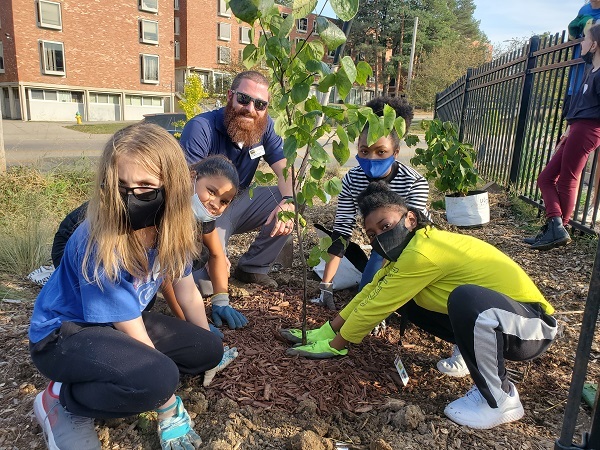
DES MOINES – The popular Trees for Kids grant program is now accepting applications through March 4.
Grantees can be awarded up to $2,500 to cover the cost of trees and mulch. All trees for this program must be planted on public property and involve youth with the planting process.
The following counties align with federal grant requirements and will receive first preference: Cass, Freemont, Mills, Montgomery, Page and Pottawattamie, but all applications are welcome from across the state. Grants will be awarded outside of these priority counties.
To apply for the grant, visit: www.iowadnr.gov/Conservation/Forestry/Educational-Opportunities
Media Contact: Gabriele Edwards, Urban Forestry Program Specialist, Iowa Department of Natural Resources, 515-822-1031.
The Iowa Department of Natural Resources (DNR) is sponsoring workshops for K–12 and early childhood educators on Iowa’s outdoors this spring and summer.
A Project WILD, Aquatic WILD and Project Learning Tree online self-guided module for teachers, naturalists and other K-12 educators is available January 18-February 28. Registration is open through February 18. Participants will explore the three national award-winning activity guides. Materials are aligned with NGSS and other Common Core standards. Upon completion of the required activities, participants will receive all three teaching guides.
A Field Investigations using Project WILD, Aquatic WILD and Project Learning Tree workshop for teachers, naturalists and other K-12 educators is scheduled for 8 a.m. to 4:00 p.m. on July 19 and 20 at Kent Park in Oxford. Learn how outdoor projects, exploration, and field investigations provide relevant learning opportunities for students that support STEM-based learning. Trainers will work with educators to incorporate activities from these resources into inquiry based learning units, and to conduct real field investigations with their students.
An Outdoor Inquiry for Early Learners workshops for early childhood educators is scheduled for 8:00 a.m. - 4:30 p.m. on July 12 and 13 at Springbrook State Park north of Guthrie Center. Provide an early foundation for your students with a collection of activities written by educators and wildlife professionals and reviewed by early childhood education experts. Participants will make and take outdoor learning kits.
Iowa educators can earn license renewal for all three courses. Register for the above outdoor education courses through the AEALearning website at https://aealearning.truenorthlogic.com/. You will be asked to create an account if you do not already have one. After you login, enter “Project WILD” in the course search to find registration information for each course.
Additional outdoor education learning opportunitiesIowa State University Extension provides Growing Up WILD training for early childhood professionals that include continuing education credits through the Iowa Department of Public Health. Visit the Iowa State University Extension and Outreach website (www.extension.iastate.edu/humansciences/growing-up-wild) to find a class.
Project WILD and Aquatic WILD training modules are now available online. Educators who complete the modules can then order the activity guides. Learn more on the DNR website at www.iowadnr.gov/Conservation/For-Teachers/Projects-WILD-WILD-Aquatic
Media Contact: Barb Gigar, training specialist, Iowa Department of Natural Resources, 515-494-3891.
|