|
FOR IMMEDIATE RELEASE
Sept. 14, 2021
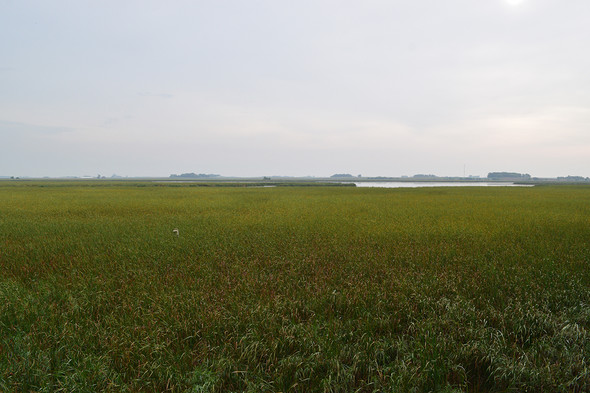 Boasting one of the largest natural marshes in the state, Eagle Lake, in central Hancock County, is home to all the usual wildlife found in north Iowa as well as a number of rare or threatened species, and touring it by canoe or kayak in the summer can make Eagle Lake feel like the Everglades. Photo courtesy of the Iowa DNR.
Eagle Lake Wildlife Area is a 960-acre high quality natural marsh within a 2,000-acre complex that is an important stop for marsh birds on the migration route and home to unique plant and animal species not found in many places around Iowa.
Unfortunately, it suffers from the three rules of real estate – location, location, location.
“You have to drive past a lot of other high-quality areas to get here so Eagle Lake doesn’t get a lot of out-of-county visitors,” said TJ Herrick, wildlife biologist with the Iowa Department of Natural Resources.
Boasting one of the largest natural marshes in the state, Eagle Lake in central Hancock County is home to a population of Blanding’s turtles, nesting trumpeter swans, nesting sandhill cranes, ibises, broad-winged skippers, Dion skippers, mulberry wing skippers and black terns, which only live in large natural marshes, and more.
It’s home to white lilies and the less common yellow lilies. Its been a collection site of sweet flag iris, a water plant collected for its seed that is grown for use at different sites around the state.
“This is an under-used area,” Herrick said. “You see everything you’d expect to find in north Iowa – turkey, deer, Blanding’s turtles, pheasants, ducks and geese. If you get out on the lake in the middle of summer, it feels like you’re in the middle of the Everglades. It’s a great place to paddle.”
Eagle Lake Wildlife Area has received a number of improvements in recent years. It boasts a reconstructed diverse prairie with 150 different plant species, restored wetlands, a 25-acre oak grove and a restored former crop field. The drought is helping with a revegetation project at 25-acre Wood Lake.
A recent addition of a large portable pump allows the DNR to put water on around 200 acres in the 700-acre Eagle Flats waterfowl refuge on the northwest part of the complex to give migration waterfowl a place to rest and refuel on the trip south.
The vegetation in the refuge is managed through a partnership with two local cattle producers who put cattle on the refuge to graze on reed canary grass. Once the cattle are removed and water is put on the refuge, the newly available sheet water will be attractive to migrating waterfowl.
“Before we were pumping, we would get hundreds of ducks in here; now, we get thousands,” Herrick said. “We had 2,500 pintail here two years ago.”
Once the duck season closes, the refuge opens to allow hunting for other species and can be a sneaky good late season pheasant hunting spot.
The Iowa DNR, U.S. Fish and Wildlife Service, Natural Resources Conservation Service, Iowa Natural Heritage Foundation, Hancock County Conservation Board, Ducks Unlimited, Pheasants Forever and more work as partners to manage and improve the Eagle Lake complex.
Blanding’s study
The Iowa DNR has been working to capture Blanding’s turtles at Eagle Lake in the spring as part of a study to see which habitats the turtles use during different times of the year. About 75 high school students from nearby Clear Lake helped with the study last spring.
The turtles are outfitted with transmitters and released back into the marsh. The data will help with marsh management to benefit the threatened species. So far, transmitters have been placed on one female and three male turtles. The study has one more transmitter to place and will try to collect another turtle this spring.
New outlet structure
Eagle Lake will be getting a new lake outlet structure and fish barrier to protect the lake from unwanted invaders. Ducks Unlimited is providing the engineering.
Liv’n on the lake
Once a small seasonal residential community, the duck hunting cabins on the west side of the lake have been transformed into full time residences. Residents from these cabins have been part of Eagle Lake’s colorful history including disputes between hunters during the 1970s when Eagle Lake transitioned from being managed as an open lake to a marsh, and when the marsh was intentionally set on fire.
Media Contact: TJ Herrick, Wildlife Biologist, Iowa Department of Natural Resources, 641-425-2814.
DES MOINES - The Iowa Department of Natural Resources (DNR) is accepting comments on the proposed fee for the new lifetime trout fishing license, through Oct. 26.
During the 89th General Assembly, House File 234 was passed and signed into law on June 8, 2021. House File 234 establishes a new lifetime trout fishing license for Iowa residents who are at least 65 years of age. House file 234 also initiated the process to set the fee for the new lifetime trout fishing license.
The current resident trout fishing fee is $14.50, which includes a $2 administrative fee. The DNR is proposing to set the new lifetime trout fishing license fee at $65. Revenues from this fee are used exclusively to stock state trout streams and urban trout ponds. Learn more about the trout program on the DNR website at www.iowadnr.gov/fishing/trout-fishing.
Comments on the proposed lifetime trout fishing license fee may be submitted through Oct. 26 via email to fisheries@dnr.iowa.gov, via Google form (https://docs.google.com/forms/d/1JgusUNrQQyRnOB3ueBUHaChXGXs0Vb8dviVOO6vve5w/edit?usp=sharing) or by mail to Joe Larscheid, Iowa Department of Natural Resources, Wallace State Office Building, 502 East Ninth Street, Des Moines, Iowa 50319-0034.
The DNR has scheduled a public hearing from noon to 3:30 p.m., Oct. 26 via conference call. Individuals who wish to attend the conference call must contact Joe Larscheid at Fisheries@dnr.iowa.gov. A conference call number will be provided prior to the public hearing. Persons who wish to make oral comments during the conference call must submit a request to Joe Larscheid prior to the public hearing. They will be asked to state their names for the record and to confine their remarks to the proposed fee for the new lifetime trout fishing license.
Any persons who intend to attend the conference call and have special requirements, such as those related to hearing or mobility impairments, should contact the the DNR or ADA Coordinator at 515-725-8200, Relay Iowa TTY Service 800-735-7942, or Webmaster@dnr.iowa.gov, and advise of specific needs.
This formal comment period is an opportunity for stakeholders to help set the fee for the new lifetime trout fishing license. After considering public input, the DNR will finalize this rule and present it to the Natural Resource Commission for approval.
For more information, please contact Joe Larscheid by email at Fisheries@dnr.iowa.gov or by phone at 515-201-3376.
Iowa state parks and forests have set Saturday, Sept. 25 as annual Volunteer Day, when Iowans are invited to lend a hand at nearly 20 parks and forests hosting events. Clean-up efforts will be unique for each park depending on needs, and may include litter pick-up, staining or painting buildings, planting trees, rebuilding picnic tables, harvesting prairie seeds and more. The state parks and forests participating include:
- Beeds Lake State Park
- Bellevue State Park
- Brushy Creek State Recreation Area
- Cedar Rock
- Lacey-Keosauqua State Park
- Lake Anita State Park
- Lake Darling State Park
- Lake Keomah State Park
- Lake Macbride State Park
- Ledges State Park
- Pikes Peak State Park
- Pilot Knob State Park
- Prairie Rose State Park
- Shimek State Forest
- Springbrook State Park
- Stone State Park
- Walnut Woods/Badger Creek State Recreation Area
- Waubonsie State Park
- Wildcat Den State Park
Citizens interested in volunteering can find complete details on times, meeting locations and activities at www.iowadnr.gov/volunteer.
The Iowa deer hunting tradition will be passed on to about 10,000 young hunters who are participating in the youth deer season, which opens on Sept. 18. This season is designed as a mentor-styled hunt, matching young hunters with a licensed adult to teach proper deer hunting techniques, wildlife behavior, and safe hunting practices without the added pressure of other hunters in the field.
For many young hunters, this will be their first experience hunting deer, and mentors are encouraged to take the needs of the new hunter into account when planning the hunt.
The goal of the hunt should be a positive, enjoyable, and ethical experience, and harvesting a deer should be considered a bonus, not define success.
The youth season coincides with the disabled hunter deer season for hunters who meet certain criteria. Each season runs Sept. 18 through Oct. 3.
Each youth must be under direct supervision of an adult mentor, with a valid license and habitat fee (if required). The youth license is valid statewide and for any legal deer.
In 2020, hunters purchased nearly 12,000 licenses for the youth season and reported harvesting more than 5,200 deer, which was a 47 percent increase over 2019. An unfilled youth season tag may be used during any subsequent deer season, while following all other rules specified for each season. Party hunting with a youth tag is not allowed. A deer must be harvested by the youth with the tag. However, that tag holder may obtain deer tags for other seasons, just as any other hunter can do.
The youth deer season usually has mild temperatures and biting insects. Hunters should be prepared to properly handle any harvest made, including having bags of ice along to cool the deer cavity and to have contacted a locker before the hunt begins that can accept the deer for processing.
A youths first hunting experience can bring a lifetime of memories. Mentors should be prepared for to make this a wonderful, adventurous and safe outing.
All deer taken must be reported using the harvest reporting system by midnight the day after the deer is recovered. Harvest reporting is a very important part of the deer management program in Iowa, playing a vital role in managing deer populations and hunting opportunities. Hunters can report their deer on the DNR website at www.iowadnr.gov, by calling the toll-free reporting number 1-800-771-4692, or at any license vendor.
MEDIA CONTACT: Jim Coffey, Forest Wildlife Biologist, Iowa Department of
Natural Resources, 641-774-2958.
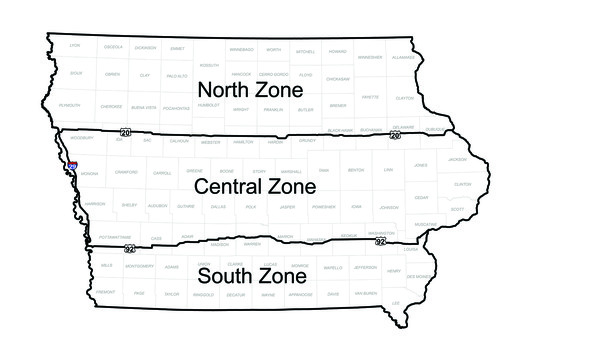 New waterfowl hunting zone boundaries will be implemented during the 2021 waterfowl hunting season, and may change which zone certain locations fall within. For example, Green Island WMA in Jackson County was historically included in the North Zone, but will now be in the Central Zone. Season dates differ between zones.
The first of Iowa’s two-day youth waterfowl seasons begin Sept. 25 in the north zone, allowing the kids to experience the fun of the hunt, without the pressure of keeping up with the adults, or fighting lousy weather.
“The young hunters get to spend some time outdoors and learn from an experienced waterfowl hunter in a one on one situation, and that’s priceless,” said Orrin Jones, state waterfowl biologist with the Iowa Department of Natural Resources.
According to the Iowa DNRs weekly waterfowl survey, local ducks are still around, and some migrants have shown up. The DNR produces a weekly waterfowl survey from 19 areas that provide a snapshot of what ducks are here at a given time. The report is available online at https://www.iowadnr.gov/Hunting/Migratory-Game-Birds/Waterfowl-Migration-Survey.
Youth season in the north zone is Sept. 25-26, in the central zone is Oct. 2-3, and in the south zone is Oct. 9-10. Daily and possession limits for the youth season is the same as for the regular season.
The youth waterfowl season is for residents only, age 15 or younger, who may hunt without purchasing a hunting license, or federal duck stamp, or paying the Iowa habitat or migratory game bird fee. Each youth hunter must be accompanied by an adult 18 years old or older and the adult must have a hunting license and have paid the Iowa wildlife habitat and migratory game bird fees.
Hunters planning to take a young person on this special hunt are reminded that only the youth may participate in the hunt and only ducks, geese, mergansers and coots are legal species. All other regulations in effect for the regular waterfowl seasons apply during the youth hunt.
New zone boundaries established for the 2021 season
New waterfowl hunting zone boundaries will be implemented during the 2021 waterfowl hunting season. It is important that hunters carefully review the zone boundaries and season dates relative to their intended hunting location. The new boundaries may change which zone certain locations fall within. For example, Green Island WMA in Jackson County was historically included in the North Zone, but will now be in the Central Zone. Season dates differ between zones.
For the fall 2021 through spring 2026 seasons, the North Zone is that part of Iowa north of a line beginning on the South Dakota-Iowa border at Interstate 29, southeast along Interstate 29 to State Highway 20 to the Iowa-Illinois border. The South Zone is that part of Iowa west of Interstate 29 and south of State Highway 92 east to the Iowa-Illinois border. The Central Zone is the remainder of the state.
DNR advising hunters to look for a change in HIP registration **Next Year**
Beginning Dec. 15, 2021, when the 2022 hunting licenses go on sale, all hunters who pursues migratory game birds will be required to register for HIP either through the Go Outdoors Iowa app on their smartphone, through a link at www.iowadnr.gov/waterfowl or at www.gooutdoorsiowa.com. Migratory game birds mean more than ducks and geese; in Iowa it includes ducks, geese, coots, doves, woodcock, rails, and snipe.
Once registered, hunters will need to write a confirmation number on their license, print an updated copy of their license with the confirmation or take a screenshot of their confirmation on their phone to show proof of registration. Requiring a confirmation number will allow the DNR to better track migratory bird hunters – a federal requirement.
The change was necessitated because registering through license vendors at the time of purchase has been inconsistent.
Media Contact: Orrin Jones, State Waterfowl Biologist, Iowa Department of Natural Resources, 641-357-3517.
DES MOINES - The Iowa Department of Natural Resources (DNR) is offering a virtual program to teach skills needed to hunt, field dress and cook upland birds to anyone who has little to no upland bird hunting experience.
The October 5 workshop will feature a two-hour virtual knowledge and skills building sessions.
“For those interested in the challenge of upland hunting as a means of sourcing their own protein, this program teaches the skills and knowledge it takes to do it all yourself,” said Jamie Cook, program coordinator with the Iowa DNR.
Participants will learn basic strategies for hunting upland birds such as proper equipment, where to hunt, safe shooting practices, and how to field dress, butcher and cook the birds.
The course is designed for participants 16 years of age and older. The course is free and will be held from 6 to 8 p.m. via Zoom. Space is limited, early registration is encouraged.
For more information and to begin the registration process, go to https://us02web.zoom.us/webinar/register/WN_VappUBgARIS14i2rIUkR_g
The program is provided through a partnership with the Iowa DNR and Pheasants Forever. It is part of a national effort to recruit, retain and reactivate hunters due to the overall decline in hunting and outdoor recreation.
Media Contact: Jamie Cook, Iowa Department of Natural Resources, 515-350-8091
Iowans lost an estimated $20 million in annual benefits from its urban tree canopy that was damaged by the derecho in August 2020, according to the results of a recently completed survey conducted by the Iowa Department of Natural Resource.
The findings were included in a report, available online at https://www.iowadnr.gov/Portals/idnr/uploads/forestry/DerechoReport.pdf, that estimated that Iowa communities had nearly 4.5 million trees damaged or destroyed by the storm.
The survey also looked at the damage to trees on rural lands and estimated that nearly 2.7 million trees were damaged or destroyed by the storm. Those findings are included in a report available online at https://www.mdpi.com/1999-4907/12/5/555.
The derecho impacted 27 counties along U.S. Hwy. 30 corridor primarily in central and east central Iowa, damaging or destroying an estimated 7 million rural and urban trees along the way.
Media Contact: Nick McGrath, Community Disaster Recovery Coordinator, Iowa Department of Natural Resources, 515-291-6555.
Fremont and Mills counties - The Iowa Department of Natural Resources (DNR) will treat Folsom, Scott B, and Lake Virginia late this summer or early fall (pending workable weather conditions) with rotenone, a botanical pesticide, to eliminate the fish populations.
Two of the lakes, Folsom and Scott B, are borrow lakes created during the construction of Interstate 29. Flooding by the Missouri River in 2019 introduced rough fish into these lakes, displacing almost all sport fish. The most recent fishery survey included common carp, silver carp, shortnose gar and black bullhead. These injurious fish species reduce water clarity, destroy aquatic plants, and prevent the fishery from reaching its full potential.
Lake Virginia, located in Waubonsie State Park, suffered severe winter kill during the past winter. Winter kill occurs during prolonged periods of ice and snow cover that eventually depletes the oxygen from the water.
"Surviving fish including black bullheads and common carp have gained the upper hand at Lake Virginia," said Bryan Hayes, DNR fisheries management biologist. “The most effective method to reclaim these lakes for fishing is to eliminate the existing fish populations with a fish toxicant, rotenone; clearing the way for restocking sport fish.”
Rotenone is used world-wide and has been since the 1930s. It is a common tool that fisheries managers use for managing sport fish and improving water quality. Rotenone is a naturally occurring compound that comes from the roots of a tropical plant in the bean family. The DNR commonly uses the commercially available formulation, 5 percent Prenfish, which has been approved for fisheries management by the U.S. Environmental Protection Agency (EPA).
The EPA has concluded that the use of rotenone for fish control does not present a risk of unreasonable adverse effects to humans or the environment. The EPA certifies all pesticides based on use according to label directions, which the DNR is equipped to fulfill these obligations.
Eliminating injurious fish species is an imperative step to achieve water quality and fishery improvements. The three lakes will be stocked with largemouth bass, bluegill and channel catfish in the spring of 2022. Catchable-size fish are expected in the lakes as soon as 2023.
Media Contact: Bryan Hayes, Fisheries Management Biologist, Iowa Department of Natural Resources; bryan.hayes@dnr.iowa.gov; 712-769-2587.
Solon, Iowa - The Iowa Department of Natural Resources, North Carolina State University and the Wood Education Resource Center are hosting a Small Sawmill Business Workshop on Sept. 23, from 9 a.m. to 4 p.m., at the Schwab/ Buford Property, near Solon, to provide educational and networking opportunities for exiting and startup small sawmill businesses.
The workshop will feature demonstrations on how to cut logs on a portable sawmill, discuss the business side and marketing lumber produced by small sawmills and tour a small sawmill with a dry kiln. A business guide will be given to all participants.
Registration is available online at https://smallsawmillworkshop2021iowa.eventbrite.com/. The registration fee is $45, which includes lunch.
Media Contact: Aron Flickinger, Forestry Program Specialist, Iowa Department of Natural Resources, 515-291-2829.
|





