|
FOR IMMEDIATE RELEASE
July 20, 2021
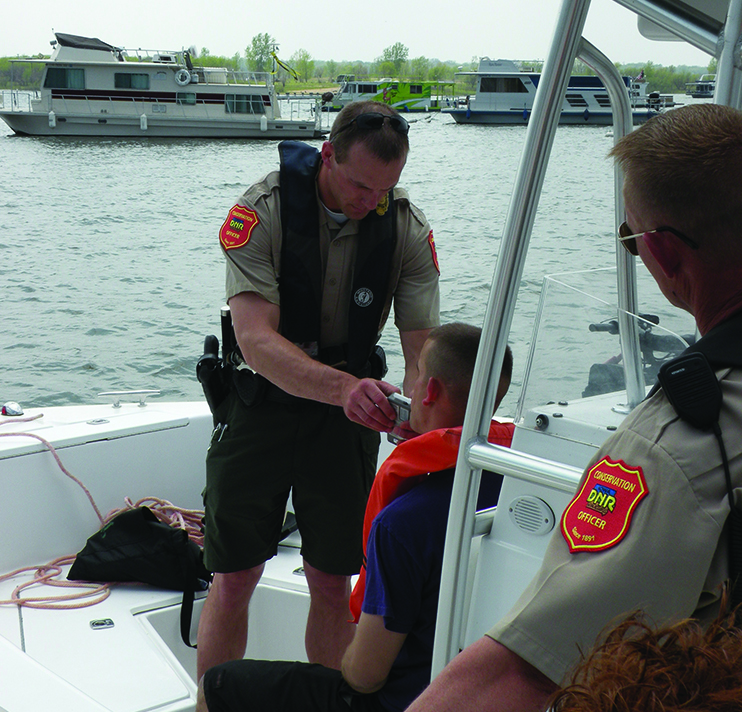 With summer’s temperatures soaring to their highest of the season, Iowa’s lakes and reservoirs will be busy places as Iowans of all ages look to escape the heat. The Iowa Department of Natural Resources (DNR) is reminding boaters to exercise safe boating practices and to have a designated boat operator who abstains from drinking alcohol.
Susan Stocker, boating law administrator and education coordinator for the Iowa DNR said the goal is to reduce boating accidents, injuries and fatalities caused by alcohol impaired operators.
“Alcohol reduces reaction time and the ability to make quick sound judgments in an emergency situation. Then if we factor in the wind and sun and glare off the water combined with the water movement that enhances the effects of alcohol, and that leads to a dangerous situation waiting to happen,” Stocker said. “Boat operators are responsible for everyone on their craft as well as watching all around them for other boaters and personal watercraft coming from all directions. It’s important that the operator avoid alcohol while in this role.”
The Iowa DNR partners with other state, county and local law enforcement to make the waters and roads safer. Iowa’s boating while intoxicated (BWI) blood alcohol concentration level of 0.08 percent was aligned with that of motor vehicles in 2011. So far this year, there have been 13 BWI arrests reported to the DNR.
While the BWI laws do not restrict passengers from drinking, Stocker encouraged them to know their alcohol limits.
“We want everyone to enjoy their time on the water, but do so safely and responsibly,” she said.
Top 5 bodies of water for BWI arrests in 2020
- Lake Rathbun
- Mississippi River
- Coralville Reservoir
- Okoboji
- Saylorville Lake
2020
- 25 BWI arrests
- 5 out of 8 boating fatalities involved alcohol
- 11 of the 38 accidents reported involved alcohol
2019
- 66 BWI arrests
- 2 out of 6 fatalities involved alcohol
- 7 out of 22 accidents reported involved alcohol
2018
- 39 BWI arrests
- 3 out of 8 fatalities involved alcohol
- 11 out of 31 accidents reported involved alcohol
Media Contact: Susan Stocker, Boating Law Administrator and Education Coordinator, Iowa Department of Natural Resources, 515-313-6439.
Osage, Iowa – The Iowa Department of Natural Resources and the Mitchell County Conservation Board are accepting public comments that will be included in the upcoming Cedar River Water Trail Plan.
Comments regarding river usage, safety concerns, and improvement suggestions can be sent through a form at iowawatertrails.org/water-trail-development/or by emailing the planning team at cedar_river_water_trail@jeo.com. Comments will be accepted until Oct. 1, 2021.
Water trails are state-designated local waterways that provide Iowans unique recreational opportunities. Through a community-based planning process, the Cedar River Water Trail in Mitchell County will improve river safety, highlight access points, and focus on the area’s history, culture, and wildlife. In order to receive state designation, a water trail plan must be created that provides an overview of the river, including a detailed map with access points and distances. JEO Consulting Group has been tasked with leading plan development.
Initial Cedar River Water Trail virtual meetings for land managers, landowners, and river users were held in October 2020, and presentations from these meetings can be found at iowawatertrails.org/events/. As the plan continues to be developed, the public will be able to participate in additional outreach events and provide input at each. Three free public involvement events will be held this summer:
- July 24, 10 a.m. to 2 p.m.: An educational fair will be hosted at the Milton R. Owen Nature Center with lunch provided, with a guided, interpretational float down the Cedar in the afternoon.
- July 31: The Cedar River Water Trail Plan team members will host a booth at Stacyville’s Brat Daze.
- August 4-8: Members of the steering committee and project team will host a booth at the Mitchell County Fair.
To learn more about Iowa water trails, visit https://www.iowadnr.gov/Things-to-Do/Canoeing-Kayaking/Water-Trail-Development.
For more information, contact John Wenck, Water Trails Coordinator, Iowa Department of Natural Resources, 515-494-8629 or john.wenck@dnr.iowa.gov
Fishing for catfish is a fun summer tradition for many Iowa families. You can always count on channel catfish when the bite slows down for other fish in the heat of Iowa summers.
“Catfish will bite most of the time, no matter what the water temperature,” explains Daniel Vogeler, Iowa DNR fisheries technician. “They are biting in most lakes, ponds, rivers and streams across Iowa.”
Bring along two coolers with ice, one to keep your bait firm and fresh and another to keep your catch cold and preserve that great taste.
Catfish have a great sense of smell and taste. Try prepared dip baits, chicken livers, minnows or chubs, green sunfish, bluegill, crawdads, frogs, night crawlers or dead, but fresh, goldeye or gizzard shad.
Lakes stratify, or form layers, this time of year, with cool, oxygen-deprived waters sinking to the bottom. Don’t fish in water deeper than 8 to 10 feet on most lakes.
Look for areas with vegetation, brush piles or rock. Fish the upper ends of the larger reservoirs where the water is shallower and baitfish like gizzard shad gather. Use baits fished on the bottom or suspended off the bottom with a bobber and let current or breeze move the bait to find active catfish.
Iowa rivers are loaded with catfish. Look for fish around downed trees and brush piles, but don’t overlook rock piles or other objects that deflect water and form a current seam. Position your bait just upstream of brush piles so the scent of the bait is carried downstream into the structure to draw the catfish out. Anchor the bait with a heavy weight so it doesn’t drift into snags. If fishing the big rivers, try upstream and on the tips of wing dykes and wing dams on the Missouri and Mississippi rivers.
Find more tips for catching, cleaning and cooking catfish on the DNR website at www.iowadnr.gov/Fishing/Fishing-Tips-How-Tos/How-to-Fish-For-/Channel-Catfish-Fishing.
Media Contact: Daniel Vogeler, Fisheries Bureau, Iowa Department of Natural Resources, 712-336-1840.
Carbon monoxide poisoning is not often thought of when on the water, but boaters need to be aware of the situations that can put them at risk of illness or even death.
“Carbon monoxide is silent, odorless, and deadly,” said Susan Stocker, boating law administrator and education coordinator for the Iowa Department of Natural Resources. “Boaters need to be aware of this risk especially when traveling at slow speeds, or idling which can cause carbon monoxide to build up on the boat. The same applies to a tailwind, which may blow exhaust towards passengers.”
Boaters are encouraged to avoid holding onto any portion of a swim platform, swim deck, swim step or swim ladder for any amount of time while the boat is underway at any speed or the engine is idling. Anyone near the boat's engine or generator exhaust is exposed to carbon monoxide, which can cause them to lose consciousness and drown.
Carbon monoxide poisoning can easily be mistaken for having too much sun, dehydration or seasickness. Other symptoms may include headache, dizziness, weakness, nausea, vomiting, chest pain and confusion. If you suspect carbon monoxide poisoning, seek immediate medical attention, she said. Stocker offered some tips to minimize exposure and impact of carbon monoxide.
- Install and maintain a marine carbon monoxide detector
- Put children in the forward-most seating on the boat
- Avoid exposure to other boats' emissions
- Maintain fresh air circulation at all times
Media Contact: Susan Stocker, Boating Law Administrator and Education Coordinator, Iowa Department of Natural Resources, 515-313-6439.
|





