FaDSS Program Newsletter


FaDSS Logo

FaDSS Program Newsletter

Click to edit this placeholder text.

July 2020

JULY 2021


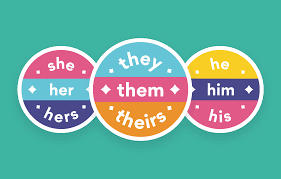
Pronouns Matter


Pronouns

The following is from MyPronouns.org shared by FaDSS Coordinator Alisa Schlief, Chair of the FaDSS Equity Committee. 

WHAT ARE PERSONAL PRONOUNS AND WHY DO THEY MATTER?

In English, whether we realize it or not, people frequently refer to us using pronouns when speaking about us. Often, when speaking of a singular human in the third person, these pronouns have a gender implied -- such as “he” to refer to a man/boy or “she” to refer to a woman/girl. These associations are not always accurate or helpful.

Often, people make assumptions about the gender of another person based on the person’s appearance or name. These assumptions aren’t always correct, and the act of making an assumption (even if correct) sends a potentially harmful message -- that people have to look a certain way to demonstrate the gender that they are or are not.

Using someone’s correct personal pronouns is a way to respect them and create an inclusive environment, just as using a person’s name can be a way to respect them. Just as it can be offensive or even harassing to make up a nickname for someone and call them that nickname against their will, it can be offensive or harassing to guess at someone’s pronouns and refer to them using those pronouns if that is not how that person wants to be known. Or, worse, actively choosing to ignore the pronouns someone has stated that they go by could imply the oppressive notion that intersex, transgender, nonbinary, and gender nonconforming people do not or should not exist.

When we refer to "personal" pronouns, we don't mean that these pronouns are necessarily private information (generally they are not), we mean that they are pronouns referring to a unique and individual person.

Hopefully, you now have a fundamental understanding about why pronouns matter. If you'd like to know more and to hear stories from trans and gender nonconforming people about their lived experiences with pronouns, please check out some of the videos and links in the resources section of this website. Once you understand what we're talking about and why, let's learn about how to use personal pronouns.


GEM Feature


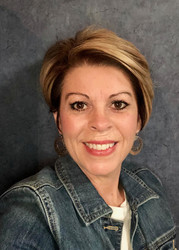
Tammy Gilmore

In each newsletter, you’ll see a feature called GEM (Going the Extra Mile) where we highlight a FaDSS worker who has gone above and beyond. 

Tammy Gilmore has been a Family Development Specialist at the Polk County Family Enrichment Center for almost 3 years.  She has been a Polk County employee for 27 years.

Tammy brings with her a wealth of information regarding local resources, contacts in the area and knowledge of the judicial system.  She also is an amazing resource for trauma and dealing with community wide team collaboration.

 Tammy is always willing to step up for her families while being creative with problem solving.  She truly meets her families where they are at.  She uses her trauma-informed care skills daily in her work as well.  Her families appreciate the honesty from her and building trusting relationships. 


Grantee Spotlight

Upper Des Moines Opportunity


UDMO Collage

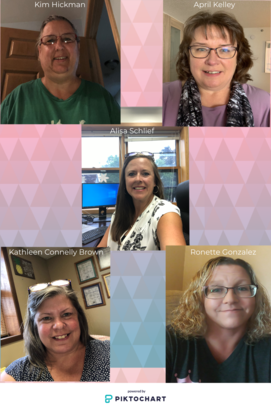
The Upper Des Moines Opportunity FaDSS program has four full-time specialists with a program caseload capacity of 68. The program serves Emmet, Palo Alto, Buena Vista, Pocahontas, Humboldt, Wright, Webster and Hamilton counties. In fiscal year 20, the program served 161 families. The average length of stay in fiscal year 21 is 12 months. UDMO specialists average 3.65 contacts per month with families.  

FaDSS specialists include Kim Hickman, April Kelley, Ronette Gonzalez and Kathleen Connelly-Brown. The FaDSS Coordinator is Alisa Schlief who has been with the program for 14 years. She currently serves as the Chair of the Equity Committee of the FaDSS Council. 

The program also participated in the Mathematica evaluation.  


Resource Feature


ASK

ASK Resource Center is the state of Iowa's Parent Training and Information Center for families with children with special needs. The goal of Parent Training and Information is to help parents, families and students understand their civil rights regarding early intervention services and special education supports so they can be strong, effective advocates. ASK Resource Center also hosts an annual Together We Can Conference which brings families and professionals from across the state of Iowa together for a full day of learning and networking with families, providers, advocates and more. 

The Resource tab of the ASK Resource Center website includes family-friendly resources in the areas of: Education, Health, Training, Laws and Diagnosis and Disability Related Resources. Here, families can access information related to IEP and 504 plans, behavior and discipline, transition and more. ASK Resource Center is an excellent resource for families that include children with special needs of any kind. 


Notes from the FaDSS Program Managers


  • Starting July 12th, Iowa FaDSS will not allow for edits to any exited family records. Please ensure all data is accurate for exited families before that date. We will be issuing annual grantee reports using the finalized data. 
  • Upcoming FaDSS Coordinator meeting dates: 9/15/21, 11/17/21, 3/23/22, 5/18/22.
  • Upcoming FY 21 FaDSS Council meeting dates: 9/16/21, 11/18/21, 3/24/22, 5/19/22.
  • DCAA is working on issuing FY 22 contracts. Please review your revised agency contract for FY 22. 
  • Futures Without Violence training will be held on September 15th from 9:00-3:00 via a web-based platform. Please email PJ West to register at PJ.West@idph.iowa.gov

Please let us know if you have any questions. Thank you for all the work you do!

-Page and Lorie