|
Dec. 15, 2020
Dec. 21 to April 1: Limitation on land applying liquid manure from confinement sites on snow-covered ground.
Feb. 1 to April 1: Limitation on land applying liquid manure from confinement sites on frozen ground.
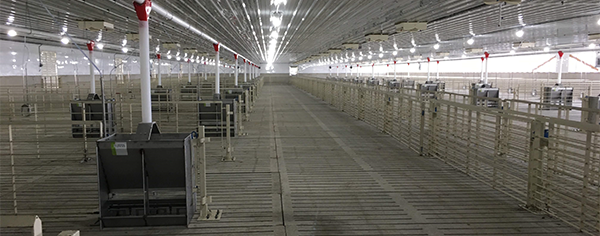 Are you ready for winter? Cold weather can affect the success of construction. If planning to build this winter, take a few tips from DNR’s senior animal feeding operations engineer.
Can your concrete stand up to the weather? Paul Petitti has been doing concrete inspections since the early ‘80s. Both as a private engineer and, since 2007, DNR’s senior AFO engineer, Petitti has seen almost everything.
“Concrete contains water and must not be allowed to freeze in the first seven days,” he says. “If properly cured, the concrete will reach about 70 percent of its design strength in the first week. And, about 90 percent of its design strength in 28 days.”
Follow Petitti’s tips for cold weather concrete to be successful.
-
Plan ahead, look at long-term forecasts and suspend concrete pouring for the season once cold weather hits.
-
When construction can’t be halted, follow these practices once temperature drops below freezing:
- Use insulating blankets to keep ground from freezing before you pour a floor slab and to cover the floor slab after pouring. Leave blankets on for seven days.
- Use insulating blankets to keep freshly poured walls from freezing. Leave blankets and forms on for three days. If temperatures remain below freezing, replace blankets and leave in place for four more days.
- If cold weather arrives after properly pouring slabs and walls and the pit’s been backfilled, put a few feet of water into the deep pit to prevent frost heave.
-
Be aware:
- Hot water in the concrete mix can help, but it is not a substitute for blankets.
- An accelerator admixture in the concrete (calcium chloride) may also help, but, again, it is not a substitute for blankets.
- Plastic drain tile becomes very brittle in cold weather, so it is subject to breaking during construction activities such as backfilling.
Petitti reminds contractors they must call and notify the regional DNR field office before pouring slabs.
DNR rules refer to the American Concrete Institute’s Standard 306 "Recommended practices for Cold Weather Concreting.” Refer to the 306 Standard for a thorough understanding of cold weather concreting.
In late November, DNR notified counties interested in using the Master Matrix to evaluate construction permit applications for confinement (totally roofed) animal feeding operations they must pass and submit a construction evaluation resolution each year. Counties can approve a resolution at any time, but must submit it to DNR between Jan. 1 and 31 for the year starting in February 2021. Find more information from DNR or the Iowa State Association of Counties.
For more information, see DNR news or search for Master Matrix on DNR’s AFO webpage.
The Iowa Department of Natural Resources is working with state and local officials to reduce the spread of COVID-19 and has transitioned employees to work remotely. DNR offices are closed to the public during this time and only available by appointment.
In another effort to further reduce the spread of COVID-19, the DNR is encouraging the use of the online services for submitting applications, payments and other daily tasks and interaction with DNR staff.
We thank you for your patience and flexibility during this time. If you need to contact DNR staff you can reach them by email or phone or by calling 515-725-8200.
|





