|
October 16, 2020
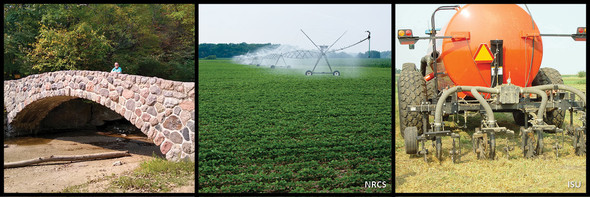 Low stream flows put fish and aquatic animals at risk. Whether irrigating or injecting manure or fertilizer, take extra care this fall to avoid spills and prevent fish kills.
Harvest is under way, with manure application soon to follow.
Please check to make sure your applicator certification is up-to-date. As Jeff Prier, DNR’s MAC training coordinator says, "The training is an opportunity to hear about the latest research from Iowa State University—from safety issues to composting mortalities. It’s also a way to stay up on the rules so you can better prevent water quality violations or respond to a spill."
If your certificate has expired or you have a confinement site certificate and just need annual training, you can take advantage of DNR’s online training and fee-paying option. First, you will have to create an IowaID, following the prompts. Find more information about the certification program at www.iowadnr.gov/manureapplicator or http://www.agronext.iastate.edu/immag/mac.html.
If you prefer to watch a video, Iowa State University Extension and Outreach offices are now open for appointments. Commercial and confinement applicators should contact their local Extension office for requirements and available times. Find training and viewing opportunities on the IMMAG website.
Currently, DNR offices are closed to the public. But please call the field office if you have questions about certification testing.
Just like you, DNR field staff want to prevent spills and fish kills. They provide these tips to help you prevent fish kills—especially in dry and drought-prone areas.
This fall’s dry conditions, low stream levels and warm water temperatures make aquatic animals especially vulnerable. Add in thick vegetation or algae, and dissolved oxygen levels in the water can sag—further stressing fish, aquatic animals like crayfish and frogs, and beneficial insects.
Stressed animals are more susceptible to pollutants.
DNR staff offer these tips, and ask you to take care this fall as you mix and land apply chemicals and nutrients.
- Read and follow chemical labels. Some chemicals are toxic in very small amounts (parts per billion—one pinch of salt in a 10-ton bag of potato chips or one pound in 120 million gallons of water).
- Follow application rates and locations in your manure or nutrient management plan.
- Avoid applying near water, including near pond and stream banks. Check the weather. Hold off on applying before a rainstorm.
- Avoid application near small feeder streams and grassed waterways where runoff could occur.
- Properly dispose of rinse water—making sure it doesn’t reach a stream or lake.
- If applying chemicals by aerial spraying, check water locations before application. Watch wind speeds and drift, and shut off application when crossing small bodies of water.
- Take care with nutrient application. Whether manure or fertilizer, ammonia levels of only 3 parts per million can cause a fish kill, depending upon the pH in the water.
- Watch soil conditions and saturation levels when land applying. Check for signs of runoff or leakage through tile lines, especially if your nutrient or manure management plan allows high application rates. You may need to spread application out over several days to avoid runoff when applying liquids with low nutrient concentrations.
Finally, report fish kills to DNR field offices or to the 24-hour spill line at 515-725-8594.
Finally. A dry fall and early harvest takes the pressure off getting manure storage structures emptied. After the last two cold, wet falls, DNR staff know producers want to get out there and land apply.
Just a reminder, though. To maximize nitrogen availability and minimize its loss, it pays to wait until soil temperatures drop below 50 degrees when applying anhydrous ammonia or ammonia-laden manure.
Find the science behind 50 degrees and falling in the 2019 October Iowa Manure Management Action Group’s (IMMAG) newsletter. For real-time soil temperatures, check out Iowa State University Extension and Outreach’s data map at http://mesonet.agron.iastate.edu/data/soilt_day1.png.
State law requires producers and manure applicators to report spills to the Iowa DNR. Not only is reporting required, but the sooner you report, the more likely DNR technical staff can help. Their experience with many types of spills may help you prevent a worse situation or a fish kill. Play it safe. Call it in.
Here’s a reminder of state rules on reporting releases, especially manure releases:
Iowa producers are required to report manure and other releases. Chapter 65.2 (9) of the Iowa Administrative Code requires: Producers and those who store, handle, transport or land apply manure from a confinement (totally roofed) feeding operation to notify DNR as soon as possible but not later than six hours after the onset or discovery of the release. Report the release by calling DNR’s 24-hour spill line at 515-725-8694 or notifying the nearest DNR field office during business hours.
The Iowa Department of Natural Resources is working with state and local officials to reduce the spread of COVID-19 and has transitioned employees to work remotely. DNR offices are closed to the public during this time and only available by appointment.
In another effort to further reduce the spread of COVID-19, the DNR is encouraging the use of the online services for submitting applications, payments and other daily tasks and interaction with DNR staff.
We thank you for your patience and flexibility during this time. If you need to contact DNR staff you can reach them by email or phone or by calling 515-725-8200.
|





