|
FOR IMMEDIATE RELEASE
September 1, 2020
The Iowa Deer Exchange is the Iowa Department of Natural Resources’ new free online database at www.iowadnr.gov/deerhunting where deer hunters willing to provide venison can connect with Iowans who want venison.
Hunters enter their information to the database, including their location. Recipients choose the condition they want the meat when they register – boned out, whole (field dressed), quartered, frozen, jerky /sausage or any, and in what amount. They also set the length of time their offer is open and may opt out at any time by contacting the Iowa DNR.
Once connected, the parties work out the details of the transfer. Donors are responsible for reporting the harvest and encouraged to properly care for the deer from the field to the recipient. It is illegal to sell venison in Iowa.
“We’re excited about this new opportunity to connect Iowans with this resource – both hunters and the venison recipients,” said Todd Bishop, chief of the Iowa DNR’s Wildlife Bureau. “It allows hunters who want to keep hunting a way to provide high quality, lean protein directly to those who want it.”
The Iowa Deer Exchange does not replace the popular Help Us Stop Hunger (HUSH) program but offers another way for Iowans to get high quality lean protein. Iowa has 27 lockers participating so far in the HUSH program for the upcoming deer season, you can learn more by visiting: www.iowadnr.gov/deerhunting.
AMES, Iowa -- As clean-up efforts are well underway and even nearing completion in some areas following the derecho that tore through Iowa in early August, the DNR State Forest Nursery is working with customers to select the proper trees to replant in areas completely leveled by the storm.
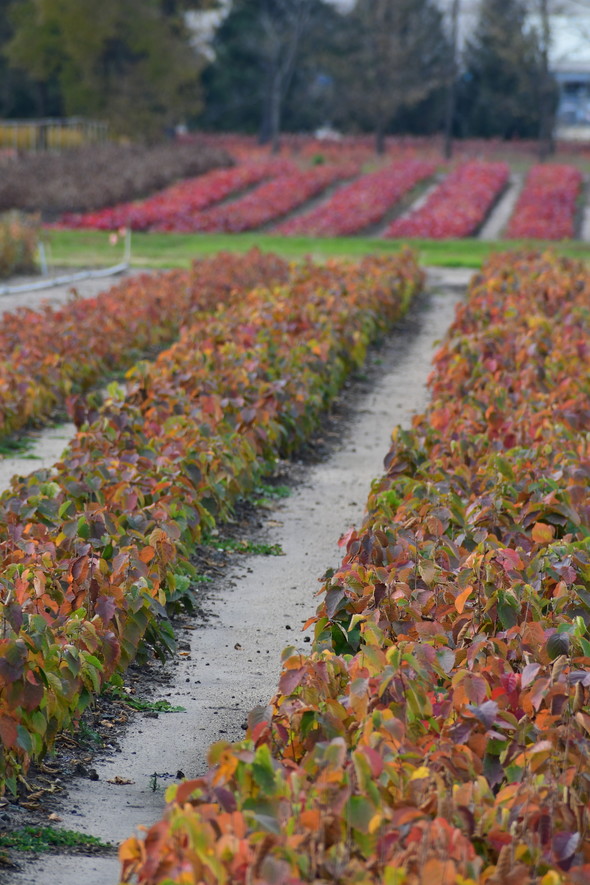
The Iowa DNR State Forest Nursery grows approximately 40 different species of native Iowa tree and shrub seedlings that are available to the general public for purchase for as little as $0.80 to $1.00 each depending on the size and species. Orders must be placed in increments of 25, with a minimum order requirement of 25 trees per species.
There are many things to consider when choosing the right trees for your property like the site conditions and what benefits you are hoping to achieve by planting trees. Trees provide many benefits including food and habitat for wildlife and pollinators, reduce soil erosion, reduce heating and cooling costs, cleaner water through removal of chemicals such as nitrogen and phosphorus, cleaner air, reduce noise pollution, as well as aesthetic and health benefits. DNR District Foresters are a great resource to help landowners determine the best trees and shrubs for areas. Contact information can be found by visiting: https://www.iowadnr.gov/Conservation/Forestry/Forestry-Landowner-Assistance
To begin placing your order with the DNR State Forest Nursery, visit: www.nursery.iowadnr.gov. There you will find all of the current inventory at the nursery, as well as descriptions of each plant and their desired conditions. Orders are available for delivery or pickup during the month of November for fall planting or April-May for spring planting.
- Each seedling order will come with care and planting instructions to help make your tree planting project successful.
- The seedlings will come bare root and will need to be planted as soon as you receive them.
- Remove all grass and weeds in a 3-5' zone around the seedlings this will reduce competition for water and nutrients that the seedlings need to survive.
- Keep all unplanted seedlings in a cool dark environment to prevent them from drying out before planting.
- About an hour before you plant, place the seedlings in a bucket of water just covering the roots until they are planted.
- Plant the seedlings with the root collar at ground level and the main root straight down.
- Avoid planting the seedlings with U-shaped or sharply bent root systems.
- After planting, protect the seedlings from animal damage, control the grass and weeds around the trees, and the seedlings should receive about an inch of water per week.
To learn more about proper tree planting, the DNR has partnered with Iowa State University’s Extension to produce the following video: https://www.youtube.com/watch?v=7auuvEmQFdM.
Media Contact: Patrick Griffin, DNR State Forest Nursery Manager, (515) 233-1161, Patrick.Griffin@dnr.iowa.gov.
Three weeks after a devastating derecho tore through a large portion of Iowa, and left major damage to residential neighborhoods, farms and cities, state parks across Iowa continue their clean-up efforts.
Palisades-Kepler State Park (LINN COUNTY) will remain closed until further notice due to extensive tree damage.
Pleasant Creek State Recreation Area (LINN COUNTY) campgrounds and day-use lodge remain closed as well as most of the north side of the park, including the beach and north shelter. The main boat ramp on the south side of the lake is open, as well as the northwest and southwest boat ramps which are accessible by the gravel road.
Lake Macbride State Park (JOHNSON COUNTY) is open; however the north and south campgrounds and day-use lodge all remain closed. Because of the extensive tree damage and clean-up efforts, visitors are asked to avoid using all of the trails, except for the North Shore Trail, at this time due to safety reasons.
Wapsipinicon State Park (JONES COUNTY) and Union Grove State Park (TAMA COUNTY) are both now open for visitors.
Rock Creek State Park (JASPER COUNTY) is partially open—the east side of the park, where the campground, disc golf course, picnic areas and trails are located, remains closed except for the marina area with the concession and the west side of the park is open.
DNR staff will continue to work diligently to assess damage, remove debris and get these areas open as soon as possible, while ensuring safety of visitors at all times. The DNR will directly contact anyone with reservations affected by park closures. For the latest up-to-date closure and alert information, visit: https://www.iowadnr.gov/Places-to-Go/State-Parks/Alerts-and-Closures.
Media Contact: Alex Murphy, DNR Director of Communications, (515) 729-7533, Alex.Murphy@dnr.iowa.gov.
|





