|
FOR IMMEDIATE RELEASE
Aug. 18, 2020

Since we won't see you at the Iowa State Fair this year, we're bringing the popular "state fair" magazine special to your door!
Subscribe to Iowa Outdoors magazine to get four big issues filled with beautiful photography, wildlife articles, outdoor destinations, and next year's calendar. You'll get the state fair t-shirt, in light-blue 100-percent preshrunk cotton, promoting the 100th anniversary of state parks.
To subscribe, visit the Iowa Outdoors magazine special page, or purchase through the DNR's online license site.
When subscribing, choose your t-shirt size (XXXL cost extra), and you can purchase an additional t-shirt when you order. T-shirts will be mailed by Sept. 30, 2020. The $20 price includes a one-year subscription, t-shirt and shipping costs.
Hurry! This offer is only available through August 31, 2020. We hope you enjoy Iowa Outdoors!
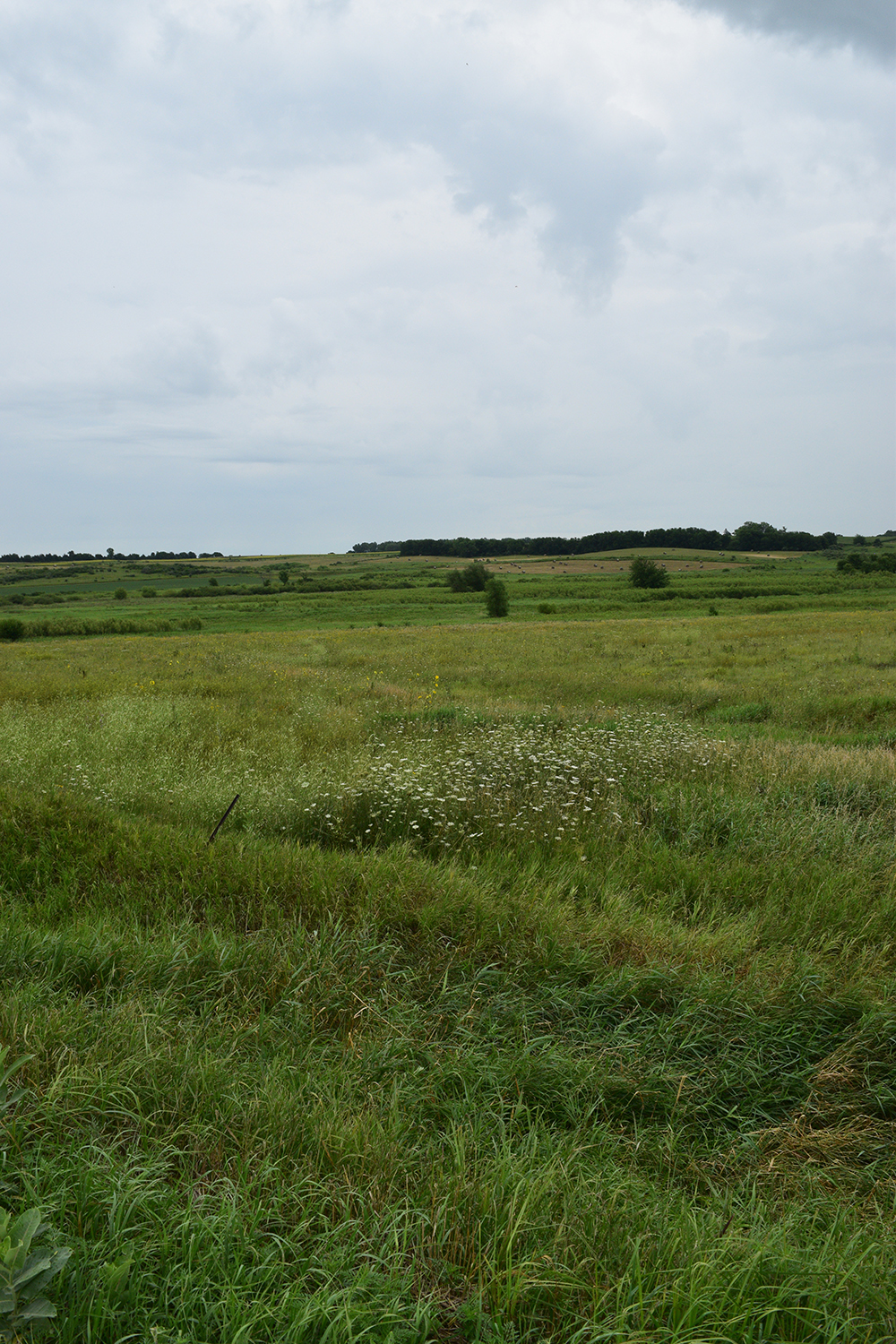 This new 30-acre prairie sits on west side of Hendrickson Marsh Wildlife Area provides better access to the area by extending the marsh out to the gravel road. The new prairie will benefit the areas pheasant population and provide a buffer to the marsh. Photo courtesy of the Iowa DNR.
Sitting smack in the middle between Marshalltown and Ames, the 850-acre Hendrickson Marsh Wildlife Area is a get-away-from-the-crowd kind of place, enjoyed by kayakers and bird watchers, and outside of opening weekend of duck season, by hunters.
With a mix of forest, prairie and a 200-acre wetland, Hendrickson Marsh is an important refueling spot for migrating birds each spring and fall. It’s home to diverse a grassland bird population, deer, turkeys, pheasants, doves and ducks. There’s a large tiger salamander population and sandhill cranes have been documented nesting here.
The wetland was dewatered as part of a renovation project to eliminate rough fish that got in to the system and to re-establish the vegetation. Standing in the parking lot on the southside off County Highway E63 on this late July morning, the project is nearing completion.
Wildlife biologist Josh Gansen said he plans to begin holding water in mid-August and given the marsh’s 8,400-acre watershed, he said it can refill in a hurry.
“We want to give the vegetation time to grow and mature. I’m hoping to get a nice response from the Bidens, millet, rice cutgrass, smartweed, river bulrush – good food for migrating waterfowl,” Gansen said. “The thing about a large watershed is that if we get a one-inch rainfall, we’ll fill up quick. I expect it to be great for walk in teal hunting. Early on, it could be a little tough for a boat.”
Work to improve the habitat extends beyond the marsh to the surrounding timber and prairie areas.
The prairie area on the south side between the parking lot and the marsh was treated with prescribed fire this summer to eliminate the encroaching brush. On the northeast corner, Gansen is using goats to help manage the vegetation when prescribed fire is not an option.
“We’ve used goats at other areas successfully, and we were fortunate enough that one of our neighbors has goats she needs to graze. They browse everything up to four feet which allows us to come in with equipment to remove the brush and avoid obstacles normally hidden by the taller vegetation,” he said.
Outside the goat zone, Gansen has been mechanically removing honeysuckle, and invasive shrub, that has been expanding its footprint in a windbreak along the north edge.
So far, Gansen has removed about 25 acres of encroaching and invasive trees as part of the long-term management plan. The brush has been replaced with prairie that will be managed with prescribed fire to reinvigorate the prairie and keep the brush at bay.
Expanding the prairie east and west
A 32-acre crop field on the southeast corner, acquired from the Iowa Natural Heritage Foundation, brought the area out to the gravel road improving access for visitors. Only in its second year, the young prairie is staring to express itself as blazing star and pale purple cone flower are easily visible.
The seed mix came for the DNR’s Prairie Resource Center and was supplemented with additional forbs that were supplied, in part, by a Monarch 3 grant from the National Wild Turkey Federation.
“The prairie has had a good response and provides good room for pheasants to run,” Gansen said.
A similar 30-acre parcel was acquired on the west side extending the area out to the gravel road. It too was planted to prairie.
“It’s a nice buffer to the marsh,” Gansen said.
Popular dove hunting spot
A 15-acre sunflower field was installed on the north side to accommodate the jump in interest for dove hunting. Pheasant chicks dart in and out of the field edge. The sunflowers are next to a field that has just been hayed and there is already a lot of doves.
Etcetera
There’s a bald eagle nest near the main boat ramp.
Visitors hike back to fish the marsh outlet, catching mainly bullheads and carp.
Hendrickson Marsh was built in 1968 and named for Iowa State University professor George Hendrickson. A plaque marking the dedication at the parking lot on E63 notes Hendrickson is “A pioneer educator in the field of Wildlife Management.”
In 2007, Hendrickson Marsh was one of the first shallow lakes in the state that was renovated using the new approach of water level manipulation to keep the wetland functioning properly. The goal of that renovation was to eliminate rough fish and to create a channel to help with future renovations.
The marsh has a good muskrat population. It’s also home to painted and snapping turtles, bullfrogs, and more.
Hendrickson Marsh draws hunters locally and from Ames, Marshalltown and Des Moines. It’s frequented by college kids. “When I went to Iowa State, it was the first place I came to duck hunt,” Gansen said.
Media Contact: Josh Gansen, Wildlife Biologist, Iowa Department of Natural Resources, 515-432-2545.
DES MOINES - The Iowa Department of Natural Resources (DNR) is offering a free virtual workshop to teach skills needed to hunt, field dress and cook waterfowl to individuals who have little to no waterfowl hunting experience.
This virtual workshop consists of two separate online knowledge and skills building sessions with instructors that possess the experience to teach skills necessary to become efficient waterfowl hunters.
“For those interested in the challenge of waterfowl hunting as a means of sourcing their own protein or red meat, this program provides the opportunity to learn the skills and knowledge it takes to do it all yourself,” said Jamie Cook, program coordinator with the Iowa DNR.
Participants will learn basic strategies for hunting waterfowl such as proper equipment, where to hunt, safe shooting practices, decoys and calling and how to field dress, clean and cook waterfowl.
The course is split into two sessions geared for participants 16 and older. Those under 16 must have an adult register and participate in the course as well. Space online will be limited so register right way to ensure your spot. Course One will be held Sept. 3 and cover waterfowl habitat and identification, hunting regulations and calling techniques. Course Two will be held Sept. 10 and cover hunting equipment, decoy spreads, cleaning and cooking. Participants can sign up for either or both courses. For more information and to begin the registration process please visit:
Course 1 – Sept. 3 https://www.register-ed.com/events/view/161726
Course 2 - Sept 10 https://www.register-ed.com/events/view/161728
The program is provided through a partnership with Delta Waterfowl and the Iowa DNR. It is part of a national effort to recruit, retain and reactivate hunters due to the overall decline in hunting and outdoor recreation.
Media Contact: Jamie Cook, Iowa Department of Natural Resources, 859-779-0222.
The Iowa Becoming an Outdoors Woman (BOW) Program is hosting three outdoor cooking classes virtually where participants are encouraged to cook along with the instructors. Classes will be held Sept. 14, Oct. 5 and 19 and there is no fee to participate.
Workshops are geared toward adults but are open to everyone. Participants under 18 are welcome with an adult present.
Classes begin at 5:30 p.m. and last for about 90 minutes. Participants will receive an ingredient list ahead of each session and are encouraged to cook along with the instructors. The relaxed format will allow for participants to ask questions during the class.
The sessions will be led by Christina Roelofs, Naturalist for the Shelby County Conservation Board and the Iowa Department of Natural Resources, Shawnell Richter, and Lydia Goehring, both Dutch oven enthusiasts and BOW instructors. Participants will need to register for each class they plan to attend.
Beyond BOW Virtual Workshop - Smoke on the Water: An Introduction to Smoking Fish and Game from the banks of the Mississippi River
A Beyond BOW virtual workshop will demonstrate how anyone can successfully smoke fish and game, even those with little to no experience smoking meat. The workshop will cover the equipment available along with tips and tricks to create some amazing flavors. Although this class is tailored towards the beginner, there will be information for all skill levels.
Media Contact: Megan Wisecup, Iowa Hunter Education Administrator, Iowa Department of Natural Resources, 515-238-4968.
The Iowa Department of Natural Resources will begin a phased in reopening of the Banner and Olofson shooting ranges with new social distancing protocols customers will need to follow.
Customers will be asked to observe social distancing practices and hand washing/sanitizing procedures while on site. Additional measures have been added including sneeze guards, limiting the number of persons in the lobby and routine disinfecting/cleaning of high touch point areas throughout the day. Masks are not required but are highly encouraged when inside the range buildings during the check in and check out process.
Banner Range reopened Aug. 17 with a reduced hours schedule for the next two weeks. Banner Range will be open from 11 a.m. to 5 p.m. on Aug. 18, 21, 24, 25 and 28. It will return to normal operations on Aug. 31. More information is available at www.iowadnr.gov/banner
Olofson Range will reopen with a reduced hours schedule for the next two weeks starting Aug. 19. Olofson Range will be open from 11 a.m. to 5 p.m. on Aug. 19, 20, 21, 26, 27 and 28. It will return to normal operations on Sept. 2. More information is available at www.iowadnr.gov/olofson
The DNR is looking to potentially open the range outside of normal hours for a few nights in September where hunters could come to sight in their firearms. Those dates and times will likely be available in early September either online or by calling the range directly.
Hunter education classes and field days will resume at Olofson starting in September. Dates and times for the classes is available at https://register-ed.com/programs/iowa.
Hunters planning to hunt waterfowl in fields damaged by the derecho storm on Aug. 10 need to be aware of what has taken place in the field after the fact to stay in compliance with the regulations.
Migratory waterfowl is under the jurisdiction of the U.S. Fish and Wildlife Service who has issued guidance as it relates to waterfowl hunting fields damaged by the storm.
Hunters are allowed to hunt waterfowl over fields that were knocked down by the wind because those fields are considered standing crops. Hunters are also allowed to hunt waterfowl over fields knocked down by the wind and harvested or harvested to the best of the equipment’s ability and in accordance with guidance form Iowa State Extension, because the crops are considered to have been harvested in a normal manner.
However, hunters may not hunt fields knocked down by the wind, not harvested and manipulated (shredded, disking, etc.) as required by insurance as it is then considered manipulated agricultural crops, which is not allowed.
Iowa’s teal only season begins Sept. 1. Regular duck seasons begin opening by zone in late September and early October. Hunters with questions are encouraged to contact their local conservation officer.
Amy Ascherl, physical education teacher at Robert Blue Middle School in Eagle Grove, is the 2020 recipient of the Brass Bluegill award from the Iowa Department of Natural Resources Fish Iowa! program.
Ascherl has taught a fishing unit to her 7th and 8th graders each fall for the past seven years. This past year she added her 5th and 6th graders. All four grades learn how to properly prepare for a fishing trip (clothes, gear, etc.), set up their own fishing pole, tie knots, cast and reel in a fish, and handle fish.
“I teach my students how to fish because I personally love the outdoors,” Ascherl explained. “I want to expose them to as many different outdoor activities as possible that they can continue to enjoy well into adulthood.”
At the end of the fishing unit, 5th and 6th graders go fishing at a local pond in Eagle Grove. The 7th and 8th graders also learn the skills of canoeing and kayaking. They spend a morning or afternoon canoeing, kayaking, and fishing at nearby Oakdale Pond. “It's always one of the highlights of the year for my students,” boasts Ascherl.
“I learn something new with each group of students,” said Ascherl. “I constantly adjust my Fish Iowa! program to make it the best it can be.”
Ascherl teaches a variety of outdoor skills in her physical education classes including the NASP Archery Program, cross-country skiing and snowshoeing. “I hope to include Hunter Safety Education this fall as an extension activity during our intervention time,” added Ascherl.
Ascherl was presented with her award on Aug. 13 at the Natural Resource Commission meeting.
The Brass Bluegill award has been presented each year since 1996 to an instructor who has established an outstanding local program that exemplifies the goals of Fish Iowa!
Media Contact: Barb Gigar, training specialist, Iowa Department of Natural Resources, 515-494-3891.
Based on overwhelming support received during public comment in March, Iowa DNR is expanding the definition of fishing tournaments to include virtual fishing tournaments.
Anglers photograph and release fish upon catching during a virtual fishing tournament, also known as a catch-photo-release tournament, instead of keeping them in a live well like a traditional fishing tournament.
Two types of virtual fishing tournaments will be offered. An aggregated virtual fishing tournament is similar to a traditional fishing tournament with participants gathering at one location at the same time. A distributed virtual fishing tournament, usually organized as an online contest, occurs on multiple bodies of water and can last up to a year (Jan. 1 to Dec. 31). Only five or or fewer participants may be present on any one body of water at the same time.
Go to the Iowa DNR Special Events Application System to schedule a virtual fishing tournament. Aggregated virtual fishing tournaments are permitted the same as traditional tournaments. Distributed virtual tournaments need a special events permit, but the application fee has been waived.
Media Contact: Bryan Hayes, Fisheries Biologist, Iowa Department of Natural Resources, 712-769-2587.
COLO - Hickory Grove Lake has reopened after rotenone treatment by the Iowa Department of Natural Resources (DNR) on August 4 to remove the remaining fish population. Several injurious fish species, such as common carp, grass carp and black bullhead, were reducing water clarity, destroying aquatic plants, and preventing the fishery at Hickory Grove Lake from reaching its full potential.
Use restrictions and signage have been removed. For more information about Hickory Grove Lake fisheries improvements, the rotenone treatment, and next steps, visit
www.storycountyiowa.gov/1375/Hickory-Grove-Lake-Restoration
The DNR rotenone treatments in Iowa are regulated by a National Pollutant Discharge Elimination System (NPDES) permit. Rotenone has been approved for fisheries management by the Environmental Protection Agency (EPA).
Media Contacts: Andy Otting, Fisheries Management Technician, Iowa Department of Natural Resources; andy.otting@dnr.iowa.gov; 515-204-5885.
Michael Cox, Director, Story County Conservation; mcox@storycountyiowa.gov; 515-232-2516.
The Iowa Department of Natural Resources is working with state and local officials to reduce the spread of COVID-19 and has transitioned employees to work remotely. DNR offices are closed to the public during this time and only available by appointment.
In other efforts to further reduce the spread of Covid-19, the DNR is encouraging the use of the online services for purchasing licenses, submitting applications, payments and other daily tasks and interaction with DNR staff.
The FREE Go Outdoors Iowa app is available at the App store and Google Play. The Go Outdoors Iowa app allows users to purchase and view hunting and fishing licenses and submit harvest and quota reports, all from your cell phone.
Full list of DNR’s online services: https://www.iowadnr.gov/about-dnr/about-dnr/online-services-databases.
Up-to-date information on DNR services, facilities and events impacted by Covid-19: https://www.iowadnr.gov/About-DNR/Covid-19.
Technical information for regulated businesses in regards to Covid-19: https://www.iowadnr.gov/About-DNR/Social-Media-Press-Room/Disaster-Assistance#3057321-covid---19-outbreak.
Thank you for your patience and flexibility during this time. If you need to contact DNR staff you can reach them by email or phone or by calling (515) 725-8200.
|





