|
FOR IMMEDIATE RELEASE
March 3, 2020
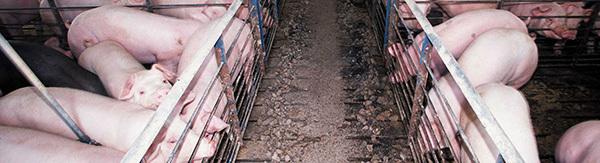 Proper building maintenance can extend the life of swine facilities. Learn more at upcoming workshops sponsered by Iowa State University Extension and Outreach. Photo courtesy of NRCS.
DNR’s permit engineer, Paul Petitti, will present at a series of Iowa State University Extension and Outreach workshops designed to improve swine building maintenance. In “It is Your Concrete Pit as Well,” Petitti will speak to the importance of owners taking an active role during construction. Knowing what to look for as pits are built can save costs and headaches later.
A new method of ventilating to prevent roofs from rusting out will be a highlight of the workshops. Extension engineers will also present current information on pit maintenance, moisture management, roof and truss management, repairs and general maintenance—topics that can extend the building’s life and help producers in “Protecting your Swine Building Investment.”
If you plan to attend, pre-registration is required. Registration is $35 and includes lunch, refreshments and all workshop materials. Find details and registration deadlines in the Swine Building brochure. More information is also available in ISU extension news. The workshop locations and dates follow:
- March 9: Carroll
- March 16: Webster City
- March 17: Le Mars
- March 23: Nashua
- March 24: Washington
Several industries are sponsoring the workshops.
The definition for common ownership of an animal feeding operation changed, effective Feb. 19, 2020. The rule change is not retroactive. It applies to facilities making changes after Feb. 19.
This change affects owners of confinement animal feeding operations, not including dry bedded confinement operations. It does not apply to open feedlots.
However, it may affect small owners of animal feeding operations that wish to expand or modify, or are planning to build a new facility near an existing one where they have common ownership. In some cases, a construction permit and/or a manure management plan may be required for the new construction. Likewise, the facility may have to meet additional separation distances from residences, businesses, churches, schools and public areas; wells and environmentally sensitive areas such as water sources, sinkholes, etc.
The definition change replaces the word “majority” with “10 percent or more.” That means a common owner now includes any person, business or any other ownership entity with an interest of 10 percent or more of two or more operations located within a regulated separation distance.
For example, if three people each own 33 percent of buildings next to each other, under the old rule those buildings would not have common ownership because no one had a majority interest. Under the new rule, the buildings would be considered under one ownership because there is more than a 10 percent interest in each of the buildings.
A few warm days and we start feeling that spring is on its way. However, confinement site producers face another month with limits on land application to snow-covered or frozen ground. Switching to surface application increases the risks of runoff, and reduces available crop nitrogen.
Wet weather and cold weather left producers in some parts of the state heading into spring with nearly full storage structures. What can producers do to get manure hauled this spring?
Here are a few tips and requirements from Trent Lambert, supervisor of the Mason City DNR field office. Following these can help keep producers on the right side of Iowa’s manure application rules. All producers must follow some setbacks for surface application.
- Until April 2, snow-covered and frozen ground restrictions apply to application of liquid manure from confinements unless the liquid manure is injected or incorporated on the application date. They do not apply to small animal feeding operations (confinements with 500 or less animal units, e.g., 1,250 finishing hogs, 500 cattle, etc.).
- If you must switch from injection or incorporation to surface application before April 2:
Confinements must notify the local DNR field office that they need to do emergency application. Update the current manure management plan and apply only on fields identified for emergency application in the MMP.
Cover or block all tile intakes within and downgradient of the application area. The temporary intake blocks must be in place prior to land application and for at least two weeks following it.
Follow separation distance requirements for surface application. When surface applying liquid manure, a 750-foot setback is required from residences, certain other buildings and public use areas. For liquid and dry manure, a 200-foot setback is required when surface applying near most environmentally sensitive areas such as wells, sinkholes and water sources. Finally, high quality water resources need additional protection and have an 800-foot setback for surface application.
- Confinements, check your construction permit to see if your facility claimed points on the Master Matrix for injecting or incorporating manure. If covered by item 26e on the Master Matrix (footnote c), your operation must have a written waiver from a DNR field office before surface applying.
- Open feedlots, if you have a similar nutrient management plan under a federal NPDES permit or NRCS plan, check it to make sure it allows for surface application.
“Due to the weather last year, many producers are still facing manure management challenges early this year,” Lambert said. “One option is to surface apply just enough to get by until the weather breaks after April 1 and manure storage can be emptied.”
To prevent surface application runoff during freeze/thaw cycles, Lambert suggests picking the most appropriate fields:
- Flat or gently sloping
- Far from a stream or other water source
- Less vulnerable areas away from environmentally sensitive areas like wells, sinkholes or ag drainage wells.
And, remember to plug those tile intakes.
Find out more from a 2016 DNR news release or check out the latest Iowa Manure Management Action Group’s (IMMAG) update for 10 things to consider when winter manure application is necessary.
|





