|
FOR IMMEDIATE RELEASE
May 14, 2019
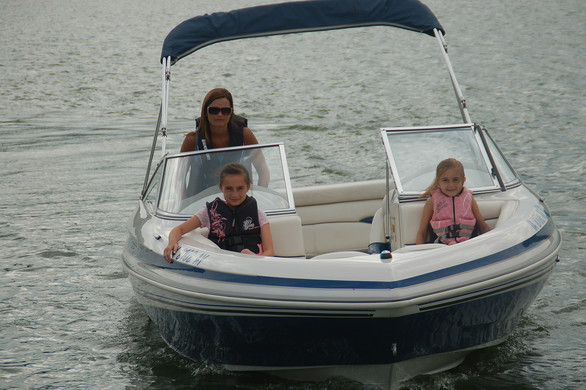 Iowa’s lakes and river will be popular places on Memorial Day weekend as thousands of boaters will take to the water for the unofficial start to summer. Photo courtesy of the Iowa DNR.
The peak season for boating in Iowa usually begins with the Memorial Day weekend when tens of thousands of boats hit the water, many for the first time for the year.
Susan Stocker, boating law administrator and education coordinator for the Iowa Department of Natural Resources, is encouraging boaters to spend a few minutes going through the boat in their driveway to help avoid problems later on the ramp or water.
“As part of their preparation, boaters should go through their vessel as well as their safety equipment to make sure everything is in proper working condition before heading to the water, including brushing up on safe boating practices. It’s also a boat registration year so make sure the boat registration is current,” Stocker said. “We’re all excited to get our boats on the water, especially after the cold winter and cool and wet spring. No one wants the first trip to be cut short by something that could have easily been prevented.”
Lifejackets should be in good condition and the right size for each person onboard. Check the fire extinguisher, boat and trailer lights, whistle, and throwable floatation.
Boaters are reminded about the requirement that drain plugs and other water draining devices must be removed and/or remain open during transport to avoid spreading invasive species. Anglers leaving with fish are recommended to put them on ice, whether in a cooler, a bucket or a live well (plug must still be removed and/or opened).
Just like any party on land, boaters should plan ahead to have a designated sober operator that is cautious with speed and on the lookout for other vessels.
It would also help the boat operator to have a passenger watch for floating or submerged obstacles that may have washed in or shifted from spring rains and runoff.
“We promote safety on the water all year long, but especially in the spring when our boating skills may be a little rusty, and the water may be stained from spring rains and runoff that can hide obstacles just under the surface,” Stocker said.
The United States Geological Service provides real time stream flow information at https://waterwatch.usgs.gov/index.php?r=ia&id=ww_current then select the stream.
In 2018, there were 32 reported boating incidents on Iowa waters: 17 of those were personal injury; 7 were property damage incidents and 8 resulted in fatalities.
Iowa has more than 231,000 registered boats.
Boating safety tips
- Wear your lifejacket - it floats, you don’t.
- Alcohol and boating don’t mix. Wind, sun glare and heat can enhance the effects of alcohol hindering the operator’s ability to make decisions.
- Check for open ramps or water hazards before heading out.
- Before leaving the house, check the trailer lights, wheel bearings and the hitch.
- Make sure there is a current fire extinguisher and horn/whistle, a wearable life jacket for everyone and a USCG approved flotation device onboard.
- File a float plan with a friend, including your destination, expected time of return and type of boat.
- Inflatable lifejackets are light weight, comfortable and USCG approved. Wear it.
- Take a boater education course available online at http://www.iowadnr.gov/Things-to-Do/Boating/Boater-Education. It has valuable information and many insurance companies will offer a discount on boat insurance. Familiarize yourself with Iowa’s boating laws.
- Top two safety violations in Iowa are having inadequate life jackets and operating too fast and too close to other vessels.
Media Contacts:
Central and Southern Iowa - Susan Stocker, Boating Law Administrator and Education Coordinator, Iowa Department of Natural Resources, 515-313-6439
Eastern Iowa – Jeff Harrison, State Conservation Officer, Iowa Department of Natural Resources, 563-349-9418
Northern Iowa – Ben Bergman, State Conservation Officer, Iowa Department of Natural Resources, 641-425-0828
Northwest Iowa – Steve Griebel, State Conservation Officer, Iowa Department of Natural Resources, 712-301-4009
Southwest Iowa – Adam Gacke, State Conservation Officer, Iowa Department of Natural Resources, 712-520-5570
The Iowa Department of Natural Resources (DNR) reminds all boaters and anglers to “Clean, Drain, and Dry” their boats and equipment this Memorial Day weekend to protect Iowa lakes and rivers from aquatic hitchhikers.
Aquatic hitchhikers are invasive species – everything from zebra mussels to Eurasian watermilfoil – that move from one waterbody to another by hitchhiking on boats, in bait buckets and on other equipment used in the water. They often grow quickly and spread fast when brought to another lake or stream due to lack of natural controls.
“The best way to control the negative impacts of aquatic invasive species in Iowa is to prevent their spread to new waterbodies,” said Kim Bogenschutz, aquatic invasive species coordinator for the Iowa DNR.
These aquatic invasive species can create serious problems for Iowa waters by reducing native species and making lakes and rivers unusable for boaters, anglers and swimmers.
Boaters and anglers can unintentionally spread aquatic hitchhikers if they do not take the proper precautions each time they leave a lake or river.
- CLEAN any plants, animals, or mud from your boat and equipment before you leave a waterbody.
- DRAIN water from all equipment (motor, live well, bilge, transom well, bait bucket) before you leave a waterbody.
- DRY anything that comes into contact with water (boats, trailers, equipment, boots, clothing, dogs). Before you move to another waterbody either: Spray your boat and trailer with hot or high-pressure water; or Dry your boat and equipment for at least five days.
- Never release plants, fish, or animals into a water body unless they came out of that waterbody and empty unwanted bait in the trash.
It is illegal to possess or transport prohibited aquatic invasive species. It is illegal to transport any aquatic plants on water-related equipment in Iowa. Signs posted at public accesses remind boaters to stop aquatic hitchhikers and identify infested waters.
Boaters must also drain all water from boats and equipment before they leave a water access and keep drain plugs removed or opened during transport. It is also illegal to introduce any live fish, except for hooked bait, into public waters.
Find more information about aquatic invasive species and a list of infested waters in the current Iowa Fishing Regulations or at https://www.iowadnr.gov/ais.
Media Contact: Kim Bogenschutz, Fisheries Bureau’s Aquatic Invasive Species Program Coordinator, Iowa Department of Natural Resources, 515-290-0540.
DECORAH, Iowa – The Iowa Department of Natural Resources (DNR) will host a public meeting at 6 p.m., May 20, at the Chuck Gipp Decorah Fish Hatchery, 2325 Siewers Spring Road, in Decorah, to discuss a proposal to remove potentially hazardous trees located around the fish hatchery.
The proposal is based on an October 2016 assessment by the Iowa DNR Forestry Bureau which identified the hazardous trees for removal. The report also included a plan to replant trees around the fish hatchery property that are a better fit for a public facility.
Any person attending the public meeting and has special requirements such as those related to mobility or hearing impairments should contact the DNR or ADA Coordinator at 515-725-8200, Relay Iowa TTY Service 800-735-7942, or Webmaster@dnr.iowa.gov, and advise of specific needs.
Media Contact – Brian Malaise, DNR Fisheries Hatchery Biologist at 563-382-8324.
|





