|
FOR IMMEDIATE RELEASE
October 9, 2018
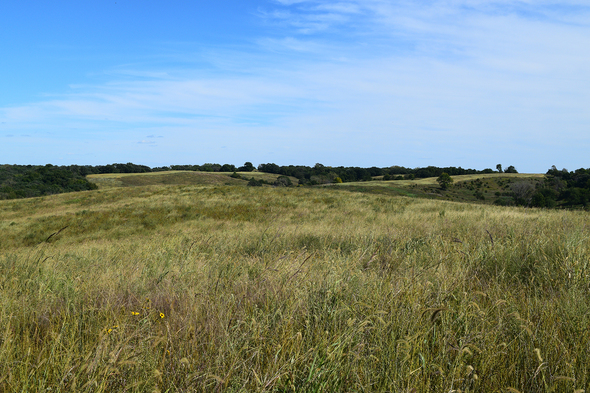 Heritage Hills Wildlife Area’s habitat diversity supports deer, pheasant, squirrel, quail and turkeys, bird watching, mushroom hunting, hiking and photography. The area in southern Madison County is a remote outdoor escape less than an hour from Des Moines. Photo courtesy of the Iowa DNR.
East Peru,
Iowa - Heather Jobst arrived for a tour of a potential new wildlife area and
was immediately struck by the uniqueness of the parcel’s size, lack of internal
roads and its location less than an hour from Des Moines.
Jobst, the senior land conservation
director with Iowa Natural Heritage Foundation (INHF), saw the potential in the
nearly 400 acres of rolling hills, timber and prairie in southern Madison
County and began a six month negotiation to purchase the private hunting
retreat. The deal was finalized in early fall 2016.
In the late summer of 2017, the Iowa
Department of Natural Resources (DNR) purchased the land from INHF and Heritage
Hills Wildlife Area became the second largest state managed public area in the
county. And word got out quickly.
“Hunters found it pretty early last
fall,” said Bryan Hellyer, supervisor for the Iowa DNR’s southeast wildlife
district. And why wouldn’t they. Heritage Hills has an oak hickory timber, food
plots, reconstructed prairie, mature field in the Conservation Reserve Program
and small prairie streams.
“There’s something here for everyone,
whether you’re a nature lover or a hunter. It’s a neat landscape,” he said.
The landscape will support hunters looking
for a hike-in hunting experience, to bird watchers and nature lovers. It’s a
place for everything – grassland birds, deer hunting, hiking, photography and pheasant
and quail hunting. Along the west edge of the reconstructed prairie, a covey of
20 quail could be still no longer and flushed.
“This is kind of an exciting thing
going on,” said Nick Palaia, fish and wildlife biologist with U.S. Fish and
Wildlife Service out of Bloomington, Minn., who is responsible for regional
grants for land acquisition and access. “We hope to see the neighbors’ kids
shoot their first deer here or pheasant off this area.”
And while the area is already in
excellent condition, there is some work to do.
This past spring, Hellyer’s staff
burned about 300 acres of the upland and timber that took out a number of cedar
trees off the hillsides and helped kick start the prairie reconstruction. The
timber resource will be managed under a forest stewardship plan.
“We will be filling in abandoned
ditches and removing undesirable trees, open up the grasslands, take trees off
the remnant prairie. It will just take a little time,” said Heath Van Waus,
wildlife technician with the Iowa DNR who will be managing the area. “Looking
six years out, it will look a lot different.”
Hunters help
fund Heritage Hills purchase
The Heritage Hills project was
possible in part because of the federal taxes paid on hunting related equipment.
A federal excise tax on sporting arms and
ammunition is used as a way to help fund wildlife related research, hunter
education, shooting range development, land acquisition and access at the state
level. The funds are distributed to states based on a formula that includes the
number of hunting and fishing licenses sold.
Heritage Hills funding was part of the
Iowa DNR’s 2016-2019 Statewide Wildlife Restoration Land Acquisition Program
Grant funded with Wildlife and Sport Fish Restoration program funds.
Heritage
Hills home to threatened species
Part of the acquisition process included
conducting bat surveys and surveyors found federally endangered Indiana bats and
federally threatened northern long-eared bats on the area. Henslow’s sparrows, a threatened species in
Iowa, have been heard here.
As work continues on the habitat
improvement, Heritage Hills may become home to other species of concern that
have been found nearby, including regal fritillary – a prairie butterfly, and
Edwards hairstreak – an oak woodland butterfly, as well as bullsnakes.
Media Contact:
Bryan Hellyer, District Wildlife Supervisor, Iowa Department of Natural
Resources, 319-694-2430.
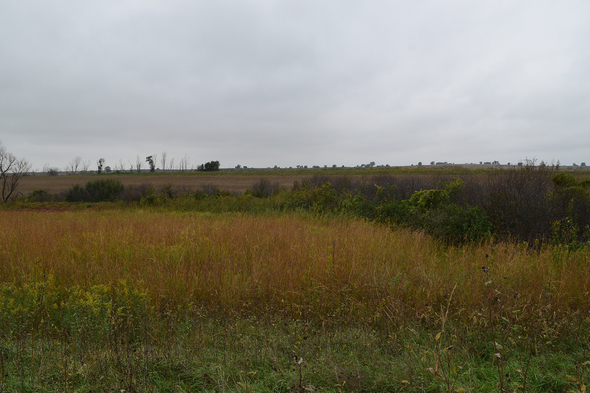 Plum thickets at the Lake Shawtee Wildlife Area are managed to provide food and cover for quail. The public hunting area in northeast Fremont County is in the region that had the highest quail counts in the state. Add in a higher pheasant population and hunters can expect a busy fall. Photo courtesy of the Iowa DNR.
Imogene,
Iowa - A 1,200-acre grassland in northeast Fremont County has been hosting
pheasant and quail hunters since the late 1980s. Positioned in southern Iowa’s
quail belt, Lake Shawtee is in the region with the highest quail counts in the
state, and that saw its pheasant counts rise to the second highest in a decade.
This corner of Iowa is well positioned
for a busy hunting season.
While Lake Shawtee will eventually be
home to a lake, the Iowa Department of Natural Resources is managing it as a
grassland and, with help from the Fremont-Mills Pheasants Forever chapter, is
working to improve pheasants and quail numbers.
The partnership with Pheasants Forever
has resulted in improving quail habitat along field edges and plum thickets to
increase survival. The technique is to cut and leave trees and brush along row
crop field edges. The area is allowed to grow up with seed-producing annual
weeds. Weeds provide quail food and additional cover right in the brush.
Grass growing among plum thickets is sprayed
to allow the area to come up in weeds with the similar food and cover goal.
With a significant focus on managing
for northern bobwhites, Lake Shawtee is one of 23 National Bobwhite Conservation
Initiative focus areas in the nation. Wildlife biologist Matt Dollison, and the
technicians at the Nishnabotna Wildlife Unit, conduct quail and pheasant call
surveys from specific locations at specific times and the results can be compared
to all of the other focus areas that follow the same survey protocols.
While most hunters come from
surrounding counties, Lake Shawtee does host a few hunters from the Des Moines
area, and from Mississippi, Georgia and South Carolina who likely found Lake
Shawtee from its participation in the quail initiative. Lake Shawtee likely
isn’t the only destination for hunters, as Fremont County has more than 16,000
acres of land open to public hunting and neighboring Mills County has nearly 6,000
acres.
“Use on the area has picked up beyond the
first two weekends, extending longer into the season,” Dollison said. “While we
don’t have the pheasant numbers that northcentral Iowa has, our pheasant numbers
have increased steadily since we started the counts in 2014, and we have quail,
who’s numbers have almost doubled in that same time.”
Imogene,
Iowa, Pop. 42
Just four miles northwest of Lake
Shawtee is the town of Imogene, home of Emerald Isle restaurant.
“When I first purchased the bar, I
thought there was almost zero pheasant hunting in the area,” said owner Kevin
Olson who purchased the bar nine years ago and has been serving hungry patrons
his signature breaded pork tenderloin ever since.
But over time, he has seen his
customer base wearing blaze orange grow. A significant portion of Emerald Isle’s
business comes from snow goose, pheasant, duck and quail hunters and Olson has
come to recognize three sets of hunters who return each fall.
“They’ve become regulars, just once a year
regulars,” Olson said. “Its dollars you see come, that wouldn’t be here
otherwise.”
This fall, Emerald Isle will hold its
first longest pheasant tail feather contest. Hunters planning to stop in should
know Emerald Isle is off the grid, as cell service is limited and they don’t
take debit or credit cards.
Media Contact:
Matt Dollison, Wildlife Biologist, Iowa Department of Natural Resources,
712-350-0147.
Seventeen
lakes across Iowa are gearing up to receive trout this fall. The Iowa
Department of Natural Resources (DNR) will release between 1,000 to 2,000 rainbow
trout at each location as part of its cool weather trout program that brings
trout to areas that cannot support them during the summer months.
“Grab your neighbors, friends and kids and try
trout fishing this fall,” said Joe Larscheid, chief of the Iowa DNR Fisheries
Bureau. “It’s time well spent. The fish
are here, easy to catch and good to eat.”
The fall community trout stockings are a great
place to take kids to catch their first fish. A small hook with a night crawler
or corn under a small bobber or small simple spinners such as a panther martin
or mepps is all you need to get in on the fun.
Bringing
trout to cities and towns offers a “close to home” option for Iowans who might
not travel to northeast Iowa to discover trout fishing. A family friendly event
is often paired with the stocking to help anglers have success and fun while
fishing.
The
popular program is supported by the sales of the trout fee. Anglers need a
valid fishing license and pay the trout fee to fish for or possess trout. The
daily limit is five trout per licensed angler with a possession limit of
10.
Children
age 15 or younger can fish for trout with a properly licensed adult, but they
must limit their catch to one daily limit. The child can purchase a trout fee
which will allow them to catch their own limit.
2018 Fall Community Trout Stocking Schedule
Oct.
19, Sand Lake,
Marshalltown, Noon
Oct.
20, Lake of the
Hills,
Davenport, 10:30 a.m.
Oct.
24, Lake Petocka, Bondurant,
Noon
Oct.
25, Banner Lake
(South),
Summerset State Park, Indianola, 11 a.m.
Oct.
25, Big Lake, Council
Bluffs, 2 p.m.
Oct.
26, Ottumwa Park
Pond,
Ottumwa, 11 a.m.
Oct. 27, Discovery Park, Muscatine,
10 a.m.
Oct.
27, Wilson Lake, Fort
Madison, Noon
Nov.
1, Moorland Pond, Fort Dodge,
Noon
Nov.
2, Prairie Park
(Cedar Bend),
Cedar Rapids, 10 a.m.
Nov.
2, Terry
Trueblood Lake,
Iowa City, 11 a.m.
Nov.
7, Bacon Creek, Sioux City,
1:30 p.m.
Nov.
9, Heritage Pond, Dubuque, Noon
Nov.
9, North Prairie
Lake,
Cedar Falls, Noon
Nov.
16, Ada Hayden Heritage
Park Lake,
Ames, Noon
Nov.
17, Scharnberg
Pond,
Spencer, Noon
Nov.
21, Blue Pit, Mason City,
11 a.m.
Find
more information about trout fishing in community lakes on the DNR trout fishing webpage.
Media
Contact: Mike Steuck, Regional Fisheries Supervisor,
Northeast Iowa, Iowa Department of Natural Resources, 563-927-3276.
|





