|
FOR IMMEDIATE RELEASE
Aug. 21, 2018
Belmond – The
Iowa Department of Natural Resources will relax the fishing regulations at Morse
Lake starting Sept. 1st to allow anglers to
more freely harvest fish before the lake’s water level is lowered this
fall.
The 98-acre
shallow natural lake is being renovated to remove abundant common carp and
bullhead populations and improve the water quality and habitat in the lake.
Anglers
with a valid sport fishing license may harvest all sizes and unlimited
quantities of any species of fish from Morse Lake. Any number of poles will be
allowed, but anglers must remain in site of these lines. Trot lines and nets
will be allowed (name and address must be attached if left unattended).
Dynamite,
poison, electric shocking devices, or any stupefying substances will not be
allowed. It is illegal to sell fish or stock
captured fish into public waters.
Liberalized fishing regulations for Morse Lake will be in effect until January 1, 2019.
The lake will be restocked with yellow perch, northern pike,
largemouth bass and bluegill in
the spring of 2020.
Media Contact: Scott Grummer,
Fisheries Biologist, Iowa Department of Natural Resources, 641-357-3517.
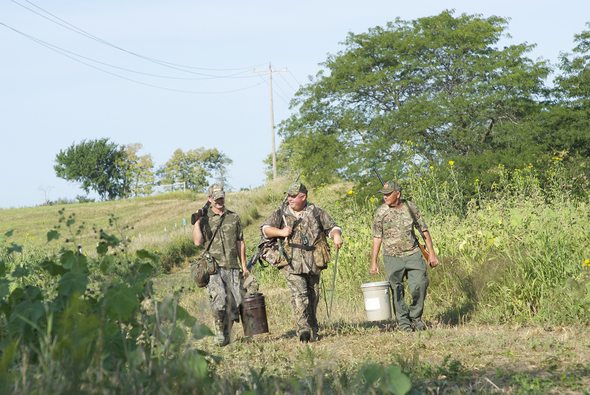 Hunters walk out of a southern Iowa sunflower field after hunting doves in 2017. Photo courtesy of the Iowa DNR.
In a few days, hunters will be tucking into the edge of sunflowers
and wheat fields awaiting the arrival of the most popular game bird in the
country. Iowa’s dove season begins September 1.
Fast paced and fun, dove hunting can be done by nearly
everyone regardless of skill level or mobility. It doesn’t require expensive
equipment to participate, only clothes that blend in to the background, a
bucket and plenty of shells. There’s a lot of action with a steady stream of
doves coming in.
The Iowa Department of Natural Resources (DNR) includes a
list of wildlife areas at www.iowadnr.gov/doves where dove
plots were planted. Hunters are strongly encouraged to scout their areas before the season opens especially
in northern Iowa where June rains likely impacted many dove fields and plantings may have failed.
Todd Bogenschutz, upland wildlife research biologist with the Iowa DNR,
said hunters looking for Plan B could scout silage or hay fields, harvested
small grain fields, grazed pastures or feedlots.
“Hunters should do their homework, scout the area a day or two before
the season to see if and how the doves are using the area,” he said.
He said there will likely be more hunters out and about because the season opens on a weekend.
“Hunters should maintain good spacing and stay in their shooting lanes
and most importantly practice common courtesy,” Bogenschutz said.
All dove hunters are required to register with the Harvest Information
Program (HIP). It’s free, fast and the information is used to help determine participation and harvest. Register by following
the instructions at www.iowadnr.gov/doves or by calling 1-855-242-3683.
Dove season is Sept. 1-Nov. 29.
Shooting hours are one half hour before sunrise to sunset. Daily bag limit is
15 (mourning or Eurasian collared) with a possession
limit of 30. Hunters are reminded that their gun must be plugged to hold no
more than three shells. If hunting public areas north of I-80, hunters should
check to see if nontoxic shot is required.
Media Contact: Todd Bogenschutz, Upland Wildlife Research Biologist, Iowa Department of Natural Resources, 515-979-0828.
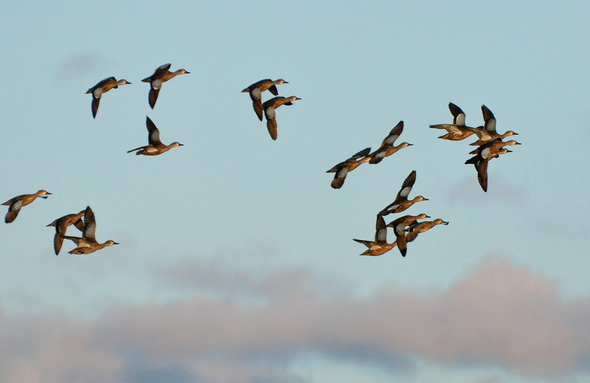 Blue wing teal buzz the marsh at sunrise. Photo by Lowell Washburn, Iowa DNR.
Iowa’s first duck hunting season
begins September 1 with the 16 day teal-only season. These fast flying early
migrators use the first cool spell in late August as a sign to start heading
south.
Teal have a well-earned reputation as an
easy to decoy species popular with young and novice hunters, said Orrin Jones,
waterfowl biologist with the Iowa Department of Natural Resources. It’s also considered one the most popular
ducks for the dinner table.
“Teal are popular because they are pretty
naïve, often giving hunters multiple opportunities for success, plus the
weather is usually comfortable and there’s a lot going on in the marsh for kids
to see,” Jones said.
He said wetland conditions will depend
on the weather in the next few weeks. If it’s hot and dry, most will be low and
muddy. If it’s cool and wet, wetlands will be in better shape.
“Preseason scouting will be important
again this year to identify which wetlands the teal are using,” he said. “This
is another reminder that wetland conditions and migration is weather dependent.”
Teal season shooting hours are sunrise
to sunset which is different than regular duck season to help prevent
misidentification. The daily limit is six teal (blue-winged, green-winged or
cinnamon only) with a possession limit of 18. Nontoxic shot is required and
guns must be restricted to hold no more than three shells. Teal season is Sept.
1-16 statewide.
Media Contact: Orrin Jones, State Waterfowl Biologist, Iowa Department of Natural Resources, 641-357-3517.
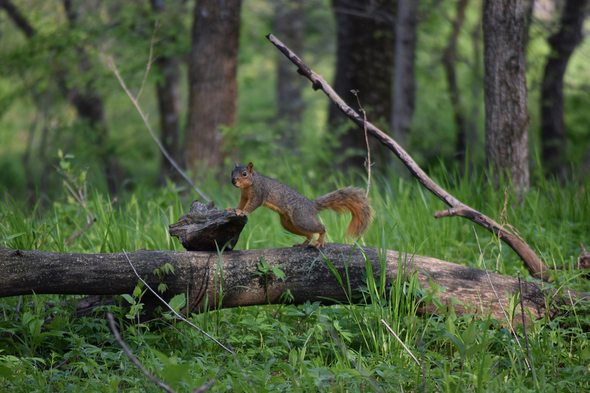 Iowa’s squirrel season begins Sept. 1. Photo courtesy of the Iowa DNR.
Iowa hunters take
note: it’s time to dust off the hunting skills and head to the woods to match
wits with one of the most cunning species afield, the elusive Iowa bushy-tail. Squirrel
hunting season opens Sept. 1 statewide.
“Squirrel hunters can
go out knowing they’re not likely to have their hunt interfered with by other
hunters,” said Jim Coffey, forest wildlife research biologist with the Iowa
Department of Natural Resources. “We had around 20,000 hunters harvest 100,000
squirrels in 2017.”
Squirrel hunting isn’t
just for experienced hunters; it’s a season where novice hunters can learn
necessary skills that can translate to other activities in the timber.
“It’s a great
introduction to hunting because there is such little competition from other
hunters. Novices can fail and learn from their mistakes because there is usually
another squirrel over the next ridge,” Coffey said. “It can be done individually
or with a group of friends often close to home. You don’t need a lot of
expensive or high tech equipment just a .22 rifle or a shotgun, and clothes
that help you blend in to the landscape. Then find a grove of trees, get permission
and start hunting. Squirrels are a plentiful, renewable resource and a
high-quality, lean protein.”
Hunting early season should
focus on cooler parts of the day– early morning and late evening, then shifts
to warmer parts of the day as the temperature cools. Hunters should look for
timber with oak, hickory and walnut trees that produce nuts squirrels use for
food.
Squirrel season is
Sept. 1 to Jan. 31, 2019. The daily limit is six squirrels (either fox or gray
combined) with a possession limit of 12. The Iowa DNR has an interactive map of
places to hunt at www.iowadnr.gov/hunting then click on places to hunt and shoot in the
left column.
Media Contact:
Jim Coffey, Forest Wildlife Biologist, Iowa Department of Natural Resources,
641-774-2958 ext. 1#
The good news for Iowa’s cottontail rabbit hunters
is that Iowa has a lot of rabbits with the southern third and the east central
region of the state leading the way. The better news for hunters is Iowa’s
cottontail rabbit season begins Sept. 1 statewide.
“It should be an outstanding year for rabbit
hunting not only for
experienced hunters, but for young or novice hunters who can learn necessary
skills and make mistakes with little competition,” said Todd
Bogenschutz, upland wildlife research biologist for the Iowa Department of
Natural Resources.
Iowa’s cottontail rabbit population estimates are
included in the recently completed August roadside survey of upland wildlife
species. Results will likely be published around the first week of September at
www.iowadnr.gov/pheasantsurvey.
Last year, an estimated 24,000 hunters harvested
120,000 cottontail rabbits. The most popular way to hunt is with a shotgun
walking brushy areas with grass next to crop fields in the morning or evening.
It can be done individually or with a group of friends.
Rabbit hunting does
not require a significant investment or high tech equipment, just a shotgun and
clothes that blend in to the landscape. Rabbit is a lean, low
fat meat and popular table fare considered a delicacy in many culinary
circles.
Southeast Iowa has become a rabbit hunting destination
for hunters from Kentucky, North Carolina and other southern states who take
repeated trips to the area each fall.
Cottontail rabbit season is Sept. 1 to Feb. 28,
2019. The daily limit is 10 rabbits with a possession limit of 20. Jackrabbit
season is closed. While wearing blaze
orange clothing is not required to hunt rabbits, it is recommended.
The Iowa DNR has an interactive map of places to hunt at www.iowadnr.gov/hunting
then click on places to hunt and shoot in the left column.
Media
Contact: Todd Bogenschutz, Upland Wildlife Research
Biologist, Iowa Department of Natural Resources, 515-979-0828.
 The remnant oak savanna at Gabrielson Wildlife Area is home to towering centuries old bur and red oak trees where visitors can spend a day going from massive tree to massive tree. Mixed in the savanna are hidden wetlands that support rare plants like fen twayblades and fen thistles (pictured). Photo courtesy of the Iowa DNR.
Forest City - The 800-acre Gabrielson Wildlife
Management Area in northeast Hancock County is a unique mix of mature oak
timber with wetlands dotting the savanna, prairies and hidden fens.
Some
of the massive oaks date back hundreds of years; likely greeting settlers as
they made their way across the prairie. Looking at the soil records from more
than a century ago, 190,000 acres in the corner where Hancock, Worth, Cerro
Gordo and Winnebago counties meet had trees like this. Most were removed as the
state was settled leaving only a few groves and farmsteads with these massive oaks.
“You
don’t think of north central Iowa as a place to come to see an amazing forest
resource but it’s an amazing place,” said TJ Herrick, wildlife management
biologist with the Iowa Department of Natural Resources. He said a person could
spend a day going from tree to tree looking at the giant oaks on the area.
This
timber has seen a lot of things come and go, but a current invader is a
particular nuisance: common buckthorn.
Common
buckthorn is an unwanted invasive species choking out the timber understory and
carpeting the floor with a massive seed bank meant to replace any trees that
are removed. For oaks to regenerate, they need an open forest floor. Herrick is
attempting to provide that space by spraying and grinding existing buckthorn trees,
then running fire through the timber.
“If
we don’t do something to replace the oaks, eventually, we won’t have anything
to take their place when they’re gone,” he said.
To
the west of the timber is a former hay field in its third year as a prairie.
What makes this one different from others is that Herrick added acorns to the
mix when the prairie was seeded.
Now
small but determined oak trees are starting to appear among the stiff golden
rod, partridge pea, primrose, tic trefoil and big bluestem. His vision is to
have an oak savanna here when his grandkids are grandparents.
“As
land managers, we remove trees from places where they shouldn’t be and add them
to places where they once were historically and where they should be today,” he
said.
The
young prairie savanna is also great bugging habitat for pheasant and turkey
broods.
Rare species, unique wetlands
“A
lot of this area has never been farmed, that why we see the giant oaks, fen
orchids and other unique species,” Herrick said.
Gabrielson
is home to rare species like smooth green snakes, gray fox, red squirrels, Dion
skippers and broad-winged skippers as well as more common timber species like scarlet
tanagers and pileated woodpeckers. Sandhill cranes can be seen in and around
the area. This area of the state had been the only place in Iowa where southern
red-backed voles called home. It was last documented here in the 1980s. North
Iowa is on the southern edge of its normal range.
Wetlands
tucked in with the oak savanna are home to some rare plants like the fen
thistle and fen twayblade. Leafy northern green orchid was confirmed for the
first time in Hancock County in 2015.
There’s
a three acre fen on the west end of the area has never been plowed. Fens are
unique landforms that develop when a seep or spring usually on the side of a
hill releases calcium rich groundwater to the surface creating a permanent wet
area. This one is filled with native cattails.
“It’s
always wet,” Herrick said. “I’ve been out here in February and saw live leopard
frogs swimming in the pools.”
Just
below the fen, a small wetland was created when drainage tile was broken and a
tile intake was plugged. It catches water from the fen. This area was likely a
shallow lake at one time.
Nature
photographers could spend a lot of time here.
Popular during the hunting season
Rarely
does a day go by in November where there isn’t a car or two in the parking lots.
It’s a destination for deer and turkey hunting in a part of the state that is more
often associated with duck and pheasant hunting.
Squirrel
hunters need to be aware that red squirrels are here and are protected.
Nonresident
deer hunters usually from the east coast and the southeast often call to ask
what Gabrielson has to offer. It’s in a zone that has fewer deer tags and fewer
applicants but could increase the chance of drawing a tag.
“That’s
why we do what we do,” he said. “We want people to use these areas.”
Media Contact: TJ Herrick,
Wildlife Management Biologist, Iowa Department of Natural Resources,
641-829-3285.
Polk City -
The Iowa Department of Natural Resources and the Capitol Callers Chapter of
Delta Waterfowl are offering two classes teaching waterfowl hunting basics at
the Butch Olofson Shooting Range, near Big Creek State Park.
Session one focuses on waterfowl
biology, identification and basic hunting gear. This session is Sept. 19, from
6-9 p.m., and will be mostly indoors. Registration for session one is available
at https://www.register-ed.com/events/view/128397
Session two focuses on scouting,
calling and guns and ammo. This session is Sept. 26, from 6-9 p.m., and will be
mostly outdoors. Registration for session two is available at https://www.register-ed.com/events/view/128398
Students may participate in one or
both sessions. Registration is required for each session.
The Iowa Department of Natural Resources
is offering Learn to Hunt Opportunities and Mentored Hunts around the state. To
view and register for upcoming events visit https://www.register-ed.com/programs/iowa/schedule/agency:31/category:outreach
For more information, contact Jamie
Cook, Iowa State Coordinator, Pheasants Forever Inc., Quail Forever, at 859-779-0222.
Media Contact: Jamie Cook, Iowa State Coordinator, Pheasants
Forever Inc., Quail Forever, 859-779-0222.
|





