|
FOR IMMEDIATE RELEASE
Aug. 14, 2018
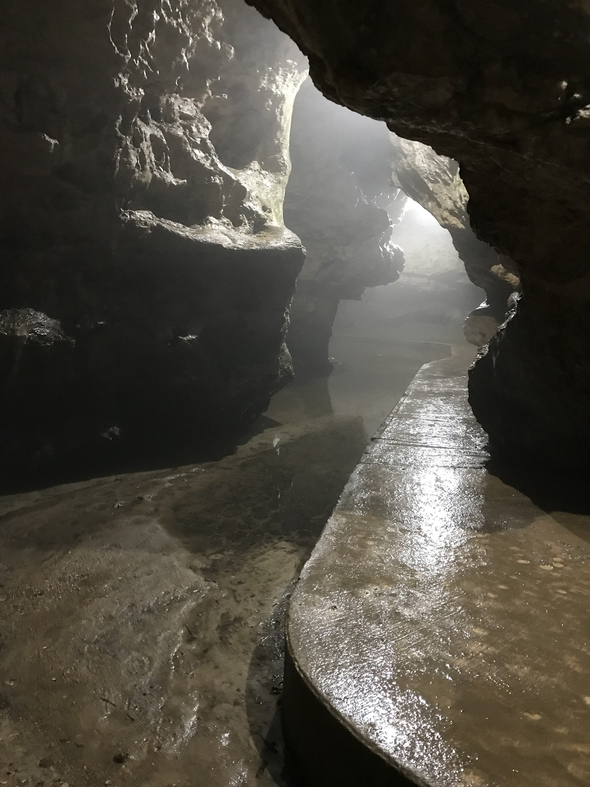 Maquoketa Caves State Park reopens Aug. 24 after an extensive renovation. Photo courtesy of the Iowa DNR.
MAQUOKETA – Maquoketa Caves State Park will open
for visitors, including campers, on Aug. 24, just in time for fall travelers
and outdoor enthusiasts.
“Maquoketa Caves is a destination for both nearby
residents and visitors from across the world,” said Todd Coffelt, DNR Parks
Bureau chief.
The park was closed for more than three months as
it underwent extensive renovations. Along with resurfacing the road through the
park, projects included:
- Dancehall Cave
cleaned after many years of flood sediment
- Lighting in caves
upgraded to LED for energy efficiency and increased brightness
- New footbridge on
woodland trail
- New boardwalks on all
trails
- All electrical
campsites upgraded from 30 amp to 50 amp electrical service
- Six nonelectrical
sites converted to electrical
- A new check-in
station for campers
- A new parking lot
with sidewalks near the cave entrance
- New roof, ceiling and
lighting on shower building
Campers can make reservations immediately for the
night of Aug. 24 and later by visiting the state park reservation system at https://iowastateparks.reserveamerica.com.
Additionally, the public is welcome to join the
Dubuque, Jackson & Jones OWL (Older, Wiser, Livelier) club at 2 p.m. on
Aug. 24 for a two- to three-mile guided tour of Maquoketa Caves. The hike will
be followed by a cash supper at 4 p.m. at Bluff Lake Catfish Farm outside the
park. To attend, RSVP by Aug. 21 by calling (563) 652-3783.
Media
Contact: State Park Ranger Scott Dykstra, 563-219-4512
Boaters
heading out for the Labor Day holiday will likely find busy waterways and lower
water levels.
Susan
Stocker, boating law administrator and education coordinator for the Iowa
Department of Natural Resources, said boat operators need to operate with
caution and to watch for hazards in the water.
Stocker
said boat ramps will likely be busy, placing boating etiquette at a
premium.
“Everyone is excited to get on the water,” she
said. “Be patient, and when it’s your turn be ready to launch. Courtesy on the water goes a long way in
avoiding problems.”
She
said an obvious way to prevent problems is for boat operators to avoid alcohol
while operating the craft.
“We want boaters to have fun on the
water, but we don’t want that fun to end in a boating tragedy. Boaters need to
keep safety in mind while on the water,” Stocker said.
Preparing for a safe day on the water
begins in the driveway. Make sure to have a properly fitting life jacket for
each person on board and that all of the safety equipment, including a properly
working fire extinguisher, is on board.
“Remember, life jackets only work when
worn,” Stocker said. “Life jackets float, you don’t.”
Boating safety tips
- Alcohol
and boating don’t mix. Wind, sun, glare and heat can enhance the effects of
alcohol hindering the operator’s ability to make decisions.
- Before
leaving the house, check the trailer lights, wheel bearings and the hitch.
- Make
sure there is a current fire extinguisher and horn/whistle, a wearable life
jacket for everyone and a USCG approved throwable device onboard.
- File
a float plan with a friend, including your destination, expected time of return
and type of boat.
- Wear
your lifejacket - it floats, you don’t.
- Inflatable
lifejackets are light weight, comfortable and USCG approved. Wear it.
- Take
a boater education course. It has valuable information and many insurance
companies will offer a discount on boat insurance.
- Top
two safety violations in Iowa are having inadequate life jackets and operating
too fast and too close to other vessels.
Media Contacts:
Central
and Southern Iowa - Susan Stocker, Boating Law
Administrator and Education Coordinator, Iowa Department of Natural Resources,
515-313-6439
Eastern
Iowa – Jeff Harrison, State Conservation
Officer, Iowa Department of Natural Resources, 563-349-9418
Northern
Iowa – Ben Bergman, State Conservation
Officer, Iowa Department of Natural Resources, 641-425-0828
Western
Iowa – Steve Griebel, State Conservation
Officer, Iowa Department of Natural Resources, 712-301-4009
WATERLOO – On
Thursday, August 2, 2018 at 1:26 a.m., Iowa Department of Natural Resources Law
Enforcement Bureau was contacted by the Waterloo Police Department after they
conducted a traffic stop of two males who had illegally killed two antlered
deer that were still in velvet.
A DNR Conservation Officer responded and charged Paul Lu,
31, and Kyaw Wahny, 19, both of Waterloo, with a total of 14 charges related to
this case, totaling $2,244. It has been requested that each of the men pay
$4,000 for liquidated damages for the deer.
“This
case was a phenomenal demonstration of agencies working together to put an end
to illegal deer poaching,” said DNR Conservation Officer Dakota Drish. ”These
two men would likely not have been caught if it weren't for the diligence of the
Waterloo police officers.”
Kyaw Wahny was charged with:
- Shooting firearm over water,
highway or railroad right-of-way
- Hunting deer without
a valid deer license or tag
- Hunting without a valid
hunting license
- Hunting without paying the
habitat fee
- Taking deer out of
season
- Taking deer with a
prohibited rifle.
- Warning for using an
automobile to hunt deer
- Warning for hunting by
artificial light
Paul Lu was charged with:
- Shooting firearm over water,
highway or railroad righ-of-way
- Hunting deer without
a valid deer license or tag
- Hunting without a valid
hunting license
- Hunting without paying the
habitat fee
- Taking deer out of
season
- Taking deer with a
prohibited rifle.
- Using an automobile to
hunt deer
- Hunting by artificial light
Note:
A criminal charge is merely an accusation and a defendant is presumed innocent
until proven guilty.
Media Contact: Dakota Drish, DNR Conservation Officer, 563-920-0566, Dakota.Drish@dnr.iowa.gov.
VINTON – Members of the Iowa
Department of Natural Resources (DNR) will hold a public meeting on August 23,
2018 at 6 p.m. at the US Bank in Vinton to discuss the proposed forest wildlife
stewardship plan at Dudgeon Lake Forest Wildlife Area.
The DNR will have
representatives on hand from its Wildlife Bureau and Forestry Section to answer
questions and discuss plans with the public.
The meeting will be
held in the conference room at the US Bank, 110 West Fourth Street, in Vinton.
Any
person attending the public meeting and has special requirements such as those
related to mobility or hearing impairments should contact the DNR or ADA
Coordinator at 515-725-8200, Relay Iowa TTY Service 800-735-7942, or
Webmaster@dnr.iowa.gov, and advise of specific needs.
Media Contact: Steve
Woodruff, DNR Wildlife Biologist, (319) 330-7013, Steven.Woodruff@dnr.iowa.gov; or, Mark Vitosh, DNR District Forester, (319) 351-8886, Mark.Vitosh@dnr.iowa.gov.
Licenses to pursue Iowa’s world class
deer herd go on sale Aug. 15 at more than 700 license sales agents statewide and
online at www.iowadnr.gov.
Resident Iowa hunters may purchase one
any deer license for a gun season, one any deer license for archery season and
one county specific antlerless deer only license.
The number of county specific license
quotas for antlerless deer only has changed for eight counties – seven counties
quotas increased and one county quota decreased. Hunters may purchase one
antlerless only deer license until Sept. 15, then as many as they want until
the season ends or quotas fill.
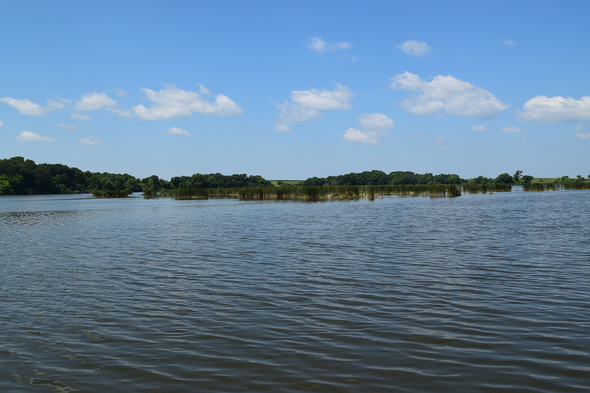 The Sunken Grove and Leo Shimon Marsh Wetland Complex is in the heart of the prairie pothole region where resident ducks and geese produce and raise their young. It is also an important migration stopover for ducks, geese, pelicans and shorebirds. Photo courtesy of the Iowa DNR.
Fonda,
Iowa – The Sunken Grove and Leo Shimon Marsh Wetland Complex becomes Grand
Central Station twice a year for migrating ducks, geese, pelicans and
shorebirds that stop to rest and refuel before resuming their journey. The
nearly 1,300 acres of wetlands, marshes, prairies and timber is surrounded by
some of the most productive farmland in the world in southwest Pocahontas
County.
“Having a spot like this in this part
of the state makes a lot of the locals pretty happy it’s here,” said Clint Maddix,
wildlife management biologist for the Iowa Department of Natural Resources.
“This area is one of my favorites. If
you want outdoor recreation, you don’t have to go any further than this spot.
There’s nothing you can’t do here: paddle, bird watch, hunt, take pictures.
“Look at it from the inside. Drive
back there, it feels like it’s a different part of the state; a different part
of the world, multiple ecosystems in a small package.”
The complex developed out of a mix of
public land acquired by different county, state and federal agencies for public
use.
Sunken Grove covers nearly 800 acres
with a 240-acre marsh that has been attracting more interest from paddlers, birders
and has hosted hunters from Minnesota and Wisconsin.
Leo Shimon Marsh covers 480 acres with
an 80-acre marsh spread between two lobes. Pulling in to the parking lot and
the new gravel boat ramp on the south end of the area a family of eight
mallards decided it was time to go.
Maddix is preparing the marsh to be at
crest when duck season opens. It has a nice crop of arrowhead on the southern lobe
and bulrush at the outlet.
The area is in the heart of the
prairie pothole region where resident ducks and geese produce and raise their
young. He has a vision for the area that includes adding wetlands basins,
getting water back to a drained oxbow and increasing the plant diversity on the
prairie.
Battling unwanted
invaders
It’s a constant battle to keep carp
out of the marsh, honeysuckle from the timber and cottonwoods out of the
prairie and visitors can see the fight up close near the main boat ramp at
Sunken Grove Lake.
Maddix said they used aerial spraying to
kill honeysuckle late last fall after native species had gone dormant and then
followed that up by grinding the dead honeysuckle this summer. This allows
sunlight to hit the forest floor which is necessary for oak regeneration.
Unfortunately, another invader has its eye on the newly opened real estate –
buckthorn.
A different kind of battle is going on
in the prairie and marsh.
If left unmanaged, trees will encroach
on the prairie and at Leo Shimon Marsh Wetland Complex that will likely be
willows or cottonwoods. Fire is used to keep trees at bay and reset the prairie
allowing different plants to shine. This year happens to be a banner year for
rattlesnake master.
A combination of fish barriers and
water control structures are used to prevent carp and bullheads from entering
the marsh and allow Maddix the ability to dewater it if any got in.
Notes
A tornado came through about seven
years ago and blew down a cottonwood tree where eagles were nesting, killing
one of the eagles. The surviving eagle found a new mate and built a new nest
near the old one. It has been active ever since.
The area is home to a large population
of great blue herons and an active heron rookery. Shorebirds, pelicans, snow
geese, bitterns migrate through. Waterfowl use peaks in October. The marsh is a
popular spot with birders and a big time migration stopover after spring ice
out.
Sunken Grove Lake has an area kept
open near an overlook platform with picnic tables, a park grill and trash can.
There is no bathroom, water or electricity available.
Pheasants and waterfowl are the top
game species; deer and turkey are overlooked. It’s popular with shed antler
hunters, mushroom hunters
Hunters are required to use steel shot
only for all hunting except for deer and turkey. No motorized boats are allowed
on Leo Shimon Marsh. Boats with motors are allowed on Sunken Grove.
Media
Contact: Clint Maddix, Wildlife Management
Biologist, Iowa Department of Natural Resources, 712-657-2639
|





