|
FOR IMMEDIATE RELEASE
August 7, 2018
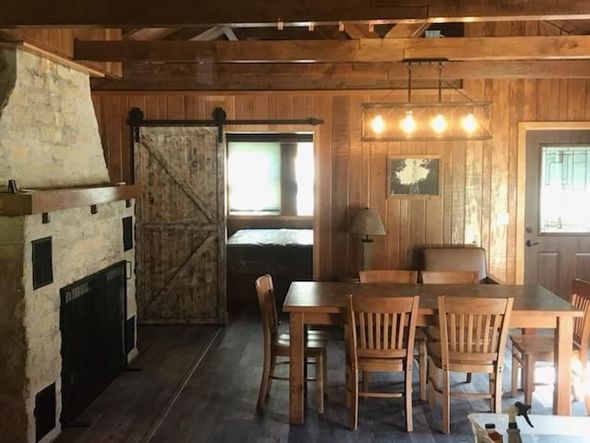 Cabin at Yellow River State Forest. Photo courtesy of the Iowa DNR.
Iowa state parks has a new cabin available for rent at
Yellow River State Forest in Harper’s Ferry.
The one-bedroom camping cabin sleeps six people and has
two porches, including one that is screened-in. Amenities include a
refrigerator, microwave, heating/air conditioning, and a wood
fireplace. Camping cabins do not have running water so there is not a
bathroom or shower; however, a hydrant outside the cabin provides drinking
water. The cabin is located near the park office and
is available to rent for two-night minimum stays for $35/night plus taxes. The
rental season is April 15 - October 31 and the cabin can be reserved
12 months in advance.
Yellow River Forest in northeast Iowa has 8,500 acres and is
a destination for trout fishing, hiking, hunting and more. The park features
more than 25 miles of trails perfect for backpackers and equestrians.
Iowa state parks offer more than 90 cabins in 20 state parks
and forests, ranging from yurts to modern family cabins that sleep up to 14. Reservations
can be made at iowastateparks.reserveamerica.com
or by calling 1-877-427-2757.
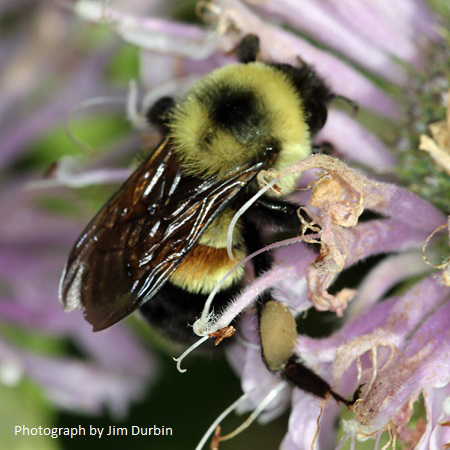
Photo courtesy of Jim Durbin
The
rusty patched bumble bee was designated as endangered by the federal government
in 2017, after determining that the population had declined 87 percent in the
last 20 years and is only present on 0.1 percent of its historic range.
Named
after the rusty patch centrally located on the backs of workers and males, but
not queens, it once occupied grasslands and tallgrass prairies in the Upper
Midwest and Northeast.
In Iowa they can be found mainly in the northeast corner,
concentrated in Black Hawk, Clayton, Johnson, Allamakee, Jackson and Winneshiek
counties. However, rusty patched bumble bees have recently been confirmed six new locations in Iowa in the last
two weeks, including in Boone County in an urban prairie garden, prompting wildlife experts to ask
gardeners in central Iowa to look for this unique species.
The Iowa Department of Natural Resources is in the process of
conducting a survey to identify locations where rusty patched bumble bees are found that will be included
as part of a larger national population survey.
Rusty
patched and other bumble bee species provide essential ecological services for
their respective ecosystems, especially for native flora, including wildflowers
and plants that produce fruits and seeds that other wildlife depend on. They
are also critical for the pollination of some of our favorite crops including
blueberries, cranberries, and tomatoes. In fact, bumble bees are more effective
pollinators than honey bees because of their ability to “buzz pollinate,” where
the bees contract their indirect flight muscles to produce strong vibrations
that forcibly expel the pollen from inside the flower.
What you can do to
help
Plant
a pollinator garden.
Use
native bee friendly plants that flower in various times of the year so the bees
always have a food source. Wildflowers that are particularly good for rusty
patched bumble bees include purple prairie clover, wild bergamot or bee balm,
wild indigo, joe-pye-weed and goldenrod. For a more complete list read
the Rusty Patched Bumble Bee Midwest Plant Guide. Avoid
invasive and non-native plants and remove any invasive plants you find in your yard.
Offer
a nesting location option.
Rusty
patched bumble bees in particular like to nest in the ground so providing
nesting habitat is also important. Examples of nesting habitat would be unmowed
or brushy areas and natural areas where there is undisturbed soil.
Minimize
use of pesticides.
Remember
pesticides can be lethal to bees so limit their use and avoid them entirely
when you can.
Have you seen a
bee? Do you want to know its species? Take a picture and visit bumblebeewatch.org.
If you've found a
Rusty Patched Bumble Bee please contact the Iowa DNR at 515-725-8464
or seth.moore@dnr.iowa.gov.
A healthy pond needs aquatic plants,
but too many can upset a fishing pond’s balance and become a nuisance. Many
pond owners struggle with how to control the amount of aquatic plants, without
completely removing all of them, so they can enjoy their pond.
Pond owners can use herbicides to kill
underwater plants, but their growing season is almost over.
Pond
rakes or cutters, although more labor intensive, are perfect this time of year
to control aquatic plants in small areas to create fishing lanes, swimming
areas and dock access.
Pond
rakes tear plants from the bottom and let you remove them from near shore or around
docks. Attach a float to the rake to let
it skim and remove plants and moss or algae from the surface.
Cutters
sink to the bottom and cut the plant stems as it is dragged back, making the plants
float to the top. The pond plants are often carried away by the wind or you can
pick them up with a floating rake.
Use
a long-handled rake or cutter with a long reach that you can throw and pull back. You can use these handy tools for many
years, and they cost less than a gallon of some aquatic herbicides. Local hardware or pool stores may carry
these, or try an online search for “pond rake or cutter.”
A
few tips to remember:
- Many
plants spread by fragmentation, so if growth is not throughout the pond, do not
use these methods.
- Once
out of the water, let the plants dry out before moving them too far. This will greatly
lighten your load.
- Obey
State Law. Don’t haul the plants off your property; you cannot transport
aquatic vegetation in Iowa. Once out of the water, leave the plants onshore to
dry and compost or move dried plants to your garden where they make excellent
mulch.
- Lakeshore
property owners on a public lake can physically remove a 15 foot wide path of
vegetation for navigation to the main lake without a permit; you cannot use herbicides
to remove the aquatic plants in a publicly-owned lake. Contact the DNR
fisheries office in your area if you have questions.
Learn more
about aquatic plants in ponds at www.iowadnr.gov/pondplants.
Media Contact: Darcy Cashatt, Fisheries
Biologist, Iowa Department of Natural Resources, 641-647-2406.
|