|
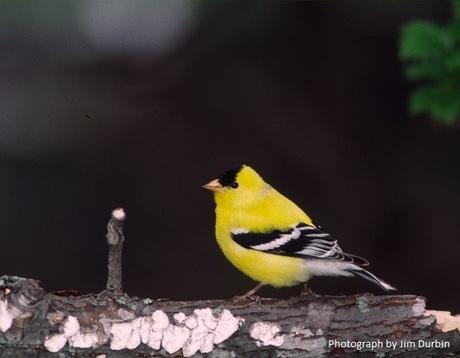
Iowa’s state bird, the American Goldfinch (Spinus tristis), is a late nester; most
of its nesting activity takes place now, during July and August. During
courtship, the male goldfinch, who is bright yellow with a black forehead and
black wings with white markings, will sing while performing a fluttering flight
display. The female is a duller yellow than the breeding male and has more
olive in her feathering. Once the couple has paired up they will make nearly
identical flight calls. The female builds a tightly woven cup of plant fibers to
hold her 4-6 eggs. Her nest is so well-built that it may even hold water! Both
parents feed the young, with the male taking a progressively larger role as the
chicks age until they leave the nest a mere 11-17 days after hatching.
 |
The goldfinches are unique in that they eat almost exclusively seeds and rarely feed on insects. In fact, they nest in July and August so that they can benefit from milkweed and thistle, which they use to build their nests and feed their young. They also eat dandelions, sunflowers, asters, grasses, and some trees such as cedar and birch. Look for goldfinches in weedy fields, open floodplains, and other overgrown areas with some shrubs and trees for nesting. They are a common bird and can also be found in suburbs, parks, and backyards. If you are looking to attract goldfinches to your backyard make sure to plant native thistles, as well as native milkweed! They will also use hopper, platform, and hanging feeders. Use nyjer, also known as thistle seed, to attract the birds.
The bright yellow of the goldfinch is a welcome sign of summer. Find these birds in your neighborhood or check out your state parks to watch these energetic and acrobatic birds!
|





