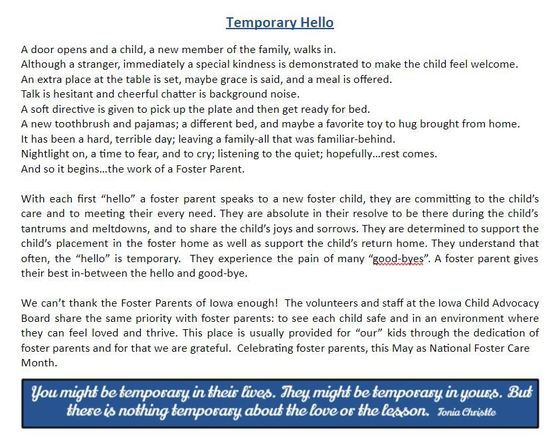
For the month of Mother’s Day, we’re bringing you The Women Who Raised Me, by Victoria Rowell.
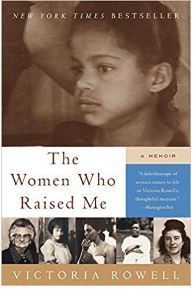
From The Goodreads book review:
The Women Who Raised Me, Author: Victoria Rowell
The story of a remarkable woman's rise out of the foster-care system to attain the American dream—and of the unlikely series of women who lifted her up in marvelous and distinctive ways. Born as a ward of the state of Maine—the child of an unmarried Yankee blueblood mother and an unknown black father—Victoria Rowell beat the odds. Unlike so many other children who fall through the cracks of our overburdened foster-care system, her experience was nothing short of miraculous, thanks to several extraordinary women who stepped forward to love, nurture, guide, teach, and challenge her to become the accomplished actress, philanthropist, and mother that she is today.
Rowell spent her first weeks of life as a boarder infant before being placed with a Caucasian foster family. Although her stay lasted for only two years, at this critical stage Rowell was given a foundation of love by the first of what would be an amazing array of women, each of whom presented herself for different purposes at every dramatic turn of Rowell's life.
In this deeply touching memoir, Rowell pays tribute to her personal champions: the mothers, grandmothers, aunts, mentors, teachers, and sisters who each have fascinating stories to tell. Among them are Agatha Armstead, Rowell's longest-term foster mother, a black Bostonian on whose rural Maine farm Rowell's fire to reach for greatness was lit; Esther Brooks, a Paris-trained prima ballerina, Rowell's first mentor at the Cambridge School of Ballet; Rosa Turner, a Boston inner-city fosterer who taught Rowell lessons of independence; Sylvia Silverman, a mother and teacher whose home in a well-kept middle-class suburban neighborhood prepared Rowell for her transition out of foster care and into New York City's wild worlds of ballet and acting and adulthood.
|

In spite of support from individuals and agencies, Rowell nonetheless carried the burden of loneliness and anxiety, common to most foster children, particularly those "orphans of the living" who are never adopted. Heroically overcoming those obstacles, Rowell also reaches a moment when she can embrace her biological mother, Dorothy, and, most important, accept herself.
Ultimately, The Women Who Raised Me is a story that belongs to each of us as it shines a glowing light on the transformational power of mentoring, love, art, and womanhood.
|
We hope you enjoy ICAB’s Book Nook! As an incentive to participate, once per year, CASA Advocates with at least one year of experience, may receive 2 hours toward the required 12 hours of continuing education for reading one of the books highlighted. Please contact Lesa Christianson, State Training Specialist, at lesa.christianson@dia.iowa.gov for a list of questions and instructions.

For FCRB Members & CASA Advocates: Positive Interactions with Youth
The Annie B Casey Foundation posted the following resource on their website: Brain Frames, a new resource series, was developed to help those who influence the lives of youth in foster care — including child welfare practitioners, parents, the legal community, teachers, mentors and other caring adults — use the findings of adolescent brain science to promote healthy outlooks and behaviors through their interactions with young people.
Stemming from the Jim Casey Youth Opportunities Initiative’s comprehensive report The Road to Adulthood, Brain Frames consist of five printable handouts that take a deeper look at the recommendations from the report, with quick bullet points, fact boxes and sample conversations that are easy to use.
These recommendations, organized according to the Initiative’s focus areas and with an emphasis on racial and ethnic equity and inclusion, include the following:
“Prevailing wisdom used to be that all the major strides in brain growth took place in early childhood — that by the time adolescence came along, neural connections had already been determined. Particularly for kids in foster care, this belief could close off a lot of opportunities,” says Sandra Gasca-Gonzalez, director of the Foundation's Jim Casey Youth Opportunities Initiative. “Knowing the science behind brain development reopens those doors and allows us to make sure that every interaction we have with a young person fuels the brain’s incredible capacity for growth during this period. There is so much more we can do to support young people.”
Each Brain Frame can be downloaded and printed as a two-sided 11x17-inch for quick reference.
CASA Advocates and FCRB Members may not be in the best position to always have the interactions outlined by the Casey Foundation, but each volunteer can advocate for the system working towards the goal finding a permanent connection for the youth that offers relational permanency. Click to read more on the importance of permanent connections
“Permanency equals a sense of belonging. When it comes to permanency for youth in care, there's one simple fact: it's a basic human need that everyone should be entitled to. We should all know where we go at Christmas.”
Lisa Davis, Former Foster Youth
To learn more and watch accompanying videos explore:
|
For CASA Advocates: In-Service Training Credit
To build upon your core advocacy knowledge and skills for working with older youth, we offer multiple options to further explore effective advocacy. Homeless Youth Online Training: Trauma Informed Advocacy is our most recently released 3-Hour independent study training. This training addresses homelessness, trauma, self-injurious behaviors and suicide, sexually related risks, substance abuse and LGBTQ issues. CASA Advocates can request this independent training from their Local Coordinator or the ICAB State Training Specialist at lesa.christianson@dia.iowa.gov.
|
 KEPRO EAP On-Demand Webcast
Topic: Self-Care: Remaining Resilient
Learn to identify ongoing symptoms of stress and how to find a healthier approach to the demands of work and home. Date: Available on demand beginning February 20, 2018.
Broadcast Length: 50 Minutes
How to Access: Go to the EAP website at http://www.EAPHelpLink.com. Enter your Iowa Employee code and look for Online Seminars in the lower right-hand corner of this homepage or you can search for them by title.
For login code information, contact your State Training Specialist.
|
Community Resources
 Each year ASK Resource Center puts together a list of Iowa summer camps. This list includes day camps and overnight camps. Each listing includes ages and genders served, special needs that they specialize in serving and those that are religious-based. Review Summer Camp Listing
DID YOU KNOW? The Americans with Disabilities Act (ADA) requires all camps to make reasonable accommodations. This means that mainstream camps and public programs may also be on your list of possibilities. It is recommended that you check with the camp of your choice. Families will want to find a program that fits their needs, philosophy, cost and goals.
|
 $300 Grants Available to Teens (Ages 14 & Up) in Care: AMP has special money from Chafee Funds for teens (age 14 and up) in foster care that can be requested through June 30, 2018. This special grant can be accessed through AMP’s Foster Funds Program. These grants will be available for up to $300 per youth. This funding is for all teens in a foster care placement (i.e. shelter, foster family homes, group care, and supervised apartment living). To be considered for funding, please complete an application and send it along with copies of receipts/invoices. Applications that are received without receipts or invoices cannot be processed. Types of items that will be covered by the Friends of Children in Foster Care program include:
- Sports registrations
- Sporting equipment costs
- Swimming lessons
- Summer camps (1 week max)
- Music instruments/lessons
- Tae Kwon Do
- Gymnastics/Dance
- Prom attire (dress, shoes & tux)
- Senior/class trips
- Class ring
- Senior pictures
- Graduation expenses (only cap and gown, announcements)
- College application fees View Application Here
|
 The Spread Your Wings Program through Families Helping Families of Iowa helps children in family foster care gain confidence by supporting their participation in extracurricular activities such as sports, art/music lessons, dance, gymnastics, martial arts, Special Olympics, etc. View Application Here
Please Note: A child’s birth parents and/or DHS worker must give permission for a child in foster care to attend camp.
|
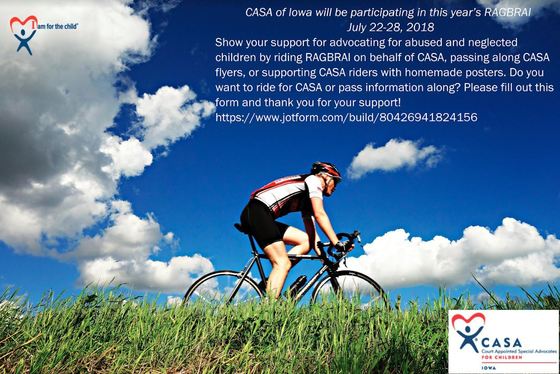
If you know a retired/retiring Educator who may be interested in volunteering for ICAB, please print this out and share with them. Thank you.
Iowa Child Advocacy Board
321 East 12th Street
4th Floor Lucas Building
Des Moines, IA 50319
childadvocacy@dia.iowa.gov
|