|
The rule changes to 567—Iowa Administrative Code Chapters 40-44,
81, and 83 were published in the 1/17/2018 Iowa Administrative Bulletin as a
Notice of Intended Action (.pdf, 95 pages).
The rules package, which includes the federal
Groundwater Rule, Lead and Copper Rule – Short-term Revisions, Revised Total
Coliform Rule, and many analytical methods changes, as well as changes to state
rules including construction standards, operator certification, environmental
lab certification, and other changes, begins on page 1608. The rules are arranged by chapter. The public comment period and information is
listed in the preamble of the Notice.
There is one hearing scheduled on Thursday, February 8th, in
the DNR’s 2N conference room at 10:00 a.m.
The public comment period runs through Friday, February 9th,
when all comments must be received by 4:30 p.m.
To view the document, find the publication date, 1-17-2018, and click on the pdf logo underneath the IAB column.
This user-friendly guide from EPA will help water supply systems identify
ways to increase their resilience to power outages. (.pdf, 31 pgs., 8 MB)
From ASDWA Weekly Update, January 10, 2018
“A recent study published in the Proceedings of the National Academy of
Sciences
found increasing salt concentrations in most U.S rivers and streams. Increased salt concentrations create a health
risk for some consumers, as well as potentially creating a risk for increased
corrosion for water treatment and distribution systems.
The researchers used 50 years of data from 232 U.S. Geologic
Survey (USGS) to show the trends of increasing salinity in rivers and streams. In addition, some of the rivers and streams
became more alkaline. Road salt was
identified as one source of these trends, but it’s not the only source as other
sources such as mining waste and the weathering of concrete can also contribute
to these trends. More research is needed
to understand the magnitude of potential impacts to water supplies, but this
issue certainly warrants additional attention.”
|
From the website:
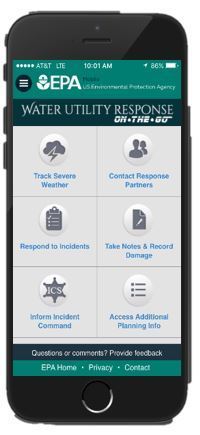
“The Water Utility Response On-The-Go App consolidates and makes accessible from the field, information and tools that water utility operators and their response partners may need during an emergency. Downloading Response On-The-Go can help responders and stakeholders increase situational awareness, facilitate coordination, and enhance overall response efforts.
The App allows users to:
- Identify and contact emergency response partners
- Monitor local and national severe weather
- Review and complete incident-specific checklists
- Populate, save and email damage assessment forms with photo attachments
- Access Incident Command System procedures and resources.”
The App is available for download at this website.
|
|
 |
Iowa
DNR staff in the water supply program areas are scheduled to speak at the
following events. The date, sponsor and
event, location, subject, and contact for more information are listed.
|





