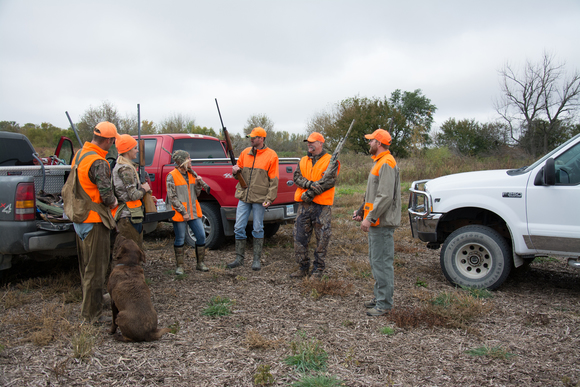
 An estimated 50,000 hunters are expected to be afield when the 2017 pheasant hunting season opens at 8 a.m., Oct. 28. Iowa’s pheasant population is similar to 2016 when hunters harvested 250,000 roosters. Photo courtesy of the Iowa DNR.
An estimated 50,000 blaze orange clad hunters
will dot Iowa’s countryside at 8 a.m. on Oct. 28, for the opening of Iowa’s
2017 pheasant hunting season.
This annual event melds generations of
Iowans who reconnect with their hunting heritage. While most hunters will
generally only spend the first week or two in the field, those who venture out later
will likely be rewarded with success.
“Hunters can expect to find similar
bird numbers to last year, but the October rain has our harvest running behind
schedule so opening weekend may not be as successful as years past,” said Todd
Bogenschutz, upland wildlife research biologist for the Iowa Department of
Natural Resources. “However, a late harvest could lead to success later in the
season.”
Results from the statewide August
roadside survey indicate higher pheasant numbers were found in a line of
counties stretching from northwest to southeast, but birds are available
everywhere quality habitat is found.
Bogenschutz said he expects almost a
repeat of 2016 pheasant season, where hunters harvested about 250,000 roosters.
Quail season
opens Oct. 28, too
Iowa’s quail population is at a 30
year high and landowners report seeing quail in areas that they had not seen them
in years but the bulk of the quail population is in the southern three tiers of
counties.
“Quail hunting is different than
pheasant hunting. Quail are found in the shrubby patches near crop ground
versus in fields of habitat,” he said. “Quail hunters will have less
competition so if someone wants to give it a try, I would encourage them to
knock on doors to get permission, don’t be shy.”
Iowa’s partridge season opened Oct.
14. Partridge hunting primarily takes place in the north-central counties.
Places to
Hunt
The Iowa DNR’s online hunting atlas
lists nearly 700,000 acres of public hunting land, including more than 20,000
acres of land enrolled in the popular Iowa Habitat for Access Program (IHAP)
allowing hunter access to private land.
Each area on the atlas includes a link
to a map with property boundaries, the size of the area, habitat type, species
of wildlife likely found, if nontoxic shot is required and more. The map is
available as a downloadable pdf that can be printed or saved to a smartphone.
To view the atlas, go to www.iowadnr.gov/hunting
and click on Places to Hunt and Shoot in the left column.
Rules
There are no new regulations this year.
- Shooting hours are 8-4:30 daily. Hunters are required
to wear one piece of blaze orange of which at least 50 percent must be solid
color.
- Hunters may harvest three rooster pheasants each
day with a possession limit of 12.
- Hunters may harvest eight quail of either sex each
day with a possession limit of 16.
- When transporting pheasants, either a fully
feathered head, fully feathered wing or foot must remain attached for
identification purposes.
Media Contact: Todd
Bogenschutz, Upland Wildlife Research Biologist, Iowa Department of Natural
Resources, 515-432-2823 ext. 111.
Hunters
heading to the field for the opening weekend of pheasant season are encouraged
to review safe hunting practices before they head out.
Megan
Wisecup, hunter education administrator with the Iowa Department of Natural
Resources, said hunters should get reacquainted with the techniques used to
hunt pheasants – be sure to walk in a straight line and know where members of the
hunting party are at all times, especially in low visibility areas like
terraces, tall switch grass and standing corn.
“Go
through the zones of fire with each member of the hunting party, talk about
avoiding target fixation and swinging on game,” Wisecup said. “Wear plenty of
blaze orange especially on the upper one third of your body. We are encouraging
hunters to wear more blaze orange than the minimum required. The goal is to be seen by other hunters.
“The
top pheasant hunting incidents all are related to not being seen. The shooter
swings on a rooster, the victim is out of sight of the shooter or the rooster
flew between the shooter and the victim.”
Wisecup
said safety also extends to the canine companions.
“Avoid
low shots to prevent injuring your hunting dog,” she said.
“The
hunting plan and safety practices are all part of a responsible hunt. The goal
at the end of the day is for everyone to return home safely.”
Tips
for a Safe Hunt
- Iowa
law requires hunters to wear at least one of the following articles of visible,
external apparel with at least 50 percent of its surface area solid blaze
orange: hat, cap, vest, coat, jacket, sweatshirt, shirt or coveralls.
- Hunters
should stay in communication with each other and to stay in a straight line while
pushing a field.
- Discuss
the hunting plan that spells out how the hunt will take place, each person’s
role in the hunt and where each person will be at all times.
- Know exactly where standers will be located,
especially when hunting standing corn or tall switch grass to avoid having the
standers get shot by the pushers as they near the end of the field and the
birds begin to flush.
- Make
sure to unload the gun when crossing a fence or other obstacle to avoid it accidentally
discharging.
- Properly
identify the target and what is beyond it especially if hunting in fields that
still have standing corn.
- If
hunting with a dog, never lay a loaded gun against a fence. Hunting dogs are usually excited to be in the
field and could knock the gun over causing it to discharge.
- Share
the hunt. Take someone new along to help
keep Iowa’s great hunting tradition alive.
Media Contact:
Megan Wisecup, Hunter Education Administrator, Iowa Department of Natural
Resources, 515-238-4968, or Jeff Barnes, Recreation Safety Officer, Iowa
Department of Natural Resources, 515-290-4907.
|





