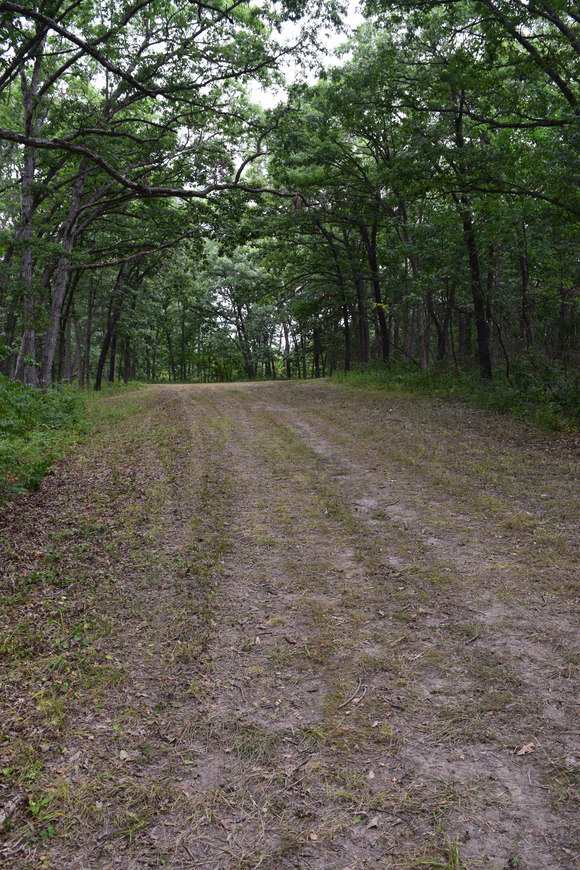
 Mount Ayr Wildlife Area has a mix of forest, prairie and shallow lake habitats. The forested area has a series of firebreaks that helps with timber management and is often a welcomed sight to successful hunters when packing out their game. Photo courtesy of the Iowa DNR.
Mount Ayr,
Iowa – The Mount Ayr Wildlife Area is a 1,500-acre outdoor playground on the
way to nowhere. While travelers are not likely to stumble upon it, hunters
would be wise to know its location.
The Mount Ayr Wildlife Area is part of
the seven county Grand River Wildlife Unit in southwest Iowa. Chad Paup is the
wildlife biologist responsible for managing the area and all its diversity. He receives
a lot of phone calls, mostly from nonresidents, who have specific questions
about deer hunting on specific areas.
His advice?
“I tell them not to overlook Mount
Ayr. It’s a tremendous deer hunting spot,” he said.
Sitting just eight miles from the
Missouri State Line in southwest Ringgold County, the Mount Ayr Wildlife Area
has been providing high quality hunting since it was formed in the 1940s. The
phrase “off the beaten path” is an often overused cliché, but in this case, it
applies. Most of the beaten path around the Mount Ayr area is Level B
maintenance dirt road.
The area has a mix of forest, prairie
and shallow lake habitats that offers a little something for everyone.
The forested area is a mix of oak and
hickory with some high quality walnut trees mixed in. A series of firebreaks have
been cut through the forest that helps with timber management. Using fire in
the timber opens the forest floor to sunlight and is one tool to knock back the
invasive honeysuckle bush.
Firebreaks provide easy access through
the timber and are often a welcomed sight to successful deer hunters when it’s
time to drag a deer out in the fall. These wide lanes also offer potential
turkey strut areas in the spring.
While deer hunting generally claims the
spotlight, starting Sept. 1, dove hunting will take center stage.
A large sunflower field on the
southwest part of the wildlife area held thousands of doves three years ago.
Dove food plots rotate from sunflowers to winter wheat then to beans and this
year it’s in sunflowers again.
The field is weedy and while not the
optimal situation, it is holding doves. Weedy sunflower plots offer other
benefits including serving as an excellent brood rearing area for young pheasants
providing a high quality protein insect diet and travel lanes for cover.
These rotating dove food plots are
also benefitting other birds, including the local quail population.
“The area has good quail numbers and
decent pheasant population. For hunters, it’s definitely worth a trip and it’s
not far from other public wildlife areas,” Paup said.
Restoring
the lake
The long, narrow 60-acre Walnut Creek
Lake on the north side has good hunting for teal and wood ducks, and serves as
a stopover point for flocks heading south. When the word gets out that a new
flock of ducks has hit the marsh, the local hunters are there the following
morning.
The shallow lake is refilling after
being renovated to remove silt. A channel has been added to improve access from
the boat ramp. That deeper channel created an overwintering area for fish.
Prior to the renovation, lotus had
taken over much of the lake. The unwanted aquatic plant has all but eliminated during
the renovation because the lake was dry.
Hiking,
paddling, sleeping, picking
The Mount Ayr Wildlife Area has a
clearing in the timber, near a series of fishing ponds that serves as a year
round rustic, no frills campsite. There is no electricity, no water and no restrooms.
But it does have fire rings and picnic tables and an impressive view of the
night sky.
While it currently doesn’t receive
much use by the paddling community, the shallow lake could be an attractive
option for paddlers looking for a quiet experience.
The lake is nearly encircled by a
mowed path. The wildlife area is popular with mushroom hunters.
Northern saw-whet
owl study
The Mount Ayr Wildlife Area was selected as a
site by researchers who were monitoring for northern saw-whet owls during their
spring and fall migration, as part of a larger, national study on owl and hawk
migration patterns.
Researchers
set up a series of 7-8 foot high mist nets that were unrolled in the evenings
along lanes mowed through a cedar thicket on the area. Speakers were used to
broadcast saw-whet owl calls to peak the curiosity of any saw-whets in the
area. When the tiny owl would investigate, it would get trapped in the soft
netting.
Researchers would collect the owl’s
weight, measurements and age data, then band and release it. The study lasted
from 2011-2015.
This tiny owl, about the size of a can
of pop, was so named because its call is similar to the sound a whetstone makes
when sharpening a knife.
Media
Contact: Chad Paup, Wildlife Biologist, Iowa
Department of Natural Resources, 641-783-2166.
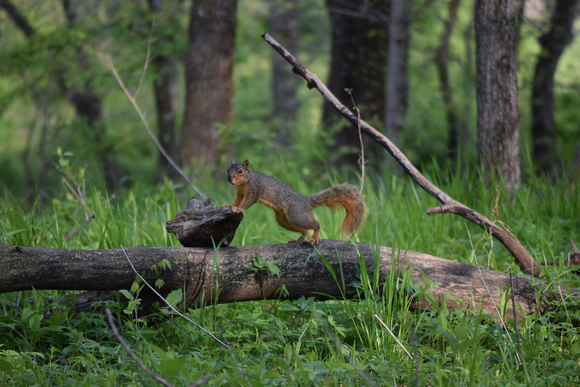 Hunting opportunities for squirrels is excellent with higher squirrel numbers in areas with quality oak and hickory trees. Squirrel season is Sept. 2 through Jan. 31, 2018. Photo courtesy of the Iowa DNR.
Squirrel
hunters should expect to find an average to above average squirrel population
over most of the state, with higher squirrel numbers in areas with quality oak
and hickory trees. Squirrel season opens Sept. 2.
Fox squirrels
can be found anywhere there are a few acres of trees, but gray squirrels are
generally limited to the heavily forested areas in eastern and southern
Iowa.
Hunting
opportunities for squirrels are excellent because competition is low and hunters
could have the area all to themselves. Because of the lack of competition,
squirrel hunting is a good way to introduce novice hunters and youth to the
outdoors. It also benefits experienced hunters by honing their skills before
other seasons open.
“If you spook
a squirrel or mess up something, there’s probably another squirrel over the
next hill. Young hunters can learn and fail which is how many of us learned our
woodsmanship skills – without the pressure of a short season or competition
from other hunters,” said Jim Coffey, forest wildlife research biologist with
the Iowa Department of Natural Resources. “We need to rejuvenate the fall
ritual of going squirrel hunting. It’s fun and takes a lot of skill to outwit a
squirrel.”
Squirrel
hunting is done by either sitting-and-waiting, or by still-hunting.
The
sit-and-wait technique is similar to turkey hunting. Hunters will sit near
likely feeding areas, such as beneath oak, walnut, or hickory trees or along
corn-forest edges and many will call them. Plan to wear plenty of camouflage
and consider a face net to avoid bugs.
The
still-hunting technique is employed by slowly walking through forested areas
and stopping frequently to watch for feeding squirrels, then sneaking up on
them.
The best
hunting times usually are during the morning and afternoon feeding hours.
Squirrel
season runs through January 31, 2018. The daily bag limit is 6 (fox and gray
squirrels combined) and the possession limit is 12. There are no restrictions on shooting
hours.
Media
Contact: Jim Coffey, Forest Wildlife Research
Biologist, Iowa Department of Natural Resources, 641-774-2958.
Ordering trees from the DNR’s State Forest Nursery just got
easier. A new online sales site – http://nursery.iowadnr.gov/ – features dozens of quality native Iowa
trees and an easy check-out process.
Also new in 2017 are changes to how nursery stock can be
used to accommodate a wider audience of people wanting to order bulk trees:
- Customers can purchase trees in bundles of 25, compared to
previous order minimums of 200.
- Seedlings can be used for any purpose, including windbreaks
or decorative landscaping.
- People who purchase nursery seedlings can resell them or
give them away. Before, state laws dictated that nursery stock had to be
planted by the purchaser.
According to Nursery Manager Aron Flickinger, the nursery
provides affordable, quality native plant materials for numerous natural
resource needs.
“Planting trees and shrubs can help landowners reach a
variety of goals,” said Flickinger. “Trees from the State Forest Nursery can be
a cost-effective way to create wildlife habitat, beautify landscaping, improve
erosion control, establish windbreaks and even save energy through shade.”
Tree varieties include 20 species of native hardwoods, nine
evergreen species and 14 smaller trees/shrubs. Prices range from $.30 to $1.40 per seedling,
and tree species are sold in three sizes ranges on the site, with the tallest
around 30 inches. Some species are available in only one or two sizes, and may
also be available for spring delivery rather than fall.
Orders can be placed anytime between August 1 and May 31. As
part of the ordering process, customers can choose a shipping window for
delivery – fall shipments begin the last week of October, and spring shipments
begin April 1.
The State Forest Nursery is located in Ames and managed by
the Department of Natural Resources. For more information visit the online
sales site at http://nursery.iowadnr.gov/
or call during regular business hours, Monday – Friday, (800) 865-2477.
Media Contact: Kandy
Weigel, State Forest Nursery, Iowa Department of Natural Resources, 515-233-1161.
|





