IN THIS ISSUE
- Bird Island Rule: What's new
- Teamwork gives this fish a fin up
- Concern over salamander pathogen
- How sapsuckers help hummingbirds
- Mudpuppies in Lake Chatuge? You bet
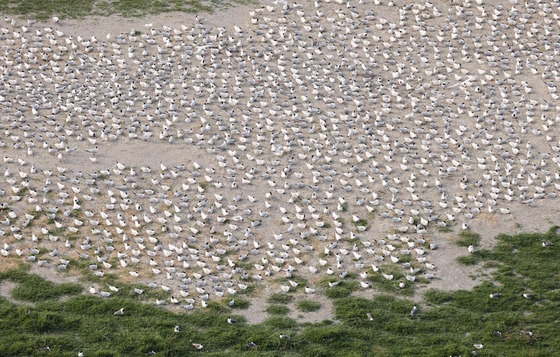 Rule revised to safeguard colonies like this one of royal terns on Brunswick Bird Island (Tim Keyes/GaDNR)
As nesting season starts for seabirds and shorebirds, the hope is recent changes to Georgia’s Bird Island Rule will better protect the birds and their nests this year.
“The last three years, we’ve had dogs kill flightless chicks in the seabird colony on Ogeechee Bar – and those are just the ones we’ve documented,” DNR senior wildlife biologist Fletcher Smith said. “We have only seen a minimal part of the loss.”
The revised rule, unanimously approved by the state Board of Natural Resources in January and overwhelmingly supported in public comments (about 96 percent in favor), updates a 1998 version and adds sites, seasonal closings and a year-round prohibition on pets.
Smith said the safeguards are critical for new sites including Ogeechee Bar near Ossabaw Island, Bird Island in Brunswick and Cumberland Dividings in Camden County. Seabirds – most of which breed in colonies – and shorebirds nest on the low islands and bars. Disturbance by people or pets can lead to massive nest losses.
“During the peak of summer, it would take as little as 15 minutes of the birds being off the nest for the eggs to become addled or cooked,” Smith said.
The islands also offer birds refuge to eat and rest. For example, Ogeechee Bar is a key source of the horseshoe crab eggs that help fuel the Arctic-to-South America migrations of red knots. Seasonally limiting public use of the “extremely sensitive islands” is the best way to conserve these resource, Smith said.
DNR’s Wildlife Conservation Section is working to install signs around the islands.
REVISED RULE/AT A GLANCE
- Adds Ogeechee Bar, Brunswick Bird Island and Cumberland Dividings.
- Closes Ogeechee Bar March 1-Oct. 15, and Brunswick Bird Island and Cumberland Dividings March 15-Aug. 31. The year-round closure of other sites is unchanged.
- Extends closures to the low-water line: No landing boats or walking in the intertidal zone.
- Prohibits pets year-round at all sites.
- Removes Pelican Spit (between Little St. Simon and Sea islands). The spit has eroded and is no longer used for nesting.
- Allows adding new dredge spoil islands and sandbars heavily used by birds.
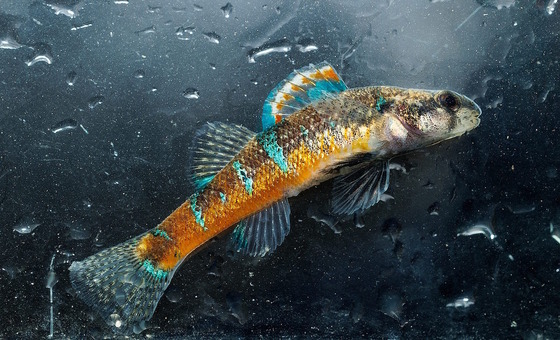 A male trispot darter in full breeding colors (Doug Strickland/Tennessee Aquarium)
For a fish with such flash, trispot darters spawn in some lackluster places.
“They really do like the crappy habitat,” DNR fisheries technician Kaylee Blackburn says with a grin. “Really mucky, mushy mud with leaf litter,” and in seeps only inches deep.
While this federally threatened fish favors bigger, clear-water streams the rest of the year, discovering where the neon-splotched breeding males and drabber females spawn has helped target research and produce what fellow DNR aquatic biologist Tiffany Penland considers an impressive amount of work – done by an impressive number of partners. “There are a lot of moving parts,” Penland said. “But with all the partners involved, we are getting so much accomplished.”
Trispots barely top 2 inches but loom large as an indicator of healthy aquatic systems. The species is found only in the upper Coosa River basin. The watershed, one of the most biologically diverse in North America, drains a chunk of northwest Georgia and a smidgeon of Tennessee before crossing into Alabama.
The parts Penland mentioned involve two projects. One led by the U.S. Fish and Wildlife Service and Tennessee Aquarium Conservation Institute is checking a randomized list of possible breeding sites to model where the fish should be.
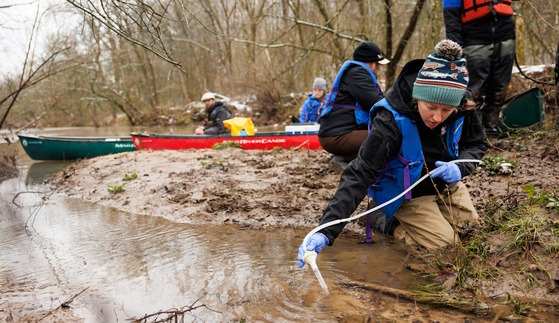 DNR's Kaylee Blackburn samples for trispot eDNA with partners (Alan Cressler)
In a companion America’s Ecosystem Restoration Initiative grant effort, DNR and partners are testing water for trispot DNA during breeding season in the species’ known range. “Positive” streams are ground-truthed to see if trispots are truly there.
Another segment of that grant project has assessed over 1,600 road stream-crossings the past two summers. Culverts that block darters from upstream spawning sites, such as where an outflow lip is perched too high above the water, are noted. Fixes that offer the best results are prioritized in concert with local governments and utilities. Four culverts have already been replaced with open-bottom structures that better suit the movement of water and fish.
Add to that outreach – from events to “How to Spot a Trispot” coloring books – and work with landowners – partners are helping one farmer pay for a culvert that benefits fish and cattle – and the result is a robust approach to restoring trispots.
For now, Blackburn said the fish are doing OK. But because of those winter runs into soggy groundwater-fed seeps, “Aquatic connectivity is their biggest issue.”
The research is providing a better understanding of the population. Penland said the clearer picture informs the partnerships with organizations and landowners, a blend that “can bring greater success to conservation and restoration efforts for trispots.”
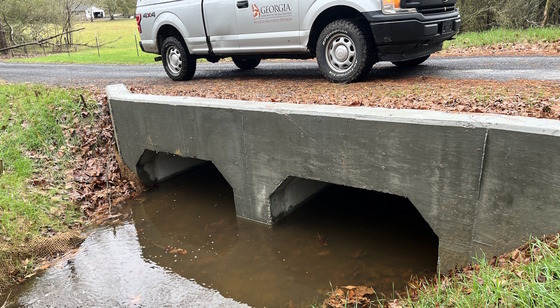 A new open-bottom culvert that provides better access upstream for fish (Kaylee Blackburn/GaDNR)
TRISPOT PARTNERS
Partners include Limestone Valley Resource Conservation and Development Council, Tennessee Aquarium Conservation Institute, The Nature Conservancy in Georgia, Dalton State College, University of North Georgia, U.S. Fish and Wildlife Service, local governments, and other wildlife state agencies.
CLEAN 13 CAMPUS
One of the streams where trispots spawn is on the 67-acre campus of Park Creek Elementary School in Dalton. The discovery of the fish led to the school joining with partners to teach students about wildlife and restoring habitats, which resulted in the Georgia Water Coalition naming Park Creek a 2025 Clean 13 honoree.
COVER FISH
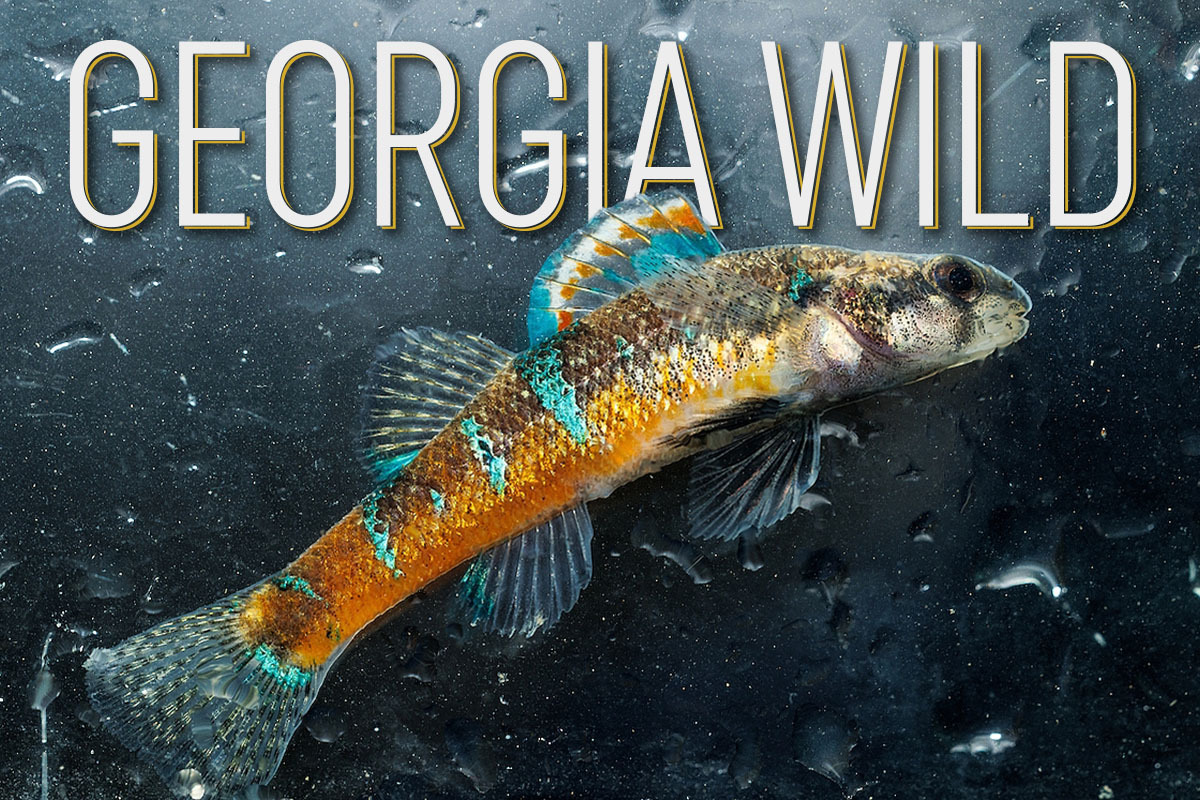
The handsome male trispot pictured above seemed to pose for photos, prompting the Tennessee Aquarium's Doug Strickland to dub it the “Brad Pitt of trispots.”
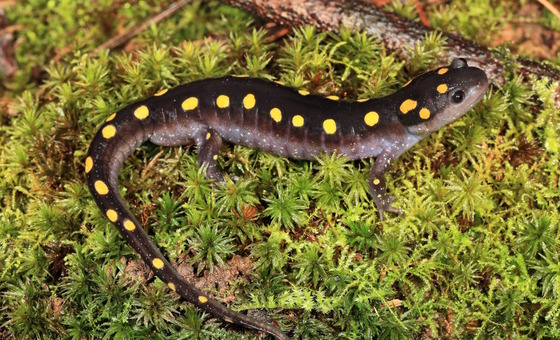 Spotted salamanders are a Georgia species susceptible to the pathogen (Alan Cressler)
A pathogen discovered last fall in captive salamanders in North America is drawing scrutiny and raising red flags.
The unidentified pathogen documented in three non-native salamander species has caused death rates of 35-55 percent in infected collections, according to Partners in Amphibian and Reptile Conservation.
Two North American species – including spotted salamanders, common in parts of Georgia – have gotten sick after being exposed to contaminated soil and water in laboratory tests, PARC reported. Signs of illness included abnormal skin shedding or sloughing, skin lesions or ulcerations, sluggishness and a decreased appetite.
The lethal salamander pathogen Bsal has been ruled out. But scientists in the U.S., which leads the world in salamander diversity, are urging caution as they try to identify the pathogen and possible risks to captive and native amphibians.
Amphibian owners, pet businesses and outdoor enthusiasts are encouraged to:
- Never release pet salamanders into the wild (it’s illegal in Georgia) or empty untreated aquarium water or substrate outside.
- Report signs of illness in captive salamanders (Healthy Trade Institute) and wild salamanders (jesse.maestas@dnr.ga.gov).
- Do not move, sell or dispose of sick salamanders without professional guidance.
- Follow recommended safety practices when caring for salamanders.
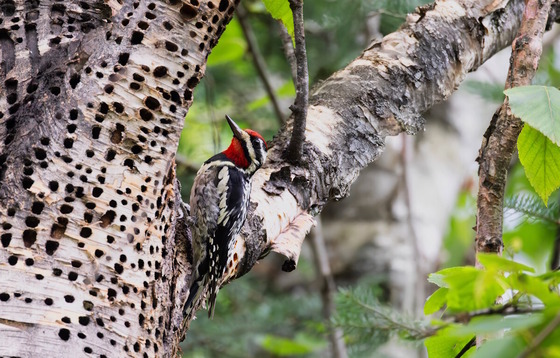 Yellow-bellied sapsucker in a well-drilled birch tree (Adobe Stock)
By TERRY W. JOHNSON
When the first ruby-throated hummingbirds arrive in our backyards each spring, they often find that nectar-bearing flowers are few and hard to find.
Of course, the early hummers benefit from our feeders stocked with sugar water.
But that begs the question, where do those that never see a feeder during migration find enough food to meet their nutritional needs?
The answer is that much of this food is unwittingly supplied by an odd woodpecker known as the yellow-bellied sapsucker. ...
Read Terry’s column about the relationship between hummers and sapsuckers.
Terry W. Johnson is a retired DNR program manager and executive director of TERN, friends group of the Wildlife Conservation Section. Check out past columns and his blog. Permission is required to reprint a column.
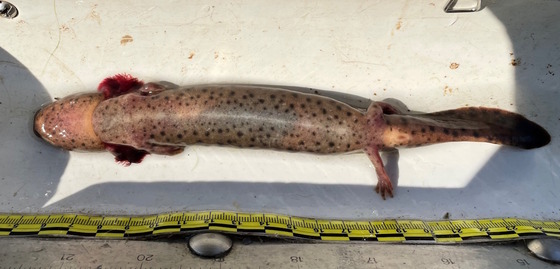 Muddpuppy caught at Lake Chatuge (Thomas Floyd/GaDNR)
Befitting their size, the mudpuppies trapped at Lake Chatuge last week are kind of a big deal. Although scientists thought the large but secretive salamanders were likely found in the Tennessee River watershed in north Georgia, this marked the first time what is presumably northern mudpuppies (Necturus maculosus) have been documented in Towns County or the Hiwassee River drainage in Georgia, said Thomas Floyd, a wildlife biologist with DNR’s Wildlife Conservation Section. The catches by Floyd and senior wildlife biologist Daniel Sollenberger are also one of the first, or at least the few, records from lakes in the Southeast.
Mudpuppies spend their entire life in water and are notoriously hard to survey. They were documented in the Toccoa River basin in 2010 and Floyd found them in the Nottely River last year. Using funnel traps this breeding season, he and Sollenberger came up empty in lakes Blue Ridge and Nottely before landing a mix of seven males and females at Chatuge. Northern mudpuppies average 10 inches long and are listed as a priority species in Georgia's Wildlife Action Plan. Report giant salamanders.
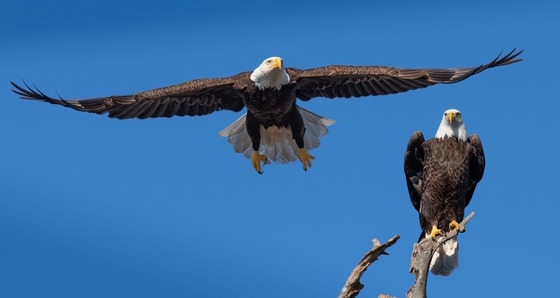 Bald eagles at a nest near Columbus (Mike Culpepper/Special to DNR)
Help native wildlife and natural habitats from bald eagles to gopher tortoises by contributing to the Georgia Wildlife Conservation Fund checkoff when filing your state income taxes. Giving is easy: Just fill in an amount of $1 or more on line 32 of tax form 500. Learn how contributions are put to work.
City Nature Challenge 2026, the iNaturalist worldwide bioblitz, includes a handful of Georgia challenges. Join by uploading observations of animals, plants and fungi in Atlanta, Savannah/coastal Georgia, Athens-Clarke County or Villa Ricca/west Georgia from April 24-27. Or take part in the global challenge.
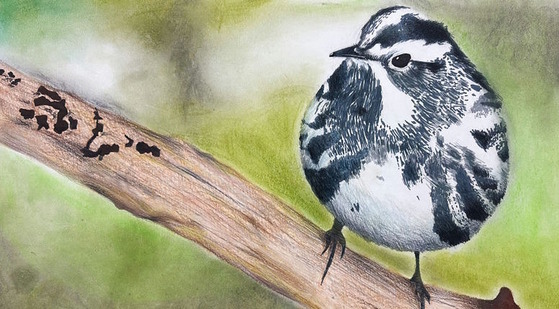 The grand-prize winning black and white warbler by a Sandy Springs fourth grader (Emma Lo/Special to DNR)
T-shirt Art Contest winners in this year’s Georgia Youth Birding Competition featured the youngest grand prize champ ever. Emma Lo, a 9-year-old fourth grader from Sandy Springs, wowed judges and led all 147 entries with her drawing of a black-and-white warbler. See the winning artwork.
Boom’s quillwort, a perennial herb that grows in slow-moving water, has not been recorded in Georgia for over 25 years. Or make that had after DNR Wildlife Conservation Section botanists scouring a state wildlife management area found a quillwort that looks like Isoetes boomii – an ID that requires analysis by microscope.
 Quick hits:
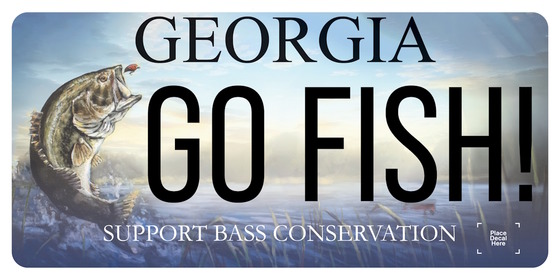
- DNR’s just-released bass license plate supports conservation and management of black bass, from angler favorites such as largemouth to State Wildlife Action Plan species like shoal and Suwannee bass.
-
A bill in the Georgia Legislature that would change the state flower from invasive Cherokee rose (introduced from China in the 1700s) to native sweetbay magnolia and designate April as native plant month has passed the Senate and is in the House.
-
CoastFest 2026 and its coast-life blend of wildlife, exhibits, fun and food will draw thousands to Mary Ross Waterfront Park in Brunswick March 21.
- To help bats and their pups, do the work needed now on your home or garage to exclude bats before maternity season – April 1-July 31 in Georgia.
- A Learn and Burn program offering in-depth instruction about prescribed fire is planned April 7 at Paradise Public Fishing Area in Enigma.
-
Keeping feeders clean as temperatures rise can lessen disease risks for birds.
- The Georgia Coastal Bird Ambassador program on St. Simons and Tybee islands is offering training this month in bird identification and stewardship.
- Explore using native plants for pollinators at the Fling into Spring symposium March 21 at the Thomasville Garden Center.
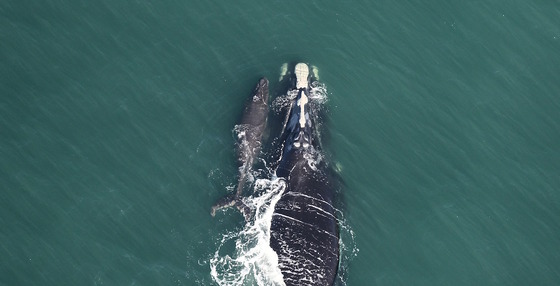 Juno with her ninth known calf off Wassaw Island in December (CMARI/ NOAA permit 26919)
Names in the news: The North Atlantic right whale nicknamed Juno (catalog no. 1612) may be best known for losing a calf to a vessel strike off Georgia’s coast in 2024, but resilience would be a better calling card. The more than 40-year-old whale has survived four entanglements in commercial fishing gear – a leading cause of death for this endangered species – and birthed at least nine calves, the latest this winter (drone video taken by permit helped determine the calf is a female). Hawkinsville’s Stan Turner landed a state-record longnose gar at Lake Blackshear March 5. The whopper needlenose weighed 31 pounds, 14 ounces – beating the former record by 12 ounces. DNR Wildlife Conservation Section outreach coordinator Linda May, Kim Morris-Zarneke of the agency's Communications, Education and Outreach Section and Ellen Graham of DNR State Parks and Historic Sites helped lead presentations last month at the Association of Fish and Wildlife Association’s Wildlife Viewing and Nature Tourism Academy. During the Seattle conference, May served on a panel showcasing birding competitions (including DNR’s Youth Birding Competition and T-shirt Art Contest), while Morris-Zarneke and Graham discussed the Outdoors Beyond Barriers program.
WHAT YOU MISSED ...
In the previous Georgia Wild:
- Wild year in review
- 2025's top headlines
- Mockingbird mystery
- Right whale calf swap
 (audio) "Alabama's watercress darter" Fish of the Week! podcast, U.S. Fish and Wildlife Service
(audio) "Bats in the Attic," including DNR's Trina Morris, The Perfect Podcast (Apple, Spotify)
"In Georgia's Wild Places: Redlands WMA," DNR
"Building Bobcat Alley," The Nature Conservancy in New Jersey
"Statewide project promises to reduce wildlife deaths on Georgia roads," Atlanta Community Press Collective. Related: "Researchers engineer safer road crossings for wildlife, people," UGA.
"Ga.'s bald eagles are nesting closer to people – that's a problem," Savannah Morning News
(+audio) "New state program takes aim at trapping feral hogs," GPB
(+video) "Georgia Senate passes bill to change state flower," WANF-TV (ch. 46, Atlanta)
"Right whale moms, calves seen off Mass., 'encouraging' sign," CBS News
"Plan to relax right whale protections raises concerns," The Current. Also: WTOC-TV (ch. 11, Savannah), WABE-FM (90.1, Atlanta), Canadian Broadcasting Corp.
"Fla., Ga. wildlife agencies seek boater input to protect right whales," WJAX-TV (chs. 47, 30, Jacksonville, Fla.)
(+video) "Effingham artist honored in DNR Youth Birding T-shirt Art Contest," WJCL-TV (ch. 22, Savannah)
"Georgia Wildlife Federation marks 90 years of conservation," Georgia Outdoor News
(+video) "Bats close theater; experts weigh in," WJCL-TV (ch. 22, Savannah)
"Cumberland could see 700 visitors a day under proposed plan," The Current
"Springtime reminder: Clean feeders save birds," Grice Connect
"To save North America's tiniest turtle, scientists rebuilding bogs," Sierra
"Cox's Clarendon Farms donation one of most significant conservation easements in U.S.," Ducks Unlimited
"Scientists discover ancient landscape – in our backyard," The Washington Post
|