A message from WRD Director Ted Will:
A retired WRD friend sent me a text one week into the New Year and it stated, “I’d like to cancel my subscription to 2021. I’ve experienced the free seven-day trial and I’m not interested.” I certainly found this funny and there have been several things that have not necessarily pointed to a great start for 2021. However, I remain confident that we will have an amazing and rewarding finish to this year; meaning, it’s a New Year and sometimes we need a New Perspective on how things are going.
Can you imagine how great it’s going to be when we can gather and fellowship over a meal again without worrying about social distancing and wearing masks? We can take so much in our jobs for granted and sometimes we lose perspective on how important our daily efforts are (regardless of our position) in achieving so many great accomplishments in our division throughout the year.
Walking around the office a couple of weeks ago, I listened to conversations about statewide hatchery production and stocking goals for 2021 and Game Management staff discussing the regulation process for 2021-2022. I heard Matt Rowe talking about a planned mussel survey on Lake Sinclair, Urban Wildlife Program co-workers celebrating their leader making her first capture of a deer over the weekend and others talking about where the next flame of fire was going to hit the ground on a WMA. And I know these conversations and actions are happening at our offices and in the field across the state.
Every day, tremendous and positive things are in motion and sometimes we need to take a step back to see all this from a different perspective or timeline.
There are certainly some days or weeks that sometimes make us think about “canceling our subscription to 2021.” But when I look at all the great things happening in our division over the long haul, I simply feel proud and grateful for all your accomplishments.
It’s a new year and I can confidently say that 2021 will be a great year because of you.
Top
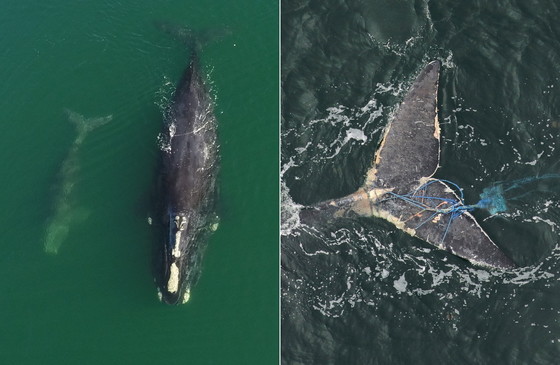 At left, one of this winter's 14 mom-calf pairs; right, the tail of the whale tangled in commercial fishing rope and part of a pot. (DNR, under NOAA permit 20556; Clearwater Marine Aquarium Research Institute/NOAA permit 18786)
This calving season for North Atlantic right whales has spurred hope while also providing a stark reminder of the threats these endangered marine giants face.
As of Tuesday, 14 calves have been seen off the Georgia and northeast Florida coast, the species’ only known calving grounds. The last time researchers documented this many calves was winter 2015-2016. (About 20 a year are needed to sustain the population, which is down to fewer than 375 whales.)
Also this month, an adult male was spotted offshore of the Georgia/Florida line with fishing rope wrapped around its tail and attached to the remnants of a fish/shellfish trap. Entanglement in commercial fishing gear and vessel strikes are the leading causes of right whale deaths. This entanglement is considered life-threatening.
With a Clearwater Marine Aquarium Research Institute aerial survey team helping from above, WRD tried on Jan. 11 and with a Florida Fish and Wildlife Conservation Commission crew the next day to attach a tracking buoy. The teams were unsuccessful because of the whale’s evasive behavior, rough seas and the approach of night. The 33-year-old male cataloged as no. 1803 has not been seen since.
If it is, agencies will try again to attach a tracking buoy and disentangle the whale.
As surveys continue, biologists are hoping to find 1803, and more calves.
Top
 DNR's Tim Bonvechio with Suwannee bass and UGA grad students (DNR)
Fisheries regions 4 and 5 are helping UGA study Suwannee bass movement and habitat use in the Withlacoochee River, as well as the percentage of largemouths and Suwannees anglers are catching and keeping on the Withlacoochee and the Ochlocknee River.
For the first part, 28 adult Suwannee bass were tracked by radio telemetry February-September. A 24-hour sampling event was also done in June.
Some of the findings: While most fish maintained a relatively small home range, some ranged far upstream and downstream, moves likely related to spawning. The bass were found most often around cypress and tupelo knees, large-diameter woody debris, and steep-grade limestone banks. They also hung out on the downstream edge of shoals and in deeper-than-average pools. (Two tracked fish even paired up and spawned!) This spring, mapping will explore habitat selection by males and females.
To assess exploitation – the percentage of fish caught and kept by anglers – 90 largemouths and 67 Suwannees were tagged between February and May, and all tags returned during that period were documented.
So far, exploitation appears low. Thirteen tags (8 percent) have been turned in and only five of the fish were kept, producing exploitation estimates of 2 to 5.9 percent. Interviews with anglers who reported the fish has revealed that some cannot differentiate between the two species in these river systems.
The evaluation will continue until May 14, when all tags have been out for a year.
Top
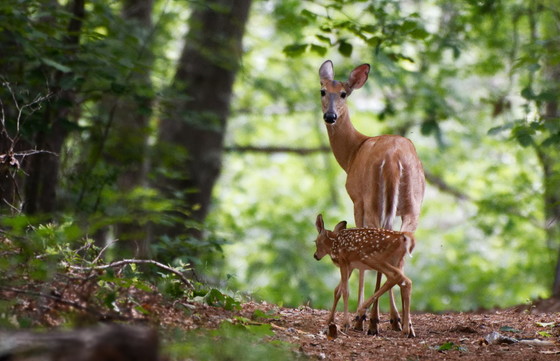 Surveying for disease helps keep Georgia deer, like this doe and fawn, healthy. (John Kelly/GNPA)
Monitoring for wildlife diseases might be one of Game Management’s lesser known roles, but it is critical. (Staff investigated 73 reports in November alone.) Here’s a quick overview and update:
- Staff conduct surveillance for Chronic Wasting Disease, or CWD, in Georgia’s white-tailed deer. CWD is a neurological disease of deer, elk and moose caused by infectious, “misfolded” proteins called prions. Staff have randomly sampled more than 1,300 deer across the state. CWD has not been detected in Georgia. High-priority samples come from deer showing clinical signs of disease. Samples are also taken from harvested, road-killed and injured deer.
-
Rabbit Hemorrhagic Disease Virus (RHDV2) was recently documented in Florida. Previously it had been found in several southwestern states, but no farther east than Texas. RHDV2 is highly contagious among rabbits and spreads rapidly through rabbit populations, killing up to 80 percent or more of infected rabbits and potentially causing severe declines in wild populations. (RHDV2 does not cause disease in dogs, other animals or humans.) WRD is working with the Southeast Cooperative Wildlife Disease Study at UGA to prioritize the investigation of reported sick or dead wild rabbits.
- Game Management has also confirmed that a dead bear submitted from Gordon County was infected with mange. Caused by a mite, mange is a highly contagious skin disease that afflicts many wild and domestic mammals. Several state wildlife agencies have detected mange in black bears, but this is Georgia’s first confirmed case. While it’s unlikely that mange will have any population-level effects, the Black Bear Committee is exploring the issue and will be submitting recommendations soon.
Top
 Young angler with a pair of hybrids at Paradise PFA (DNR)
Fisheries Region 4 had its south-central Georgia hatcheries humming last fall. Answering an increased emphasis on stockings to expand angler success, the number and size of fish stocked surged.
Thanks to a cooperative effort between state hatcheries and Welaka National Fish Hatchery, more than 16,000 bluegills and 32,000 channel catfish 6 inches or longer were stocked at public fishing areas, state parks and other community lakes. Another 100,000-plus bluegill fingerlings were also stocked.
In addition to more fish for park lakes, staff worked closer with state parks on fishery management. For example, a feeder was installed at Little Ocmulgee State Park to enhance fish growth and angler success.
At Paradise PFA, a hybrid-striped bass fishery developed at the area near Enigma a few years ago also received a boost. A successful production season at Richmond Hill Hatchery doubled the number of hybrids stocked at Paradise. Not only did the usual waters benefit – lakes Bobben and Russell – some hybrids were added to a Kids Fishing Event pond. Look for some exciting catches there this year!
Top
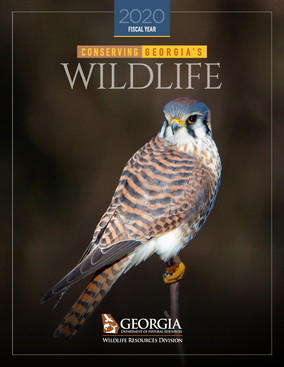
What did conserving Georgia’s rare animals, plants and habitats look like in fiscal year 2020? From American kestrels to Canby’s dropwort and Suwannee alligator snapping turtles, find out in the Wildlife Conservation Section's new annual report.
WRD’s work to engage hunters in the new two-year regulations cycle used all available platforms. In addition to public meetings, staff broadcast the effort on social media (including this blog and video) and held a public meeting live on Facebook.
Late-winter and early spring is a great time to catch big fish in Georgia. The WRD Angler Awards Program recognizes anglers who land a trophy, and features a youth category with lower weight requirements to recognize young anglers. (Need a certified scale? Here's a list of those close to you.)
Pass the word to private landowners: DNR has updated its landowner’s guide to conservation resources. This comprehensive booklet provides key details and contacts on wildlife and habitat programs that offer technical and financial assistance as well as incentives for managing private lands and native wildlife.
Top
|
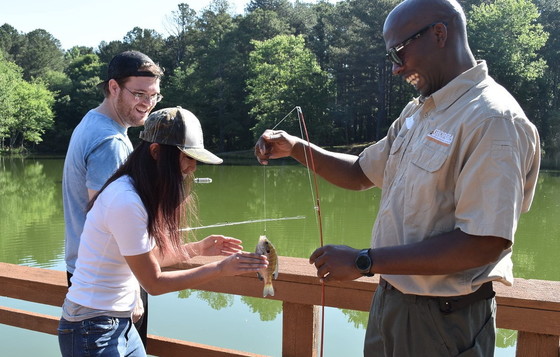 Bucket-list item: Visit five PFAs this year. (DNR)
Need some ideas for your outdoors bucket list in 2021? Look no further than this Georgia Wild blog post, where spot-on suggestions vary from visiting a WMA in each region to teaching someone how to hunt or fish.
Talk about laying the groundwork for hunter success: In November, Game Management started disking more than 1,700 acres on nearly 530 wildlife openings. Staff also surveyed about 46,000 acres to assess bobwhite population densities.
While most monarch butterflies migrate to Mexico, some winter in the South, even breeding here. WRD has joined with Journey North, Monarchs Across Georgia and UGA to document public sightings of monarchs, a species that warrants federal listing, from now through March in Georgia and eight other coastal southern states.
DNR’s Youth Birding T-shirt Art Contest is open for entries. Artists from pre-K to high school ages have until March 10 to enter their bird drawings or paintings to contest coordinator Linda May.
Miss a WRD WeAreDNR issue? Catch up here! And let us know if you have comments or know of a WRD retiree who would like to receive the e-newsletter.
Top
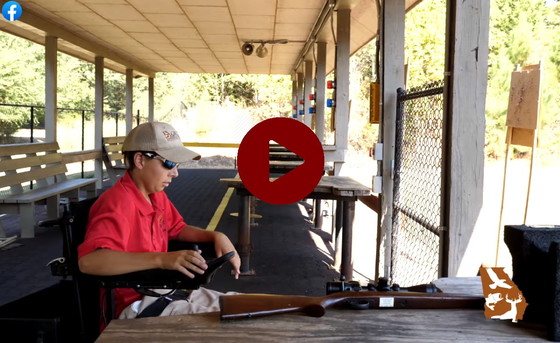 DNR videos you don’t want to miss:
Top
DNR joins the Ossabaw Island Foundation and many others in marking the passing and legacy of Eleanor “Sandy” Torrey West, the matriarch of Ossabaw. West died on Jan. 17, her 108th birthday. Her parents bought the island in 1924, and in 1978 West and her family sold it to Georgia, creating the state’s first heritage preserve, 26,000 acres of maritime forest, wetlands and beaches limited to “natural, scientific and cultural study, research and education, and environmentally sound preservation, conservation and management of the island’s ecosystems.”
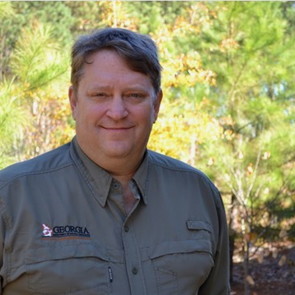
Thom Litts (left) is WRD’s new assistant director. The 18-year employee was promoted from fisheries chief in December, filling the vacancy created by Ted Will’s appointment as director. Thom, who has a master’s in geography from UGA, is an avid angler and lives in Covington with his wife and their two daughters.
Wildlife Conservation recently promoted senior wildlife biologist Trina Morris to program manager. She will be responsible for operations at the section’s Wildlife Resources Conservation Center office. Program Manager Brett Albanese has moved from WRCC to headquarters, where he will still oversee programs for freshwater aquatic research and conservation, along with other responsibilities. Assistant Chief Matt Elliott will continue to serve as the section's federal assistance coordinator and supervise headquarters support staff and WRCC prescribed fire staff, as well as other duties.
|
Josh Diehl of Grovetown not only caught a Georgia Bass Slam in 2020, he landed the grand prize. Drawn from among the year’s 40 Bass Slam anglers, Josh took home a prize pack including a framed “Bass Species of Georgia” print, an annual pass to the Go Fish Education Center, a Magellan camp chair, tackle box, lures and more. Fish for a slam in 2021.
Don’t forget: We Are DNR awards allow WRD employees to recognize co-workers for their exemplary efforts. Just click the button and answer a few questions.
Top
The WRD champions chosen by section chiefs for the past quarter are:
Fisheries Management
Dylan Severens, GIS specialist, Wildlife Resources Conservation Center – Many employees can attest to Dylan’s commitment to customer service. As part of the GIS team, he is frequently brought into projects to help manage, analyze and visualize a variety of data. Sometimes this requires him to see sites and explore issues in the field. Not only does Dylan do a great job helping with projects, he contributes to annual reporting for Fisheries and manages the section's statewide fish-population monitoring database. GIS products he has created are used to summarize section activities for grant reports. Dylan has taken on extra duties this past year because of vacancies and personnel changes, and while meeting that challenge he continues to deliver outstanding results and customer service.
Wildlife Conservation
Tim Keyes, shorebird biologist, Brunswick – Tim has been an invaluable asset to coastal conservation. An expert bird biologist, he has built a robust coastal bird program that encompasses many partners and has significantly raised awareness of our coast as crucial habitat for many bird species. His work contributed to the recognition of the coast as a Western Hemispheric Shorebird Reserve Network site. His ecological expertise helped conserve more than 60,000 acres via 16 land acquisition grants totaling $17 million. Tim is part of the working groups for American oystercatchers and swallow-tailed kites, and the recovery lead for the Wood Stork Recovery Plan. He founded DNR’s Youth Birding Competition, a nationally recognized model for engaging young birders, and established and maintains the Georgia Shorebird Alliance.
Game Management
Blaine Tyler, wildlife technician, Sapelo Island – According to Sapelo manager Fred Hay, Blaine is the wildlife tech every site wishes it had. From customer service to paperwork administration, Blaine sets a very high standard for himself and his team. He has directed multiple habitat-improving projects, most notably the reconstruction of the southern pool at the Reynolds Duck Pond and the restoration of scorched pond pine and palmetto habitats following the massive summer wildfire of 2011. Blaine excels at working with internal and external partners to keep projects on time and within budget.
Congratulations to all of these employees. Thanks to each for helping WRD excel at customer service and continue to pursue its mission.
Top
Changes for mid-October through early January (hourly positions not included).
HIRED
- Stephen Robert Beaman, Fisheries Management (Region 4, Waycross), fisheries tech 3
- Margaret Allison Hunt, Wildlife Conservation (WRCC), wildlife biologist 2
- Christopher Alan James, Fisheries (Region 3, Fort Valley), fisheries tech 2
PROMOTED
- Thomas L. Litts, WRD administration (Headquarters), assistant director
- Bobby W. Lord, Game Management (Region 3, Thomson), wildlife tech supervisor
- Marshall G. Nelms, Game (Region 4, Fitzgerald), wildlife biologist 3
- Angela Ruth Spinks, Fisheries (Region 5, Albany), fisheries tech 3
- Theodore A. Will, WRD administration (Headquarters), director
RESIGNED
- Jennifer Nichole Bratcher, Fisheries (Headquarters), administrative assistant 3
- Heidi Marie Ferguson, Public Affairs (Headquarters), communications specialist 3
- Aaron Gunnar Gray, Fisheries (Region 5, Albany), fisheries tech 3
- John Caleb Griner, Hunter Development, training/development specialist 2
- Craig Joseph Jacobs, Game (Region 6, Brunswick), wildlife tech 1
- James M. Moffett Jr., Wildlife Conservation (WRCC), wildlife biologist 2
- Bryce Cameron Muhlenberg, Hunter Development, training/development specialist 2
- Tammy M. Peters, Game (Headquarters), administrative assistant 1
- Calvin Tyler Wakefield, Game (administration), wildlife biologist 2
RETIRED
- Russell L. Garrison, WRD administration (Headquarters), director
- Patrick Markey, Fisheries (Region 2, Gainesville), fisheries tech supervisor
TRANSFERRED
- Jo E. Northcutt, Game (administration), administrative assistant 3
- Thomas R. Shover, Game (Region 4, Fitzgerald), wildlife tech 2
- Angela Kay Thomas, Fisheries (Headquarters), administrative assistant 3
Top
|