Prescribed fire crew following a burn at Tallulah Gorge. (Hal Massie/DNR)
Did you know that more than 500 staff members make up the Wildlife Resources Division? Spread across the state, some of us have been part of this family for years and some are brand new, but one thing is certain: Regardless of what region we work in or how long we have called WRD home, we are family.
The view from the Director’s Office is that our people are our greatest priority and it’s our hope to know everyone professionally and personally, and to look out for the wellbeing of all.
Director’s Office staff are a only phone call or email away to advise and support in any way possible. We are here for you, and most importantly we stand behind you.
We are proud to be a part of this family of incredibly talented, passionate and hard-working individuals and it is our responsibility to do everything we can to help this division be its best.
Just a few ways we are here for you:
- Training in media, social media and handling media inquiries and interviews.
- General training programs.
- Chaplain’s program.
- Volunteer and intern placement.
- Brainstorming collaboration for new initiatives.
You can reach us at (770) 918-6401. Thanks for all you do to make WRD great!
Top
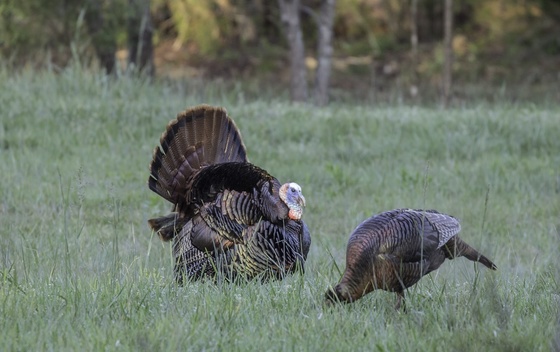 Wild turkeys (Joe Berry)
The 2019 statewide turkey season opens Saturday, March 23, runs through May 15 and comes with a fair forecast – similar to last year’s season.
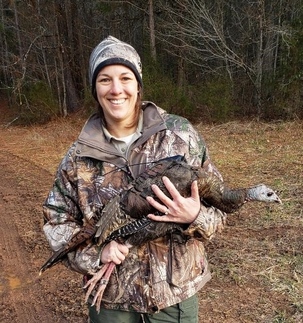
Emily Rushton, WRD wild turkey project coordinator (below), says reproduction in 2017 that registered below the four-year average could mean fewer 2-year-old gobblers across much of the state. “However, that lower average comes between two better years, so hopefully other age classes will remain plentiful."
Quick takes per region:
- The Ridge and Valley, Piedmont, and lower Coastal Plain should have the best success based on 2017 reproduction.
- The Blue Ridge had a poor 2017 reproductive season but saw a jump in 2018, so there may be plenty of young birds in the woods this spring.
- The upper Coastal Plain saw reproduction below their five-year average for the past two years, meaning numbers may be down.
Also worth noting: The season opens April 6 on Cedar Creek and Cedar Creek-Little River wildlife management areas, two weeks later than the statewide start. (Hunting on both WMAs still ends May 15, in sync with the state season). The delayed opener is part of University of Georgia and WRD research into the timing of hunting pressure and effects on gobbler behavior and reproductive success.
Georgia has one of the longest turkey seasons in the nation and a season bag limit of three gobblers. Let the calling begin.
|
NEED TO KNOW
- Harvested birds must be reported via Georgia Game Check. Use the Outdoors GA app (it works with or without cell service), go to gooutdoorsgeorgia.com or call (800) 366-2661. Hunters who have not used the app since at least deer season should make sure they have the latest version.
- Hunter education is required for people born on or after Jan. 1, 1961, who buy a season hunting license, are at least 12 and hunt without adult supervision, or who hunt big game on a WMA. Learn more.
- Hunt safe. Before you head for the woods, review these safety tips.
Top
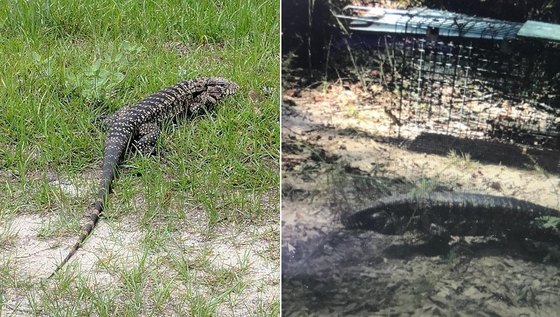 Tegus in the wild in Toombs (Photos provided to or taken by DNR)
Argentine black and white tegus – big South American lizards that are popular in the pet trade but trouble in the wild – may have a toehold in southeast Georgia.
WRD Wildlife Conservation and Game Management Section staff, in concert with DNR's Law Enforcement Division, are investigating reports of tegus in eastern Toombs and western Tattnall counties. Residents have reported them crossing roads, showing up in yards, even being trapped in a farmer’s shop.
Since last summer WRD has documented at least four adult Argentine black and white tegus and 20 sightings in the stretch of forest, farmland and sandy-bottomed streams from Lyons to Reidsville.
These non-native lizards would pose a threat to native animals such as gopher tortoises and ground-nesting birds. The concern is that tegus are reproducing in the wild in the area. If so, an early response is crucial to eradication. Once established, as with Florida’s two known breeding populations, the only effective option is trying to stem their numbers and spread.
DNR is asking residents to report sightings by taking a photo, noting the location and logging it at gainvasives.org/tegus. “We think there’s something going on. But we need to know more,” said John Jensen, a senior Wildlife Conservation biologist.
TEGUS ARE …
- Native to South America. The Argentine black and white tegu (Salvator merianae) is native to Brazil, Paraguay, Uruguay and Argentina.
- Terrestrial lizards but also strong swimmers.
- Popular in the pet trade. In the wild, they can reproduce quickly: Reproductive-age females lay about 35 eggs year in Florida.
- Not considered aggressive but will defend themselves if threatened or harassed. Tegus can react fast and have sharp teeth and claws, strong jaws and a strong tail.
- Legal in Georgia to own as pets, but it is illegal to release any animal into the wild.
- Not protected by Georgia wildlife laws or regulations, although local ordinances may apply.
- Capable of inhabiting much of the Southeast, as noted in this study.
Top
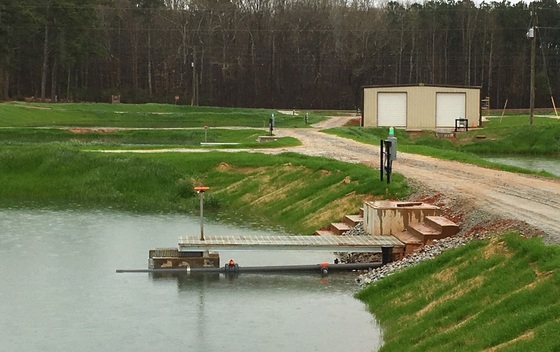 The grass truly is greener -- and the fish-raising prospects greater -- now at Walton Hatchery. (DNR)
If you’ve been to WRD’s Social Circle offices in the past eight to 10 months, you probably noticed a lot of heavy equipment at work renovating the Walton Fish Hatchery.
The good news is that the renovation – the hatchery’s first major upgrade in 40-plus years – is finished and Walton is ready to start raising fish again.
The overhaul included cleaning out ponds, rebuilding dikes, replacing all kettles and drain structures in the ponds, and completely replacing the water supply, drain pipes and electrical wiring.
Another important feature: Large water supply ponds were added in the center of the hatchery. The Walton Hatchery is supplied by a spring, and prior to the renovation, low flows could hinder operations. With the changes, Fisheries Management can store water and also re-use water from production ponds, options that will help drought-proof the hatchery and allow it to operate more efficiently.
Hatchery manager Tony Beck is relieved to have the renovation done and looking forward to raising fish in the new facility. The first crops of walleye and largemouth bass will be going in the production ponds soon.
Top
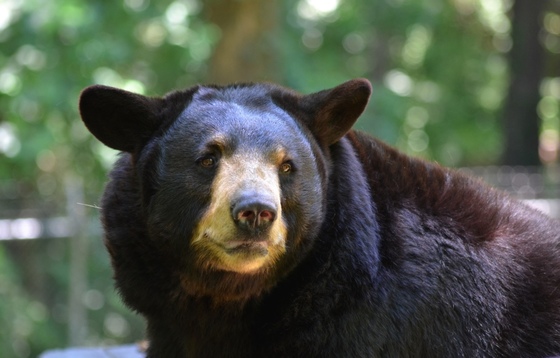 Bear sightings begin to surge in spring, which is why WRD is urging Georgians to become bearwise. Themes stressed through summer will include: never feed or approach bears; secure garbage and recyclables; and, remove bird feeders and take pet food indoors. More at BearWise.org.
Anglers and boaters have better access to the Ocmulgee River in Monroe County thanks to the reconstruction of Popes Ferry Landing. Off Ga. 23 about 14 miles north of Macon, the landing sports a new 20-foot-wide boat ramp, parking to suit and a SPLASH life jacket loaner board. Credit Fisheries Management’s boating access construction crew and Fort Valley staff for completing this challenging job.
Ducks Unlimited has presented DNR a bronze level award, recognizing the agency’s strong and continuing support of waterfowl conservation in partnership with DU. Since 1985, 36 habitat projects benefiting 15,560 acres of wetlands have been completed in Georgia, while WRD and DU also teamed up for two North American Wetland Conservation Act projects totaling another 10,832 acres.
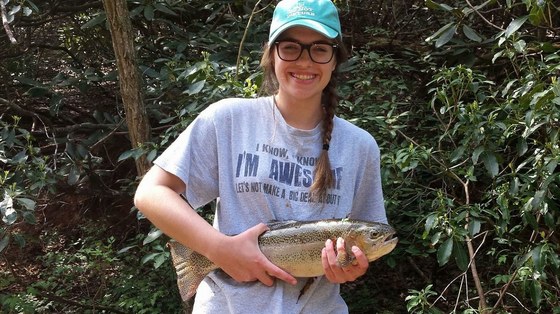 Making a good thing better, WRD’s Angler Awards Program has been expanded, splitting out awards for adults and youth, and adding categories for trophy largemouths and Public Fishing Area records. Fisheries Chief Matt Thomas said he’s excited about the new opportunities to “recognize even more great fish that Georgia anglers are catching.”
License and license plate sales fell short of WRD goals last year, although efforts to promote both helped offset the impact of another hurricane hitting when license sales peak. Sales of hunting and fishing licenses topped $30 million – $2.5 million shy of the 2018 goal – while 121,942 tags were sold or renewed, reaching 90 percent of the goal. Director Rusty Garrison encourages staff to keep promoting licenses and license plates. Remember the R3 toolbox, and feel free to ask questions.
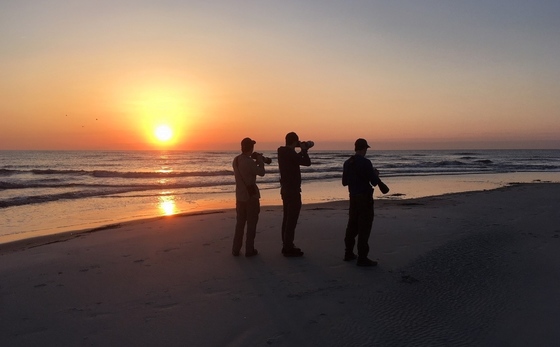 WRD’s annual Youth Birding Competition is timed to spring migration and centered on linking youth in grades K-12 to the outdoors and birds. The statewide birdathon is April 26-27, but teams have to sign up by March 31.
The Keeping Georgia Wild festival, May 18 at Charlie Elliott Wildlife Center and sponsored in part by Georgia Wildlife Federation and FCA Outdoors, also is a great way to enjoy the outdoors. Details at georgiawildlife.com/KeepingGAWILD.
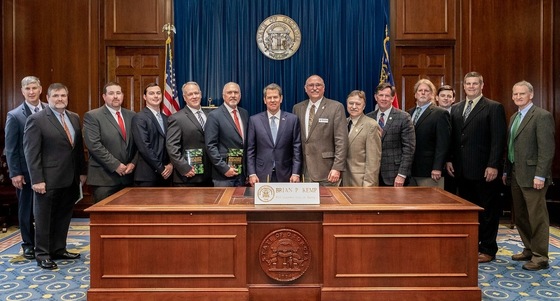 WRD’s Forestry for Wildlife Partners for 2018 were recognized in a photo op with Gov. Brian Kemp in February. Georgia Power, Weyerhaeuser and CatchMark Timber Trust are among the largest landowners in the state, affecting wildlife on about 1 million acres. Learn more about Forestry for Wildlife Partnership.
Ever want to sift through past WRD employee e-newsletters? Here's the archive.
Top
Game Management announced its 2018 section awards during WRD’s statewide meeting in January. Those honored included: Bobby Bond, Wildlife Biologist of the Year; John Bearden, Wildlife Technician of the Year; Sonja Daniels, Employee of the Year; Bryan Crowe, Exemplary Customer Service Award; and, Alan Isler, Chief’s Leadership Award. Each, said Chief John Bowers, represent the section’s “tradition of passionate and dedicated service toward wildlife conservation and customer service.”
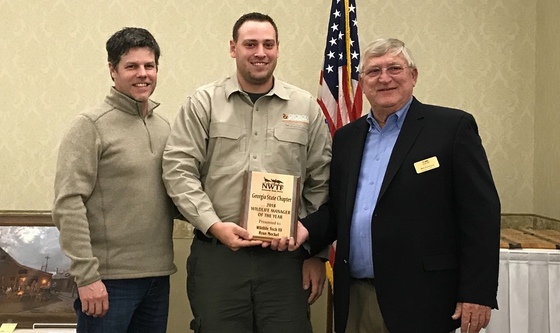 Ryan Meckel, center, with Game Management Chief John Bowers and Georgia NWTF President Bob Fountain
Others recognized at the statewide meeting included: Mark Rigglesford, Georgia Chapter American Fisheries Society Fisheries Professional of the Year; Tim Bonvechio, Georgia American Fisheries Society Distinguished Service Award; Bryan Crowe, Southwest Georgia Sportsman Club’s Resource Manager of the Year; Kevin Von Seggern, 2017 National Wild Turkey Federation Wildlife Manager of the Year; Ryan Meckel (above), 2018 Wild Turkey Federation Wildlife Manager of the Year; Brent Womack, recipient on behalf of the Raccoon Creek Project as part of Georgia Water Coalition's inaugural Clean 13; Frank Manning, recipient of a DNR life-saving award proclamation; Charlie Killmaster and Tina Johannsen, Best Technical Wildlife Paper at the annual Southeastern Association of Fish and Wildlife Agencies meeting; Nathan Klaus, Longleaf Alliance Bill Boyer Natural Resource Professional of the Year; Lisa Kruse, a U.S. Fish and Wildlife Service Recovery Champion for the Southeast Region; Jason Lee, U.S. Forest Service Regional Forester Honor Award for Implementation of state and private programs; Lee, Mark Dodd, Fred Hay, Eamonn Leonard and Jacob Thompson, recipients of One Hundred Miles 100 awards for coastal Georgia conservation; and, Rick Lavender, editor of Georgia Wild, awarded second in a newsletter category of the annual Association for Conservation Information competition. (2018 We Are DNR and Champion recipients were also honored, however all but those listed in the We Are DNR section below were recognized in previous e-newsletter issues.)
Volunteer awards announced at the meeting went to Game Management Region 4; Fisheries Management Region 2; the Go Fish Education Center; Charlie Elliott Wildlife Center; Jacob Crumbley, Track It Forward; and, Hunter Education, which recorded the most volunteer hours in the division.
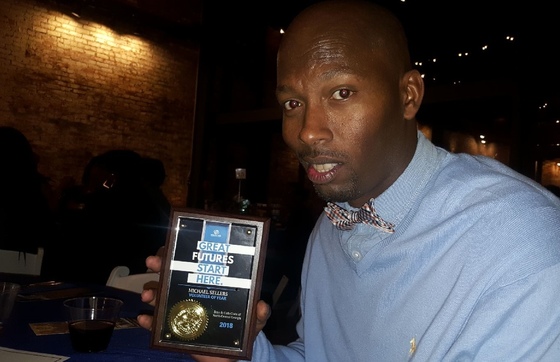 WRD's Michael Sellers named Walton County Boys and Girls Club Volunteer of the Year
Speaking of top volunteers, in December the Walton County Boys and Girls Club named WRD Volunteer Coordinator Michael Sellers its Volunteer of the Year for his work in 2018 mentoring, coaching and taking youth fishing. Sellers, who also volunteers at two other area nonprofits, said the award was an honor. “I was one of those club kids a few years back. … (Other) volunteers inspired me to start giving back to the community.”
She has long since settled into the job but Emily Rushton has been working as the statewide turkey project leader since October. Rushton started with WRD as a private lands biologist in 2013 and previously served as a biologist with the Florida Fish and Wildlife Conservation Commission.
Even newer to WRD are Public Affairs’ supervisors. Marketing and Communications Manager Lacey Creech leads the unit following Jenifer Wisniewski’s move to the Tennessee Wildlife Resources Agency. Creech previously led a multiplatform content team for Viacom’s CMT Network at its Nashville, Tenn., headquarters for more than a decade. Assistant Manager Sarah Hanson started in October, after Taylor Brown became DNR Grants Unit supervisor. Hanson worked as a Public Affairs specialist with the U.S. Air Force for 11 years, and served as a front desk clerk at Fort Yargo State Park before joining WRD.
Top
WE ARE DNR
WRD's We Are DNR recipients include the following, plus some comments from those nominating them:
Caleb Griner, Game Management (Hunter Development) – Caleb helped lead an Adult Quail Hunt and Learn Program I (the nominator) took part in. He provided excellent, professional instruction and presented himself well, taking extra time to ensure I was comfortable using a shotgun and providing top-notch coaching. He also presented one of the best explanations of Pittman-Robertson funds, what they're used for and how they benefit wildlife and Georgians. Caleb was a shining example of WRD’s excellence in customer service.
Noah McCoard, Game Management (Private Lands) – Noah recently went above and beyond on many levels, stepping up to help when staff was short, offering exceptional customer service to landowners and our partners at the Natural Resources Conservation Service, and providing timely reports that helped WRD maintain its relationship with NRCS staff throughout the state. Noah handled more than 30 gopher tortoise and quail conservation plans on a shortened deadline, delivering them with time to spare. He is an asset to DNR, one recognized by NRCS staff including State Forester Michael Sampson and Assistant State Conservationist Floyd Hooker. Noah always is available to present at workshops, while he also works to improve through taking part in training.
Colt Martin, Fisheries Management (Burton Fish Hatchery) – For an Instagram “takeover” dubbed A Day in the Life of a Trout Technician, Colt spent two days documenting his day-to-day duties through video and photographs. He then completed the campaign with a Q&A session. Through this takeover, the public glimpsed the inner workings of WRD trout hatcheries, a perspective that also provided transparency into daily operations at one of the agency’s facilities. The campaign was well received, spurring numerous messages expressing how thorough and enjoyable it was. The campaign would not have been nearly as successful without Colt's dedication, work ethic and the quality of content he provided.
Trina Morris, Emily Ferrall and Laci Pattavina (aka the Bat Crew), Wildlife Conservation – These three exemplified WRD's mission by creating and helping pull together content for a week-long Instagram takeover. Designed to raise public awareness of bats’ importance to the ecosystem and the conservation issues bat species in Georgia, the takeover succeeded because of the compassion of Trina, Emily and Laci for bat conservation and the quality of work they put into this customer-oriented project. The teamwork and support they provided leading up to and during the campaign was excellent.
We Are DNR awards allow all WRD employees to recognize associates for exemplary work. Just click the button below and answer the brief questions.
Top
Changes for October through early March (hourly positions not included).
HIRED
- Amy M. Cottrell, Fisheries Management (Southeast Region III Operations), fisheries biologist 2
- Lacey S. Creech, Public Affairs, marketing/communications supervisor
- Christopher Collin George, Fisheries Management (North Region 1), fisheries technician 3
- William Robert Glisson, Game Management (Sapelo Island Operations), wildlife tech 2
- Kaitlin O'Connell Goode, Game Management (administration), natural resources manager 2
- Matthew James Goode, Game Management (administration), wildlife biologist 2
- Trevor Buford Griffin, Game Management (Hunter Education and Shooting Sports), training and development specialist 2
- Ceasar Edenfield Grovner, Game Management (Sapelo Island), vessel mate 1
- Jason Robert Hammond, Game Management (Calhoun), wildlife tech 1
- Sarah Elizabeth Hanson, Public Affairs, marketing/communications assistant supervisor
- Camilla Gaye McClain, Fisheries Management (Southecentral Region IV), administrative support 1
- Caleb Darrell Mills, Fisheries Management (Southeast Region V), fisheries tech 2
- Matthew Aaron Phillips, Fisheries Management (North Region 1), fisheries tech 3
- Jonathon William Pritchard, Fisheries Management (Central Region II), fisheries tech 2
- Grant Michael Rentz, Game Management (Forest Management), forester 4
- Graham Scott Rhone, Game Management (Albany), wildlife tech 2
- Shane Garrett Richardson, Game Management (Sapelo Island), wildlife tech 2
- Jacob Lee Rogers, Game Management (Albany), wildlife tech 1
- Douglas Thompson Rose Jr., Game Management (Sapelo NERR and Visitors Center), marine tech 2
- Jacob William Synnott, Fisheries Management (Southeast Region III), fisheries tech 2
- Diana Josephine Taylor, Wildlife Conservation, administrative assistant 3
- Kelly Elizabeth Tolleson, Game Management (Fort Valley), administrative support 1
- Cheyenne Elan Whitetree, Wildlife Conservation (Charlie Elliott Wildlife Center), curator/preservationist 2
- Arthur Lee Williams Jr., Game Management (Sapelo Island), vessel mate 1
TRANSFERRED
- Jessica Lee Holbrook, Fisheries Management (Southeast Region III), fisheries tech 3
- Michelle L. McLaurin, Wildlife Conservation (administration), business support analyst 1
- Mark D. Rigglesford, Fisheries Management (North Region 1), fisheries tech 3
- Emily Brown Rushton, Game Management (administration), wildlife biologist 2
PROMOTED
- Jennifer Nichole Bratcher, Fisheries Management (headquarters), administrative assistant 1
- Chelsea R. Bennett, Game Management (Hunter Education and Shooting Sports), manager training
- Taylor Chamblis Cumbie, Game Management (Albany), wildlife tech 2
- Jonathan Cade Helton, Game Management (Calhoun), wildlife tech 3
- Maura Elizabeth Hinton, Fisheries Management (headquarters), administrative assistant 3
- Charles H. Killmaster, Game Management (administration), wildlife biologist supervisor
- Ryan Christopher Meckel, Game Management (Di-Lane Plantation WMA), wildlife tech 3
- Katherine L. Might, Fisheries Management (headquarters), business support analyst 1
- Tammy M. Peters, Game Management (administration), administrative assistant 1
- Jonathon William Pritchard, Fisheries Management (Southeast Region III), fisheries tech 3
- Taylor Kyle Winchell, Game Management (Fort Valley), wildlife tech 2
RESIGNED
- James A. Alfred, Game Management (Calhoun), wildlife tech 1
- Jones Horton Nelson, Fisheries Management (DJ Boat Ramp), construction specialist 3
- Martha L. Snowden, Game Management (Fitzgerald), administrative support 1
- Aaryn Mckenzie Tarver, Game Management (Albany), wildlife tech 2
- Jesse Michael Thomas, Game Management (Bobwhite Quail Initiative), wildlife biologist 2
- John H. Thrift, Game Management (Bobwhite Quail Initiative), wildlife biologist 2
- Nathaniel Stoutt Weaver, Game Management (Forest Management), forester 4
- Jason M. Wisniewski, Wildlife Conservation, wildlife biologist 3
- Jenifer Hancock Wisniewski, Public Affairs, marketing/communications supervisor
- James Christopher Woolsey, Fisheries Management (Go Fish Education Center), fisheries tech supervisor
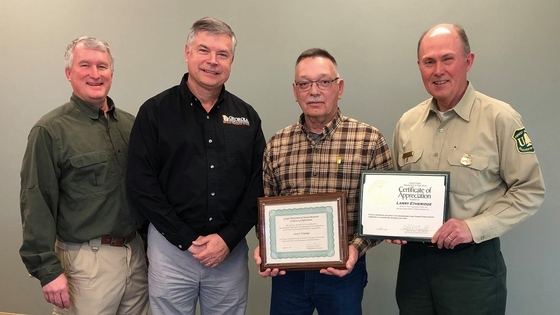 Celebrating the retirement of Larry Etheridge, third from left, at Arrowhead WMA
RETIRED
- Larry Eugene Etheridge, Game Management (Calhoun), wildlife tech supervisor
- Lucy E. Hinson, Fisheries Management (Southcentral Region IV), administrative support 1
- Regina C. Malcom, Wildlife Conservation, business support analyst 1
- Elizabeth A. Ogletree, Fisheries Management (headquarters), business support analyst 1
- Tracey S. Purser, Game Management (Bobwhite Quail Initiative), administrative assistant 3
Top
|