WRD clearing trees in southwest Georgia. (DNR)
As Hurricane Michael churned toward the Florida Panhandle, DNR put people, equipment and processes in place. And when the massive storm sliced across Georgia Wednesday night and early Thursday, leaving destruction from Donalsonville to Augusta, the agency was at work helping Georgians.
In southwest Georgia – Michael was a Category 3 hurricane when it crossed the state line – 28 critical action and debris removal teams cleared major roads, helped secure unsafe sites, teamed with local responders and assessed and tackled damage at state properties. State parks across Georgia welcomed evacuees and their pets, waiving entrance, parking and pet fees.
In Albany, hard-hit by Michael, a DNR incident command center directed the agency’s regional response. In Atlanta, staff worked shifts at the Georgia Emergency Management Agency’s State Operations Center.
“Hurricane Michael was a truly devastating storm,” DNR Commissioner Mark Williams said. “Once again DNR rose to the challenge and was on the ground before the storm, during the storm and after the storm to offer aid to our fellow Georgians. Each and every division stepped up to lend a helping hand and I am incredibly proud of the DNR family.”
The recovery effort continues.
Top
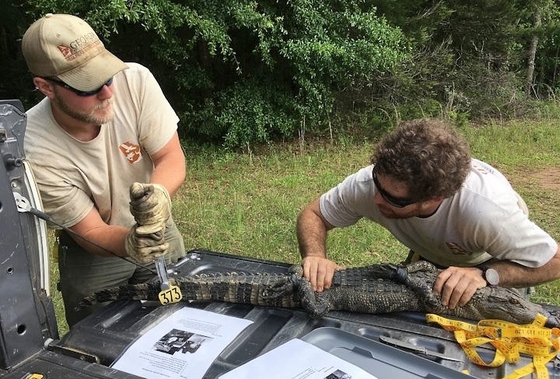 From office to field, be diligent in every part of your job. (DNR)
You have probably heard me say this before: Own your work.
OK, maybe you’ve heard me say it more than once. Owning our jobs as WRD employees is part of my philosophy for the agency and vital to fulfilling our mission.
But the question has been asked, what exactly do I mean? How can you take ownership of your job?
In a nutshell, take responsibility for your work.
All of us at WRD are passionate about what we do. We know what needs to be done. And for the most part, we love doing it. But there are parts of the job we don’t love, where the doing is drudgery.
Yet we must own every aspect of our work: what we enjoy and what we don’t.
Paperwork is an easy example. There’s always paperwork: timesheets, reports, you name it. While we all want to be in the field, we must complete our paperwork in a timely manner. When we don’t, it affects other people and their jobs. Just ask any AOC about their struggles with getting timesheets in on time. When we neglect required paperwork we drop the ball and disrespect others.
For some people, answering the questions of customers calling on the phone is drudgery. It shouldn’t be. Instead, when a call comes, own the customer’s question. If you don’t know the answer, connect the caller to someone who does. Then follow up to make sure their question was answered. That follow-up can make all the difference in the world.
For me, the drudgery is a flood of emails. I get more than 100 a day. If I’m not careful, I can easily spend all my time doing email. I am sure many of you face the same challenge. Email is a part of life, but do not let it own you. Find a system that works for you to efficiently handle emails.
Be responsible in all aspects of your job. Learn and practice effective time management. What is the most important part of your work? Keep it at the forefront. Identify the big rocks – the top priorities – and deal with them first. You can always squeeze in the smaller rocks.
What is most important to me is helping you succeed on the job. I want each of us to be like fire-and-forget missiles: locked in and heading toward the target, with no other guidance needed. That’s what owning our work looks like.
Thanks for owning your job at WRD, and for all you do to make this agency great!
Top
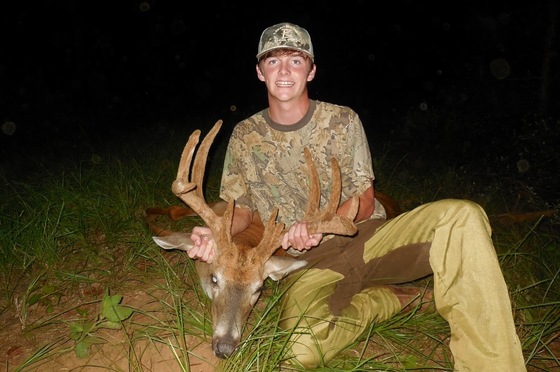 A velvet Houston County bruiser from opening day of archery season.
Fall hunting started with less bang and more bugs as
summer’s heat survived the change in seasons. But hunters still hit the woods.
And WRD helped them.
COMING UP: FACEBOOK LIVE ON DEER SEASON
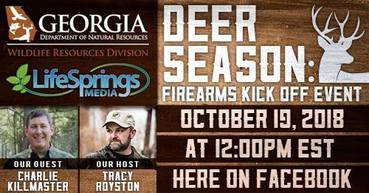 Join us live on Facebook at noon Friday, Oct. 19, as state deer biologist Charlie Killmaster joins LifeSprings Media’s Tracy Royston to talk deer firearms season, hunting regulations and more.
Top
|
 DNR's Jim Hakala and a trophy bass inspire young anglers at Sloppy Floyd. (DNR)
As fishing also trends toward autumn, Fisheries Management staff continue to blog weekly about the places and tactics that are hot, or not, for Georgia anglers.
A late-September post gave the low-down on then-lukewarm bass fishing at mid-state reservoirs, updates on Flat Creek and McDuffie public fishing areas, trout ops in north Georgia and Jim Hakala’s take on this year’s Outdoor Adventure Day at Sloppy Floyd State Park.
One highlight at Sloppy Floyd was the wide-eyed reactions from children given the chance to see a live 8.25-pound largemouth bass, one of the fish WRD collected for display at the event.
“It was a great opportunity for people to be able see a fish of that size up close,” said Hakala, a fisheries biologist.
Top
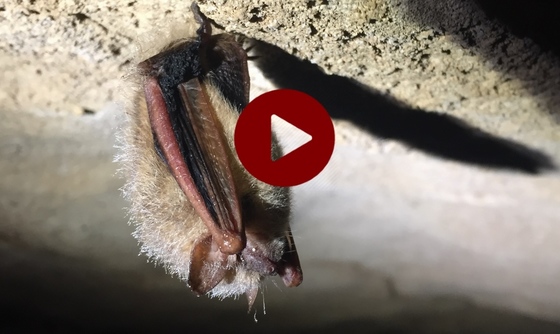 When Georgia bat counts ticked up 1 percent this winter compared to last year, it didn’t ease worries over white-nose syndrome.
Totals in the caves that WRD surveys -- a high-priority conservation action in Georgia's State Wildlife Action Plan -- are down 93 percent from historical highs. The disease that has killed millions of bats is still hammering north Georgia’s most common one: the tri-colored. And except for grays, Myotis bats are simply no longer seen in the region.
Senior wildlife biologist Katrina Morris wants to be excited about the slight increase, but she’s realistic. “We had a real winter, and I think it’s more likely there were more bats in the caves,” because of the more persistent cold, said Morris, who leads bat surveys for the Wildlife Conservation Section.
Learn more in WRD's annual report on WNS and this story map.
Meanwhile on Georgia’s barrier island beaches, loggerhead sea turtles continued their nesting comeback, if at a slower pace.
The Georgia Sea Turtle Cooperative reported more than 1,730 nests this summer. That topped the annual average – 1,345 – since comprehensive surveys began in 1989. But this was the first sub-2,000 nest season since 2014, eclipsed by last year’s 2,155 and a record 3,289 nests in 2016.
DNR Sea Turtle Program Coordinator Mark Dodd said fluctuations are normal and the population is growing about 3 percent a year. “Overall, the trend is still good.”
Follow nesting news on the Georgia Sea Turtle Cooperative’s Facebook page.
Top
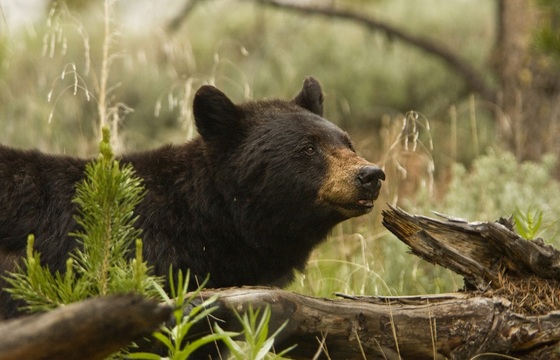 WRD’s draft management plan for black bears is the focus of public meetings this month in Perry, Young Harris and Waycross. State bear biologist Adam Hammond said the plan is aimed at conserving black bears while providing sustainable harvest, promoting the species and minimizing human-bear conflicts.
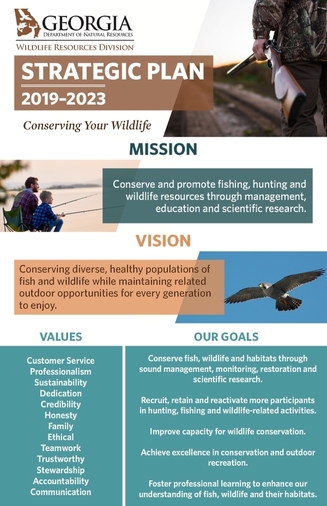 We all work more effectively when we have a plan that defines our mission, vision, goals and values. Our revised strategic plan does that through 2023, concisely addressing how WRD will meet customer needs and manage Georgia’s wildlife, all under a new division motto “Conserving Your Wildlife.”
The 2019 statewide meeting is on your calendar for Jan. 9 at Charlie Elliott Wildlife Center, right? Attendance is required for all employees, full-time and hourly, except for the minimal staffing needed to cover critical office duties. Register here, and if you’re making a long drive and need a room at Charlie Elliott the night before, email Public Affairs’ Heidi Ferguson.
Fall’s hot start slowed license sales: At the end of September we were $1.2 million behind on our sales goal for the year. The good news is that more than 12,500 WRD license plates were sold in August, leaving us only 431 tags shy of the annual mark (tag sales lag a month behind). For help pitching licenses and tags, dig into our R3 toolkit. Got questions? Ask away.
Top
|
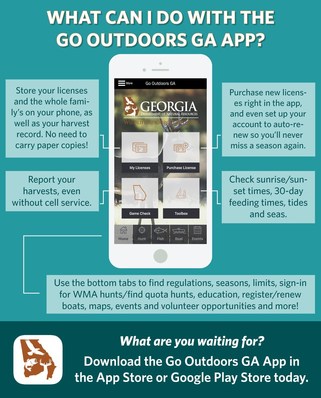 The free Go Outdoors GA app has many uses, from buying and storing hunting and fishing licenses to viewing regulations and finding places to hunt, fish, hike and put your boat in the water.
The app even allows hunters to check their harvest without cell service.
If you don’t have the app, download it on your mobile device via the Apple or Google Play Store (search “Outdoors GA”).
If you do, mention it to outdoors-loving friends and family who don’t.
Top
|
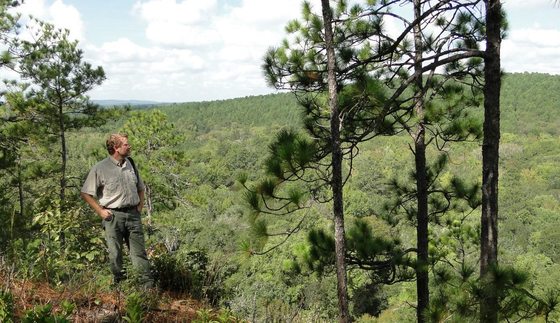 Senior biologist Nathan Klaus at Sprewell Bluff WMA. (Rick Lavender/DNR)
Nathan Klaus, a Wildlife Conservation senior biologist, will receive the Bill Boyer Natural Resource Professional of the Year Award at The Longleaf Alliance’s biennial conference Oct. 23-26 in Alexandria, La. Named for early longleaf and prescribed fire advocate Bill Boyer, the award recognizes a natural resources professional for significant contributions to conserving longleaf pine ecosystems. Klaus, a 19-year DNR employee, has been a leader in restoring longleaf – notably montane longleaf along the Flint River – groundcover and rare species through prescribed fire and forest management, invasive species control, land acquisitions and partnerships.
DNR Ranger 1st Class Eric White and volunteer Steve Wilson have been named Hunter Education Instructors of the Year. “Teaching students to be safe, responsible, ethical hunters is the goal for all instructors” said Jennifer Pittman, Hunter Development Program manager. “Both Eric and Steve are exceptional examples of the type of instructors that can encourage and inspire young hunters.” White’s Law Enforcement Division unit serves the Albany, Tifton, Moultrie and Thomasville areas. Wilson lives in Haralson County in northwest Georgia.
Recent recognition of employees’ service included Michael Spencer, who has worked for the agency for 35 years. Spencer started as a district fisheries biologist in northwest Georgia in 1983 and served as a senior biologist, regional supervisor and fisheries assistant state supervisor before becoming supervisor of the License and Boat Registration Unit. For some historical perspective, during his first year on the job, Motorola introduced the first commercial cell phone (at $3,995 each), Michael Jackson debuted his moonwalk dance move and M*A*S*H aired its final episode.
Top
WE ARE DNR
WRD's We Are DNR recipients include the following, plus some comments from those nominating them:
Sonja Daniels, Game Management (headquarters administration) – Through Sonja's outstanding effort involving Game Management administrative functions, the section can provide hunting and other wildlife-related opportunities on more than 1 million acres of WMAs, hunting and shooting education programs to more than 50,000 people and technical assistance to Georgia citizens and landowners. With Sonja's hard work, Game Management closed out a $46 million budget dispersed over 65 fund sources to less than $1, all while dealing with headquarters vacancies at assistant chief and administrative assistant 1. The administrative functions, policies and procedures Sonja implements and oversees allow our office to function smoothly and provide exemplary service to staff and constituents.
Adam Hammond, Scott Bardenwarper, Cameron Chester, Jim Johnson, Joel Payne (all but Hammond, in Region 1, are in Game Management Region 2) – This group led in resolving the recent bear crisis at Big Canoe. (Note: Other Region 1, 2 and some Law Enforcement staff also have worked with Big Canoe all spring and summer on nuisance bear issues.) These five employees responded to requests for immediate, on-site assistance at all hours and on holidays, including July Fourth. They teamed with Law Enforcement and Big Canoe staff and homeowners to catch a sow and three cubs that had been breaking into unoccupied homes, behavior that had escalated dramatically and dangerously. The removal required discretion, judgement and skill. It also averted a potential crisis. The outcome speaks to the professionalism and commitment to public service by regions 1 and 2 in dealing with Big Canoe and bears for more than a decade.
Rob Bartlett, Mike Crumbley, Scott Fulton, Cody Langford, Matt Skinner (Game Management Region 4) – This team, which covers seven primary west-central WMAs and satellite areas totaling 48,500 acres, went above and beyond in management and research. Despite a wet January and February, they conducted controlled burns on 12,151 acres with help from biologist Theron Menken, The Nature Conservancy and Wildlife Conservation. They also planted 356 acres of dove fields, maintained 170 wood duck boxes and operated 10 waterfowl impoundments. For research purposes, they caught 254 doves for banding, conducted three deer camera surveys, trapped geese, collected 87 chronic wasting disease samples, recorded deer cooler data and surveyed for alligators, quail and turkey poults.
We Are DNR awards allow all WRD employees to recognize associates for exemplary work. Just click the button below and answer the brief questions.
WRD CHAMPIONS
The WRD champions chosen by section chiefs for the previous two quarters are:
Fisheries Management
-
Thom Litts, who has helped modernize how the section manages information and made that information more accessible internally and externally, such as though ESRI applications that better serve field staff and administration in data management.
-
John Kilpatrick and Craig Robbins, who, despite a biologist and tech vacancies in the regional office, completed all Region 3 spring sampling assignments, monitored Alabama shad, stocked the new Tired Creek Reservoir, collected bass for mercury analysis and prepped for opening of Silver Lake Public Fishing Area.
- McDuffie Hatchery’s Lewis Boykin and Chalisa Fabillar, who took on the added task of raising walleye fingerlings this spring – with the Walton Hatchery closed for renovations – work that included nine more production ponds and having to quickly flip walleye ponds to make room for striped bass.
- Summerville Hatchery Assistant Manager Collis “Danny” Edwards, who led the hatchery when the former manager retired and, though short-staffed, worked with a talented tech 2 to meet or exceed production goals and maintain the hatchery, making emergency repairs to avoid major fish losses.
Game Management
-
Adam Hammond, who answered numerous bear complaints and worked closely with Region 1 and 2 staff, Law Enforcement and Big Canoe staff and homeowners to safely resolve a sensitive situation involving a sow and cubs – including staying nights nearby to respond faster and patrol the area.
-
Stephen Giles, for his work on WRD’s Millennial Recruitment and Retention Committee, where he did an excellent job researching and preparing a report for the project and representing himself and fellow millennials in a professional manner.
-
Russ Singletary, for his significant role in habitat management at River Creek WMA, a property he has helped manage since 1955 and where his work after the state acquired River Creek in 2005 has been key to hunting success rates, including a 45-percent success rate on average for turkey hunters the last five years.
-
Allen Smith, who implemented mowing, spraying, liming, fertilizing and planting 75-plus acres of warm-season food plots at Bullard Creek and Alligator Creek WMAs, helped with alligator surveys and met with agencies and groups about managing rare species on Alligator Creek.
-
Kevin Kramer, Region 4’s supervisor who goes over and beyond every year at the National Archery in the Schools Program state tournament, bringing his entire staff to help run the event.
Wildlife Conservation
-
Nathan Klaus, who in nearly 20 years of service to WRD has built a reputation in the Southeast for his expertise and work ethic as a restorer of and spokesman for imperiled ecosystems, leading to The Longleaf Alliance presenting him the Bill Boyer Natural Resource Professional of the Year.
-
Melanie Holthaus, who as administrative assistant 3 has done an outstanding job in administration of the Social Circle office, involving nearly 20 full-time staff, many hourly employees and tracking more than 20 grants.
-
Zach Henshaw, who first worked with WRD’s seasonal fire crews and since going full-time in July 2017 has been involved in red-cockaded woodpecker conservation, prescribed fire, gopher tortoise surveys and a new prothonotary warbler project he assumed responsibility for this spring.
-
Tina Bennett, who in her relatively short time with WRD as the sole administrative assistant for the coastal office did a great job organizing files, coordinating purchases, tracking grants and contracts, and handling correspondence. Tina has moved to Texas to be closer to her grandchildren.
Congratulations to all of these employees. Thanks to each for helping WRD excel at customer service and pursue its mission.
Top
Changes for mid-June through Oct. 1 (hourly positions not included).
HIRED
- Mitchell Avery Brice, Game Management (Fort Valley), wildlife technician 1
- Robert Allen Dills, Game Management (Gainesville), wildlife tech 1
- Kenneth Edward Ellington, Game Management (Calhoun), wildlife tech 1
- Hunter J. Roop, Fisheries Management (North Region 1 Operations), fisheries biologist 2
- Zachary Steven Moran, Fisheries Management (North Region 1 Operations), fisheries biologist 2
- Anakela Popp, Wildlife Conservation (Social Circle), wildlife biologist 2
- Michael Anthony Schena, Fisheries Management (DJ Boat Ramp CO/R&M), construction specialist 2
- Jacob William Synnott, Fisheries Management (Southeast Region 3 Operations), fisheries tech 2
TRANSFERRED
- Taylor Leigh Brown, WRD Communications State, communications specialist 4
- Morgan William Bettcher, Wildlife Conservation (Social Circle), wildlife tech 2
- Adam D. Hammond, Game Management (Administration), wildlife biologist 3
- Marissa G. Peebles, Fisheries Management (Region 2 Operations), administrative support 1
- Craig Robbins, Fisheries Management (Southeast Region 3 Operations), fisheries tech 3
- Kenneth Dale Story, Game Management (Fort Valley), wildlife tech 3
PROMOTED
- Robert R. Bartlett, Game Management (Fort Valley), wildlife tech 3
- James W. Dunwoody, Game Management (Sapelo Island), vessel captain 1
- Katherine L. Might, Fisheries Management (Operations), business support analyst 1
- Joseph Vernon, Game Management (Sapelo Island), wildlife tech 3
- Scott William Fulton, Game Management (Fort Valley), wildlife tech 2
- Johnny Robert Williams Jr., Fisheries Management (Central Region 2 Operations), fisheries tech 3
RESIGNED
- Alford Leon Bailey Jr., Game Management (Sapelo Island), vessel mate 1
- Faye Wall Bartlett, Fisheries Management (Central Region 2 Operations), administrative support 1
- Tina Marie Bennett, Wildlife Conservation (Brunswick), administrative assistant 3
- Robert L. Danley, Game Management (Sapelo Island), wildlife tech 2
- John M. Madden, Hunter Education & Shooting Sports, training/development specialist 2
- Jody Rice, Charlie Elliott Wildlife Center, curator/preservationist 2
RETIRED
- Frank D. Johnson, Fisheries Management (North Region 1 Operations), fisheries tech 3
- Regina C. Malcom, Wildlife Conservation (Social Circle), business support analyst 1
- Elizabeth A. Ogletree, Fisheries Management (Headquarters Operations), business support analyst 1
Top
|