 As part of the agency charged with managing Georgia’s wildlife, one of the most direct and frequent contacts we have with our widest realm of customers – the general public -- are calls about nuisance, injured or “orphaned” wildlife. Our primary goal in handling these calls is serving the customer.
To help us more consistently meet that goal, we are making changes – changes that benefit customers and wildlife.
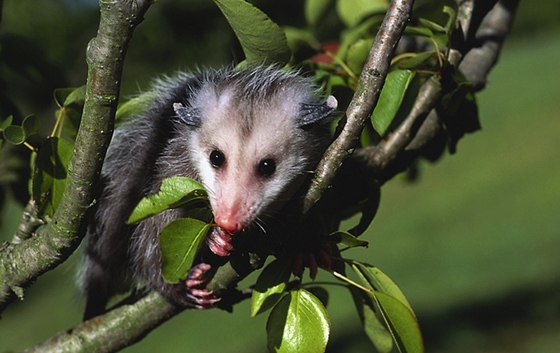
We have equipped the call center at Brandt Information Services, which handles licensing, to answer basic nuisance wildlife and wildlife rehabilitation calls (i.e., "There's a baby possum in my pear tree!"). We are marketing that phone number, (800) 366-2661, as the one to call with these issues.
We also are reviewing and strengthening protocols that guide how we respond to such calls and how the public can reach us 24/7 (after-hours calls go to the State Operations Center, which contacts the appropriate person on call). And our revised website makes it easier for people to find related information, at www.georgiawildlife.com/nuisancewildlife.
Yet in all of these changes, please remember that the key is to serve our customers, and to serve them well.
That means when our phone rings or our email dings with a question about a coyote in the neighborhood or a fledgling blue jay in the backyard, we adopt the problem.
Assess the situation. Provide an answer or direct the customer to staff who can. If you need to transfer the call, stay on the line as long as possible to make sure the call is answered by the person you're trying to reach. (Note: We do not transfer these customers to the Brandt call center. We handle them.) If forwarding an email, assure the customer they can contact you again if they don’t hear back.
Adopting the problem is basic, responsible customer service.
More details will be coming from your section chief. But if you have questions in the meantime, let Marketing and Communications Manager Jenifer Wisniewski know, (706) 557-3324.
Listen to excerpts from a call to Brandt about a deer fawn.
UNIFORM CATALOG COMING SOON
What’s also coming, later in August, is WRD’s long-awaited uniform catalog and updated policy. No more 5.11. The new contract will feature multiple brands available through one company. The products also will be delivered faster.
The catalog, a living document in which items can be added or deleted, will include a range of colors, styles and items. (There are more than 20 different shirts for men and women.) The options, all relatively inexpensive, will be available through an online store. Each section will set and communicate to staff its uniform budget.
Stay tuned for details. And as always, thank you for all you do to make WRD great!
Back to top.
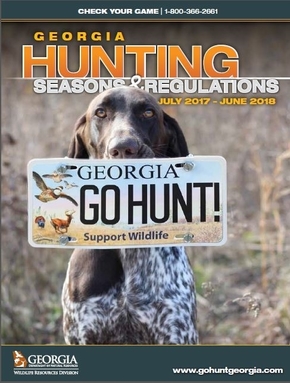 Here's a quick look at major regulation changes noted in the just-released 2017-2018 Georgia Hunting Seasons and Regulations Guide.
Georgia Game Check: To improve reporting, hunters can record a harvest via the Outdoors GA app even when they don’t have internet service or Wi-Fi. Simply enter the information and sync it once service or Wi-Fi is available to obtain the required confirmation number.
New places to hunt: WRD has added two WMAs, Alapaha River in Irwin County and Alligator Creek in Wheeler County, plus more Voluntary Public Access sites open to hunting.
Bear and deer seasons: A three-day hunting period (the second-to-last weekend in September) has been added to the south Georgia bear season. The central Georgia bear season will be the second Saturday in January. The 2017-2018 deer season ends Jan. 14. Either-sex deer-hunting opportunities have been increased by 21 days in the Piedmont and Ridge and Valley regions, and by 14 days in the Lower Coastal Plain.
Feral hogs, coyotes on WMAs: To help control these invasive animals, feral hogs and coyotes can be hunted May 16-31, 2018, using legal big or small game weapons. As before, hunters can continue to kill coyotes and feral hogs as incidental take during big and small game hunting dates on WMAs.
The 2017-2018 guide is online. Printed copies are available at WRD offices and license vendors. For license change details, see this special edition of We Are DNR sent in June.
Back to top.
|
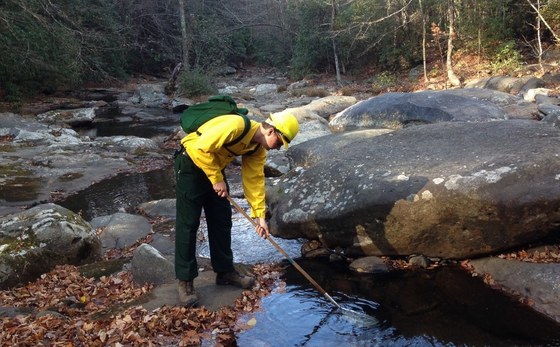 Fisheries biologist John Damer collects fish and water samples on the Conasauga. (DNR)
The Fisheries Management Section, in cooperation with DNR’s Environmental Protection Division, is responsible for investigating fish kills in public waters. Fish kills can result from natural causes, such as diseases, parasites or even heavy rainfall events that lead to sudden changes in water quality.
However, the kills that spur the most concern and interest are those caused by human activity. From pipeline leaks to sewage spills, these incidents usually involve pollutants in a waterway.
When a call comes in about dead fish in public waters, WRD fisheries staff respond promptly. After making sure the area is safe to enter, they try to find the cause and the kill’s upstream and downstream limits. If fish are still dying, the immediate concern is pinpointing the cause and promptly stopping it.
For human-caused fish kills, staff can usually follow a trail of dead fish or other evidence of pollution (i.e., chemical smells, discolored water) to the source. Water quality measurements are taken, dead fish counted or estimated using standardized procedures, and, if possible, species identified. Once fisheries staff have determined the probable cause, EPD searches for the responsible parties and handles regulatory and enforcement actions.
Monetary values are set by fish species and size. At a minimum, restitution for the fish killed and the cost of the investigation are expected.
In fiscal year 2017, Fisheries Management investigated 10 fish kills caused by human activities and about 20 where the cause was natural or undetermined. These investigations are not the most glamorous of WRD’s responsibilities but they are an important part of our mission.
WHAT TO DO
If you see dead fish in public waters, immediately contact the regional fisheries office or the T.I.P. hotline, (800) 241-4113 or rangerhotline@dnr.ga.gov.
DID YOU KNOW?
The north Georgia forest fires in fall 2016 resulted in water quality changes that caused a fish kill.
Back to top.
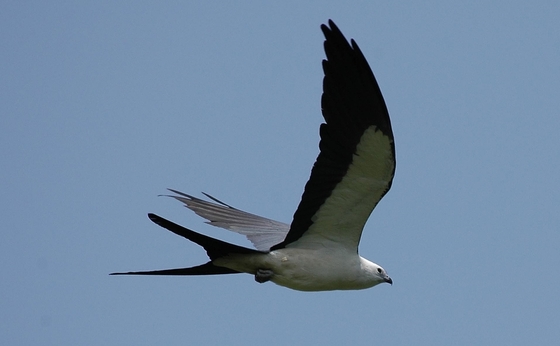 Swallow-tailed kite (Todd Schneider/DNR)
What guides our agency's work with 639 animal and plant species of conservation concern? Answer: Georgia’s State Wildlife Action Plan.
This strategy is critical to conservation in our state. But the Wildlife Action Plan is far from being a household phrase, inside WRD or out. Here’s why it should be.
What is it? The Wildlife Action Plan is a statewide strategy to conserve populations of native wildlife species and their habitats before these animals, plants and places become rarer and costlier to conserve or restore. The lineup varies from swallow-tailed kites to Georgia aster and Southern Appalachian mountain bogs.
What does it do? The plan uses the best available data to assess conservation needs and ways to address them. The 150 actions recommended focus efforts where they’re most needed and effective.
Who developed it? Georgia’s first Wildlife Action Plan was finalized in 2005, with a revision approved in 2016. Each process, led by WRD’s Nongame Conservation Section, involved representatives from 100-plus conservation agencies and groups, land managers and owners, and academia. This is not "just" a DNR plan.
How is it funded? Congress requires an approved plan for states to receive State Wildlife Grants, the main federal funding for states to conserve nongame. Georgia receives about $12.5 million annually.
What has it done? Achievements credited at least in part to the plan include:
- Acquisition of more than 105,000 acres of high-priority lands for conservation and recreation, with another 290,000-plus acres protected through conservation partners and easements.
- Advancements in prescribed fire, invasive species control and native plant restoration that enhanced key habitats.
- Monitoring that helped rare amphibians, bats, plants and birds, including the resurgence of bald eagles.
See why you need to know about Georgia's Wildlife Action Plan? Find out more at www.georgiawildlife.com/SWAP.
TAKING ACTION AGAINST BAT DISEASE
Efforts to combat white-nose syndrome, a disease that has killed millions of bats in North America, are emphasized in the Wildlife Action Plan. This WRD story map explores Georgia survey results this winter and the impact of WNS in our state.
Back to top.
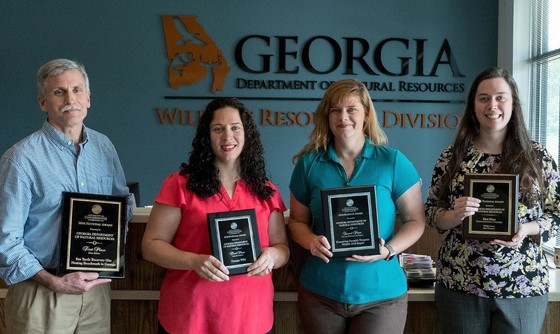 WRD's Rick Lavender, Jenifer Wisniewski, Linda May and Heidi Ferguson
WRD’s Public Affairs team won four national awards for their work promoting Georgia’s fish and wildlife resources. The honors, announced during the Association of Conservation Information’s annual conference in Nashville, Ind., included first place in the News Release category, first in Conservation Post, second in Publications and third in Newsletter. This year's contest by the non-profit organization of natural resources communicators representing state, federal and Canadian wildlife, parks and natural resource agencies, as well as private conservation organizations, drew more than 400 entries.
With hunting seasons opening soon, WRD’s Hunt and Learn programs are the ticket for teaching youth ages 10-17 everything from hunting basics to caring for harvested game. These popular educational weekends feature qualified teachers, guided hunts (as appropriate, squirrel, deer, rabbit, quail, falconry or turkey) and three instruction levels – beginner, intermediate and advanced. Youth must be accompanied by an adult. Call (770) 784-3059 to register.
Fisheries Management staff attended the International Convention of Allied Sportfishing Trades, or ICAST, to meet with Georgia fishing industry companies and partners. Held this July in Orlando, Fla., ICAST is the world’s largest sportfishing trade show. Most major fishing product and apparel manufacturers and retailers from Georgia attend, providing WRD a significant opportunity to interact with industry partners and help keep them informed about how the agency spends the Wildlife and Sportfish Restoration funds they provide through excise taxes. The outreach also allows WRD to develop relationships and collaborate on shared goals, such as angler recruitment, retention and reactivation, or R3.
Back to top.
WRD We Are DNR recipients for June and July include the following, plus some of the comments from those nominating them:
Tim Bonvechio, Fisheries Management Region 4 (Waycross) – “In the truest sense, a fisheries biologist is one who uses sound scientific procedures to implement best-management practices in regards to the species and geographical location. By this definition, Tim exceeds the status quo. He is relentless in his efforts to ensure a positive impact on Georgia's fishing opportunities."
Mark Dodd, Nongame Conservation (Brunswick) – As DNR's Sea Turtle Program coordinator, “Mark does an excellent job working with multiple volunteers that assist him with the intense and long sea turtle nesting season. … Through his decades of work, he has made Georgia shine when it comes to the recovery of our loggerhead sea turtle populations."
Jim Johnson, Game Management Region 2 (Gainesville) – Jim provides “excellent customer service, particularly with nuisance wildlife contacts covering Lumpkin, Dawson and Forsyth counties.” His duty station is heavily used Dawson Forest WMA. “Everyone knows Jim by name or appearance. He is the face of WRD on that WMA, having served there approximately 14 years.”
David "Brentz" McGhin, Fisheries Management Region 4 (Waycross) – A creel clerk with WRD since 1994, Brentz has “assembled one of the most impressive long-term fisheries data series … 23 years of data on the Altamaha!” He is a go-to guy, helping with sampling, work at the hatchery and maintenance at PFAs and the regional office. “Brentz does not say 'no' if a task needs to be done.”
Rhonda Swinea, Fisheries Management Region 4 – “Rhonda’s role as license clerk ramped up the week before the new prices took effect. Over the year, she sold 582 recreational licenses and 41 lifetime licenses. But the day before the changes, she sold 18 lifetime licenses. While all in the office pitched in, Rhonda processed most of those lifetime licenses. Her customer service for licenses and boat registrations has been excellent.”
Back to top.
We Are DNR awards allow all WRD employees to recognize associates for exemplary work. Just click the button above and answer the brief questions.
WRD CHAMPIONS
Also, here are the most recent WRD champions, as chosen by section chiefs.
Fisheries Management:
-
James Woolsey, hatchery manager at the Go Fish Education Center. Though shorthanded on staff, James has maintained production at the hatchery.
-
Shari Franklin, AOC III at the Gainesville office. Shari prepared the Summerville technician 2 hiring package and drove to Summerville to orient the new employee. She also handled the cut in the number of purchasing cards and informed vendors about the policy change.
-
Wes Beard, assistant manager at Marben PFA. Wes has done a good job managing the PFA and has proven resourceful (including obtaining extra concrete from construction workers on-site and making 62 fish attractors). He also has handled all lake fertilization and the six regional boat ramps.
Game Management:
-
Brian Vickery, Bryan Crowe, Nicholas Crosby, Taylor Cumbie and Drew Zellner, of Region 5. This team worked to expand the region’s managed dove fields to 254 acres, planting 81 percent, or 206 acres, of that total. They also created a 146-acre dove-field complex at Elmodel WMA, providing better dove hunting opportunity and enhancing quail habitat.
-
Adam Hammond, Larry Ethridge and Chuck Waters, of Region 1. They did an outstanding job responding to a black bear incident at Fort Mountain State Park and conducting the follow-up investigation and actions.
Nongame Conservation:
-
Amber Barrow, wildlife interpretive specialist at Charlie Elliott Wildlife Center. In her many responsibilities (including running the Brooke Ager Discovery Center, day camps and homeschool programs, coordinating the annual JAKES event and serving as the center’s webmaster), Amber’s enthusiasm, attitude and ability to work with all make her a champion.
-
John Jensen, senior wildlife biologist and resident reptile and amphibian expert. In his 21 years with WRD, John has led many key herp conservation efforts, varying from coordinating the State Wildlife Action Plan amphibian/reptile technical team to contributing to the regional gopher tortoise conservation strategy.
-
Tom Patrick, botanist. Few botanists in the Southeast can compare with Tom in field experience and breadth of taxonomic expertise. One of the Georgia Natural Heritage Program's original employees (starting in 1986), Tom is an expert in trilliums and native orchids, has an encyclopedic knowledge of Georgia flora, and manages the state’s Protected Plant Program.
Congratulations to these employees! And thanks to each for helping WRD excel at customer service and pursue its mission.
Back to top.
Changes for mid-May through June (hourly positions not included).
HIRED
- Robert Allen Andrews, Game Management (Calhoun), wildlife technician 1
- Lindsey L. Brown, WRD Administration/Director's Office, training and development supervisor
- Zacheus Mark Henshaw, Nongame Conservation, wildlife tech 1
- James A. Jones, Game Management (Calhoun), wildlife tech 1
PROMOTED
- Brett W. Albanese, Nongame Conservation (Wildlife Resources Conservation Center), manager 2, natural resources
RESIGNED
- Lucas Lee Mashtare, Game Management (Hunter Education and Shooting Sports), training and development specialist 2
- Jeremy C. Whigham, Game Management (Forest Management), forester 4
- Eric G. Darracq, Game Management (Forest Stewardship), wildlife biologist 3
- Ethan Edward Lovelace, Fisheries Management (Southeast Region III Operations), fisheries tech 3
RETIRED
- Gwendolyn Medina, Game Management (Thomson), administrative support 2
Back to top.
|