|
Big Things Are On The Way!
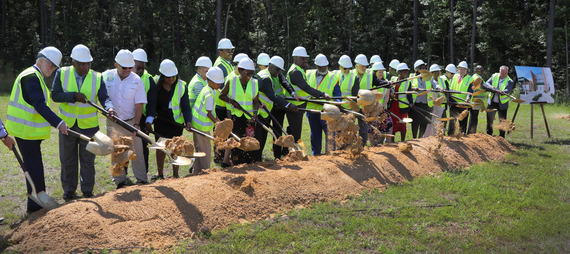
Local leaders from multiple municipalities gathered to break ground at the site of Chatham County’s planned 83,000-square-foot Multi-Agency Public Safety Facility.

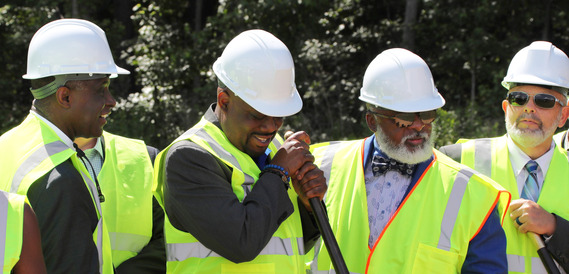
A spirit of collaboration filled the vacant field at 654 Gulfstream Road on Thursday, May 30, as local leaders including the Chatham County Commission, mayors, managers, and mayor pro-tems from across the county, convened for the groundbreaking ceremony. Their unified message emphasized the importance of working together to provide Chatham County residents with enhanced public safety resources.
“This facility will be for the benefit of all of Chatham County – every municipality – that’s why it’s called the Multi-Agency Public Safety Building,” Chatham County Commission Chairman Chester A. Ellis said. “All the municipalities will operate out of this building, some on a daily basis, some on an emergency basis.”
The facility will house the Emergency Operations Center (EOC), Non-emergency call center (NECC), E-911 dispatch, the Chatham Emergency Management Agency (CEMA), and other public safety entities. The construction of the MAPS facility is slated to be completed in 2-3 years.
|

The facility will be rated to withstand a Category 5 hurricane and serve as the Emergency Operations Center for Chatham County during extreme weather events and disasters. The building will be equipped with redundant HVAC, sanitation, potable water, and power systems to allow for at least 72 hours of operation if the primary system fails.
CEMA Director Dennis Jones said he hopes to 'wear the hinges out' on the new facility and underscored the importance of intergovernmental collaboration in public safety.
“The value [the MAPS facility] adds to public safety is immeasurable. The state-of-the-art facility will help propel Chatham County into the future of emergency response and recovery efforts,” Jones said. “As we stand on this ground today, we’re not just breaking earth, we’re breaking barriers. We’re breaking down walls of uncertainty and laying the foundation for a safer and stronger community.”
|
|
|
Tipping The Scales
 Imagine a day when you find your life hanging in the balance. On one side, piled high and weighing heavily against you, is the dark history of wrong choices you’ve made and are unable to stop making. On the other side, equally weighty, is a single daunting choice, but one with the bright promise of tipping the scales in your favor, erasing the past, and changing all of your life choices from this day forward.
It may seem to be an obvious choice, but it is anything but an easy one. For those in the grips of substance addiction or mental illness, if homelessness or PTSD or a personal history of family trauma has affected a person’s ability to live a responsible, healthy, and law-abiding life, it may be more than daunting to make the choice to accept the hand stretched out to help.
When circumstances bring individuals to an Accountability Court, though, the truth of the matter is that they have run out of choices. Their pattern of disregard for self, others and the law has brought them to the point of reckoning – they can be committed to prison, or they can commit themselves into the hands of an entire team of legal and mental health professionals whose only goal is to give them back the rest of their days with the ability to make the right choices and make a better life.
Accountability Courts in Chatham County and across the nation exist to tip the scales of justice through the imposition of caring strength, structure, and supervision until those affected can shed the crippling weight of their past problems. Like Treatment Courts, these innovative programs have for decades been tremendously successful in intervening to break cycles of substance use or mental health issues, thereby saving people from a life of repetitive crime and incarceration. The numbers are sobering: 4,000+ Treatment Courts in operation, 150,000+ individuals served by Treatment Courts each year, a 58% reduction in crime, and an average savings of $6,000 in tax dollars per participant.
Chatham County has six Accountability Courts and one that is specifically a Treatment Court: DUI Court (under Judge White), Mental Health Court (Judge Freesemann), Drug Court with a special track especially for US Veterans struggling with these issues (Judge Bass), ANCHOR Court, formerly Family Drug Treatment Court (Judge Cole), SPARC Court, the juvenile mental health court (Judge Formey), and the newly created Parental Accountability Court (Judges Colbert and Karpf). HOPE Court, also under Judge Formey, is the Treatment Court program which intervenes to help young victims of sexual trafficking. National Treatment Court Month is observed in May, but the good work of all these programs is hardly limited to a single month, so each court will be featured in more detail over the next several months’ newsletters.
For a compelling overview of the impact Accountability and Treatment Courts make on individuals, families and communities, take a minute to watch this video from All Rise: The National Association of Drug Court Professionals. “When I didn’t believe it, when I didn’t want it, when I didn’t care if I had it, they still freely gave it to me.” More than any statistics, the words of Treatment Court graduates attest to the success and the value of these life-altering programs. “They believed in me until I was able to believe in myself.”
|
|
Green Looks Good On Chatham County
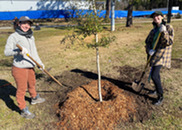
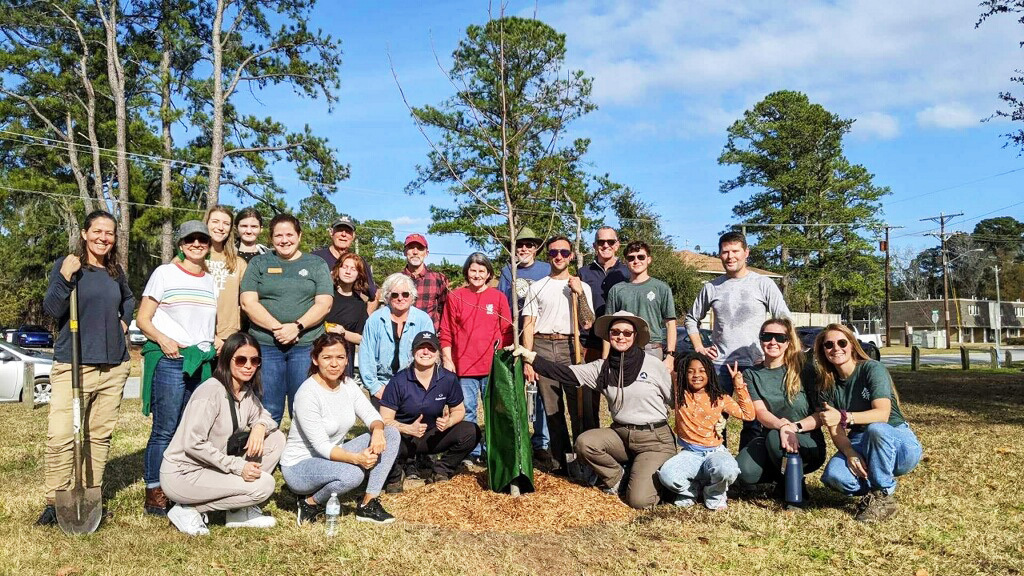
In 2007, Chatham County committed to becoming “The Greenest County In The State.” With a grant from the Georgia Tree Council’s ReLeaf Program and funding from ARPA (the Federal American Rescue Plan Act), Chatham has recently become even greener, by the planting and maintenance of dozens of native trees.
|
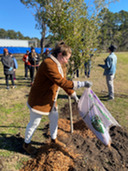
With the help of community volunteers and the Savannah Tree Foundation, new healthy trees were planted at Ambuc Park, Westlake Community Park, and Lamarville Community Park as well as areas along Chatham Parkway. The expansion of the county’s tree canopy not only enriches the natural landscape but underscores how critical outdoor spaces are for community health, wellbeing, and resilience. This project is amplified by an educational component targeting nearby communities and schools and fostering environmental awareness and engagement.
The initiative fits within Chatham County's broader blueprint for fostering a superior quality of life for its residents. Through strategic investments in parks, pathways, and recreational spaces, the county underscores the intrinsic value of natural resources and promotes active lifestyles and community connectivity in healthy, safe, and natural environments.
The community tree planting project also aligns with the County's resilience agenda. By adding green infrastructure, Chatham County enhances our community’s capacity to withstand and recover from adverse situations, which is the essence of community resilience. This newest endeavor punctuated Chatham County’s 2024 resolution to observe Earth Day by, among other things, conserving and protecting its natural resources and promoting equitable community resilience through the health, safety and welfare of its residents.
With resourceful leveraging of funding, Chatham County has demonstrated a multifaceted approach to community development, intertwining environmental goals with economic and social welfare. Weaving together the threads of environmental stewardship, community resilience, and inclusive development, Chatham is also setting a commendable example for fostering sustainable and resilient communities.
|
|
|

Be The Hero Your Pets Think You Are
|
|
 A hurricane roaring through your hometown quickly escalates from a natural disaster to a personal catastrophe when you’re not prepared to deal with it. When do you need to leave? How will you get out? Where will you go? What should you batten down and what should you load up? Oh, and who let the dogs out?!
Our pets are probably creatures of habit even more than we are, so when things get weird weatherwise, they can get wired. This means the doggy that always trots by your heel without a leash or the kitty that always turns into a boneless bucket of purrs on your lap may not be quite so calm or quite so inclined to hop in the car to go for a nice long ride with you. As you go about preparing your home and family for emergency situations, remember to think about how a strange and stressful situation might affect your furry friends AND think about all the things they might possibly need for health, safety, and comfort until the storm blows over.
Just like you’re encouraged to assemble an emergency supply kit and a handy information folder for your family, go through that whole process for your pets as well. Gather the things they normally need: their food and a manual can opener, bowls, water, litter box or pooper-scooper supplies, crate or bedding, toys or blankets, medications and prescriptions. Think of the things they could need in circumstances that could injure or frighten them: a strong harness or leash, collars with your name and contact info as well as vaccination tags, first aid kit, possibly muzzles or calming medications.
|
 And then think of the things you might need as you travel with your pet or in a worst case, become separated from your pet: current photos of you with your pet, current vaccination records, your vet’s contact info and emergency plans, your pet insurance information.
And while you’re thinking calmly, before emergency strikes, there are things you can do proactively. Having your pet microchipped and keeping the associated contact info for you up to date is the very best way to dramatically improve the chances of your reunification should you become separated. Look into hotels or shelters along your evacuation routes to confirm where pets are accepted. Place a rescue alert sticker in a visible place on your home, listing the number and types of pets who live there, but be sure to mark it “evacuated” when you leave, so rescue workers know no one was left behind.
And about that: if it’s not safe for you to stay in your home during an emergency such as a hurricane, it’s not safe for your pets to stay there, either. Take them with you, and plan ahead to keep them safe! Bring them inside and keep them contained well ahead of any need to evacuate.
June is both Pet Preparedness Month and the beginning of Hurricane Season. For excellent lists of pet preparedness suggestions for emergencies and natural disasters, check out these knowledgeable resources: The Humane Society, Ready.gov, and The American Red Cross.
|
|
One Chatham Inclusion Acadamy
Thirty Councilors Study to Make The Best Possible One Chatham
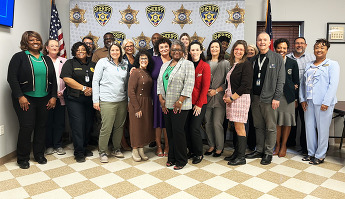
Schools are out for the Summer all across the country, but one academy is going full steam ahead in Chatham County. Under the tutelage of its new DEI Administrator, Chatham County Government’s ‘One Chatham’ Inclusion Academy has a lofty curriculum and a healthy enrollment. Thirty Team Chatham members from a wide variety of departments and responsibilities within the county comprise the ‘One Chatham’ Inclusion Council and are learning the ABCs of what true DEI can mean for Chatham County.
D is for Diversity – that’s probably the easiest one. Chatham County is a community made up of a glorious mixture of just over 300,000 people. Team Chatham members proudly reflect the diverse community they serve.
E is for Equity – Chatham County’s commitment to fairness and justice means not only ensuring that all voices are heard but also means considering each person’s uniqueness and treating each person according to their particular circumstances.
And I is for Inclusion – in these parts ‘southern hospitality’ is a real thing, and in Chatham County it matters that every single person on our team and in our community truly feels a welcome sense of belonging.
The ‘One Chatham’ Academy is a deep dive into the hows and whys of DEI and what it can mean for Chatham County’s employees and residents alike. In bi-monthly meetings, Council members study and consider every aspect of the Academy goals: to Educate, Cultivate, and Collaborate. And then when they Graduate from the Academy, these County leaders become the teachers themselves, taking the goals with them throughout the county.
|
|
|
|
|
|