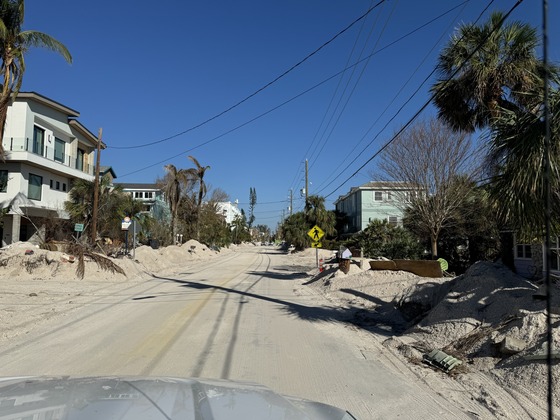
Before you begin to rebuild your building, there may be a National Flood Insurance Program (NFIP) term you need to be aware of: “substantial damage.”
It’s common to think that substantially damaged merely describes a structure that has sustained a large amount of damage by a flood or any other source such as fire, tornado, or earthquake.
In reality, substantial damage is a specific term that applies to a damaged structure in a Special Flood Hazard Area – or floodplain – for which the total cost of repairs is 50 percent or more of the structure’s market value (actual cash value) before the disaster occurred. For example, if a structure’s market value before the damage was $200,000 and repairs are estimated to cost $120,000, that structure is “substantially damaged.” Land value is excluded from the determination.
Repairing a structure in a floodplain requires a permit. In addition, the “substantially damaged” structure must be brought into compliance with the Florida Building Code and the community’s floodplain management regulations. Options include floodproofing a non-residential structure, elevating the structure to a height determined by local community officials, or demolishing the structure.
What is Substantial Damage?
Communities that participate in the NFIP are required to determine whether damage to structures within a mapped Special Flood Hazard Area (SFHA), regardless of its origin, meets the criteria for substantial damage.
Substantial damage is defined in the NFIP regulations as:
“Damage of any origin sustained by a structure whereby the cost of restoring the structure to its before-damaged condition would equal or exceed 50 percent of the structure's market value before the damage occurred.”
The National Flood Insurance Program
If the City does not participate in the NFIP, there are several consequences. The first is the loss of the ability to obtain insurance from the NFIP. Second, and most importantly, disaster assistance would be unavailable following a declared disaster. If the City did not participate in the NFIP, owners of buildings with conventional loans would also be required to notify buyers or lessees that the property is in an SFHA and that Federal disaster relief is not available in a declared disaster.
Increased Cost of Compliance (ICC) coverage is paid coverage under the insured’s NFIP flood policy. Policyholders of structures substantially damaged by flood located in the Special Flood Hazard Areas (SFHA) can receive up to $30,000 through ICC to help meet the cost of complying with building codes and ordinances.
Substantial Damage Determinations
With the help of consultants, the City will conduct a Substantial Damage determination for all buildings in Treasure Island. Building owners will receive a letter with more detailed information regarding these visits in the near future.
To calculate substantial damage, the local official visually inspects a house, noting the impacts on the structure itself and, when possible, the interior. These notes, coupled with other information such as property valuations and estimated costs to repair, are used to calculate the percentage of damage to the structure.
Once a determination on the percentage of damage is made, local officials then share that information with the property owners if their structure is substantially damaged. There is an appeal process to this Substantial Damage determination.
No permits other than for life safety or remediation (removal of damaged drywall, flooring and baseboards) can be issued until this Substantial Damage determination has been made for structures that are not FEMA compliant. These inspections will be prioritized for structures with submitted permits.
FEMA compliant structures are those that meet the local requirements for floodplain construction and the floodplain requirements of the Florida Building Code. Treasure Island’s floodplain requirements require that structures are elevated to base flood elevation plus 2 feet. Base flood elevations may be found here: Community Development (arcgis.com) You will need to choose the floodplain layer from the layer list at the top of the page (it may be helpful to turn off the zoning layer).
Values
A link to the property appraisers website where you may access the FEMA/WLM letter for the property: Quick Search | Pinellas County Property Appraiser (pcpao.gov)
• Search for your address in the search bar
• Click on TOOLS on the right side of the screen
• Select "FEMA/WLM Letter"
• You can see the value of your structure under the 50% Rule section
• Beneath that, it will show you what half of that is and how much you can spend on improvements
An alternative way to determine value is through a private appraisal. This is a specific type of appraisal with very detailed requirements. Guidance may be found in the document titled “FEMA Actual Cash Value Appraisal Checklist for SI/SD Determinations” at this link to Applications and Forms: City of Treasure Island (mytreasureisland.org)
For more detailed information on your specific property, please email flood@mytreasureisland.org with the property address and any questions.
For questions regarding permitting, please email permits@mytreasureisland.org