Withlacoochee River System Update - 6/1/2026
Southwest Florida Water Management District sent this bulletin at 06/01/2026 03:11 PM EDT
 |
The Wet Season Has Begun!
Rainfall:
- This time of year marks a drastic shift in our weather patterns.
- The dry, cold fronts that typically push down our peninsula come to an end…
- …and tropical moisture from the Gulf settles across our region, allowing for almost daily thunderstorms.
- This year, the wet season appears to have started early, and thankfully so with the extreme drought conditions we’ve been dealing with.
- May turned out to be a very wet month.
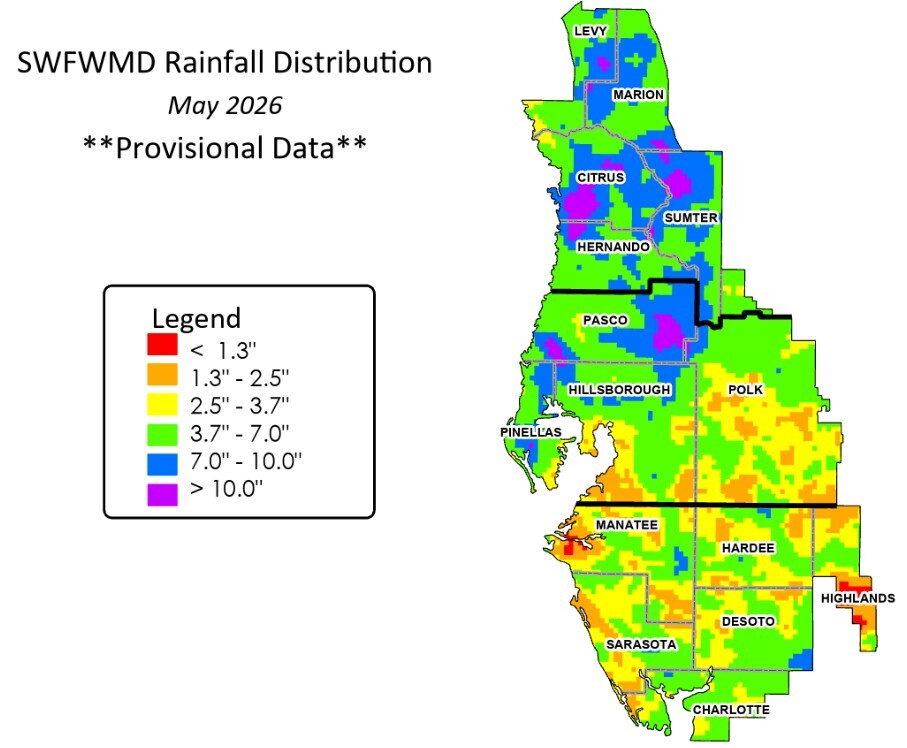
- Our region received 7.1 inches of rainfall in May, nearly twice the historical average for the month (3.7 inches).
- So far this year (January – May), we’ve received about 13.7 inches of rain, below the historical average for the first 5 months (15.9 inches).
- Although May was a very wet month, water levels in our region’s lakes, rivers, and the aquifer remain very low due to the extended drought we’ve been experiencing.
- Aquifer (groundwater) levels remain well below normal, currently in the 28th percentile for this time of year, and much lower than last year (53rd percentile). Remember, the 50th percentile is average.
- June is the start of wet season, which runs through the end of September.
- If we continue to see above average rainfall this summer, our water resources should be able to recover this year.
- The figure below shows how much rainfall different areas received last month.
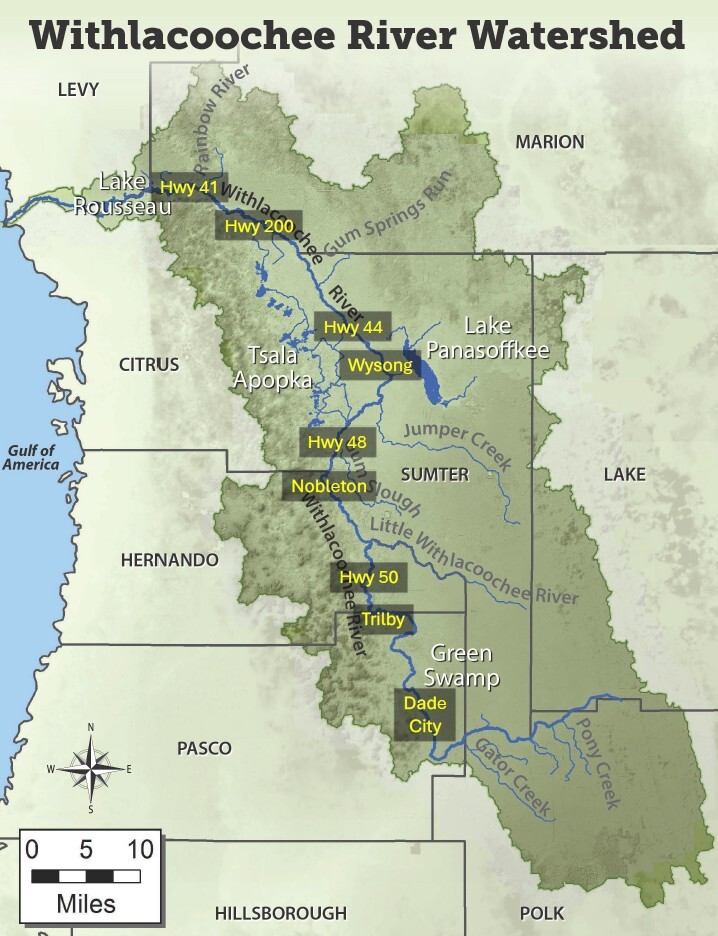
Withlacoochee River (from the Green Swamp downstream past Hwy 200):
- What a difference some rainfall can make.
- The Withlacoochee River’s steep dry-season decline came to an end in mid-May.
- And most areas saw increased water levels and flows over the past couple weeks.
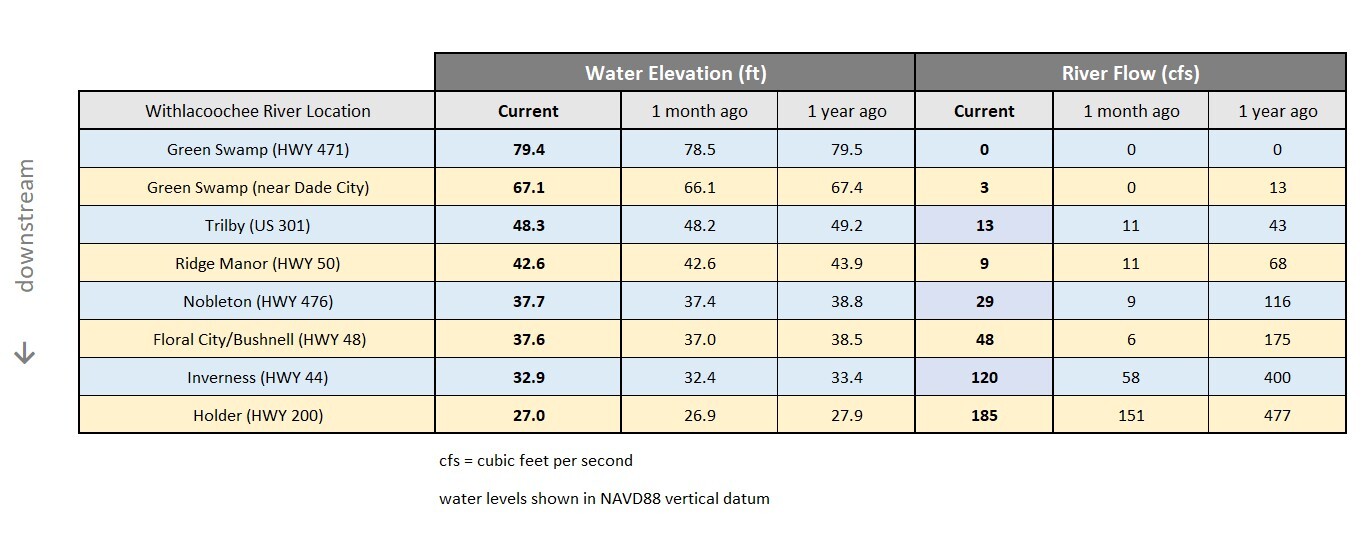
- Although river levels in the Green Swamp rose a foot last month, there is still no appreciable flow leaving that area.
- It’ll take several more weeks of rainfall to fill the Green Swamp enough to provide continuous flow to the Withlacoochee River again.
- Near Trilby and Ridge Manor, the Withlacoochee received enough rainfall to hold river levels and flows relatively steady over the past month.
- From Nobleton past Hwy 44 near Inverness, the river rose 5 to 7 inches in May, and flows increased nicely due to heavy rainfall in that area.
- Despite some decent rainfall and river levels starting to rise again, the entire Withlacoochee River remains very low.
- Because of our regional drought, it’ll take a lot more rainfall this year just to bring the river back up to normal conditions.
- And if rainfall is sparse this summer, like it was last summer, water levels could remain low.
- We never know what the next few months will bring, it all depends on the rain.
- The table below compares current river levels and flows to what they were last month and last year.
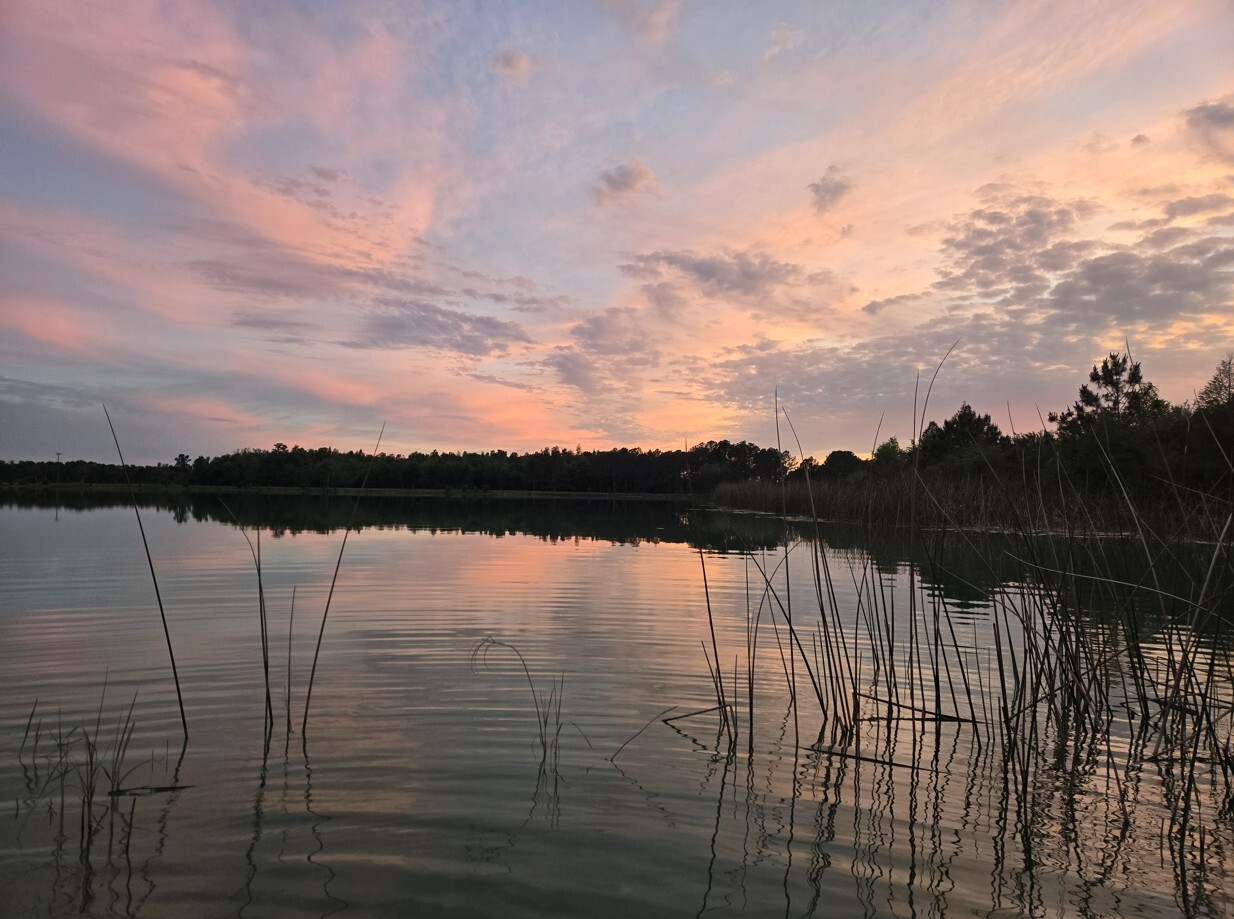
Sunset in the Green Swamp (April 2026)
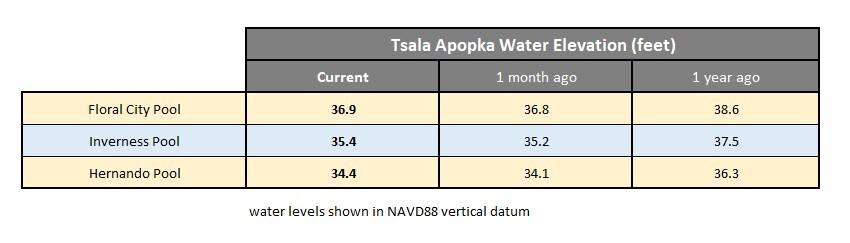
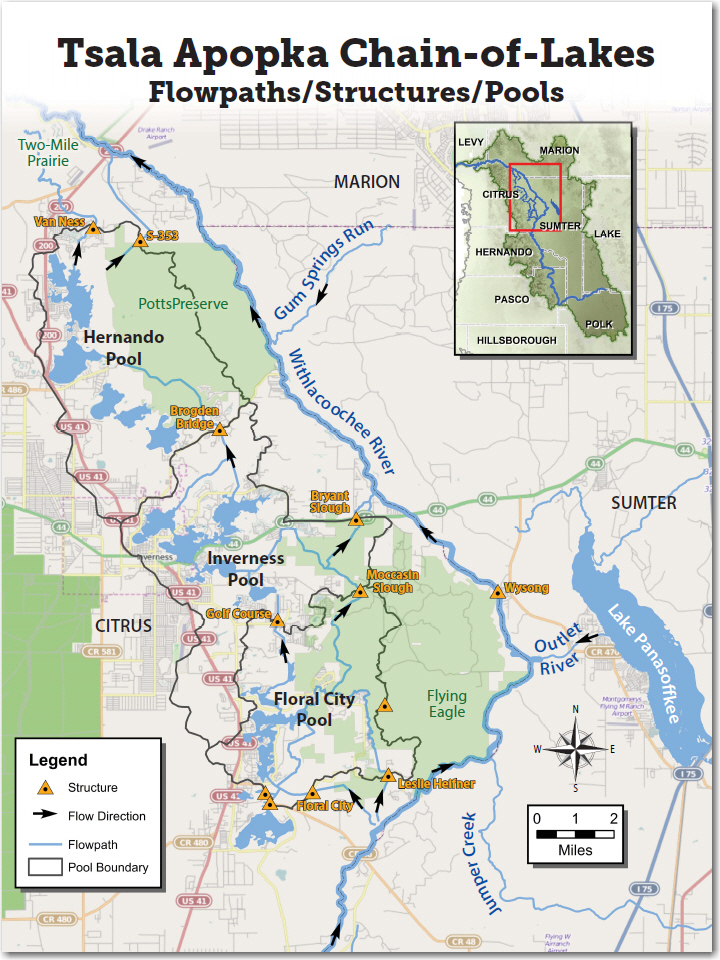
Tsala Apopka Chain of Lakes:
- The Tsala Apopka Chain of Lakes received nearly 9 inches of rainfall last month.
- As a result, lake levels rose for the first time in 8 months (since last September).
- In May, the Floral City and Inverness Pools rose just over an inch, while the Hernando Pool rose more than 2.5 inches.
- This is quite the difference from April, where all three pools dropped 8-10 inches.
- Despite this slight rise in water level, all three pools remain very low for this time of year.
- It’ll take a couple extra feet rainfall this summer, above the 30-inch wet season average, to bring the lakes back up to their normal high levels.
- Everyday that it doesn’t rain, water levels drop due to evaporation and downward leakage to the underlying Floridan Aquifer.
- All water control structures in the lake chain remain closed, helping to conserve water in the lakes.
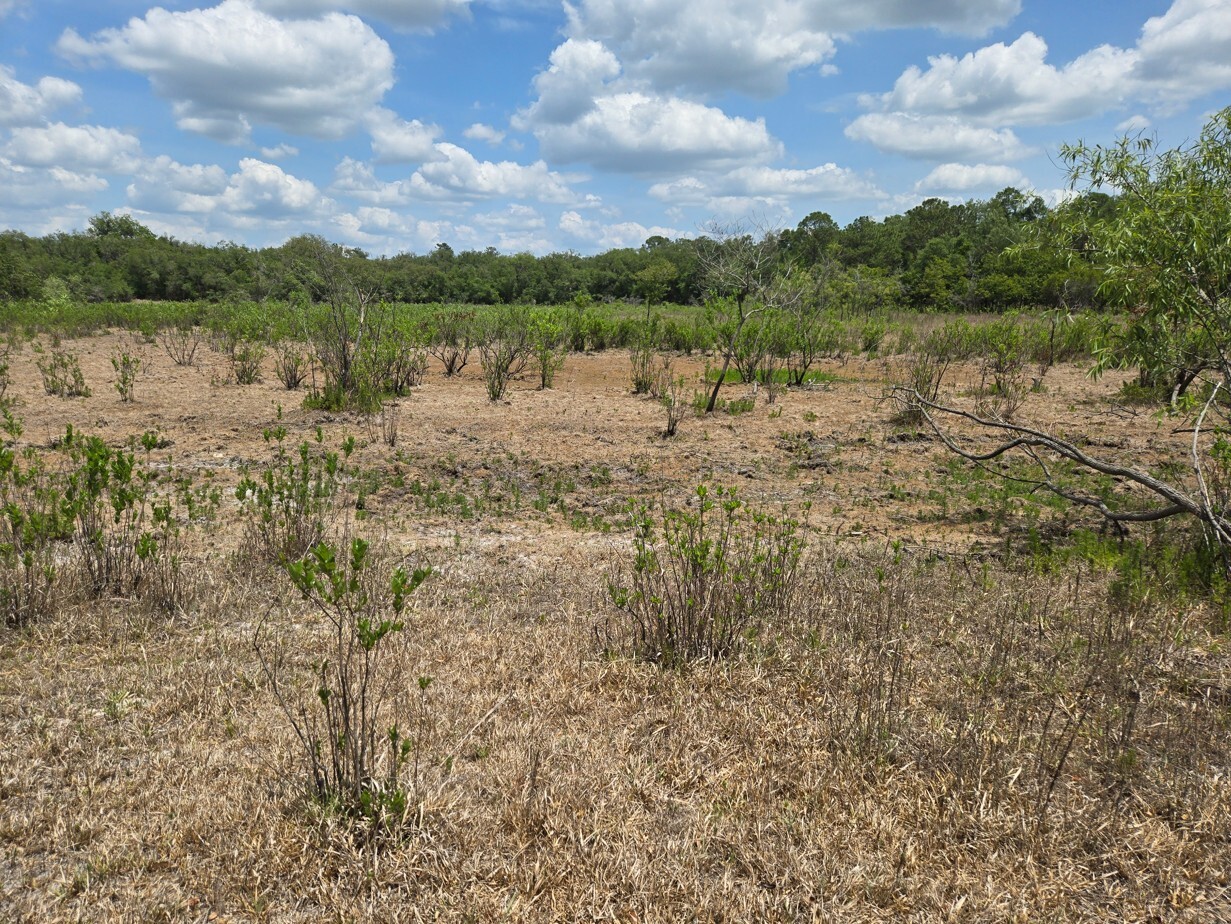
Dry lakebed in Ridge Manor (May 2026)
Lake Panasoffkee and Wysong:
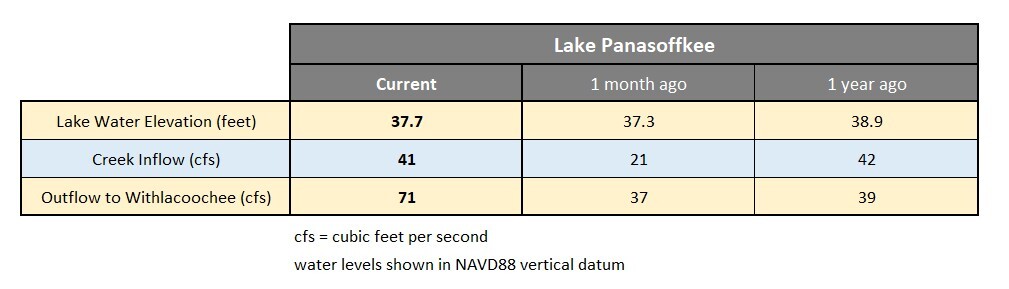
- Rainfall is key to water levels in Lake Panasoffkee.
- In May, the Lake Panasoffkee area received about 11 inches of rainfall, nearly three times the historical average for that month.
- Not only does rainfall provide an immediate boost to lake levels, but it also fills the surrounding aquifer that feeds the spring-fed creeks flowing into the lake.
- Over the past month, flows entering the lake more than doubled, and Lake Panasoffkee rose 5 ½ inches.
- Outflow from the lake also increased in May due to higher lake levels.
- Downstream along the Withlacoochee River at the Wysong Structure, river levels rose about 3 ½ inches from the recent rains.
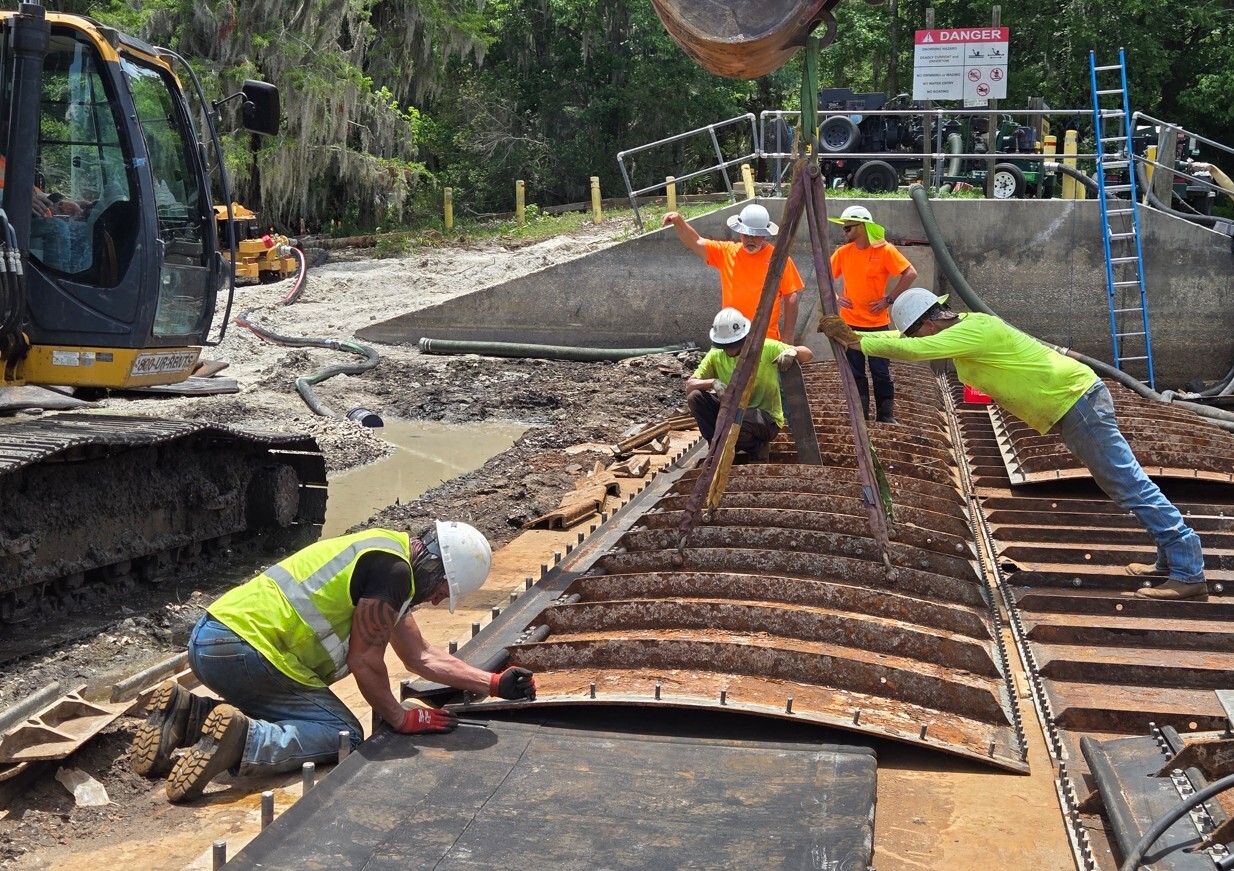
- The construction work at Wysong is continuing ahead of schedule.
- Last week, installation of the new air bladders began. The remaining air bladders are expected to be installed this week.
- These new bladders will allow the structure to function more efficiently and extend the life of the structure many years.
- All work at Wysong should wrap up by the end of the month.
Work crew reinstalling steel gates over the new air bladder at Wysong (May 2026)
Lake Rousseau and the Lower Withlacoochee River (from Dunnellon to the Gulf of Mexico):
- With the start of the wet season coming early, water flows into and out of Lake Rousseau have increased over the past couple weeks.
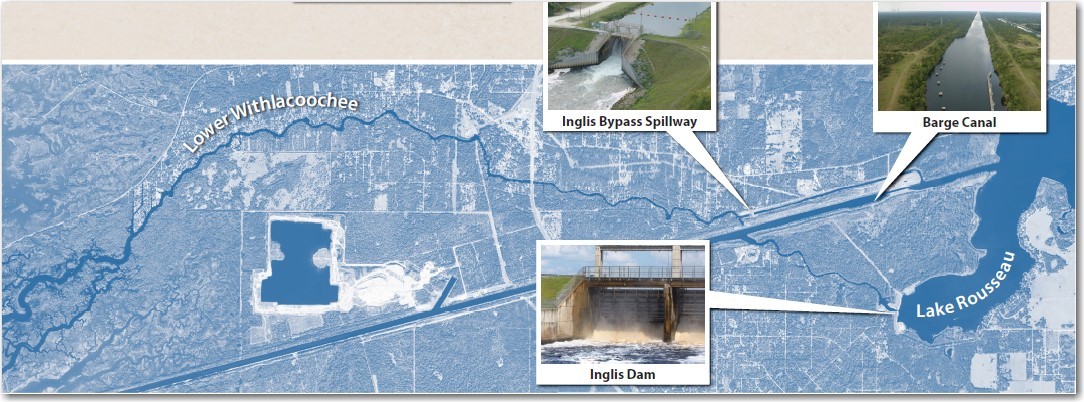
- Lake Rousseau is an in-stream lake formed over a century ago with flood control structures near Inglis.
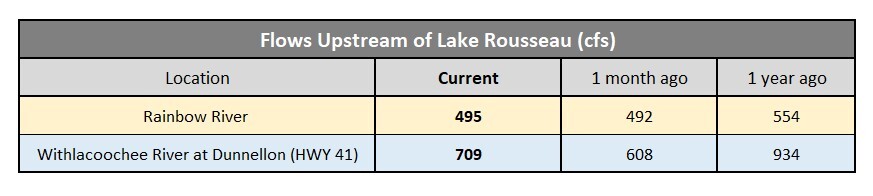
- Near Dunnellon, spring flow from the Rainbow River joins with the Withlacoochee River before entering Lake Rousseau.
- Rainbow River flows increased slightly in May but remain 11% lower than a year ago due to regional drought conditions.
- Withlacoochee River flows increased 17% in May, providing an additional 100 cubic feet per second (cfs) of flow into the lake.
- Water levels on Lake Rousseau have stayed relatively constant the entire month of May.
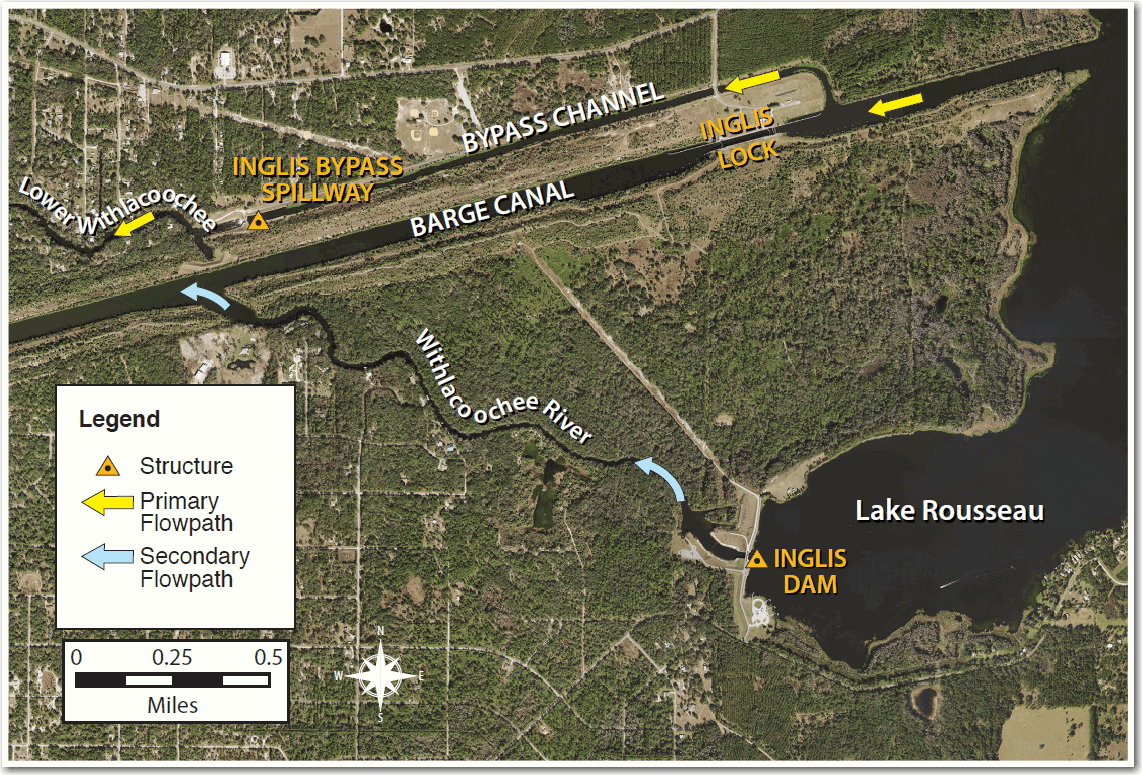
- Flow that enters Lake Rousseau from the east, exits through water control structures on the west end of the lake.
- There are two structures that release water from the lake (see map below).
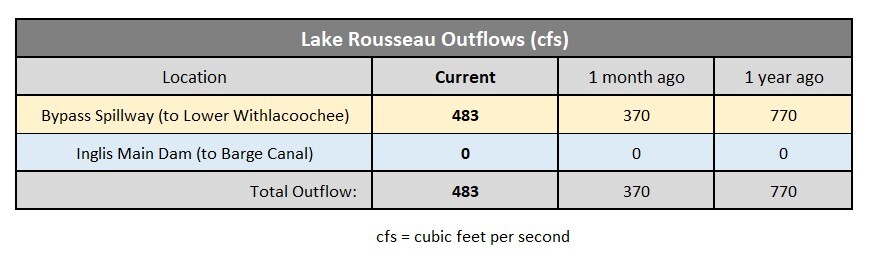
- The primary outlet from Lake Rousseau is the Inglis Bypass Spillway which provides continuous freshwater flow to the Lower Withlacoochee River.
- The Inglis Bypass Spillway is currently flowing at 35% of its capacity, up 9% since last month.
- Freshwater flow to the Lower Withlacoochee River increased by over 100 cfs in May.
- The Inglis Main Dam, which was closed 15 months ago, remains fully closed and won’t open again until Withlacoochee River flows increase substantially.
Have a great week!
Mark
Mark Fulkerson, Ph.D., P.E.
Chief Professional Engineer
Southwest Florida Water Management District
(352) 269-6073 (office)
(352) 279-4493 (cell)
|
|
|
|
|
|
|
|


|
Southwest Florida Water Management District | 2379 Broad Street, Brooksville, FL 34604-6899 |
|
If you do not want to continue receiving emails about these projects, click Unsubscribe. To manage your Southwest Florida Water Management District subscriptions, click Manage Preferences. |