Withlacoochee River System Update - 9/2/2025
Southwest Florida Water Management District sent this bulletin at 09/02/2025 04:45 PM EDT
 |
Withlacoochee River System Update
Rainfall:
- Rainfall is an interesting phenomenon because every storm is different, and no two years are alike.
- We can easily compare the excess rainfall and flooding from last year to the minimal rainfall and lower water levels this year.
- Many factors affect when and where it rains, and those factors are out of our control.
- Over time, we’ll all get our fair share of rain, but sometimes it seems to be raining everywhere except where we need it most.
- This entire summer, the Green Swamp and many areas along the Withlacoochee River have received below average rainfall.
- When it has rained, the storms haven’t been widespread enough or lasted long enough to significantly boost our water resources.
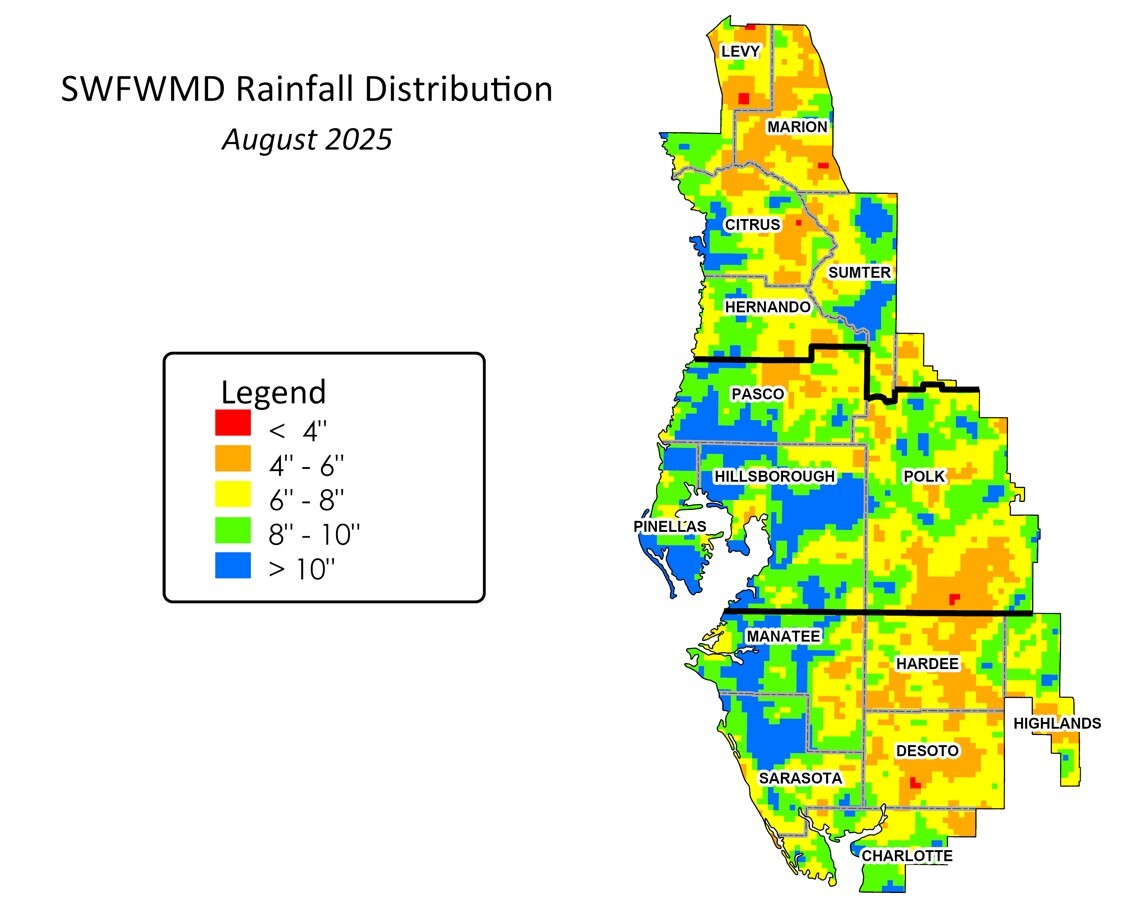
- In August, our region averaged 7.3 inches of rainfall, less than the historical average for the month (8.1 inches).
- So far this year (January through August), we’ve received about 33 inches of rain, seven inches below the historical average (40 inches) for the first 8 months of the year.
- Aquifer (groundwater) levels remain below average, currently in the 40th percentile for this time of year, and much lower than last year (65th percentile). Remember, the 50th percentile is average.
- Lower aquifer levels affect our lakes, rivers, and wetlands by allowing those surface water bodies to drain down into the ground faster.
- The figure below shows how much rainfall different areas received last month. The green and blue areas received above average rainfall in August.
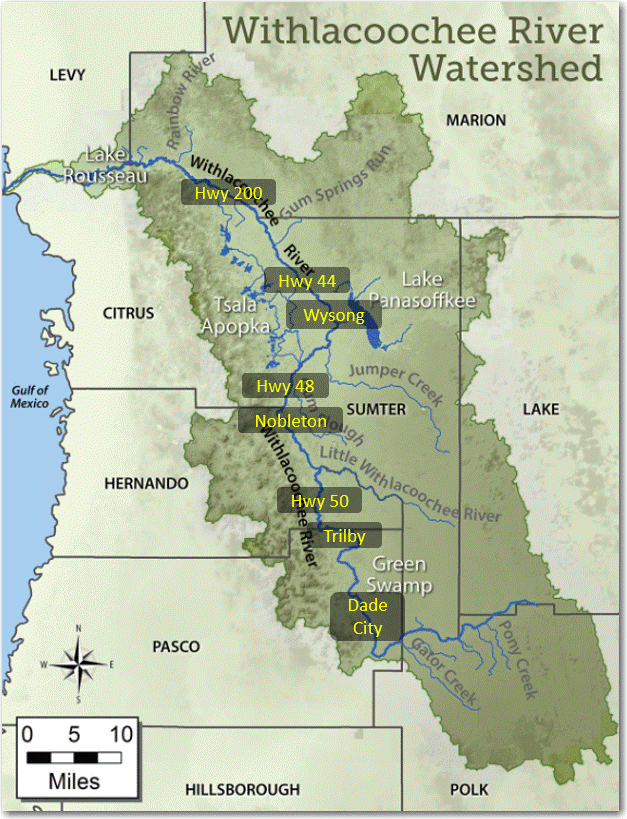
Withlacoochee River (from the Green Swamp downstream past Hwy 200):
- Water levels and flows along the Withlacoochee River remain lower than normal for this time of year, due to below average rainfall in recent months.
- Very little flow is exiting the Green Swamp (start of the river), a condition almost unheard of during the month of September.
- In fact, you’d have to go all the way back to 2007 to find a year when river levels in the Green Swamp were lower than this year.
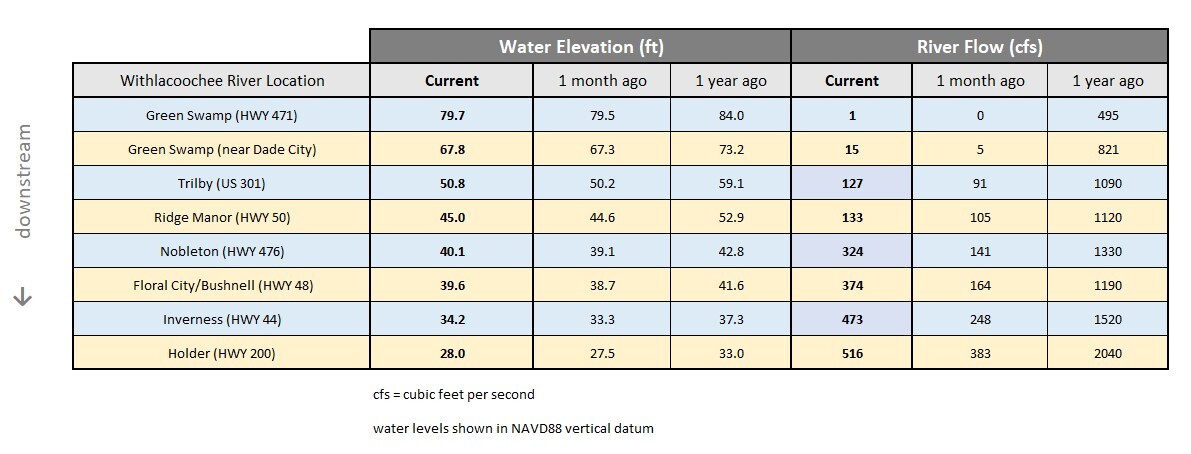
- Downstream near Trilby (US 301) and Ridge Manor (Hwy 50), river levels and flows did increase in August, but are already dropping again.
- In this stretch of the river, water levels are 8 feet lower than they were last September, and that was well before the flooding from Hurricane Milton.
- From Nobleton (Hwy 476) to Hwy 200, river levels and flows are about as high as they’ve been all summer and are currently peaking from rainfall earlier in August.
- But river levels in these areas are also several feet below average for this time of year.
- It’ll take a lot of rainfall in September to raise river levels and flows back up to normal wet season conditions.
- The good news is there’s still a lot of storage available in the wetlands and riverine swamps to store heavy rainfall, so at this point, the risk of flooding this year is minimal.
- The table below compares current river levels and flows to what they were last month and last year.
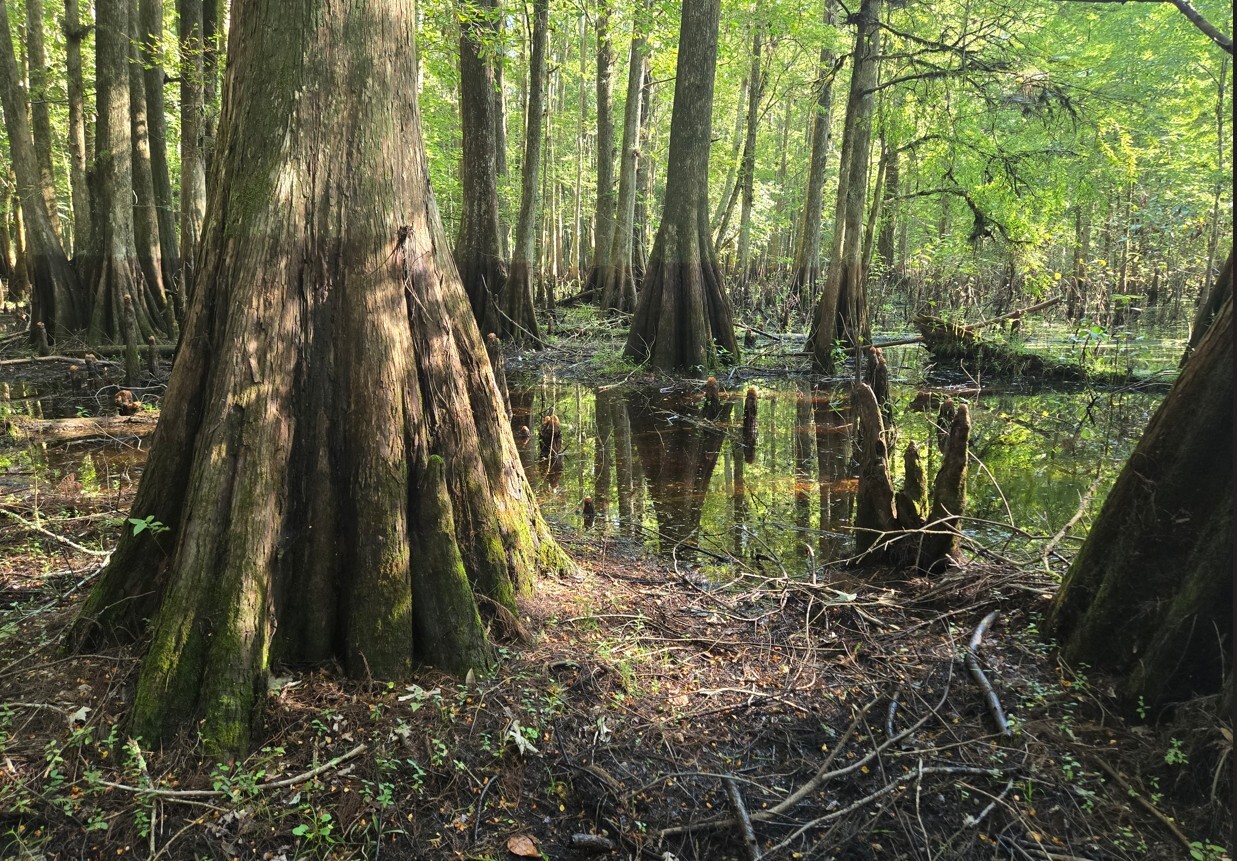
Withlacoochee River swamp starting to fill this summer (August 2025)
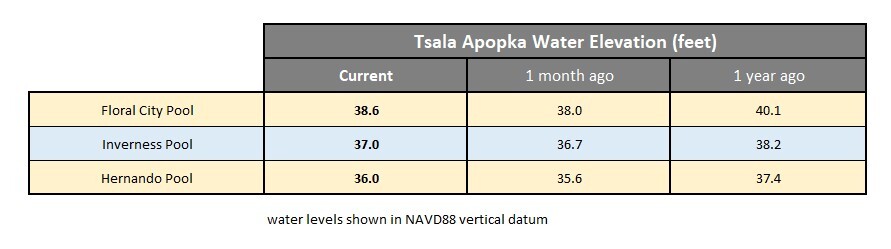
Tsala Apopka Chain of Lakes:
- Lake levels rose a few inches in August but remain very low for this time of year.
- During the summer rainy season, there are two sources of water to the Tsala Apopka Chain of Lakes.
- The main source is rain falling directly on the lakes, canals, and swamps themselves.
- The secondary source, which is only available at limited times, is inflow from the Withlacoochee River.
- And every day it doesn’t rain, water levels in the lake chain will drop 1/4 to 1/3 of an inch per day (~2 inches a week) due to natural losses from evaporation and downward leakage to the underlying aquifer.
- Rainfall on the lake chain has been well below average this summer, and available river inflows have also been low because of lower-than-normal river levels.
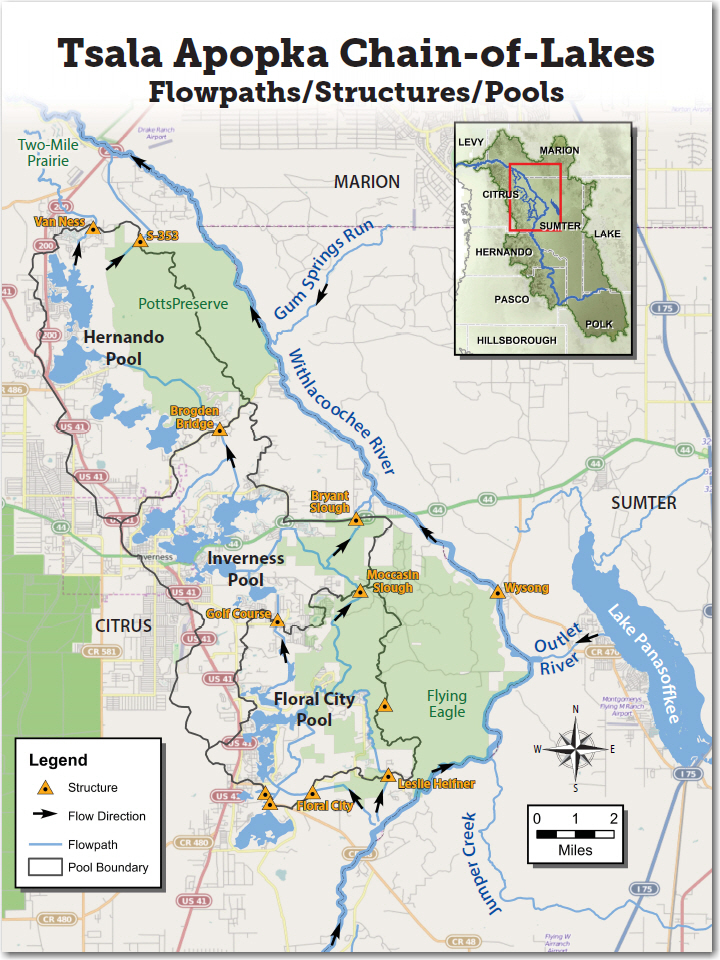
- Water control structures, which were opened in July, remain open bringing available river water into the lake chain.
- The Leslie Heifner and Floral City structures are fully open, moving water into the Floral City Pool.
- The Golf Course and Brogden Bridge structures are also open, evenly splitting those flows with the Inverness and Hernando Pools.
- But despite these river inflows, lake levels are still not rising.
- It’ll take a lot more rainfall to raise lake levels this year.
- All three pools are currently about 1.4 feet lower than they were a year ago, and more than 2 feet lower than the high levels we typically see at the end of the wet season.
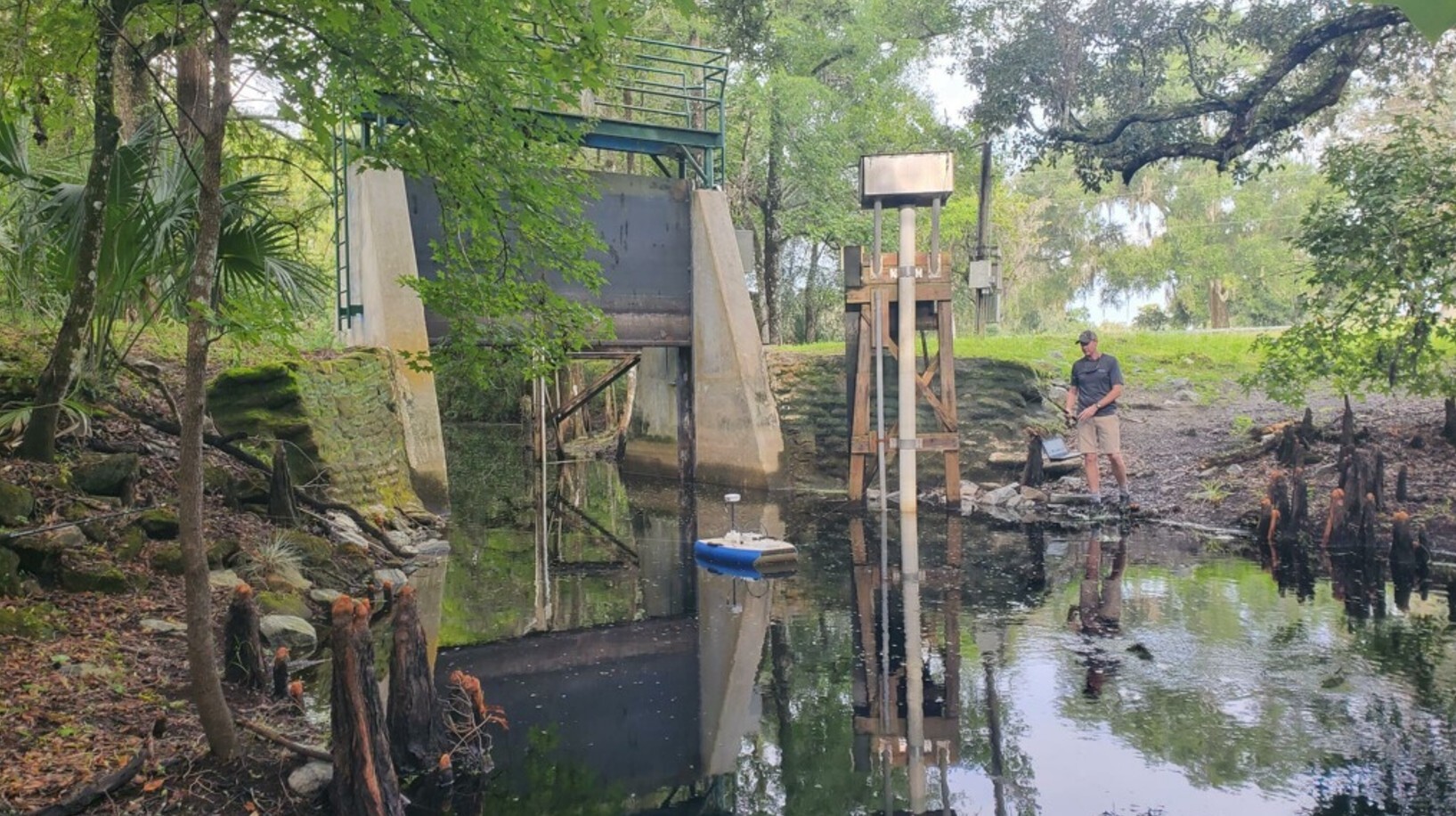
Measuring flow entering the Tsala Apopka Chain of Lakes (August 2025)
Lake Panasoffkee and Wysong:
- Across the river in Sumter County lies Lake Panasoffkee, a spring-fed lake influenced by regional rainfall and the Withlacoochee River.
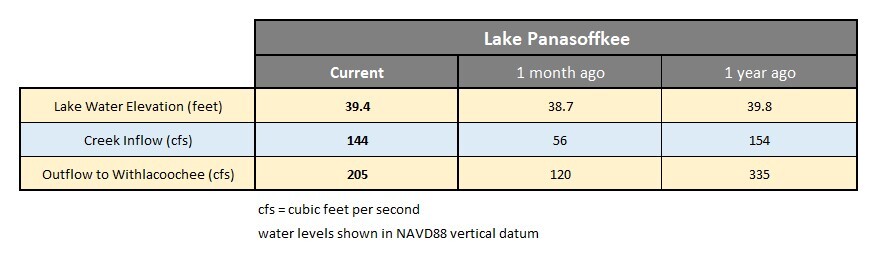
- Lake levels rose 8.5 inches in August mostly due to rainfall east of Panasoffkee that has increased flow in the creeks that feed the lake.
- Measured flow in Shady Brook and Little Jones Creek nearly tripled over the past month.
- Outflow from Lake Panasoffkee to the Withlacoochee River also increased due to higher lake levels.
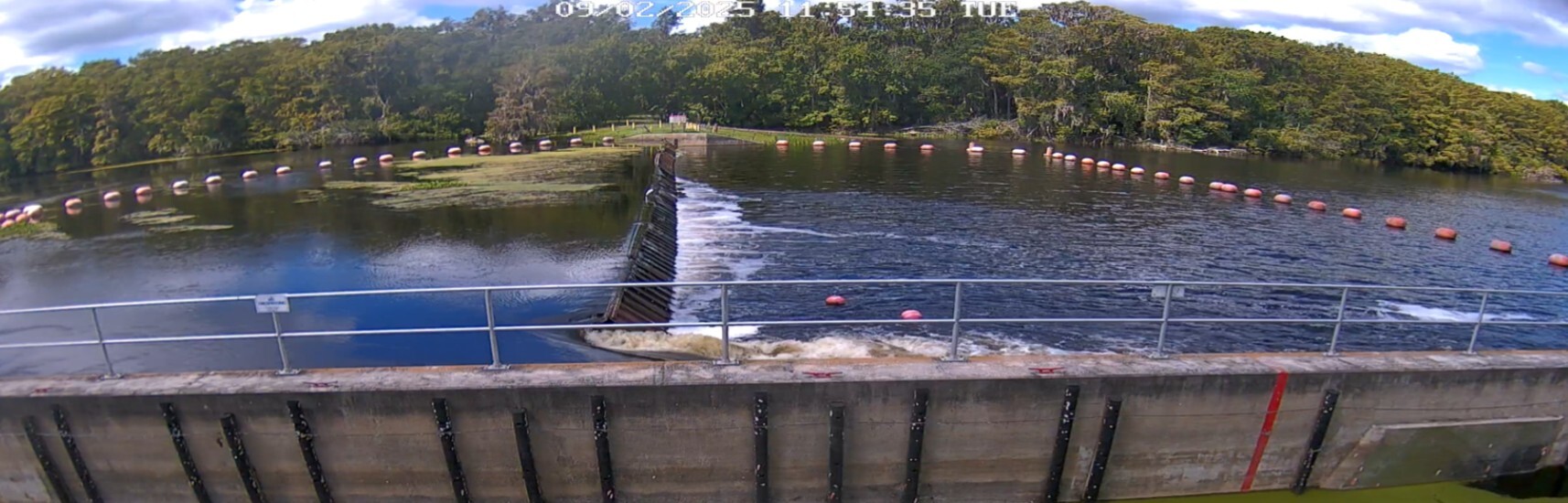
- The Wysong structure, located 3 miles downstream of Lake Panasoffkee, spans the entire Withlacoochee River.
- The main gate (230-foot-wide) of Wysong remains raised.
- The independent gate (19-foot-wide) is partially lowered, allowing river flows to pass downstream.
- Lake Panasoffkee levels are currently about 5 inches lower than they were a year ago.
Withlacoochee River at Wysong (August 2025)
Lake Rousseau and the Lower Withlacoochee River (from Dunnellon to the Gulf of Mexico):
- Downstream of Dunnellon, the Withlacoochee River enters Lake Rousseau, an in-stream lake formed over a century ago with flood control structures near Inglis.
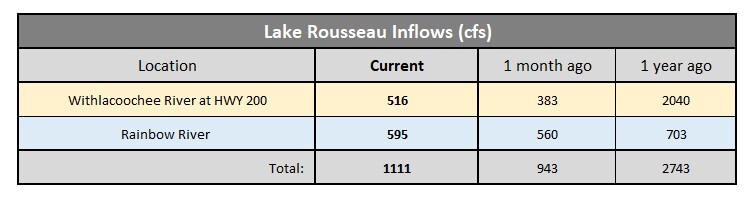
- Inflow to Lake Rousseau includes combined flows from the Withlacoochee and Rainbow Rivers.
- Rainbow River flow (which reflects changes in aquifer levels) increased by 6% last month.
- Regional aquifer levels have risen in recent weeks but remain lower than average for this time of year.
- Withlacoochee River flow (which depends on rainfall and runoff from adjacent lands) increased by 35% in August.
- Flows entering Lake Rousseau are currently less than half of what they were a year ago, because of less rainfall this summer.
- Water levels on Lake Rousseau have stayed relatively constant the entire month of August.
- Flow that enters Lake Rousseau from the east, exits through water control structures on the west end of the lake.
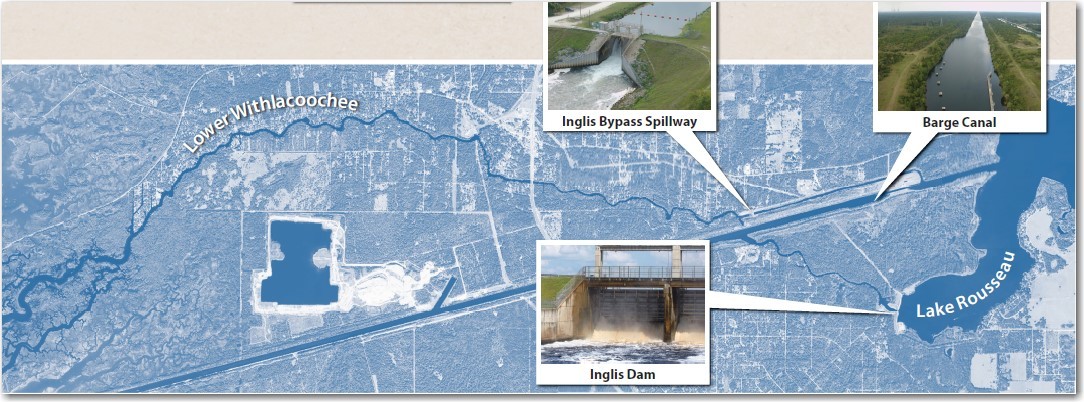
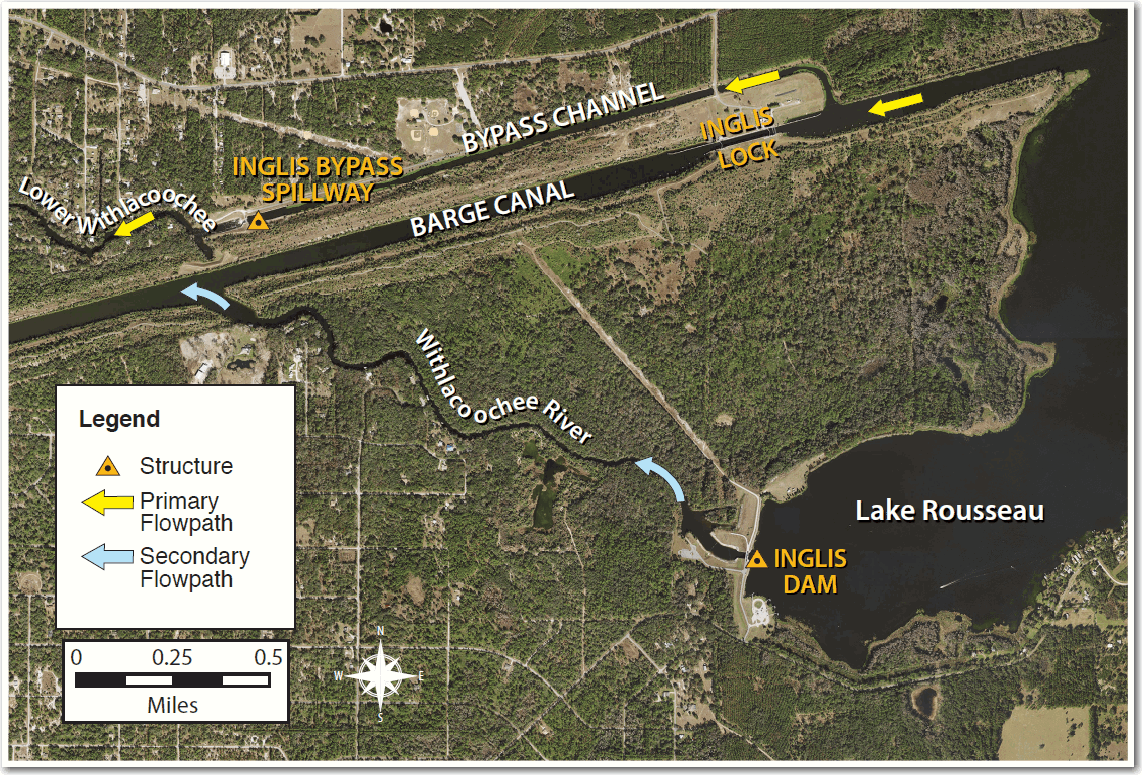
- There are two structures that release water from the lake (see map below).
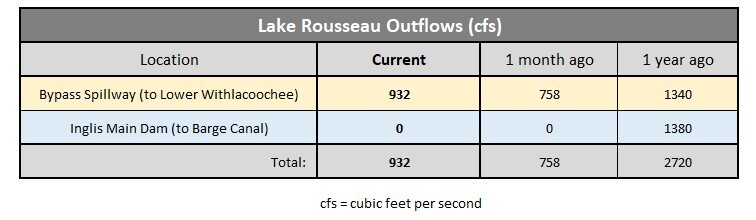
- The primary outlet from Lake Rousseau is the Inglis Bypass Spillway which provides continuous freshwater flow to the Lower Withlacoochee River.
- The Inglis Bypass Spillway is currently flowing at 67% of its capacity, up 13% from last month.
- When the Bypass Spillway reaches maximum capacity, the Inglis Main Dam is opened, discharging excess water from Lake Rousseau to the Barge Canal.
- This provides flood protection to the Lower Withlacoochee River when the remainder of the Withlacoochee is high.
- Coastal flooding from storm surge (high ocean levels) is not preventable by any water control structures.
- The Inglis Main Dam, which closed in early February, remains fully closed and won’t open again until Withlacoochee River flows increase substantially.
- Last year at this time, the Inglis Main Dam was open, discharging nearly a billion gallons of water a day in the Gulf.
- Freshwater flow to the Lower Withlacoochee River is only one-third of what it was a year ago.
Hope you had a nice Labor Day weekend!
Mark
Mark Fulkerson, Ph.D., P.E.
Chief Professional Engineer
Southwest Florida Water Management District
(352) 269-6073 (office)
(352) 279-4493 (cell)
|
|
|
|
|
|
|
|


|
Southwest Florida Water Management District | 2379 Broad Street, Brooksville, FL 34604-6899 |
|
If you do not want to continue receiving emails about these projects, click Unsubscribe. To manage your Southwest Florida Water Management District subscriptions, click Manage Preferences. |