Withlacoochee River System Update - 2/3/2025
Southwest Florida Water Management District sent this bulletin at 02/03/2025 04:41 PM EST
 |
A Normal Start for the Withlacoochee River in 2025
Rainfall:
- You may have enjoyed all those cold days in January, but this Florida native is glad to have the warmer weather back (at least for now).
- Our dry season continues through the end of May, but during the winter months there’s less evaporation and solar radiation, so water levels don’t typically drop as fast as they might from March to June.
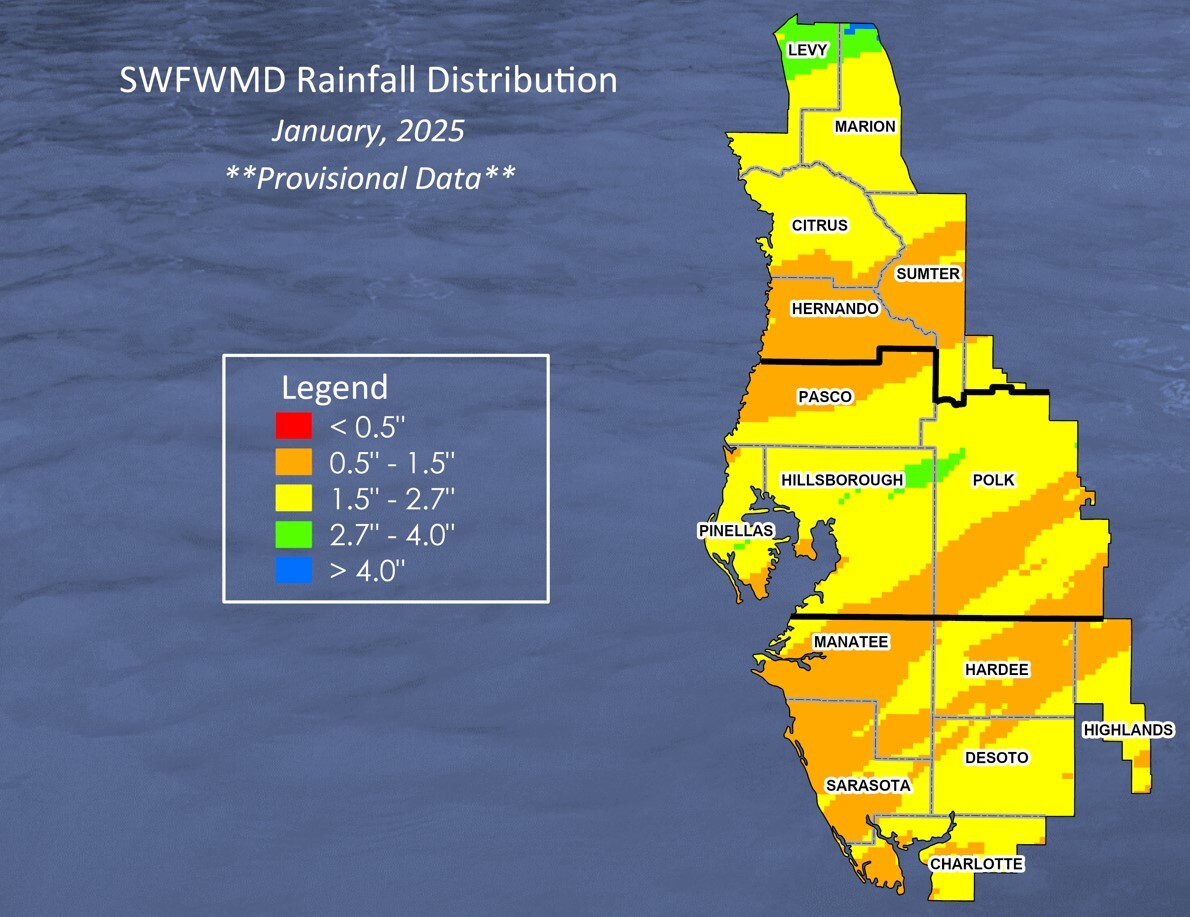
- Last month our region received 2.1 inches of rainfall, less than the historical average for January (2.7 inches).
- This time of year, rainfall will give a temporary boost to our water resources, but the normal trend is a slow decline until our wet season begins.
- Aquifer (groundwater) levels are still high, currently in the 74th percentile for this time of year, much higher than last year (51st percentile).
- The figure below shows how much rainfall different areas received last month. Nearly the entire region saw below average rainfall in January (orange and yellow areas).
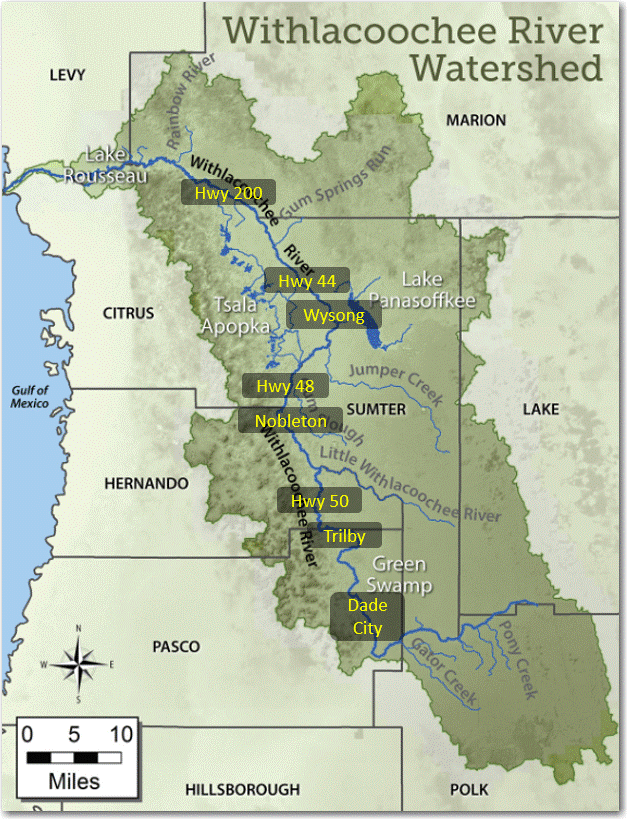
Withlacoochee River (from the Green Swamp downstream past Hwy 200):
- River levels and flows continue to decline along the Withlacoochee River.
- After dropping sharply in November and December, January saw a slower decline, mostly because river levels had already recovered from flood conditions by the first of the year and are back to mostly normal conditions now.
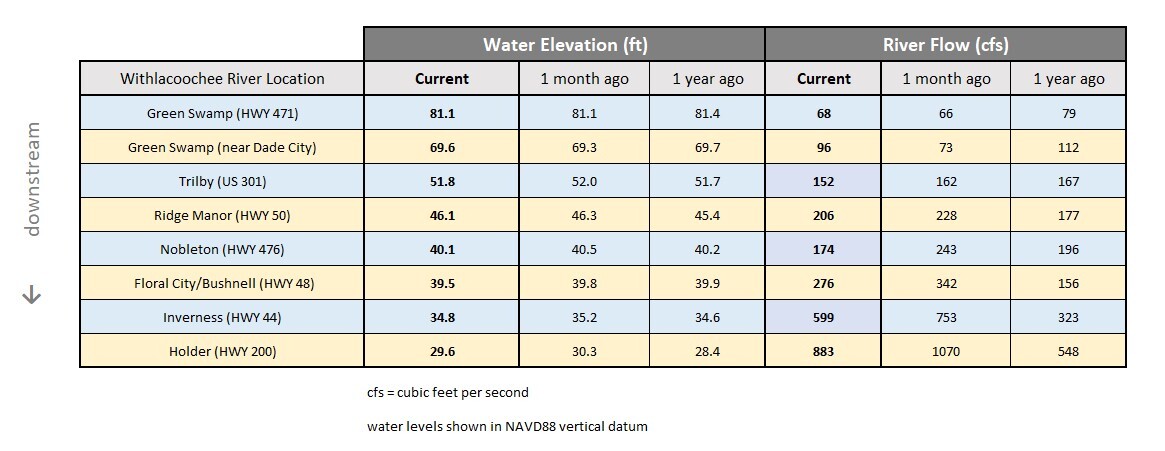
- River flows dropped an average of 17% in January.
- In the Green Swamp, river levels and flows have risen slightly from rainfall the area received a couple weeks ago.
- Near Trilby and Ridge Manor, river levels fell a few inches the first 3 weeks of January but have risen slightly again from recent rainfall.
- Near Nobleton (476) and Hwy 48, the river fell 3 to 4 inches over the past month.
- At Hwy 44 and Hwy 200 (Holder), the river dropped 6 to 8 inches in January.
- Many areas adjacent to the river, that flooded when the Withlacoochee crested last fall, remain high because that water is unable to drain back to the river now and higher groundwater levels are preventing it from soaking into the ground.
- The table below compares current river levels and flows to what they were last month and last year.
- In many areas, river levels and flows are higher than they were a year ago, which is understandable after the flooding we saw from Hurricane Milton.
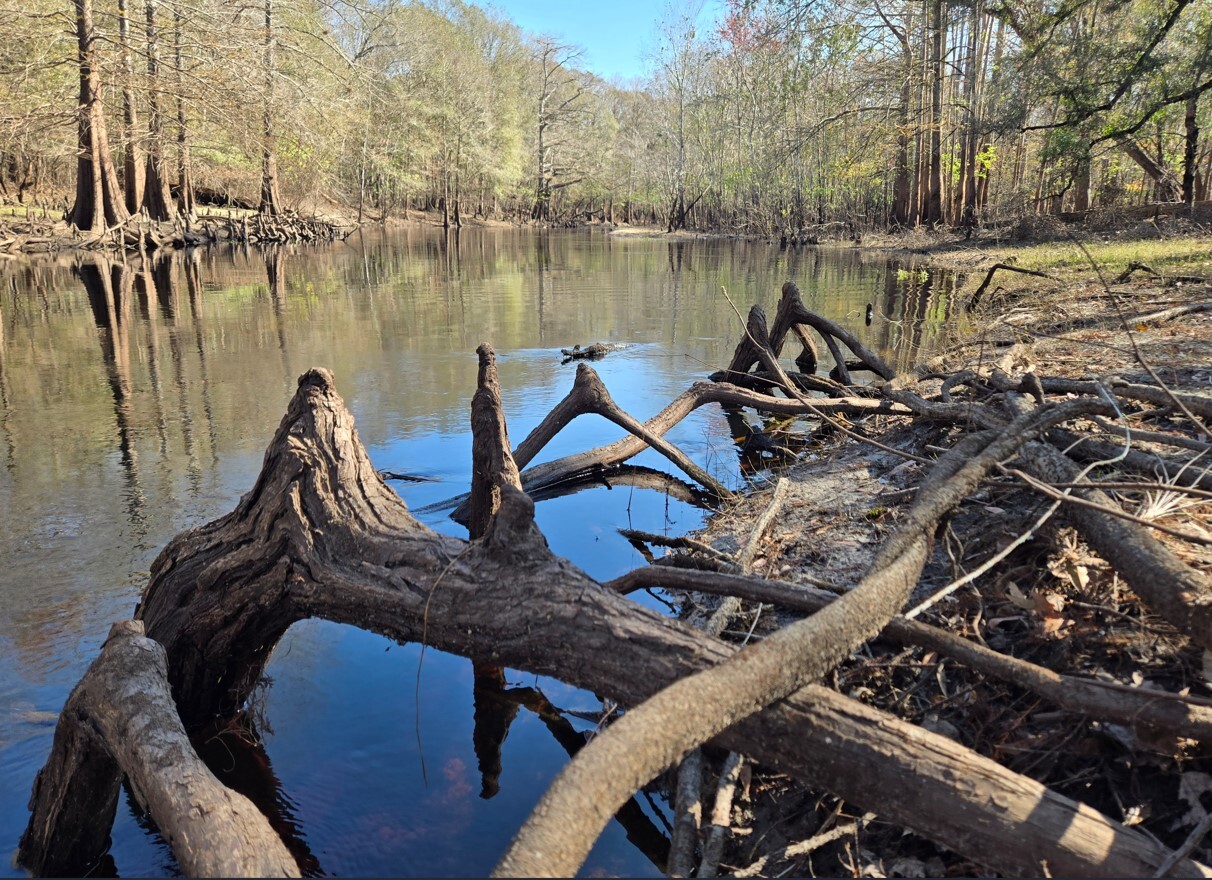
Withlacoochee River in the State Forest near Lacoochee (January 2025)
Tsala Apopka Chain of Lakes:
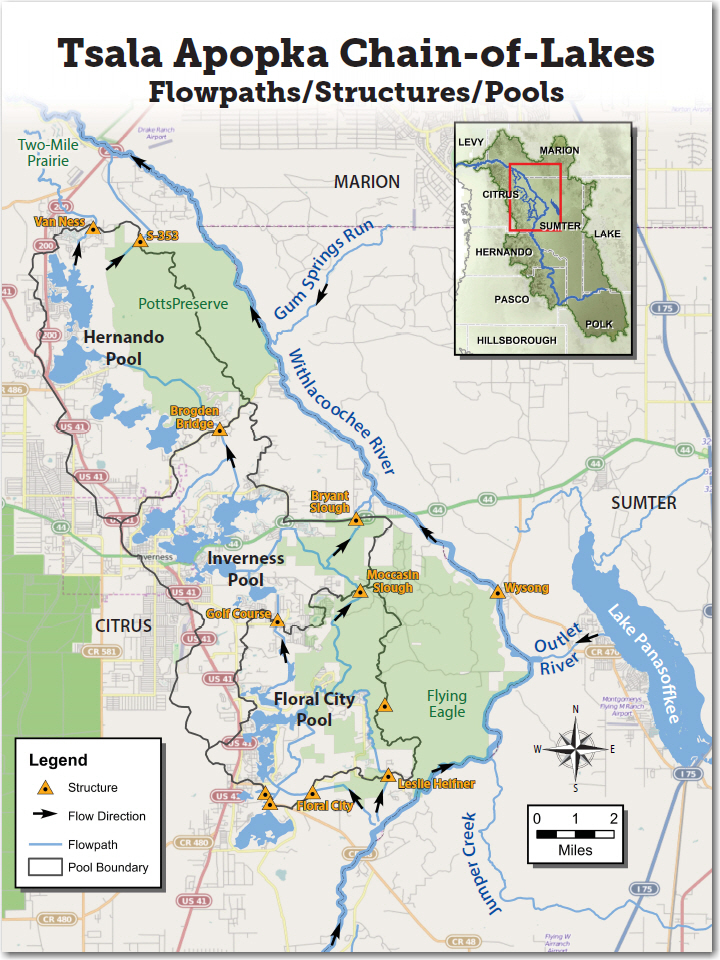
- Downstream of Hwy 48, there are canals and natural wetlands that connect the Withlacoochee River to the Tsala Apopka Chain of Lakes.
- During certain times of the year, the river is high enough to flow into these lakes, normally during the summer or fall when river levels are rising.
- Currently river levels are below lake levels and all water control structures are closed.
- There is no flow of water into or out of the Tsala Apopka Chain of Lakes.
- Lake/marsh/canal levels will naturally decline, however, from evaporation and downward leakage to the underlying aquifer.
- This time of year, lake levels will drop anywhere from 1/8 to 1/4 of an inch per day.
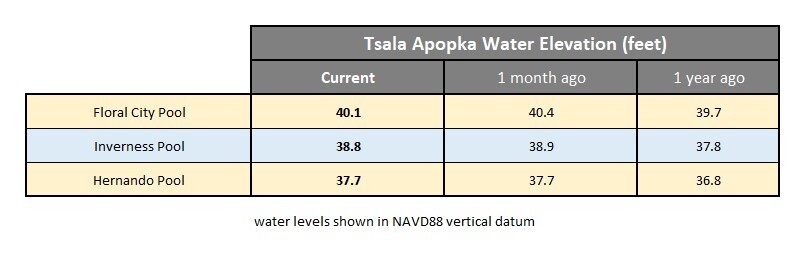
- Last month, all three pools of the Tsala Apopka Chain of Lakes dropped between 1 and 4 inches, depending on which areas received more rainfall and how connected each pool is to the underlying aquifer.
- Currently all three pools are higher than they were last year at this time.
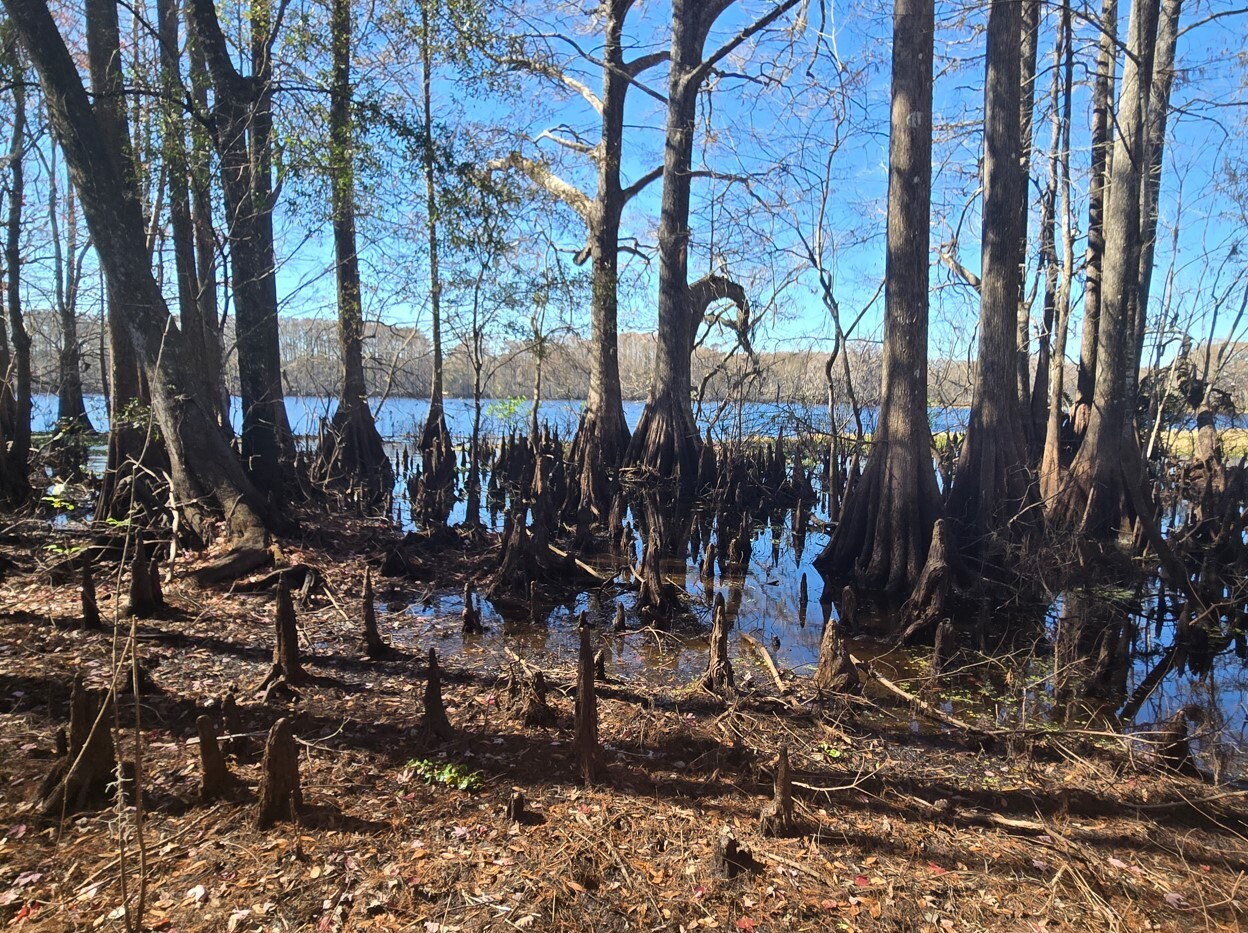
Glimpse of the River through the Swamps near Nobleton (January 2025)
Lake Panasoffkee and Wysong:
- Rainfall is critical to the hydrology of Lake Panasoffkee.
- It refills the aquifer which provides a continuous source of spring flow to the lake from Shady Brook and Little Jones Creek.
- It also affects how fast water flows out of Lake Panasoffkee to the Withlacoochee River by causing seasonal fluctuations to both the river and the lake.
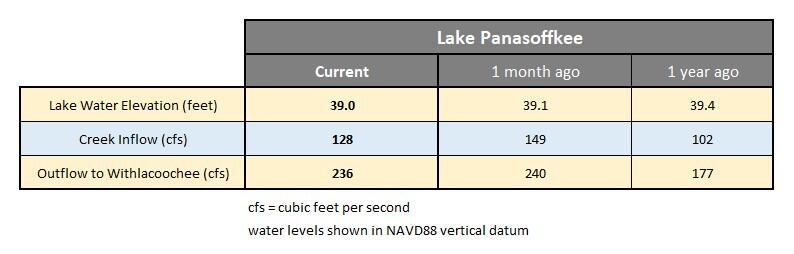
- Creek inflows only declined slightly in January and remain higher than they were last year at this time.
- Outflow from Lake Panasoffkee remained relatively steady last month and is currently 33% higher than it was a year ago.
- Lake Panasoffkee dropped about an inch in January and remains 5 inches lower than it was a year ago at this time.
- The Wysong structure, located 3 miles downstream of Panasoffkee on the Withlacoochee River, can also influence lake levels during certain times of the year (not during droughts or floods).
- The main gate at Wysong (230-foot-wide) remains fully raised while the independent gate (19-foot-wide) is fully lowered, allowing river flows to pass downstream.
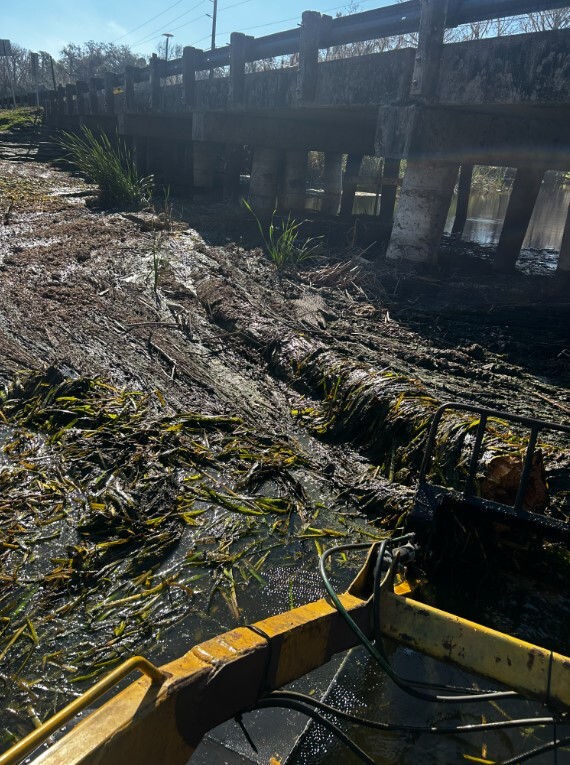
- Work began Friday to remove heavy mats of eelgrass, which had built up on the Outlet River bridge (CR470) after floating out of the lake over the past few months.
- As of today, workers have removed this obstruction to allow normal boat traffic and prevent any structural damage to the bridge.
- Unlike the hydrilla blockage a few years ago which severely restricted flow, this eelgrass was floating on the surface and minimal flow changes are expected after its removal.
Workers Removing Eelgrass Blockage from the Outlet River at CR 470 (February 2025)
Lake Rousseau and the Lower Withlacoochee River (from Dunnellon to the Gulf of Mexico):
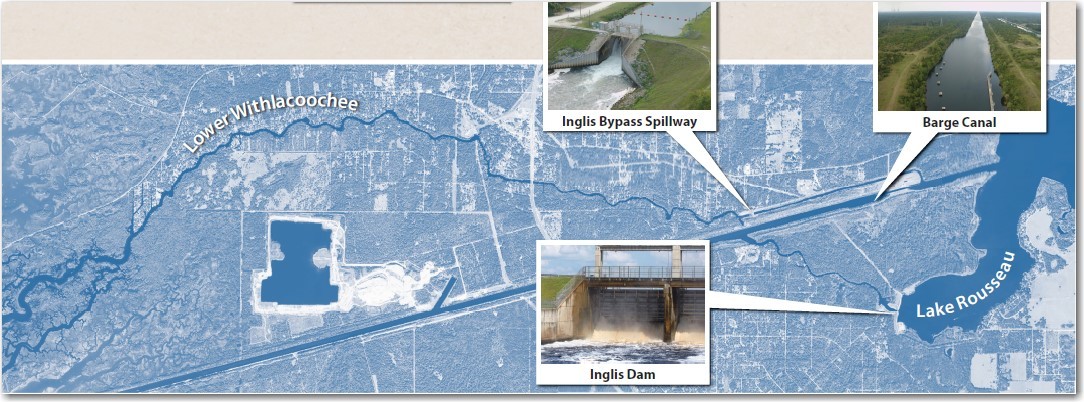
- Downstream of Dunnellon, the Withlacoochee River enters Lake Rousseau, an in-stream lake formed over a century ago with flood control structures near Inglis.
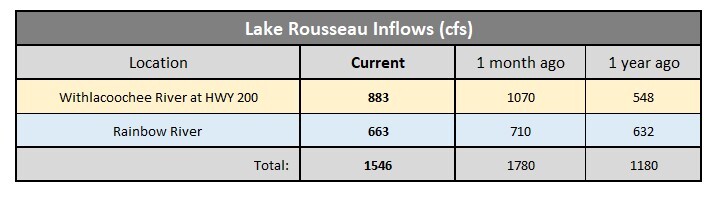
- Inflow to Lake Rousseau includes combined flows from the Withlacoochee and Rainbow Rivers.
- Rainbow River flow (which reflects changes in aquifer levels) fell 7% in December.
- Withlacoochee River flow (which depends on rainfall and runoff from adjacent lands) decreased 17% last month.
- Overall, inflows to Lake Rousseau have declined slightly over the past month but remain 31% higher than they were a year ago.
- Water levels on Lake Rousseau have stayed relatively constant the entire month of January.
- Flows that enter Lake Rousseau from the east exit through water control structures on the west end of the lake.
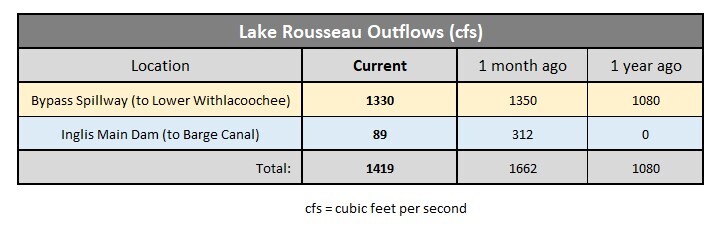
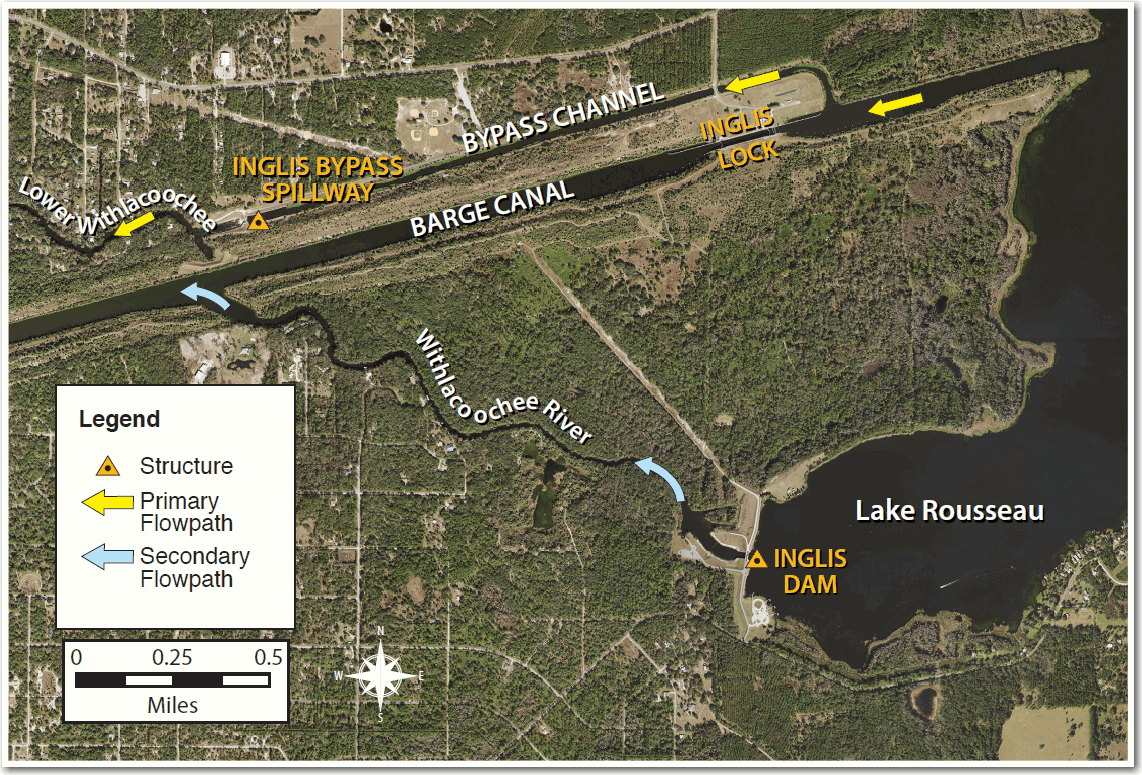
- The primary outlet from Lake Rousseau is the Inglis Bypass Spillway which provides continuous freshwater flow to the Lower Withlacoochee River.
- This structure, which has discharged maximum available flow since early August, remains fully open.
- The Inglis Main Dam, which was opened in early August, has been incrementally closed since early November, when floodwaters from Hurricane Milton finally began to recede.
- This structure discharges excess water from Lake Rousseau to the Barge Canal, whenever the Bypass Spillway reaches maximum capacity.
- Currently only one gate at the Inglis Main Dam remains open 2 inches while the other gate was shut last week.
- Unless the river receives substantial rainfall in the coming days, the Inglis Main Dam is expected to be fully closed very soon.
- Contrary to popular belief, these structures only affect the Withlacoochee River a little way upstream of Dunnellon and they cannot prevent river flooding near Hwy200 or areas farther upriver.
Hope you have a wonderful week!
Mark
Mark Fulkerson, Ph.D., P.E.
Chief Professional Engineer
Southwest Florida Water Management District
(352) 269-6073 (office)
(352) 279-4493 (cell)
|
|
|
|
|
|
|
|


|
Southwest Florida Water Management District | 2379 Broad Street, Brooksville, FL 34604-6899 |
|
If you do not want to continue receiving emails about these projects, click Unsubscribe. To manage your Southwest Florida Water Management District subscriptions, click Manage Preferences. |