Withlacoochee River System Update - 10/1/2024
Southwest Florida Water Management District sent this bulletin at 10/01/2024 03:06 PM EDT
 |
Wet Season Ends; Hurricane Season Heats Up
Rainfall:
- It might seem contradictory to say that the wet season has officially ended while hurricane season is alive and well
- Fact is, Florida receives most of its rainfall during a four-month period (June to September) when we average 6-9 inches of rain per month.
- The dry season, October through May, only averages 2-3 inches of rain per month.
- Of course, hurricane season officially extends into November, and there’s always a chance for some areas to receive heavy rainfall during the dry season.
- Hurricane Helene did not bring substantial rainfall to our area, but it did cause devastating storm surge flooding along the coast.
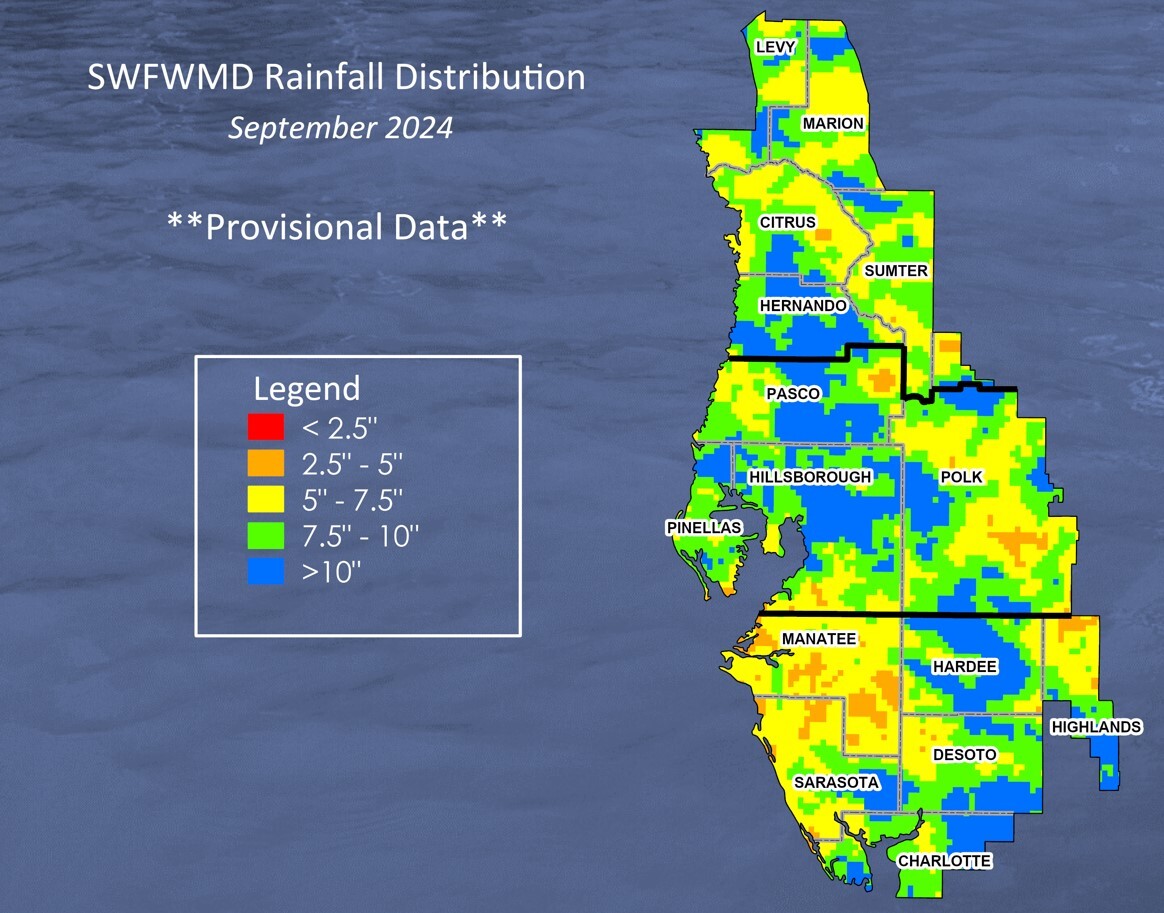
- Rainfall totals for the month of September averaged 8.3 inches for our region, higher than the historical average (6.3 inches).
- So far this year (January through September), our region has received 47.9 inches of rain, higher than the historical average (46.1 inches) for the first 9 months of the year.
- Aquifer (groundwater) levels rose remain high and are currently in the 70th percentile for this time of year, much higher than last year (34th percentile).
- The figure below shows how much rainfall different areas received last month. Most areas received above average rainfall in September.
Withlacoochee River (from the Green Swamp downstream past Hwy 200):
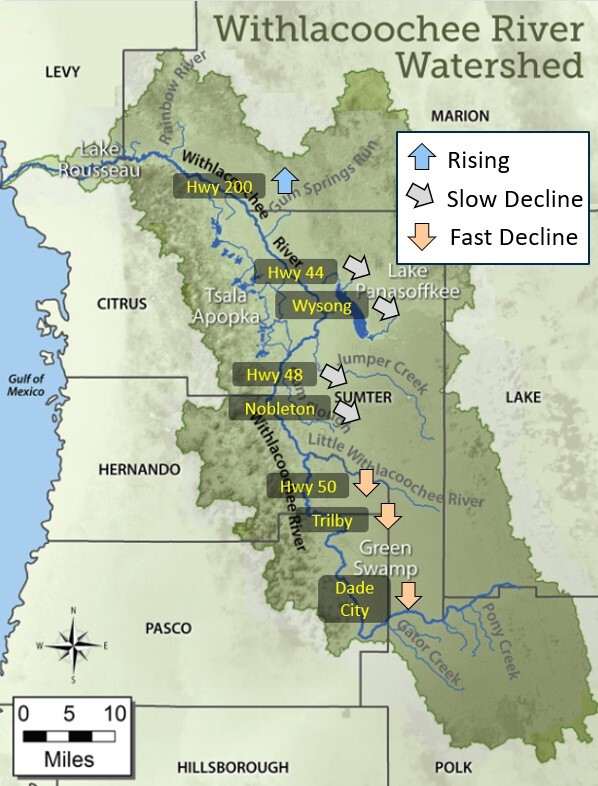
- As our wet season ends, water levels and flows are still very high along the entire Withlacoochee River.
- In the Green Swamp, river levels/flows are now on a steady decline, which is an indicator that the rest of river should be dropping in the coming weeks.
- Downstream of the Green Swamp, river levels and flows are slowly starting to decline, a process that will take several weeks even if we don’t receive substantial rainfall.
- The Withlacoochee River at SR200, is slowly rising again from localized rainfall, but that trend is not expected to last long.
- It’s been a couple years since we’ve seen the Withlacoochee River this high.
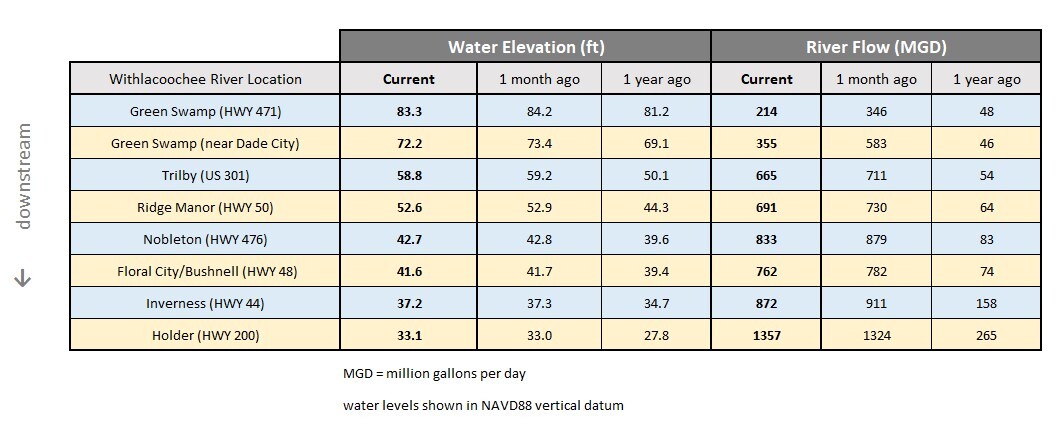
- River flows are more than 8 times greater than they were a year ago and levels are more than 4 feet higher on average.
- This isn’t surprising since 2023 was a much drier year overall.
- The high levels experienced by the Withlacoochee River this summer are not unusual, just the result of good wet season rainfall this year.
- The table below compares current river levels and flows to what they were last month and last year.
Tsala Apopka Chain of Lakes:
- For much of September, water levels in the Tsala Apopka Chain of Lakes either rose or held steady.
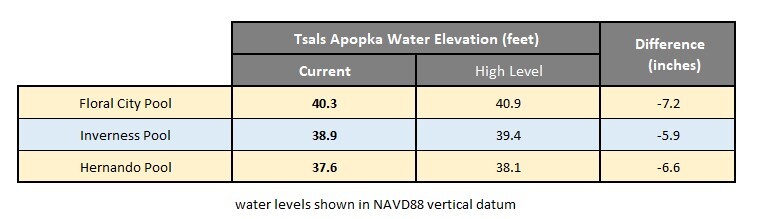
- The Floral City Pool has seen very little fluctuation recently as it currently sits at its target (high minimum) level for the wet season.
- The Inverness Pool, which was lowered several inches in August, was re-filled in September and is currently a few inches below its target (high minimum) level.
- The Hernando Pool has also seen very little fluctuation in September and is currently three inches below its target (high minimum) level.
- Currently all three pools are also 6-7 inches below their high levels (see table below). The high level is the maximum we would allow the lakes to reach.
- As the wet season comes to an end, and drier weather is imminent, our goal is to bring additional water into the lake chain “topping them off”, near their high levels.
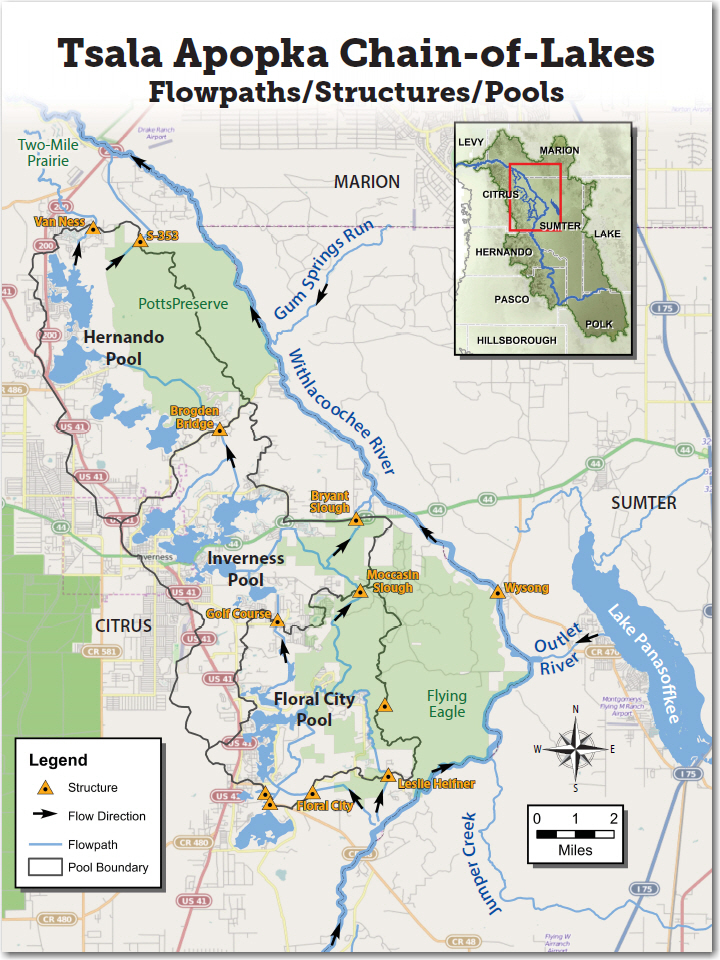
- Today, several structures were opened to bring river water into the lake chain and split it evenly between all three pools.
- No structures are open that would drain (or lower) lake levels.
- The Golf Course Structure is finally complete and operational for the first time today!
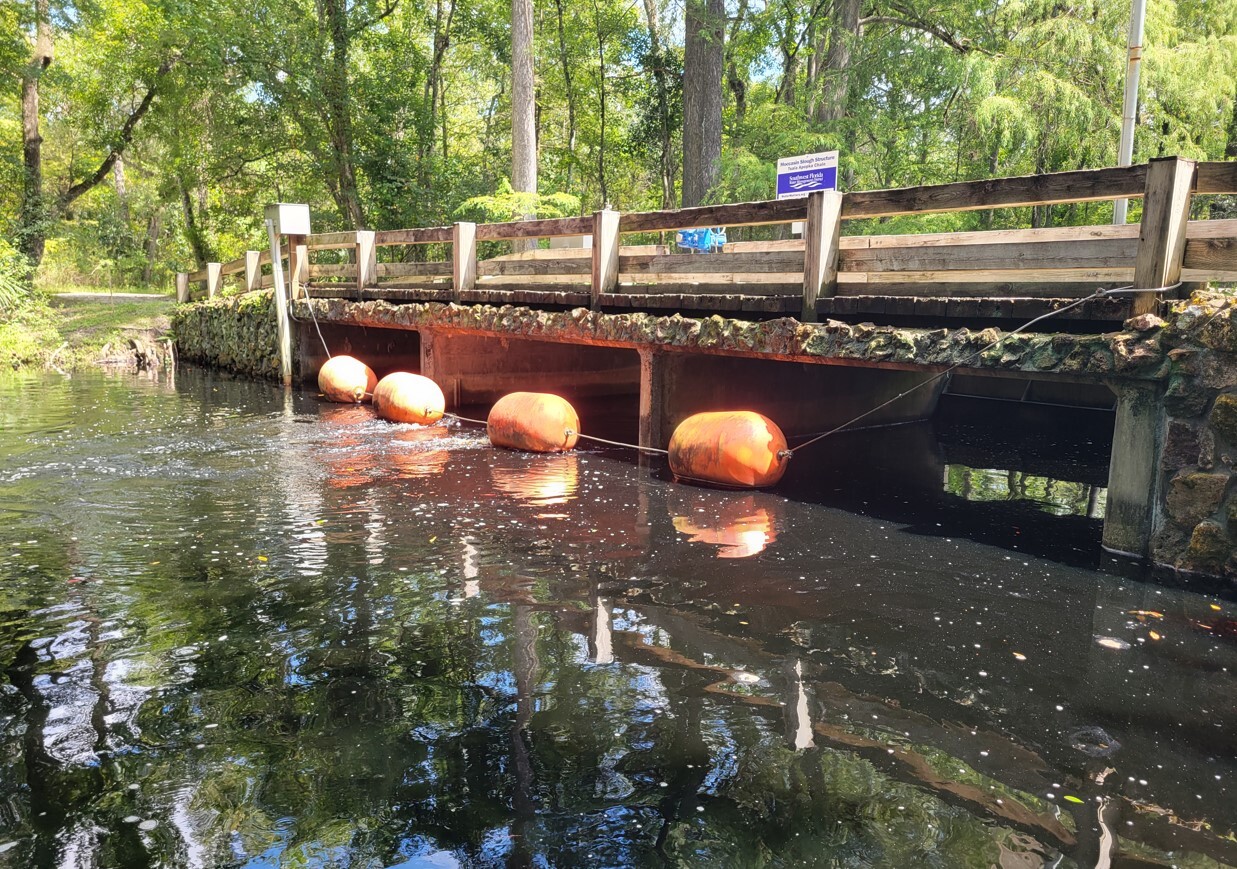
Water flowing through Moccasin Slough Structure (September 2024)
Lake Panasoffkee and Wysong:
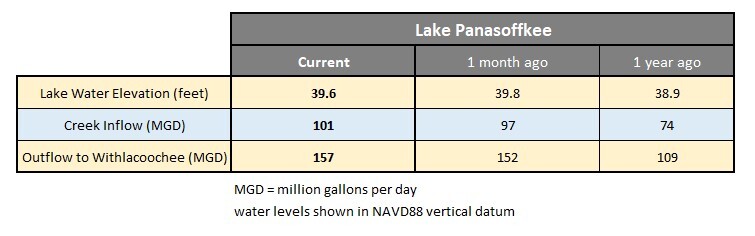
- Lake Panasoffkee rose in early September from heavy rains but has been steadily dropping for the past few weeks.
- Creek inflows are 35% greater than a year ago, providing continuous spring flow and storm runoff into the lake.
- Flows exiting Lake Panasoffkee also remain high, although substantially lower than they were in early September.
- Downstream along the Withlacoochee River, the Wysong structure remains fully lowered.
- River flows at Wysong are strong, more than 5 times greater than a year ago.
- The boat barriers will be installed at Wysong soon, as river levels continue to drop.
- We anticipate slowly raising Wysong in the coming weeks to help conserve water upstream and in Lake Panasoffkee.
- Lake Panasoffkee is currently 9 inches higher than it was a year ago at this time.
Lake Rousseau and the Lower Withlacoochee River (from Dunnellon to the Gulf of Mexico):
- It’s been a wild summer for Lake Rousseau.
- Normally water levels on the lake are stable, except when areas immediately upstream are flooding or when there is the potential for coastal flooding.
- Lake Rousseau had been lowered about 7 inches for much of August, in response to high water conditions near Dunnellon.
- Then, just when lake levels approached normal again in September, Hurricane Helene caused the lake to be lowered again, to prevent discharges during record storm surge.
- As of yesterday, Rousseau is finally back up to its normal operating level.
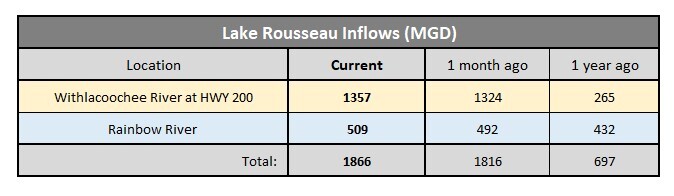
- Flows entering the lake remain high with the Withlacoochee River currently providing over 70% of the inflow.
- Rainbow River flows are also strong, nearly 18% higher than they were a year ago.
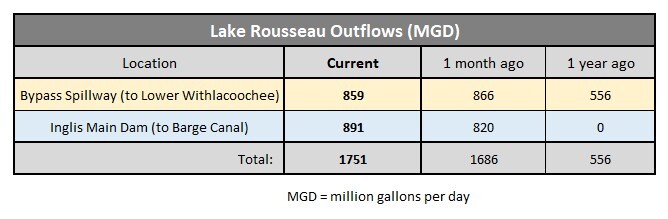
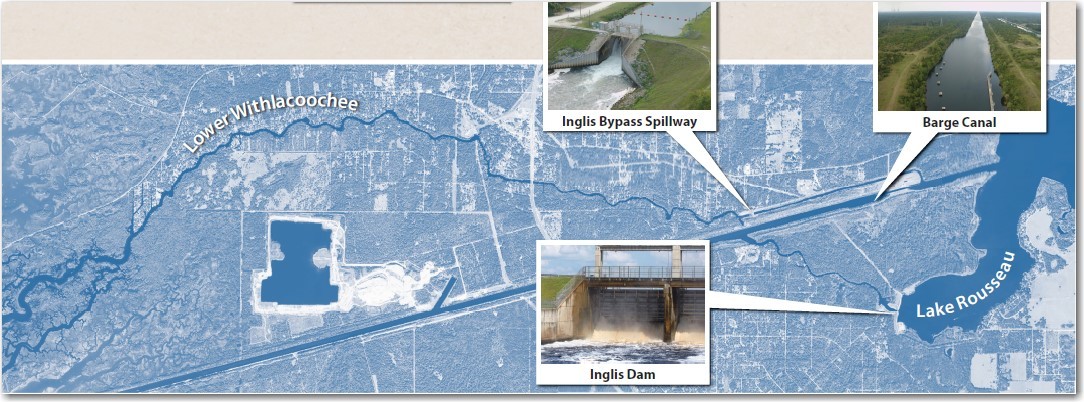
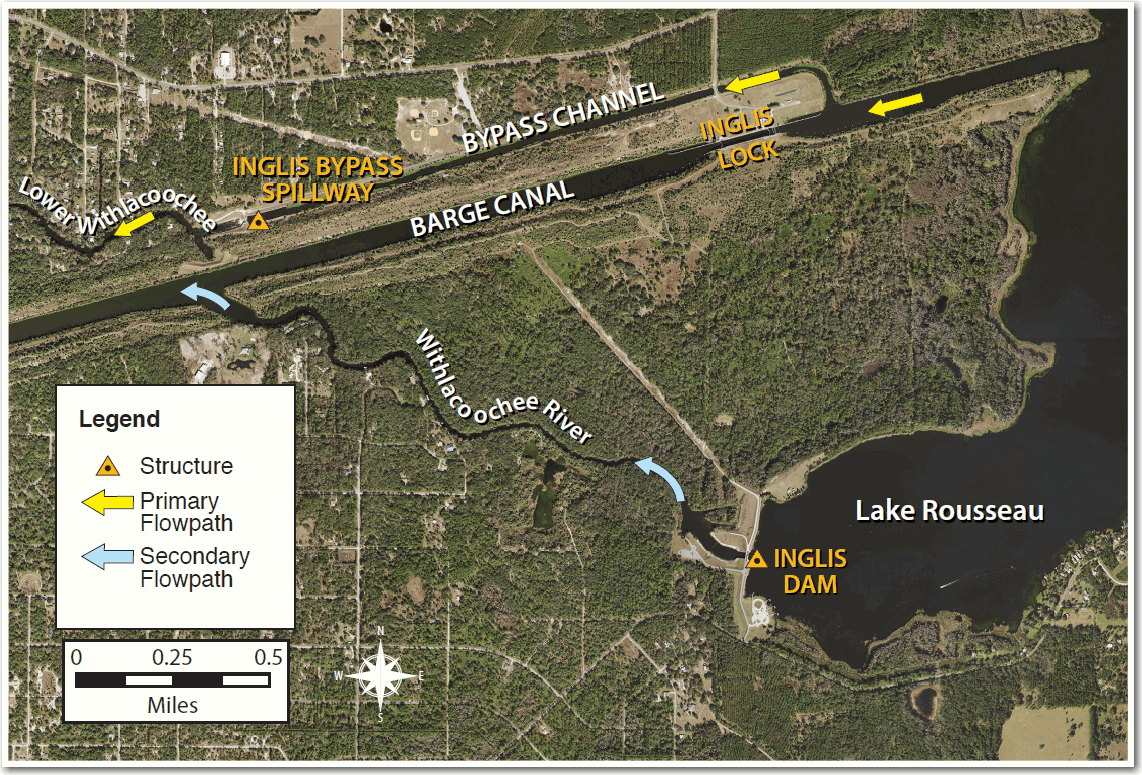
- The Inglis Bypass Spillway (primary outlet from Lake Rousseau) continues to provide maximum flow to the Lower Withlacoochee River.
- This structure was closed for nearly 24 hours when Hurricane Helene brought devastating storm surge flooding to the coast.
- Currently, the Bypass Spillway is discharging 50% more flow than a year ago, due to greater river inflows this year.
- The Inglis Main Dam, which was opened in early August, remains open discharging excess water from Lake Rousseau to the Barge Canal.
- Last year at this time the Inglis Main Dam was closed.
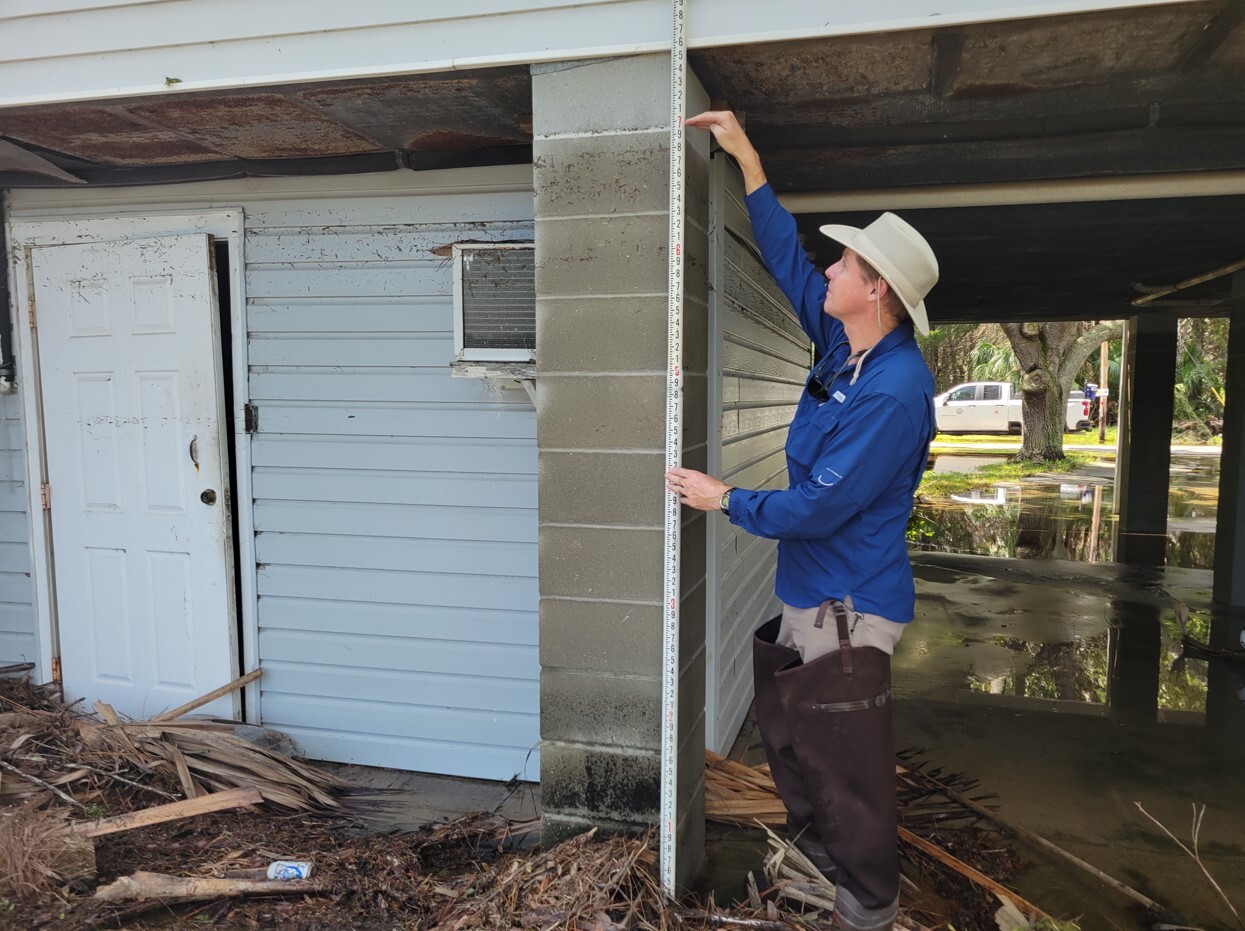
- Coastal areas, and those connected to the coast by river/swamps/canals, were significantly impacted by storm surge from Hurricane Helene.
- Unfortunately, there is no way to prevent water levels along the coast from rising when storms like this occur.
Documenting Storm Surge Flooding in Yankeetown (September 27, 2024)
Stay safe and enjoy your week!
Mark
Mark Fulkerson, Ph.D., P.E.
Chief Professional Engineer
Southwest Florida Water Management District
(352) 269-6073 (office)
(352) 279-4493 (cell)
|
|
|
|
|
|
|
|


|
Southwest Florida Water Management District | 2379 Broad Street, Brooksville, FL 34604-6899 |
|
If you do not want to continue receiving emails about these projects, click Unsubscribe. To manage your Southwest Florida Water Management District subscriptions, click Manage Preferences. |