Withlacoochee River System Update - 3/1/2024
Southwest Florida Water Management District sent this bulletin at 03/01/2024 06:47 PM EST
 |
Wetter Than Average Winter Continues
Rainfall:
- February was mostly a dry month, but a few days of rain plus one very wet weekend gave us above average for the month.
- Last year, was a much drier winter, with only 4 inches of total rainfall from December through February.
- This year has been much wetter, with 11.2 inches of rainfall over the past three months.
- That’s nearly 4 times as much rain as last winter and a few inches above the historical average (8.3 inches).
- These winter rains have kept water resources higher and may have prevented a serious drought that looked all but certain after a very dry summer last year.
- Aquifer (groundwater) levels are currently in the 55th percentile (slightly above average) for our region, and higher than this date last year (48th percentile).
- Flow in area springs, which fluctuates from changing rainfall trends, remains strong.
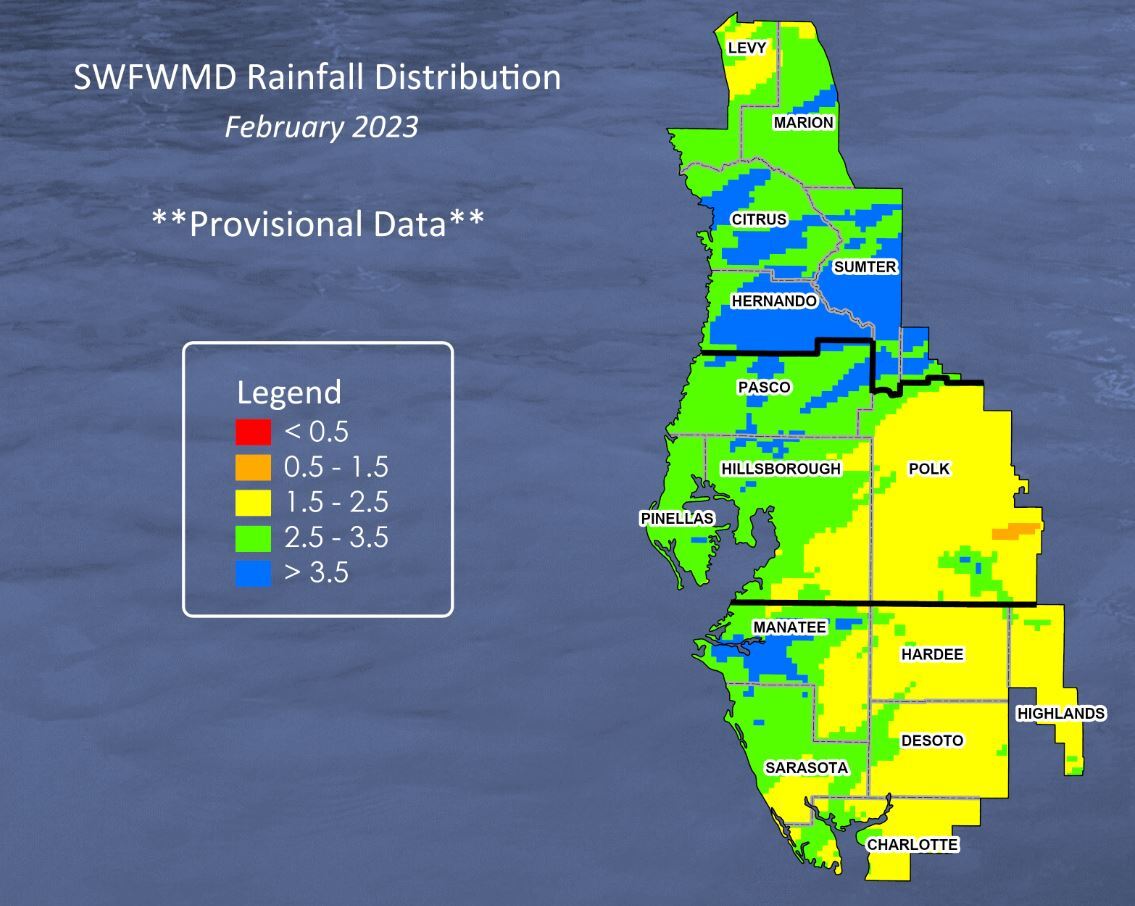
- The figure below shows how much rainfall different areas received last month. Green and blue areas represent above average rainfall.
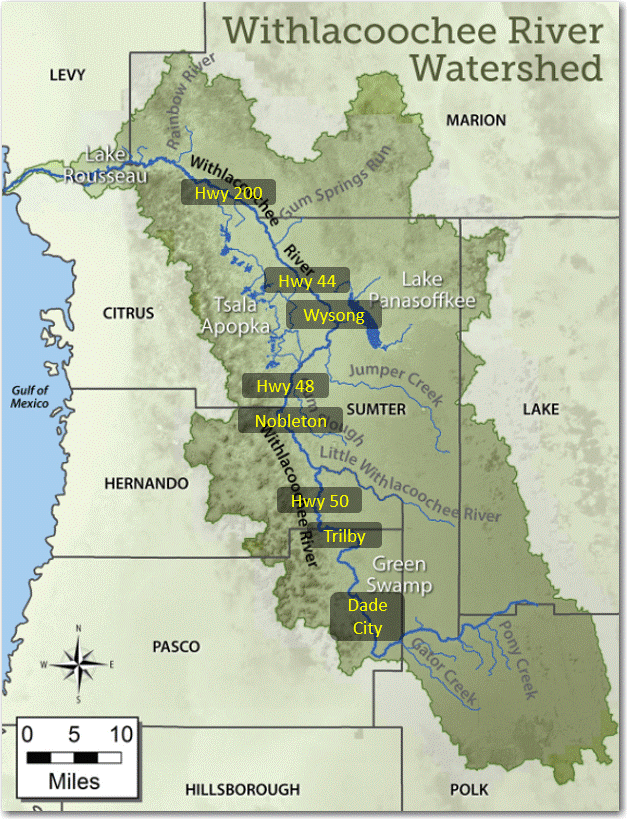
Withlacoochee River (from the Green Swamp downstream past Hwy 200):
- The Withlacoochee River is in good shape for this time of year, thanks to above average rainfall this winter.
- After steadily dropping the first half of February, river levels and flows rose again from regional rainfall and are currently higher than they were a month ago.
- Along the entire Withlacoochee River, water levels and flows are finally higher than they were a year ago, a trend we haven’t seen in many months.
- River conditions typically decline from November through May, but with the additional rainfall this winter, river levels and flows have stayed higher.
- In the Green Swamp, where the river begins, flows remain strong.
- This is a good sign for the months to come, because many years the Green Swamp will cease flowing altogether due to normally lower rainfall during the dry season.
- The Withlacoochee River could still drop substantially by summer unless our region continues to receive high rainfall.
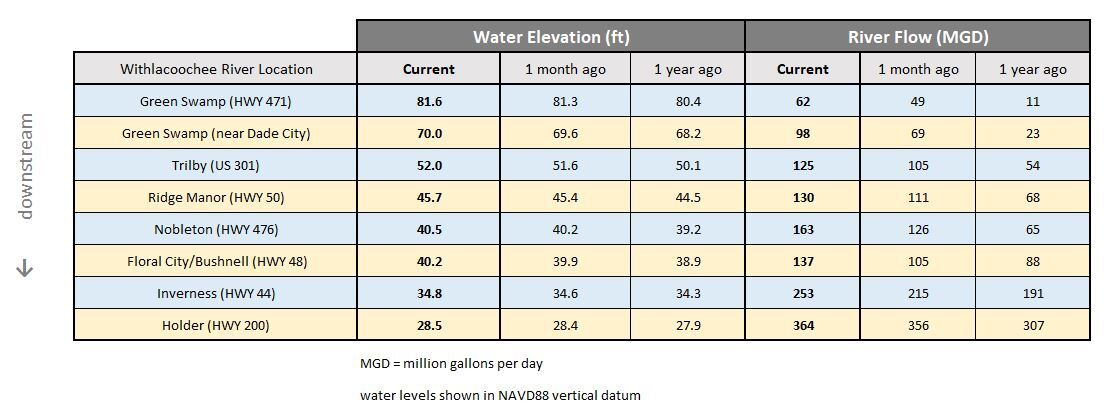
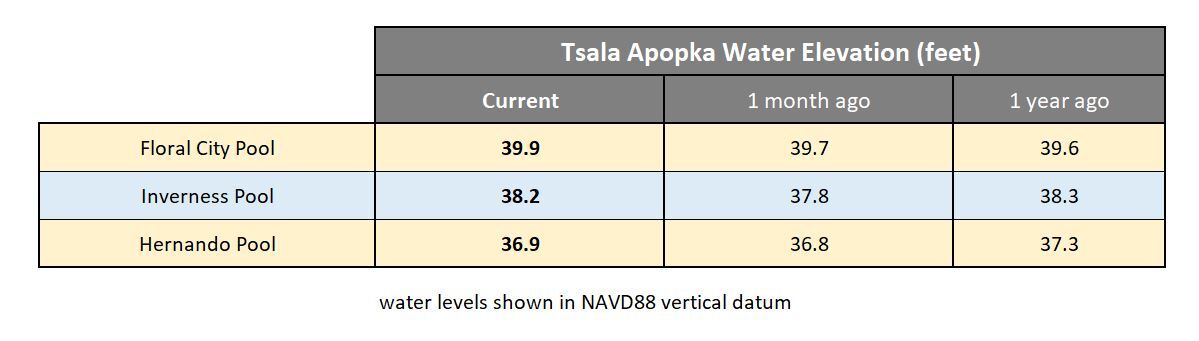
- The table below compares current river levels and flows to what they were last month and last year.
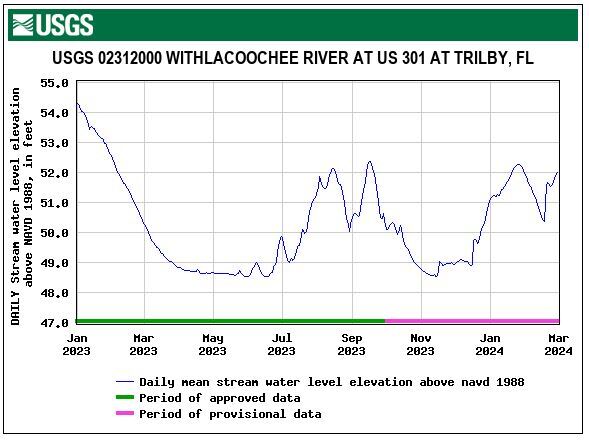
- The chart below (from USGS) shows how river water elevations dropped drastically last winter compared to this winter which has brought considerably more rain.
Withlacoochee River at Trilby - Water Surface Elevations (January 2023 - February 2024)
Tsala Apopka Chain of Lakes:
- Water levels throughout the Tsala Apopka Chain of Lakes rose again in February.
- These increases were due to rainfall directly on the lakes combined with additional flow from the Withlacoochee River.
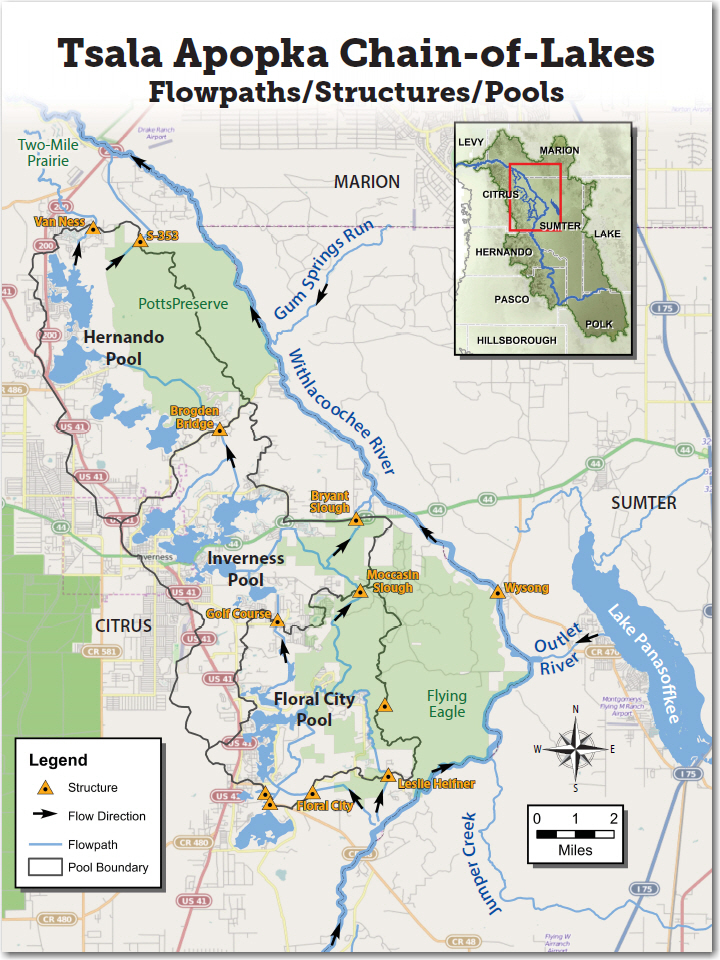
- Several water control structures remain open sharing river inflows between all three pools of the lake chain.
- Construction at the Golf Course Structure has been slow in recent weeks, but the project is progressing.
- This week, crews mobilized a crane to de-water the site so that construction of an improved structure can continue.
Morning Fog Rises above Lake Henderson in the Tsala Apopka Chain of Lakes (February 2024)

Lake Panasoffkee and Wysong:
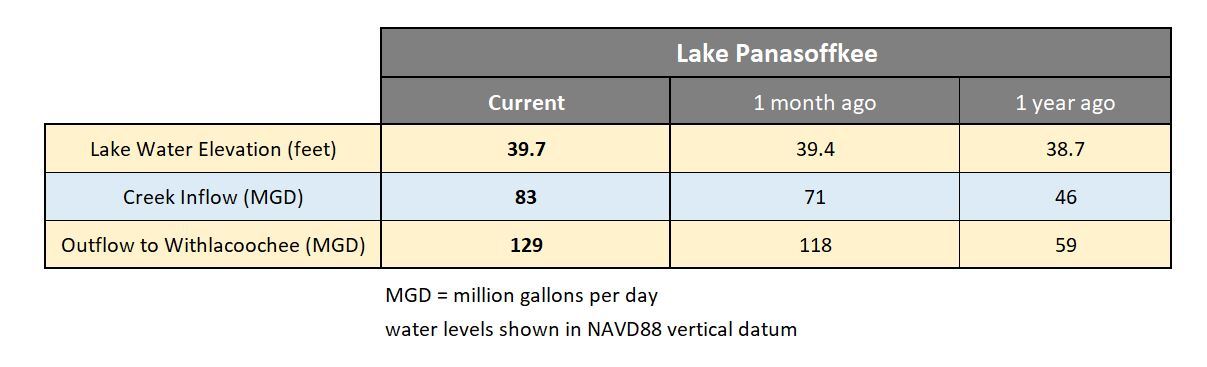
- Lake Panasoffkee also benefited from rainfall in February.
- Lake levels rose 3 inches last month and have increased about a foot overall since November.
- The spring-fed creeks, which provide continuous flow into Lake Panasoffkee, have not experienced their normal dry season declines yet this year.
- In fact, the stream flows entering the lake are higher now than they were for most of the wet season (last summer).
- The lake is currently about 12 inches higher than it was a year ago.
- Outflows, from Lake Panasoffkee to the Withlacoochee River, are also greater than average for this time of year, due to higher lake levels.
- The Wysong Structure remains inflated, helping to conserve water upstream, benefiting both Lake Panasoffkee and the Tsala Apopka Chain.
- The main gate (230-ft-wide) at Wysong has been fully raised for over a year now.
- The independent gate (19-ft-wide) remains partially raised, allowing river flows to pass downstream.
Water Flows through the Swamps of Little Jones Creek Towards Lake Panasoffkee (February 2024)

Lake Rousseau and the Lower Withlacoochee River (from Dunnellon to the Gulf of Mexico):
- Downstream from Dunnellon, the Withlacoochee River is influenced by water control structures on Lake Rousseau.
- Water levels on Lake Rousseau remain relatively steady most of the time.
- What does change are the flows entering and leaving the lake.
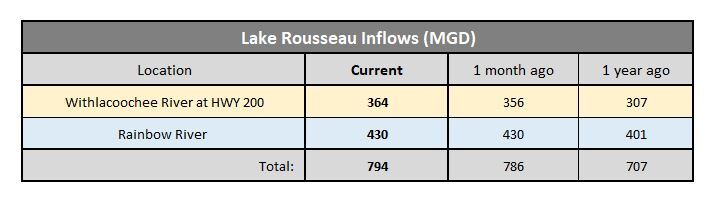
- Inflow to Lake Rousseau includes combined flows from the Withlacoochee and Rainbow Rivers.
- Rainbow River flow (which reflects changes in aquifer levels) saw little change in February.
- Withlacoochee River flow (which depends on rainfall and runoff from adjacent lands) is slightly higher than it was a month ago.
- Overall, inflows to Lake Rousseau are 12% higher than they were a year ago, due to higher rainfall this wet season.
- The Rainbow River is currently providing more than half of the total flow entering Lake Rousseau.
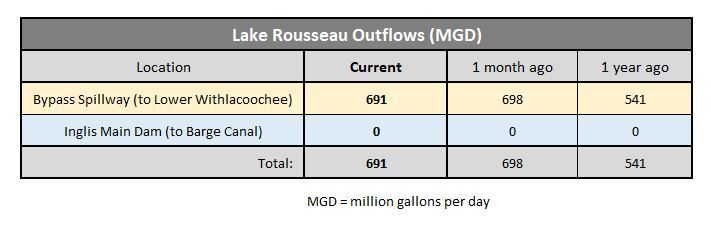
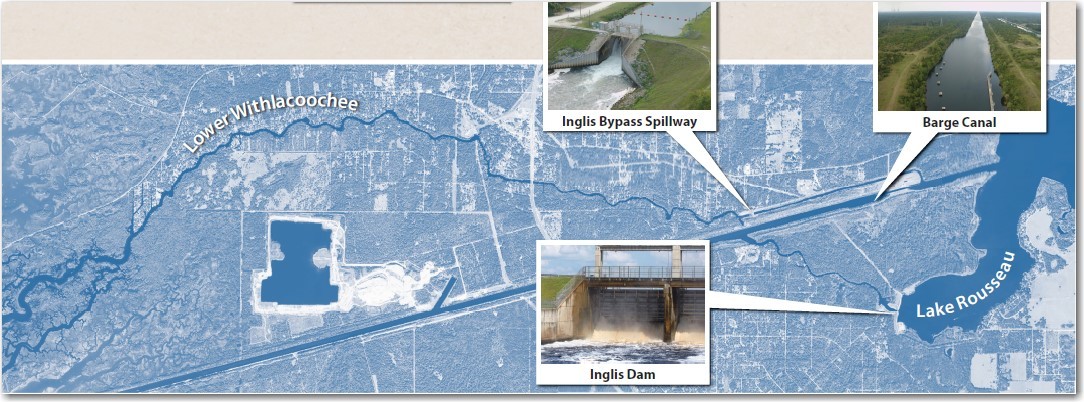
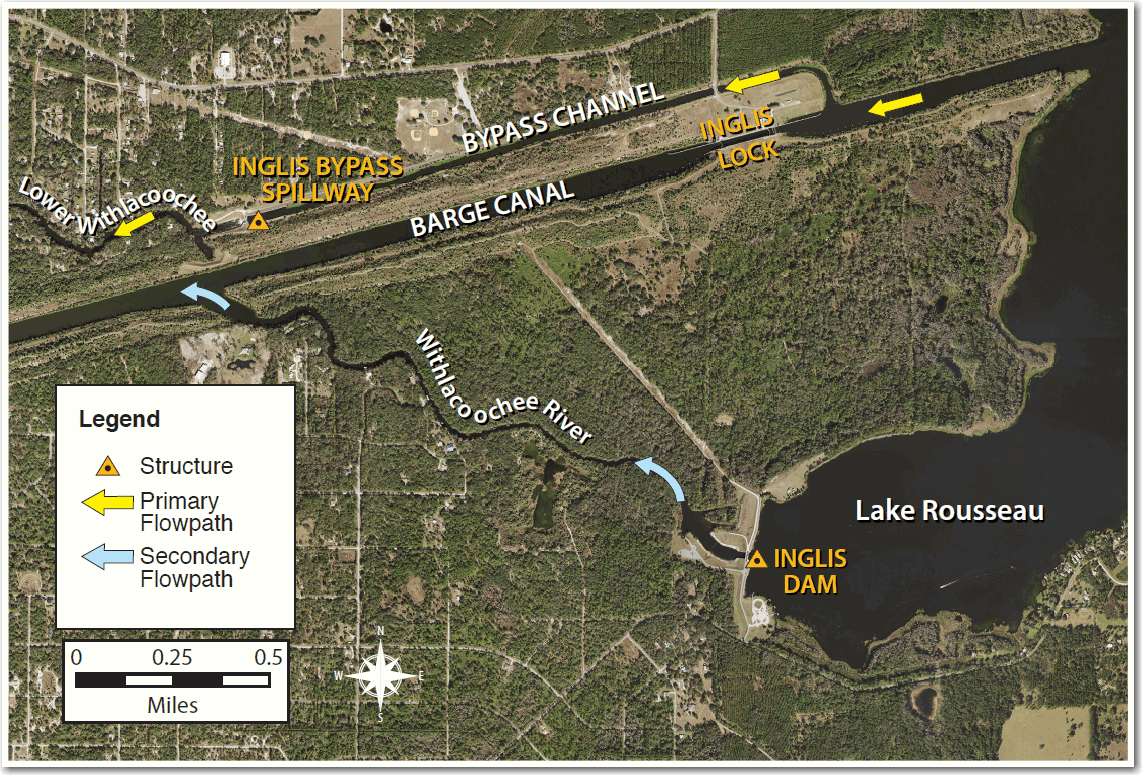
- The primary outlet from Lake Rousseau is through the Inglis Bypass Spillway to the Lower Withlacoochee River (see maps below).
- When the Bypass Spillway reaches its capacity, the Inglis Main Dam is opened to discharge excess flows to the Barge Canal.
- Currently, the Bypass Spillway is flowing at around 77% of its 900 MGD capacity, which is 28% more flow than a year ago.
- The Inglis Main Dam remains closed and won’t be open again until the Bypass Spillway reaches its capacity.
- Freshwater flow from Lake Rousseau to the Lower Withlacoochee River saw little change in February.
Have a great weekend!
Mark
Mark Fulkerson, Ph.D., P.E.
Chief Professional Engineer
Water Resources Bureau
Southwest Florida Water Management District
(352) 269-6073 (office)
(352) 279-4493 (cell)
|
|
|
|
|
|
|
|


|
Southwest Florida Water Management District | 2379 Broad Street, Brooksville, FL 34604-6899 |
|
If you do not want to continue receiving emails about these projects, click Unsubscribe. To manage your Southwest Florida Water Management District subscriptions, click Manage Preferences. |