Withlacoochee River System Update - 10/2/2023
Southwest Florida Water Management District sent this bulletin at 10/02/2023 05:08 PM EDT
 |
Water Levels Below Average as Wet Season Ends
Rainfall:
- We’re nearing the end of our wettest time of the year.
- Our rainy season, which runs from June to September, officially ended on Saturday.
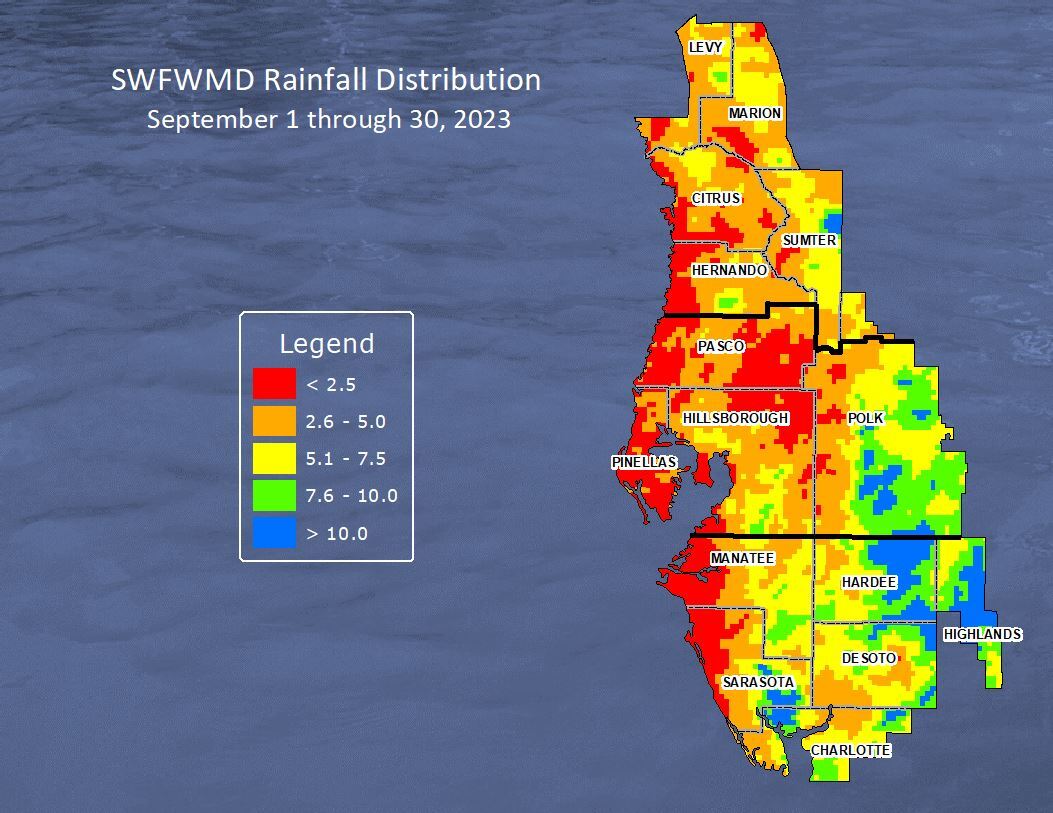
- Last month we received just 4 inches of rainfall. The historical average for September is 6.3 inches.
- So far this year (January to September) we’ve received 38 inches of rain, about 6 inches below the historical average (46 inches) for the first 9 months of year.
- By this time last year, our region had already received 46 inches of rain.
- Less rainfall in 2023 (and the last half of 2022) has resulted in lower water levels in area lakes, rivers, and the aquifer.
- Aquifer (groundwater) levels are currently in the 37th percentile, much lower than this date last year (64th percentile).
- Hurricane season runs through the end of November, so there is still a chance for tropical weather to bring heavy rainfall to our area in the coming weeks.
- The figure below shows how much rainfall different areas received last month. All red and orange areas received below average rainfall last month.
Withlacoochee River (from the Green Swamp downstream past Hwy 200):
- The Withlacoochee River normally peaks this time of year from summer rains that saturate the watershed.
- This year, the river is still waiting for enough rainfall to substantially raise water levels and increase stream flows.
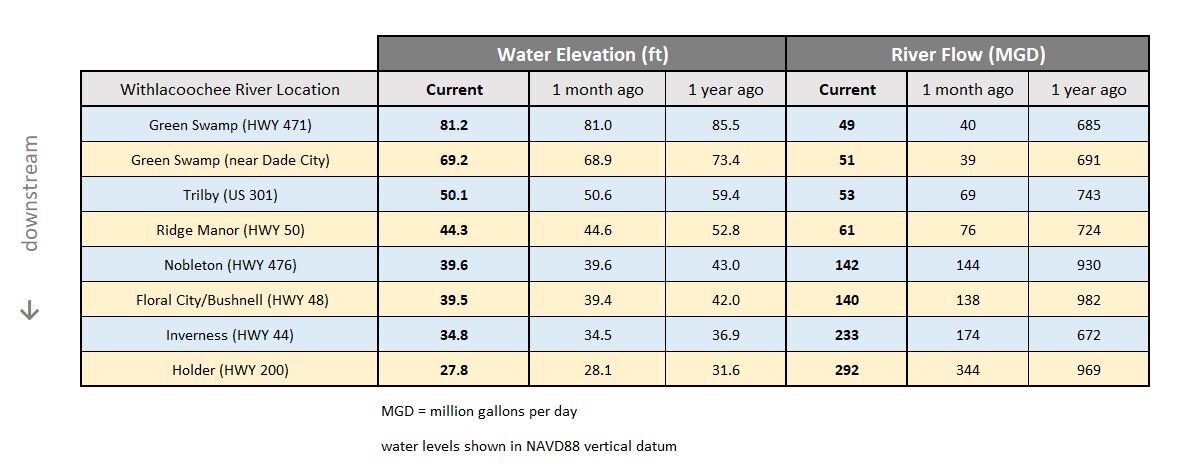
- Conditions along the Withlacoochee River haven’t changed much over the past month.
- And compared to last year, the river is much lower.
- River flows are only about 15% of what they were a year ago.
- Water levels along the Withlacoochee are on average 5 feet lower than last year at this time.
- We could still see the river rise significantly this year if our region experiences widespread heavy rainfall.
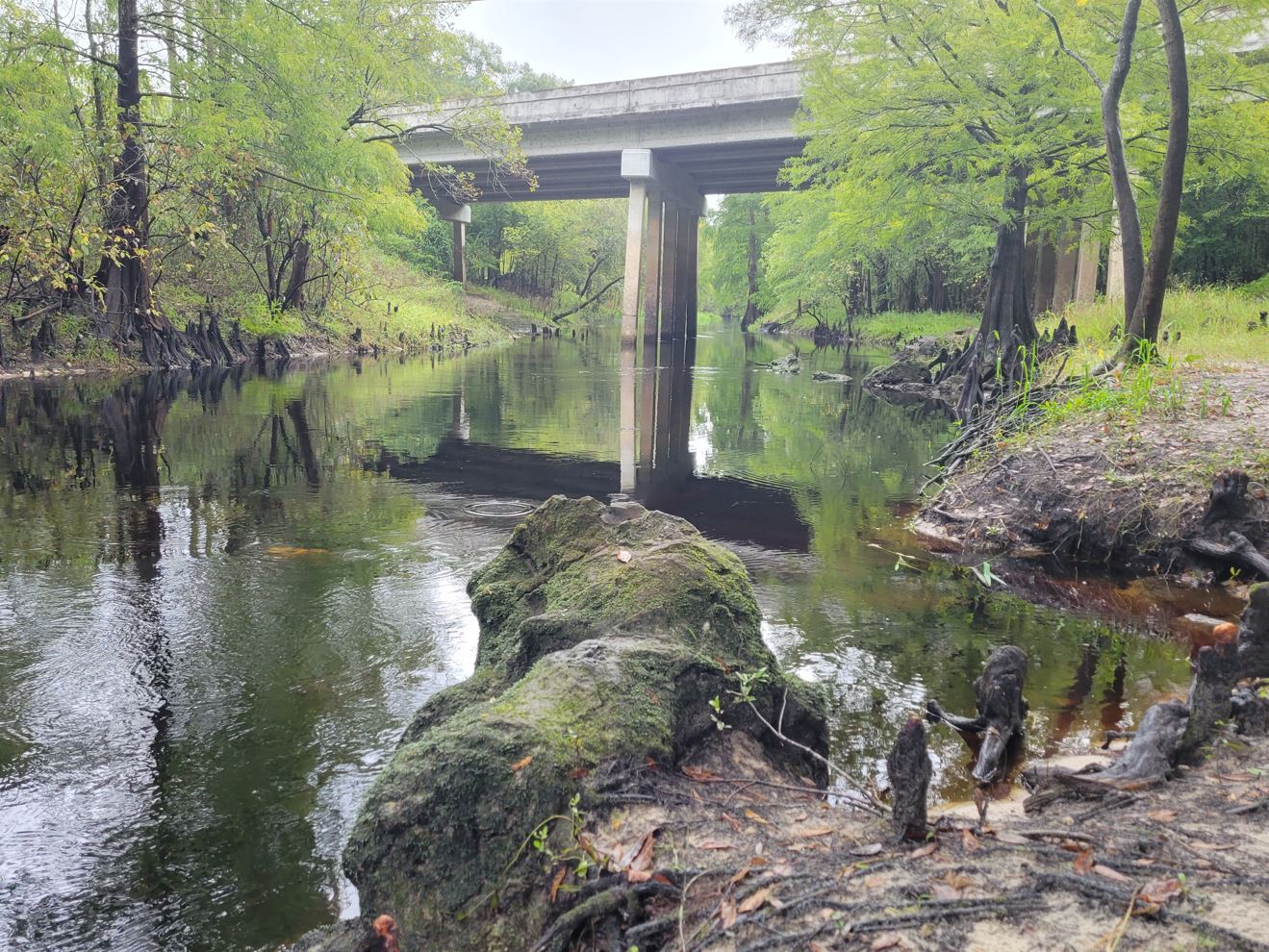
- Water continues to flow from the Green Swamp, but only a fraction of what it was a year ago.
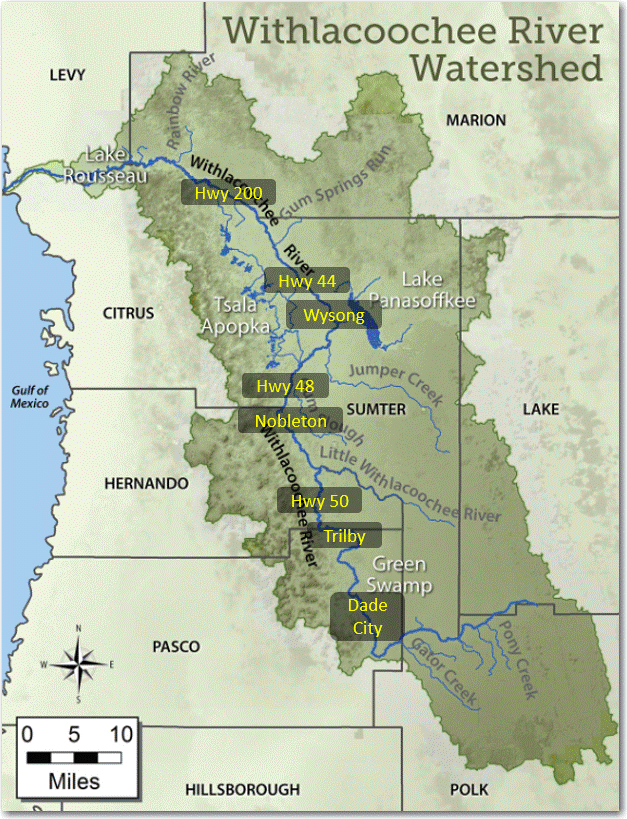
Withlacoochee River at Hwy 98 Bridge near Trilby (September 2023)
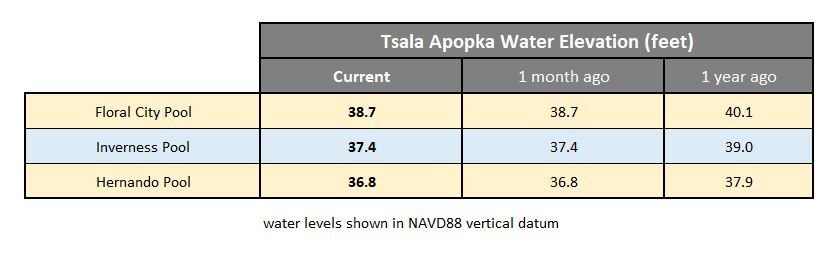
Tsala Apopka Chain of Lakes:
- Water levels throughout the Tsala Apopka Chain of Lakes remained relatively unchanged over the past month.
- Behind the scenes, however, the hydrologic cycle was working overtime.
- The lakes received 2 to 4 inches of rain last month.
- Water also continued to flow into the lake chain from the Withlacoochee River.
- Those contributions were offset by the natural losses of evaporation and downward leakage to the aquifer.
- The overall result was no net change in lake levels in September.
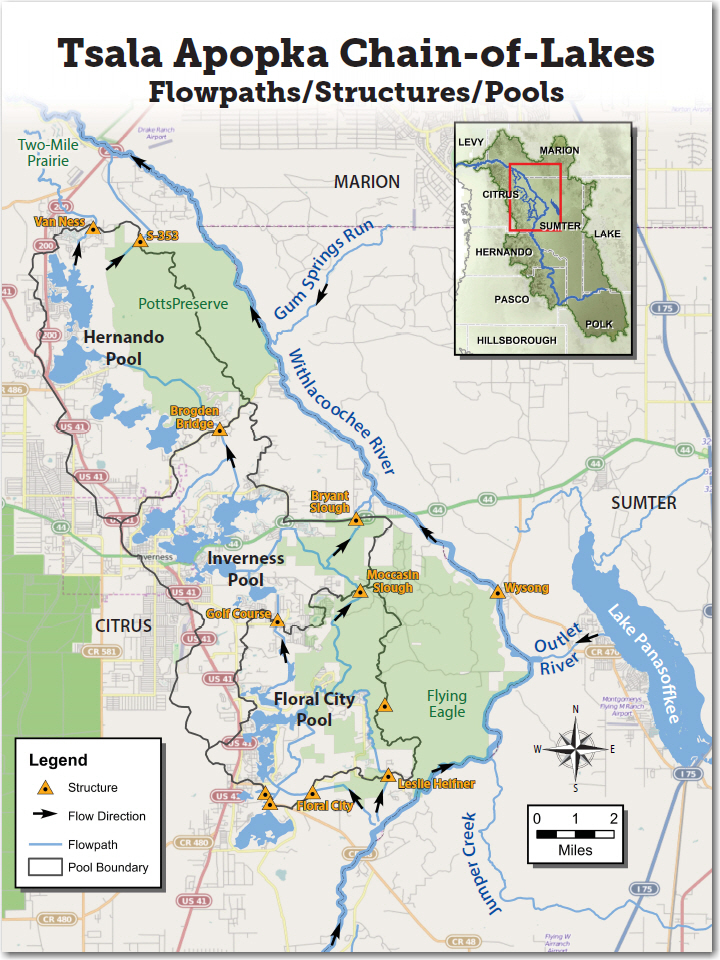
- Water control structures, which were opened in mid-July, remain open moving water into all three pools.
- Currently the Leslie Heifner, Floral City, Golf Course, Moccasin Slough and Brogden Bridge structures are open (see map below).
- Structures will remain open as long as possible to help capture water for the upcoming dry season.
- All three pools are currently 13 to 18 inches lower than they were a year ago, due to less rainfall in 2023.
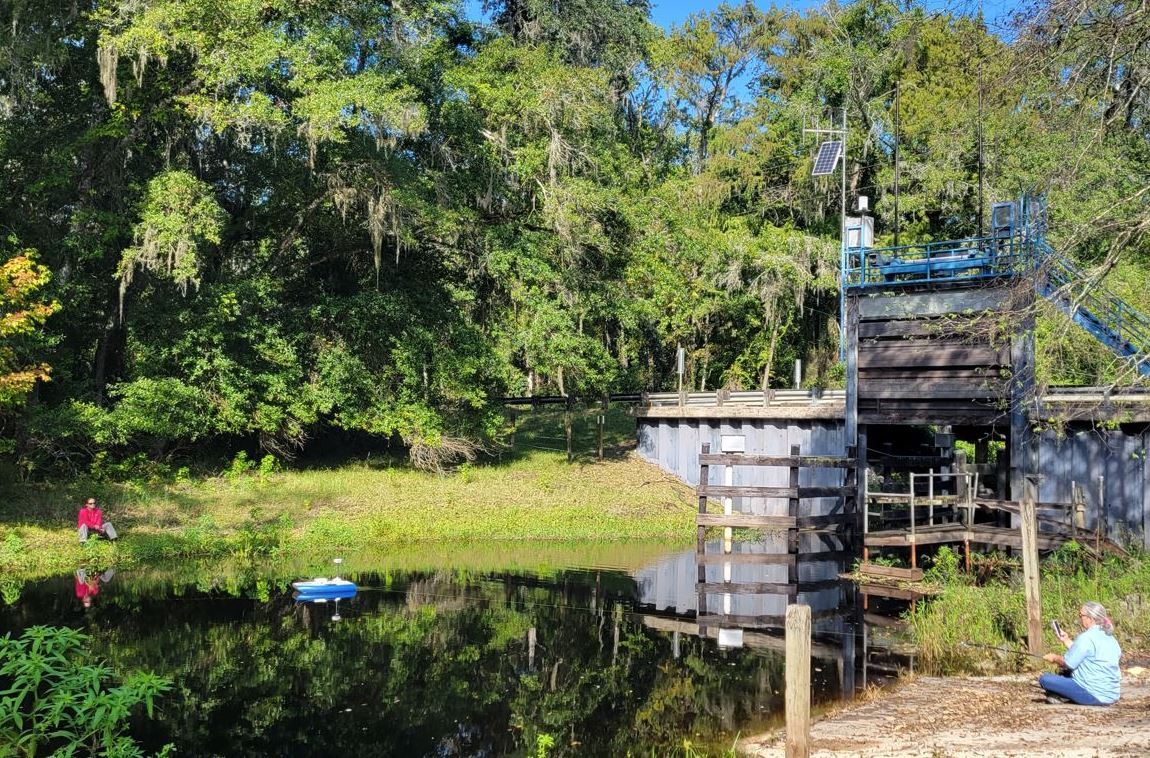
Staff Measuring Flows at Leslie Heifner Structure (September 2023)
Lake Panasoffkee and Wysong:
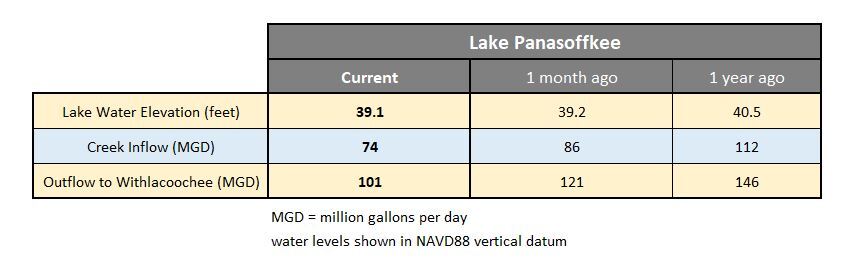
- Lake Panasoffkee rises and falls each year due to changing rainfall patterns that directly affect the lake itself, the Withlacoochee River, and regional groundwater levels.
- Water flows into the lake from spring-fed creeks and countless connections with the Floridan Aquifer.
- Water exits the lake to the Withlacoochee River via the Outlet River, about 2 miles upstream of the Wysong – Coogler Water Conservation Structure.
- Over the past month, inflows matched outflows and water levels on Lake Panasoffkee remained relatively unchanged.
- Lake Panasoffkee is currently 16 inches lower than it was last year at this time, due to less rainfall in recent months.
- The Wysong Structure remains inflated, helping to conserve water upstream.
- In recent years, the Wysong structure would have been fully deflated by this time, as the Withlacoochee River would have naturally risen from wet season rainfall.
- Our region has not experienced enough rainfall this year to significantly raise river levels, allowing the Wysong structure to remain inflated all summer.
- Last year, river flows at Wysong were four times higher than they are this year.
Lake Rousseau and the Lower Withlacoochee River (from Dunnellon to the Gulf of Mexico):
- Downstream from Dunnellon, the Withlacoochee River is influenced by water control structures on Lake Rousseau.
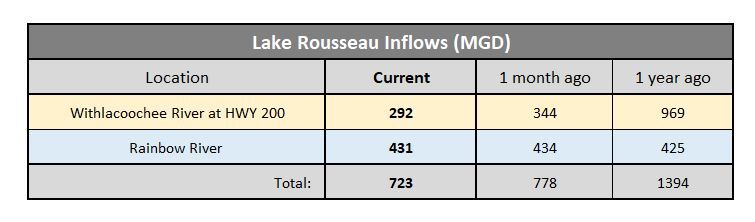
- Inflow to Lake Rousseau includes combined flows from the Withlacoochee and Rainbow Rivers.
- Rainbow River flow (which reflects changes in aquifer levels) remained steady over the past month.
- Withlacoochee River flow (which depends on rainfall and runoff from adjacent lands) decreased by 15% in September.
- Overall inflows to Lake Rousseau are less than half of what they were a year ago.
- The Rainbow River continues to provide most of the flow that is entering Lake Rousseau.
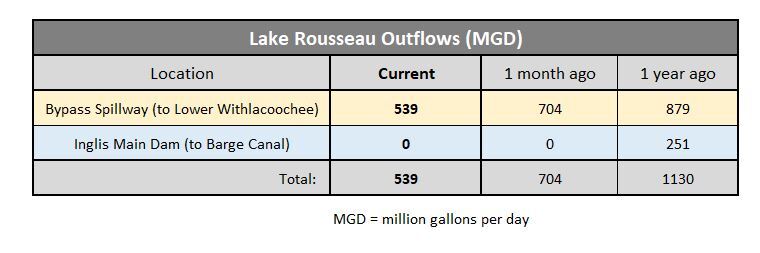
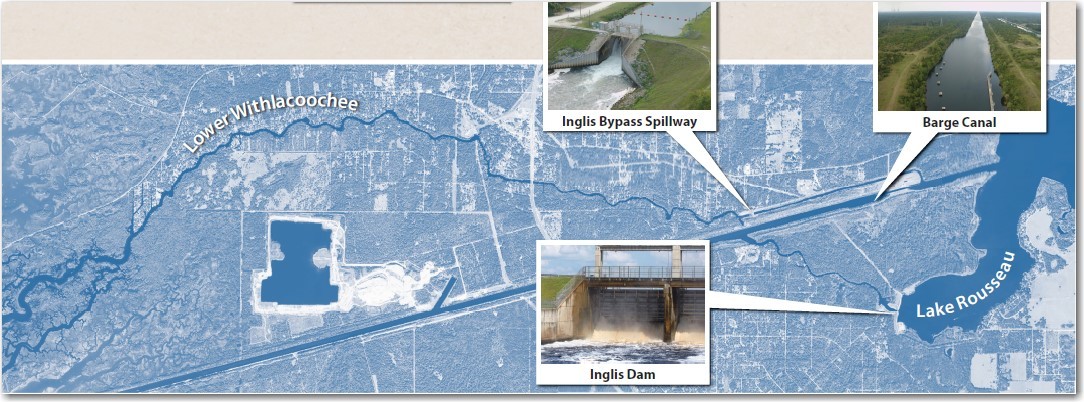
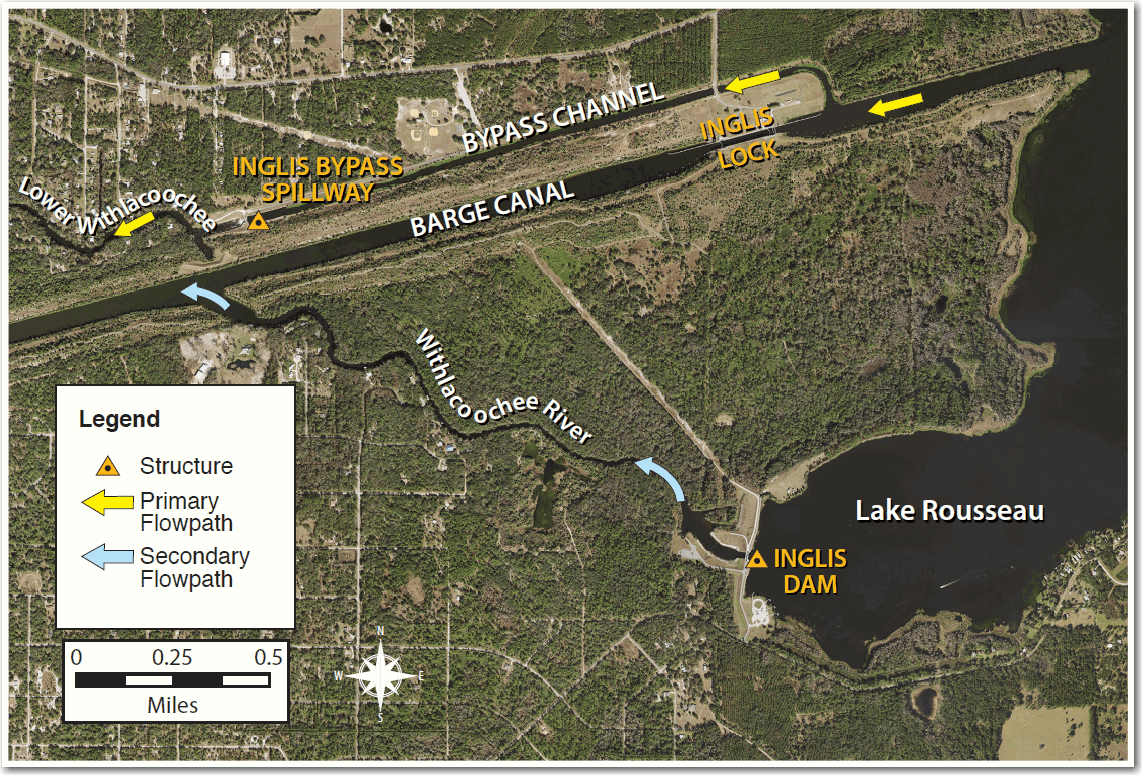
- The primary outlet from Lake Rousseau is through the Inglis Bypass Spillway to the Lower Withlacoochee River (see maps below).
- The Inglis Main Dam, which discharges excess flows to the Barge Canal, was closed in early January and remains closed.
- All flow is still passing downstream through the Bypass Spillway, which is currently flowing at about 60% of its capacity.
- Freshwater flows from Lake Rousseau to the Lower Withlacoochee River decreased by 23% last month, due to below average rainfall.
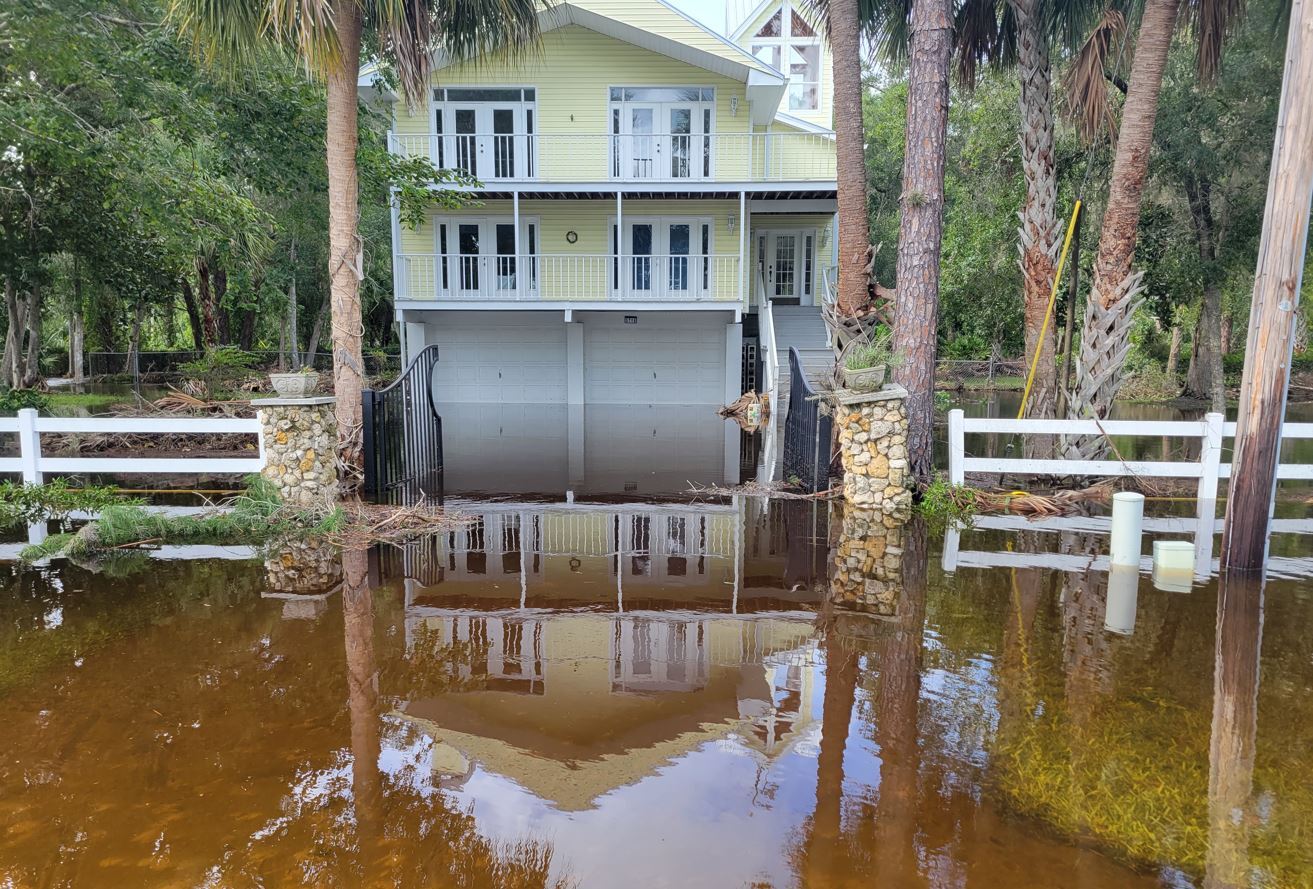
- The Lower Withlacoochee River experienced substantial flooding in late August from Hurricane Idalia’s storm surge along the coast.
Flooding in Yankeetown from Hurricane Idalia (August 2023)
Have a wonderful week!
Mark
Mark Fulkerson, Ph.D., P.E.
Chief Professional Engineer
Water Resources Bureau
Southwest Florida Water Management District
(352) 269-6073 (office)
(352) 279-4493 (cell)
|
|
|
|
|
|
|
|


|
Southwest Florida Water Management District | 2379 Broad Street, Brooksville, FL 34604-6899 |
|
If you do not want to continue receiving emails about these projects, click Unsubscribe. To manage your Southwest Florida Water Management District subscriptions, click Manage Preferences. |