Withlacoochee River System Update - 8/2/2021
Southwest Florida Water Management District sent this bulletin at 08/02/2021 06:15 PM EDT
 |
Water Resources Reach High Levels in July
Rainfall:
- The first 5 weeks of our rainy season (June through early July) were extremely wet, bringing 20 plus inches of rainfall to much of our area.
- After Tropical Storm Elsa (July 7th) blew through, things seemed to dry out for a bit, but over the past week or so the rainfall has returned.
- Overall, our region received an average of 10 inches of rain in July, with some areas seeing upwards of 12 to 14 inches.
- So far this year, we’ve received 33.2 inches of rain, more than the historical average (31.1 inches) for January through July.
- Above average rainfall has filled our region’s aquifer and increased flow in area springs.
- Aquifer (groundwater) levels are currently in the 80th percentile, above average for July and much higher than they were a year ago (53rd percentile).
- As a result, spring flows increased sharply in July and are well above average for this time of year.
- High rainfall amounts have also increased river flows and raised water levels in areas lakes and wetlands. Some areas have already experienced flooding this year.
- Check out this video that highlights part of our response to high water concerns in early July: https://www.youtube.com/watch?v=0bec02jcnfY
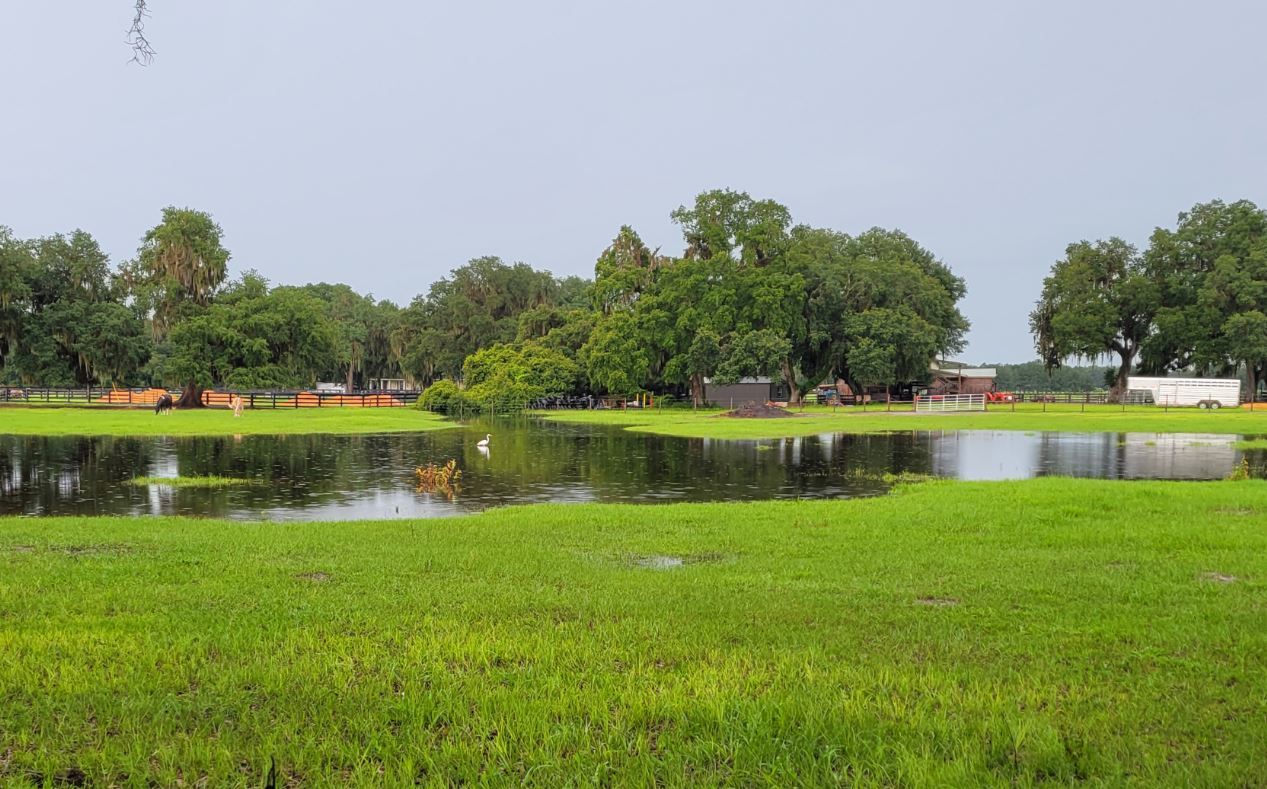
Above Average Rainfall Causes Water to Stand in a Normally Dry Horse Pasture (July 2021)
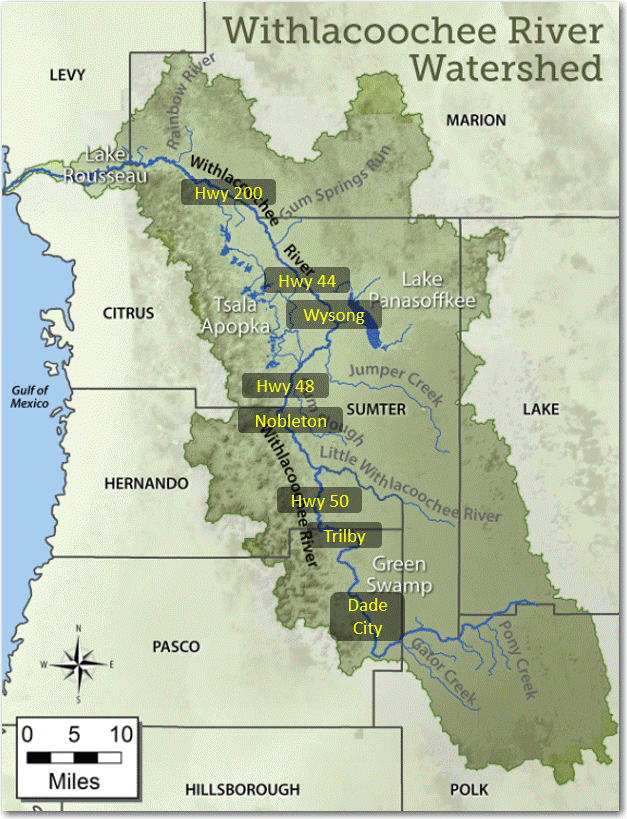
Withlacoochee River (from the Green Swamp downstream past Hwy 200):
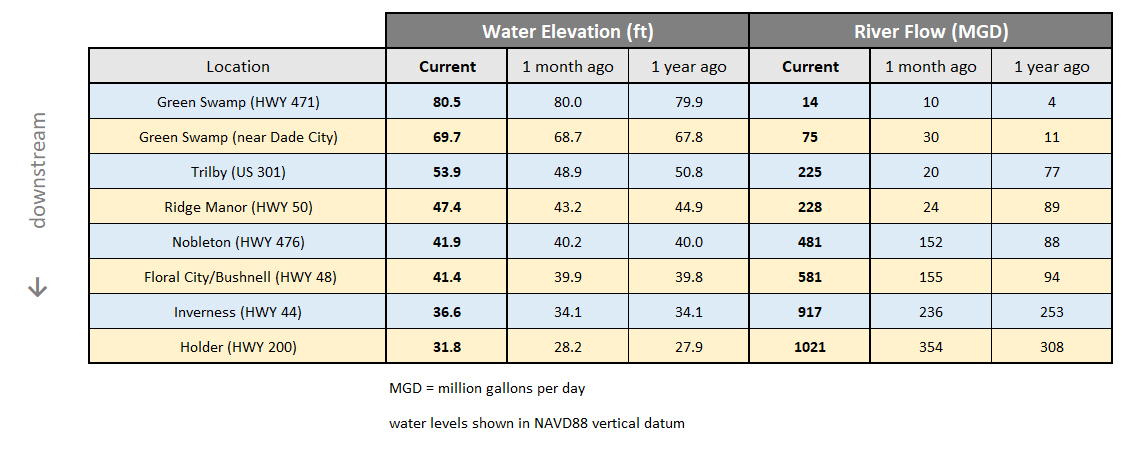
- Heavy rainfall throughout June and early July dramatically increased flows and levels along the Withlacoochee River.
- Some areas have already peaked in July and are on their way back down, while other areas are still rising.
- In the Green Swamp, river levels crested in early to mid-July and have already receded a few feet.
- Downriver near Trilby (Hwy 301) and Ridge Manor, where the river narrows and banks are higher, river levels crested a couple weeks ago and flows have already decreased 50% since then.
- Farther downstream near Hwy 44 and Hwy 200, river levels are still rising.
- In this area, the river is much wider and receives additional flow from Lake Panasoffkee and several second magnitude springs.
- Across the board, river levels and flows are substantially higher than they were a year ago.
- With a couple months to go in the wet season, we’ll likely see higher conditions along the Withlacoochee River in the coming weeks.
- The Little Withlacoochee River, which peaked in early July after flooding several neighborhood roads and properties, has declined some, but remains high for this time of year.
- The table below compares river levels and flows along the Withlacoochee River to what they were last month and last year.
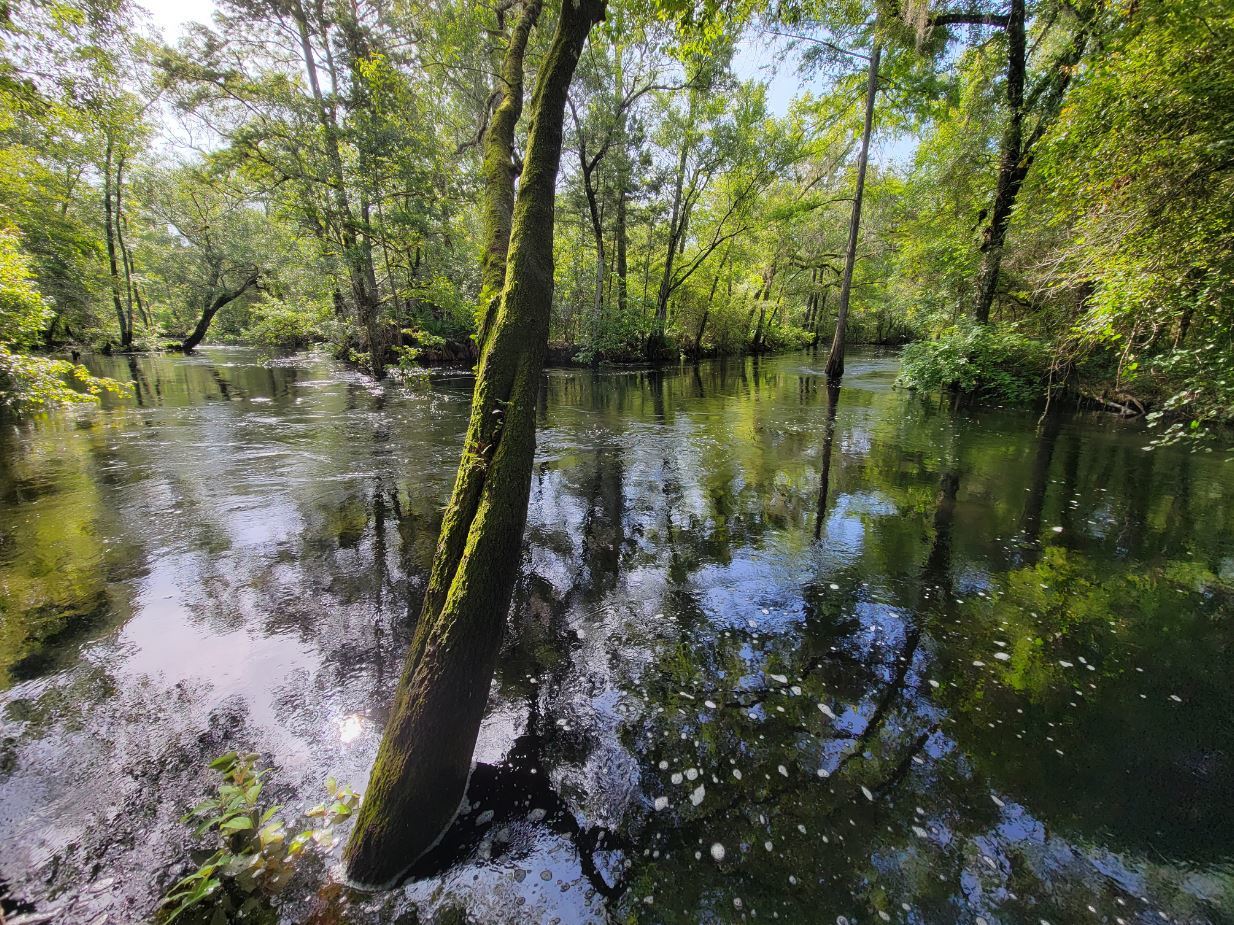
Little Withlacoochee River Overflowing its Banks (July 2021)
Tsala Apopka Chain of Lakes:
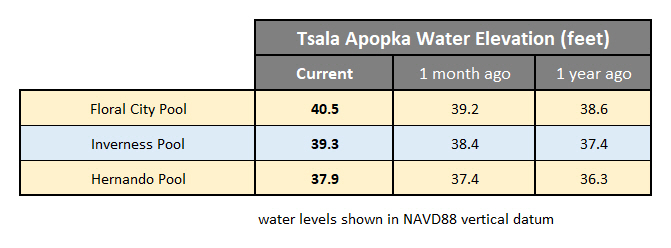
- All three pools in the Tsala Apopka lake chain have now reached their target high levels for the summer.
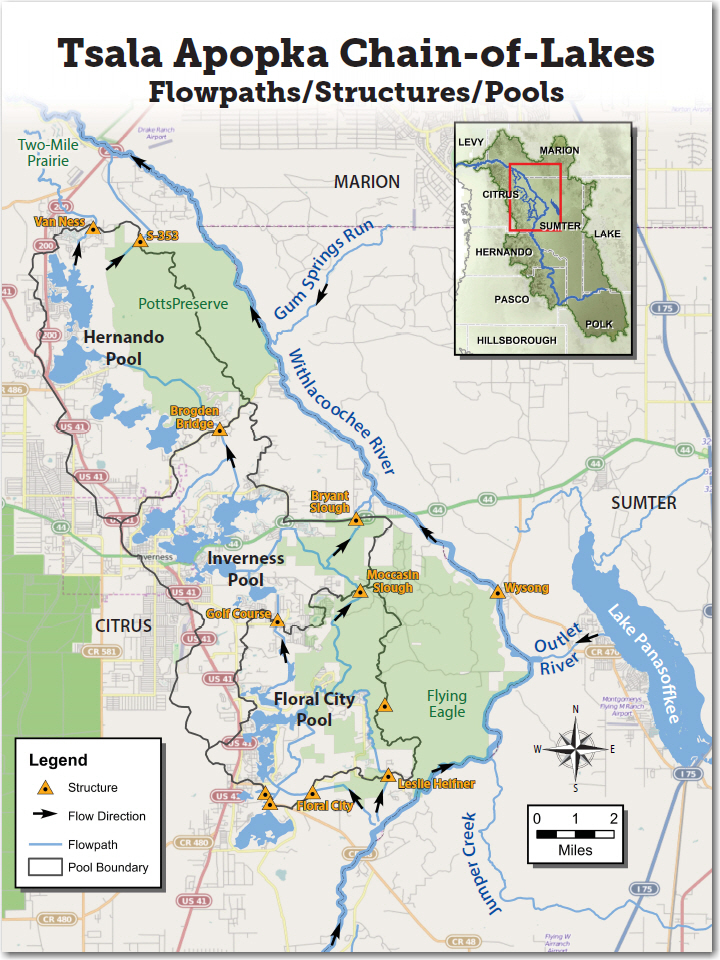
- As a result, structures have been open in recent days, releasing excess water from the lakes.
-
Inverness and Hernando Pools
- The Inverness and Hernando Pools reached their target levels in early July (3 weeks ago).
- For the past week or so, the Brogden Bridge structure has been open, sending excess water from the Inverness Pool into the Hernando Pool.
- During this same period, the Van Ness structure has been open, sending those excess flows out of the Hernando Pool and towards Two-Mile Prairie.
- The Bryant Slough structure may be opened tomorrow to move water directly from the Inverness Pool into the Withlacoochee River near SR 44.
-
Floral City Pool
- This past Friday, the Floral City Pool finally reached its target level for the summer. Since then, additional rainfall has raised water levels a couple inches more.
- Today, the Golf Course structure was opened to help move this excess water out of the Floral City Pool.
- Overall, the goal is to maintain these target high levels throughout the summer, although localized rainfall could raise lake levels periodically, until the structures can catch back up.
- Keep in mind, most of the water control structures on this lake chain are simply conservation structures, except for S-353 which is a true flood control structure.
- The Leslie Heifner and Floral City structures will remain closed for now, preventing additional river water from entering the lake chain.
- Water levels in Tsala Apopka are currently about 1.75 feet higher than they were a year ago.
Lake Panasoffkee and Wysong:
- Rising water levels on the Withlacoochee River prompted the lowering of the Wysong Structure in early July.
- This was much sooner than last year, when Wysong wasn’t fully lowered until September.
- But each year is different, however, and this year we’ve received much more rainfall earlier in the wet season.
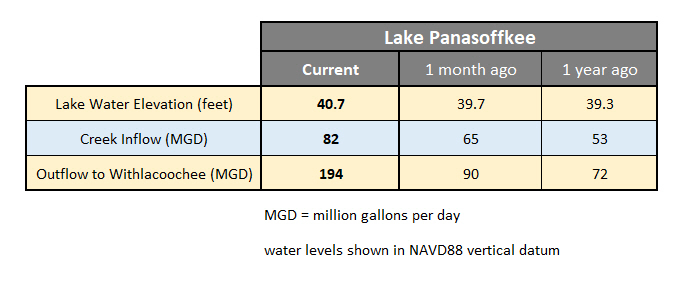
- Despite Wysong being fully lowered, Lake Panasoffkee continued to rise more than a foot in July.
- This is because Wysong has had little to no influence on Lake Panasoffkee since about mid-June when river levels began to rise.
- The streams that provide continuous flow into Lake Panasoffkee increased sharply in July.
- Outflow from the lake to the Withlacoochee River has more than doubled in the past month.
- Lake levels are currently 1.5 feet higher than they were a year ago but remain about a foot lower than the peak that occurred in 2019.
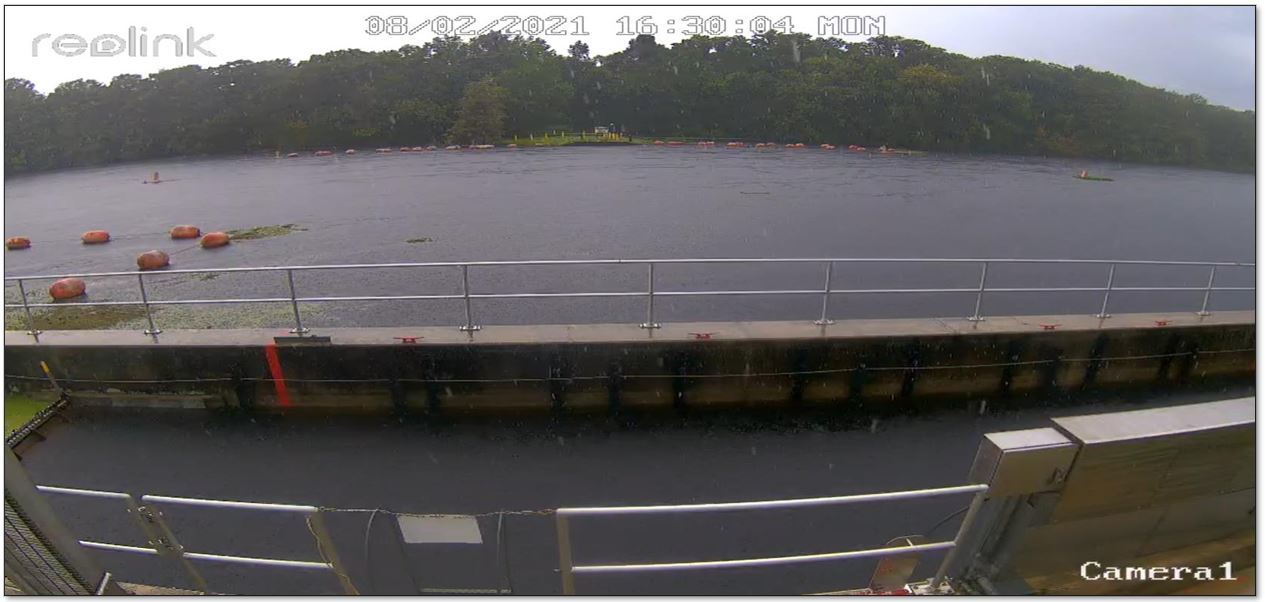
- With Wysong now fully lowered, boat traffic can safely pass through the center of the river over the structure.
Rain Falls on the Withlacoochee River with Wysong Fully Lowered (June 2021)
Lake Rousseau and the Lower Withlacoochee River (from Dunnellon to the Gulf of Mexico):
- Lake Rousseau is an in-stream reservoir, created 112 years ago (1909) when the original Inglis Dam was built on the Withlacoochee River.
- The influence of the Inglis Dam extends just upstream of Dunnellon, where the Rainbow River contributes constant flow to the Withlacoochee.
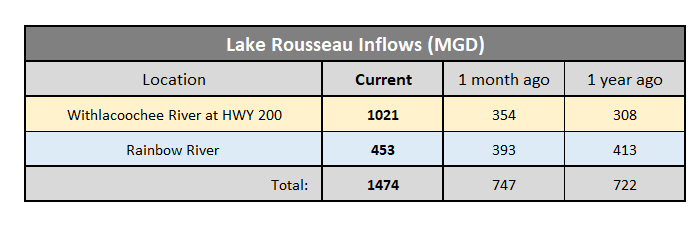
- Flows in the Withlacoochee River at Hwy 200 (which vary based on rainfall) nearly tripled over the past month.
- Rainbow River flows (which are driven by aquifer levels) increased by 15% in July as groundwater levels continue to rise from recent rainfall.
- Flow in the Rainbow River is now close to its peak rate from last summer.
- Overall, inflows to Lake Rousseau have doubled over the past month and are twice as high as they were a year ago.
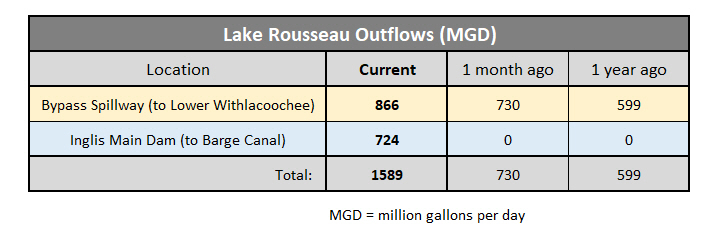
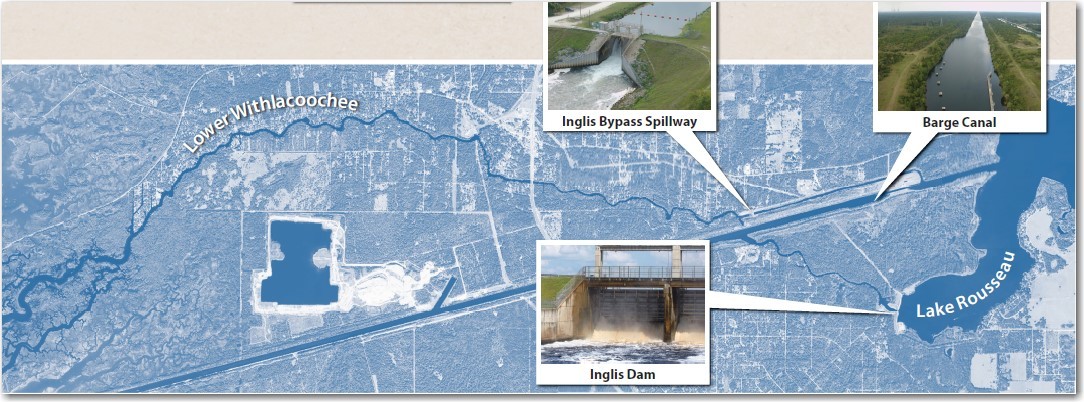
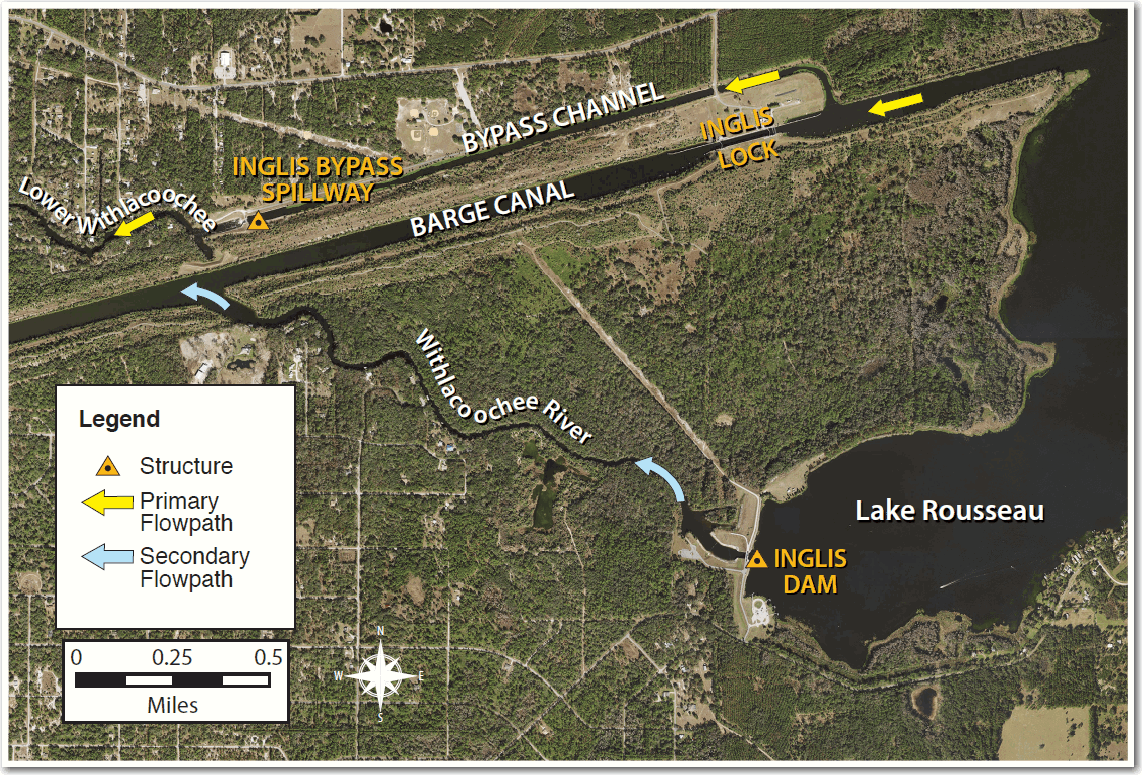
- Higher inflows mean greater outflows from Lake Rousseau to the Lower Withlacoochee (via the Bypass Spillway) and the Barge Canal (via the Inglis Main Dam).
- The Inglis Bypass Spillway is now flowing at capacity, providing nearly 900 million gallons of freshwater per day to the tidally influenced Lower Withlacoochee River.
- The Inglis Main Dam was opened in July and is currently discharging excess flows from Lake Rousseau to the Barge Canal and into the Gulf of Mexico.
- Overall, outflows from Lake Rousseau have more than doubled over the past month as well.
Have a great week!
Mark
Mark Fulkerson, Ph.D., P.E.
Chief Professional Engineer
Water Resources Bureau
Southwest Florida Water Management District
(352) 796-7211, ext. 4410
(800) 423-1476 (FL only)
(352) 279-4493 (cell)
|
|
|
|
|
|
|
|


|
Southwest Florida Water Management District | 2379 Broad Street, Brooksville, FL 34604-6899 |
|
If you do not want to continue receiving emails about these projects, click Unsubscribe. To manage your Southwest Florida Water Management District subscriptions, click Manage Preferences. |