|
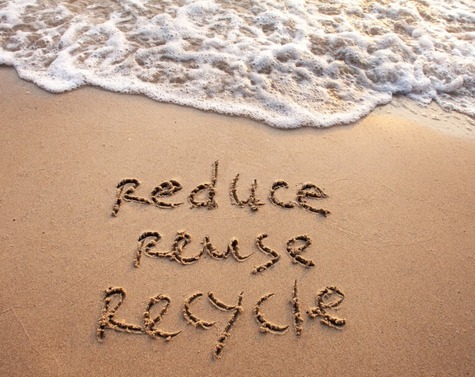
SAVE THE DATE | REDUCE, REUSE, RECYCLE| LEAVE THE LEAVES |
|
 |
|
Melbourne Public Works Staff Replace 40,000 Meter Registers |
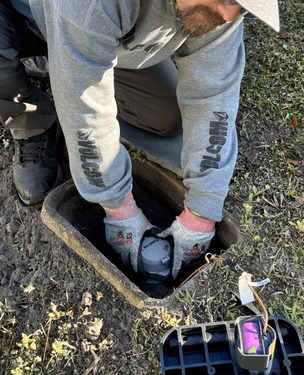
The City of Melbourne Public Works staff have been busy replacing old meter registers with new, more advanced, digital units since 2023 after the lithium batteries were getting to the end of their 10-year life span.
A register attaches to the top of the meter. They act much like the odometer of a car, which shows the total mileage the car has traveled. Similarly, a water register keeps a running total of water that has passed through the meter, providing a cumulative total of water consumption.
The old telemetry units sent meter-reading data to the meter services trucks as they drove by. The new units contain SIM cards that communicate with cell towers similar to how a cell phone’s texting feature does, so staff no longer have to drive around to pick up the register's signal data.
|
About 40,000 out of 60,000 registers have been replaced. It's estimated that replacements will take up to 5 more months to complete.
John Precious, one of the utilities technicians out replacing meter registers says, "Residents can help make sure their meters are accessible (not grown over with grass, shrubs or weeds or not putting items on the meter box like landscape pavers, flowerpots or statues) and clean out the meter box so the shut off valve and meter registers aren’t buried."
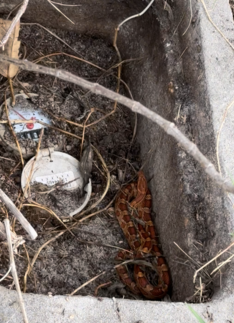
While working in the field, staff have come across a range of wildlife and environmental elements. Among the more interesting finds are harmless snakes seeking shelter, such as the Red Rat Snake (shown in the photo to the left) and the Ring-necked Snake. Staff have also encountered fire ants, bees, lizards, exposed roots, and even garbage during their work.
|
|
|
Monthly Water Usage and Raw/Finished Water Quality Statistics
December 2025 Water Usage
|
WATER QUALITY STATISTICS
|
|
Water pumped to service: 539,982,000 gallons or 17.419 MGD average
Maximum finished water pumped to service: 18.584 MGD on December 1, 2025
Water quality flushing: 38,968,400 gallons
Committed capacity: 2.0314 MGD
Capacity available for development: 5.0626 MGD (Based on 12-month average daily flow)
|
Lake Water
Lake level: 14.04 feet above MSL on December 31, 2025 (Prior month comparison: 14.46 feet on November 30, 2025)
pH: 7.6
Alkalinity: 68 mg/L
Total hardness: 91 mg/L
Chlorides: 85 mg/L
Color: 268
Total dissolved solids (TDS): 301
|
Well Water
|
Finished Water - Pumped to Service
|
|
pH: 7.4
Alkalinity: 127 mg/L
Total hardness: 565 mg/L
Chlorides: 676 mg/L
Color: 6
Total dissolved solids (TDS): 1657
|
pH: 8.5
Alkalinity: 63 mg/L
Total hardness: 84 mg/L
Chlorides: 76 mg/L
Color: 2
Total dissolved solids (TDS): 354
|
|
|
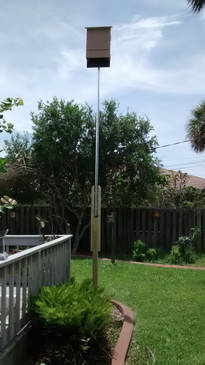
Save the date on your calendar for the popular 2026 Florida Friendly Landscaping Seminar! This free event, geared towards adults, will be held on Saturday, March 21, 2026, at the Melbourne Auditorium from 9 a.m. to 2 p.m. Doors open at 8:15 a.m. There will be a plant sale, garden and landscape-related vendors, four landscaping presentations and free coffee. Topics will range from bats and pollinators to container gardening and an update on the Indian River Lagoon. This is a sustainable event. Please bring a reusable bottle for water and coffee. All food, plates and silverware will be composted by Eaton Worms.
Registration is open but not required. More information will follow in future newsletters and on the City's website and social media as planning and details get finalized.
|
|
|
December 2025 Data
WATER DISTRIBUTION
|
WASTEWATER COLLECTION
|
METER SERVICES
|
- Main breaks: 7
- Service line repairs: 31
- Service line replacements: 10
- Hydrants serviced/repaired: 28
- Water line locates: 871
|
- Feet of sewer lines cleaned: 15,695 ft.
- Feet of sewer lines inspected: 4,575 ft.
- Sewer line locates: 692
- Reuse locates: 166
- Manhole inspections: 479
|
- Regular water turn ons: 278
- Low pressure complaints: 7
- Misc. calls/checks: 55
- Check leaks: 40
|

The 3 R's: Reduce, Reuse, Recycle
|
The 3 R's stand for "Reduce, Reuse, Recycle." This eco trio of rules guide us to take care of our environment and use resources wisely.
1. Reduce
-
"Reducing" waste means buying and using less. Instead of buying new clothes or plastic bottles, one can choose thrift, second-hand stores or very well-made sustainable brands and reusable bottles. It's about cutting down on waste from the start and being mindful of our resources, so they don't end up in the landfill.
- Another way to reduce waste is by purchasing items with less packaging and bring your own bags to the store.
2. Reuse
- "Reusing" means using items again instead of throwing them away. There are many creative ways to reuse items in your household. This is also why it is important to be mindful about how you shop and the quality of items you purchase. Buying cheap or single-use products that break after one or two uses often costs more in the long run, whereas investing in durable, long-lasting items can save money and reduce waste in landfills.
3. Recycle
-
“Recycling” is the process of collecting and processing materials like paper, plastic, and glass so they can be turned into new products. It’s a way to give old items a new life instead of sending them to the landfill.
-
On average, over 69 million tons of waste are recycled in the United States. Paper and cardboard make up about two-thirds of all the recycled things. Next, metals are around 13%. Finally, glass, plastic, and wood are about 4 to 5% each. (epa.gov/recycle)
-
Food waste remains a significant problem in the United States, where an estimated 30–40% of all food produced is wasted. This issue is especially concerning because it involves discarding edible food and contributes to environmental harm, such as increased landfill waste and greenhouse gas emissions. Composting or "recycling food" helps address this problem by diverting food scraps from landfills and reducing the amount of trash sent to landfills. It also saves space in trash cans and helps keep kitchens cleaner by preventing food waste from sitting in garbage bins.
ECO Division Curb Contamination Monthly Summary
December 2025 Data
Monthly Total Inspections
|
Contaminated Recycle Carts
|
Uncontaminated Recycle Carts
|
| 106 |
32 |
74 |
The majority of contaminants found in recycling carts were plastic bags and plastic clam shell containers.
|
|
Wastewater Treatment Operational Summary and Reuse Statistics
December 2025 Data
D.B. LEE
WATER RECLAMATION FACILITY
|
- Treated this month: 124.46 million gallons (MG)
- Treated daily: 4.01 million gallons/Day (MGD)
- Reuse production - total monthly flow: 54.91 MG
- Reuse average daily flow: 1.77 MGD
- Reuse number of days run: 31
- Plant efficiency, BOD removal: 99.16 %
- Committed capacity: 1.925 MGD
- Remaining capacity available for development: 0.425 MGD
- Rainfall: 1.52 inches over 5 days
|
 |
|
FPL commercial demand reduction credit: $5,518.80 (11/15/25 - 12/15/25) |
GRANT ST.
WATER RECLAMATION FACILITY
|
- Treated this month: 95.40 MG
- Treated daily: 3.08 MGD
- Reuse production - total monthly flow: 22.13 MG
- Reuse average daily flow: 0.71 MGD
- Reuse number of days run: 30
- Plant efficiency, BOD removal: 96.38%
- Committed capacity: 0.606 MGD
- Remaining capacity available for development: 0.264 MGD
- Rainfall: 1.74 inches over 3 days
|
|
|
FPL commercial demand reduction credit: $3,372.60 (11/18/25 - 12/17/25) |
 |
|
A total of 77.03 million gallons of reclaimed water was produced during December, representing 35% of total plant flows. |
|
|
Leave the Leaves, But Keep Storm Drains Clean
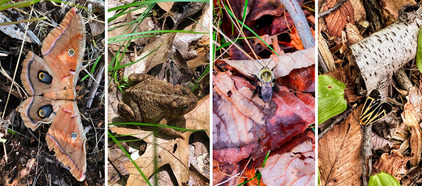
Left on land, leaves decompose, feeding your plants and enriching your soil. Not only that, they provide habitat for butterflies, native bees, fireflies and more.
If you want to see more nature in your yard, then you’ll want to give them a place to live. Fallen leaves are one of the most important habitats in your yard.
- Bumblebees burrow into them.
- Butterfly and moth caterpillars cocoon inside them.
- Fireflies hide and lay eggs beneath them.
- Toads tuck into the damp leaf layer for shelter and moisture.
- Songbirds like robins and thrushes forage through them for insects and larvae to eat.
Every fallen leaf helps keep your yard alive. It’s not just about insects. Those same leaves return nutrients to your soil, retain moisture and feed your trees, completing a natural cycle that modern cleanup often interrupts.
|
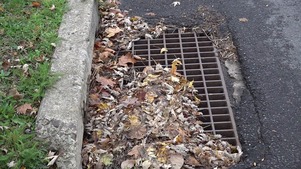
However, when large amounts of leaves are washed off our lawns, down our driveways, into storm drains, and into our water bodies - they release phosphorus and nitrogen into our water, contributing to water pollution.
So, what can you do to prevent pollution, keep a tidy yard, and support wildlife?
-
Keep edges tidy along sidewalks, driveways, and paths. A clean border instantly reads as maintained.
-
Avoid large loose piles in open areas or lawns; instead, spread or rake them neatly into flower beds or under trees (not too close to the trunk).
-
Create clear borders with a mowed strip, edging, or stone line to signal intention.
-
Never rake or blow leaves into streets, gutters, or storm drains. Instead, if you see leaves on a storm drain next to your yard, please clean them up or call the city or county public works.
-
A ring of leaves away from the trunk starts a soft landing for insects that fall from the tree.
-
Add a sign telling neighbors that you're intentionally helping nature. It shifts perception from neglect to purpose and can even inspire curiosity and conversation.
-
If you must get rid of the leaves, add them to your compost but know that shredded or turned leaves won’t protect insects already living inside them. It’s still a win for soil health, just less so for biodiversity.
-
If you have a yard service, make sure they are disposing of leaves and yard debris responsibly. All yard waste containers set out for pickup must be placed at least 5 feet away from storm drains.
If you remember nothing else: keep it neat at the edges, off the street, and close to your trees. That simple formula satisfies most codes and still protects the ecosystem right outside your door.
|
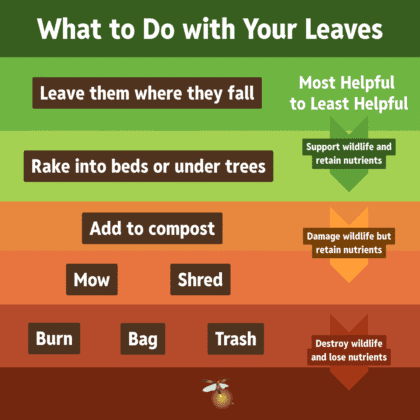 |
Disposing of leaves removes both nutrients and habitat. It’s the most harmful option for local ecosystems and the easiest one to replace with something better.
|
WATER PROJECTS
|
WATER RECLAMATION/SEWER PROJECTS
|
STREETS & STORMWATER PROJECTS
|
Under Construction:
|
Under Construction:
|
Under Construction:
|
- Filter drain improvements at the SWTP, $21,911,000
- Pineda Booster Station chemical feed and storage, $1,423,700
|
- Lift Station No. 42 rehabilitation/replacement, $697,525
- Lift Station No. 17 replacement, $860,856
- Biosolids improvements at D.B. Lee & Grant Street WRFs, $28,247,000
- Force Main Replacement for Lift Station No. 11, $212,157.51
|
|
Under Design, Study or in Bid Process:
|
Under Design, Study or in Bid Process:
|
Under Design, Study or in Bid Process:
|
- RO water treatment plant expansion
- Water main from Lake Washington to the distribution system
|
- Engineering services for the design and construction of the Grant Street WRF improvement project
- Force main replacements associated with Lift Station No. 63
- Gravity sewer inverted siphon elimination
- Western force main, phase 2
- Western force main, phase 3A
- Force main from Lift Station #6 to Mosquito Ditch phase 1
- Lift Station No. 55 Replacement
|
- Spring Creek baffle box
- Espanola Way baffle box
- Darrow Baffle Box
- Riverview Baffle Box
- Line Street Cemetery Baffle Box
- Melbourne Cemetery Baffle Box
|
|
|
|
For more information about this newsletter, please contact the Melbourne Environmental Community Outreach Division at (321) 608-5080 or send an e-mail to megan.ruben@mlbfl.org
|
|
|
|
|