|
FOG | LAGOON EFFORTS| EMERGENCY REPAIR |
|
 |
|
Lawn Watering Restrictions Changed on Sunday, November 2 |
During Eastern Standard Time (November 2, 2025 – March 8, 2026) irrigation is limited to only one day per week on scheduled days:
-
Saturday: Residential addresses that end in an odd number or have no address
-
Sunday: Residential addresses that end in an even number
-
Tuesday: Nonresidential addresses
Water your yard:
- Before 10 a.m. or after 4 p.m.
- Only when needed. Watch the weather, wait to water.
- For no more than one hour per zone.
Improving landscape irrigation practices can save water and improve your landscape’s quality at the same time.
Watering less in the fall and winter is better for your lawn:
- Grass and plants need less water during the cooler months.
- Overwatering can encourage mold and fungus, weaken grass roots and promote weeds and undesirable insects.
Wasted water harms the Indian River Lagoon:
- Water is wasted when broken or misdirected sprinkler heads spray water onto sidewalks and pavement.
- Runoff from oversaturated yards often carries fertilizers, debris and nutrients into natural waterways, like the Indian River Lagoon, which leads to poor water quality.
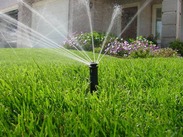
Reclaimed water is not subject to year-round water restrictions that apply to potable water or groundwater well irrigation systems. However, because all water is valuable, reclaimed water customers are encouraged to use it wisely and follow recommended best practices for irrigation.
For more information about watering restrictions, visit St. Johns River Water Management District’s website.
Irrigation Hotline Number: 386-329-4545
|
|
|
Monthly Water Usage and Raw/Finished Water Quality Statistics
October 2025 Water Usage
|
WATER QUALITY STATISTICS
|
|
Water pumped to service: 539,181,000 gallons or 17.393 MGD average
Maximum finished water pumped to service: 18.391 MGD on October 22, 2025
Water quality flushing: 44,301,820 gallons
Committed capacity: 2.0314 MGD
Capacity available for development: 5.0626 MGD (Based on 12-month average daily flow)
|
Lake Water
Lake level: 16.53 feet above MSL on October 31, 2025 (Prior month comparison: 15.50 feet on September 30, 2025)
pH: 7.2
Alkalinity: 50 mg/L
Total hardness: 75 mg/L
Chlorides: 50 mg/L
Color: 336
Total dissolved solids (TDS): 194
|
Well Water
|
Finished Water - Pumped to Service
|
|
pH: 7.5
Alkalinity: 120 mg/L
Total hardness: 671 mg/L
Chlorides: 868 mg/L
Color: 5
Total dissolved solids (TDS): 1989
|
pH: 8.7
Alkalinity: 62 mg/L
Total hardness: 58 mg/L
Chlorides: 87 mg/L
Color: 1
Total dissolved solids (TDS): 342
|
|
|
Indian River Lagoon Efforts Ongoing
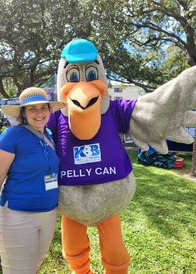
Last month the City co-sponsored another successful Indian River Lagoon (IRL) Day event at Front Street Park. The event's purpose is to educate and celebrate the IRL.
This is one of the efforts to unite people with a commitment to heal this important resource.
Extensive, science-based plans to restore the lagoon are well underway throughout Brevard County in the lagoon's five-county area, focusing on critical efforts needed to restore our waters.
These include programs to:
- Upgrade or replace wastewater treatment plants and septic systems.
- Reduce stormwater runoff.
- Remove pollution-causing muck.
- Plant seagrass and add living shorelines.
- Minimize fertilizer use.
These targeted actions and investments are already reducing key pollutants, cleaning the water and protecting the animals that call it home.
|
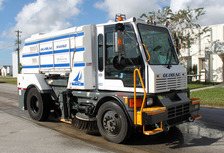
Many actions by the City of Melbourne are having big impacts on improving the IRL. The City now has 17 advanced baffle boxes that remove trash, debris and nutrients from entering the lagoon. They have eliminated over 10,000 pounds of total nitrogen from entering the lagoon since the first one was constructed in 2015. Also, since January 2025, Melbourne street sweepers alone have removed over 544,660 pounds of debris that otherwise would have washed into the lagoon.
Click the button below to learn more about projects and grants currently underway to help save the lagoon.
|
|
|
October 2025 Data
WATER DISTRIBUTION
|
WASTEWATER COLLECTION
|
METER SERVICES
|
- Main breaks: 4
- Service line repairs: 63
- Service line replacements: 13
- Hydrants serviced/repaired: 42
- Water line locates: 1,501
|
- Feet of gravity main cleaned: 27,087 ft.
- Feet of sewer lines inspected: 8,510 ft.
- Sewer locates: 906
- Reuse locates: 457
- Manhole inspections: 87
|
- Regular water turn ons: 452
- Low pressure complaints: 2
- Misc. calls/checks: 76
- Check leaks: 58
|
Eliminate FOG to Save Pipes From Clogs
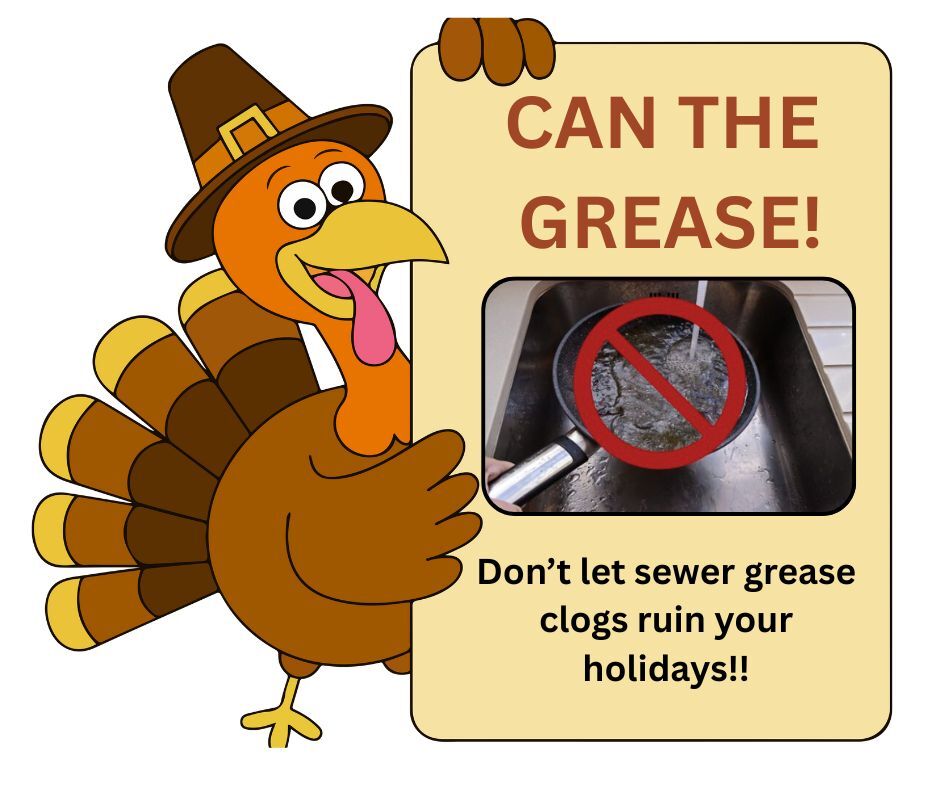
Blocked drains can ruin your holiday festivities. Pouring fats, oils and grease (FOG) down the kitchen sink can lead to huge problems and expensive repairs down the road. Oils and grease rinsed down the drain can congeal and block your pipes, which may require you to call a plumber. As liquid grease and fats cool, they solidify and build up inside the pipes, ultimately becoming a hardened mass that restricts water flow. Clogged sewer pipes can also cause untreated wastewater to back up into homes and businesses, or to overflow from manholes into parks, yards, streets and storm drains.
Follow these tips to help keep FOG out of your pipes:
- Never pour cooking oil, pan drippings, bacon grease, salad dressings or sauces down the sink, toilet or into street gutters.
- Recycle used cooking oil or properly dispose of it by pouring it into a sealable container and placing the sealed container in the trash.
- To recycle large amounts of oil and grease, such as what’s left over from frying a turkey, contact a local recycler. Or mix clay cat litter, a little at a time, into the oil. When all the oil has been absorbed, pour the cat litter into a trash bag, seal the bag, then dispose of it in your regular trash.
- Dispose of food scraps into the trash. Using a garbage disposal or food grinder does not remove FOG —it just makes the pieces smaller.
- Scrape pots and pans or use paper towels to remove all oil and grease before washing them.
ECO Division Curb Contamination Monthly Summary
October 2025 Data
Monthly Total Inspections
|
Contaminated Recycle Carts
|
Uncontaminated Recycle Carts
|
| 136 |
58 |
78 |
|
|
Wastewater Treatment Operational Summary and Reuse Statistics
October 2025 Data
D.B. LEE
WATER RECLAMATION FACILITY
|
- Treated this month: 153.99 million gallons (MG)
- Treated daily: 4.97 million gallons/Day (MGD)
- Reuse production - total monthly flow: 49.97 MG
- Reuse average daily flow: 1.62 MGD
- Reuse number of days run: 31
- Plant efficiency, BOD removal: 99.06 %
- Committed capacity: 1.925 MGD
- Remaining capacity available for development:0.425 MGD
- Rainfall: 10.10 inches over 11 days
|
 |
|
FPL commercial demand reduction credit: $5,939.28 (9/17/25 - 10/17/25) |
GRANT ST.
WATER RECLAMATION FACILITY
|
- Treated this month: 121.19 MG
- Treated daily: 4.04 MGD
- Reuse production - total monthly flow: 16.57 MG
- Reuse average daily flow: 0.62 MGD
- Reuse number of days run: 28
- Plant efficiency, BOD removal: 97.37%
- Committed capacity: 0.606 MGD
- Remaining capacity available for development: 0.264 MGD
- Rainfall: 11.96 inches over 10 days
|
|
|
FPL commercial demand reduction credit: $4,476.36 (9/19/25 - 10/21/25) |
 |
|
A total of 68.75 million gallons of reclaimed water was produced during October, representing 25% of total plant flows. |
|
|
Emergency Repair Completed for Sewer Force Main
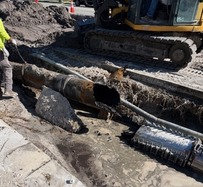
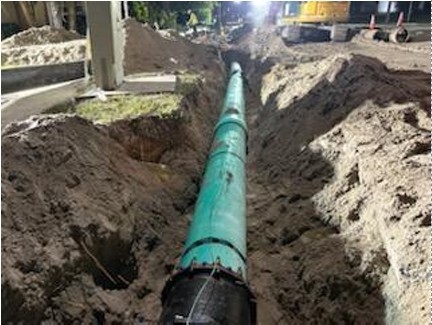
The Wasterwater Collection Division worked closely with contractor Cathcart Construction for the emergency replacement of 132 feet of sewer force main. The 16-inch iron pipe was severely deteriorated from prolonged sewer gases. The work was done near the intersection of Kelmore Drive and Sarno Road. The section of cast iron pipe was replaced with C900 PVC, providing improved durability and corrosion resistance.
|
 |
|
WATER PROJECTS
|
WATER RECLAMATION/SEWER PROJECTS
|
STREETS & STORMWATER PROJECTS
|
Under Construction:
|
Under Construction:
|
Under Construction:
|
- Filter drain improvements at the SWTP, $21,911,000
- Water production facility improvements, $26,483,806
- Pineda Booster Station chemical feed and storage, $1,423,700
|
- Lift Station Nos. 42 rehabilitation/replacements, $697,525
- Lift Station No. 17 replacement, $860,856
- Biosolids improvements at D.B. Lee & Grant Street WRFs, $28,247,000
|
|
Under Design, Study or in Bid Process:
|
Under Design, Study or in Bid Process:
|
Under Design, Study or in Bid Process:
|
- RO water treatment plant expansion
- Water main from Lake Washington to the distribution system
|
- Engineering services for the design and construction of the Grant Street WRF improvement project
- Force main replacements associated with Lift Station No. 63
- Gravity sewer inverted siphon elimination
- Western force main, phase 2
- Western force main, phase 3A
- Force main from Lift Station #6 to Mosquito Ditch phase 1
|
- Spring Creek baffle box
- Espanola Way baffle box
|
|
|
|
For more information about this newsletter, please contact the Melbourne Environmental Community Outreach Division at (321) 608-5080 or send an e-mail to megan.ruben@mlbfl.org
|
|
|
|
|