|
GREEN HOLIDAYS | POO PIT | LEAD AND COPPER |
|
 |
|
Temporary 3-Week Water Treatment Change Begins on January 5 |
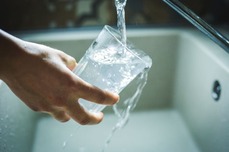
Beginning Monday, January 5, 2026 and continuing through January 26, 2026, Melbourne water customers may notice a chlorine odor in their tap water. During this period, the City of Melbourne is temporarily changing its water disinfection method. This temporary change in water chemistry will not affect the safety of water for drinking.
Why is Melbourne temporarily switching its disinfection method?
Changing the disinfectant method to free chlorine periodically provides additional protection against microorganism contamination and helps ensure the water you receive remains safe.
Do other local utilities that typically disinfect water with chloramine periodically use free chlorine for disinfection?
Temporary and periodic switches in disinfectant are a well-known industry standard, particularly for utilities in warm climates such as Florida.
Who is affected by the temporary switch in disinfectant?
Dialysis patients and fish, amphibian and reptile owners.
What actions do I need to take to prepare for the temporary switch in disinfectant?
Only fish, amphibian and reptile owners, as well as dialysis patients, need to take special precautions. For all other users, there are no precautions that you need to take. However, if you are sensitive to the taste or smell of chlorine, you can collect water in a container and place it in your refrigerator for a few hours. This will allow for much of the chlorine to leave the water.
How can I remove chlorine from drinking water?
Boiling water will remove chlorine, as will allowing chlorinated water to stand in an open container for a few hours.
What is chloramine?
Chloramine is the normal disinfectant used to treat Melbourne’s water. It is a combination of chlorine and ammonia that is added in very small amounts to treated water to provide continuous disinfection in the pipes and tanks that distribute drinking water.
Special Notice: Fish, Amphibians, and Reptiles
Chlorine and chloramines are toxic to fresh and saltwater fish, amphibians, and reptiles. Both chlorine and chloramines pass through the gills into the bloodstream inhibiting the red blood cells’ ability to carry oxygen. Chlorinated and chloraminated water is safe for people and animals that do not live in water.
For more information contact your aquarium supply or pet supply store.
Information for Dialysis Patients and Facilities
Like chlorine, chloramine can harm kidney dialysis patients during the dialysis process if not removed from water before entering the blood stream. Dialysis industry standards require that a trained nurse, technician, or caregiver test for both chlorine and chloramine to ensure both have been removed from the water before use in a dialysis machine. Chlorine and chloramine are both safe for dialysis patients to drink, cook with, and bathe in because the digestive system neutralizes both chlorine and chloramine before it enters the blood stream.
For more information contact your dialysis provider, physician, or the Brevard County Health Department at 321-726-2913.
|
|
|
Monthly Water Usage and Raw/Finished Water Quality Statistics
November 2025 Water Usage
|
WATER QUALITY STATISTICS
|
|
Water pumped to service: 528,344,000 gallons or 17.611 MGD average
Maximum finished water pumped to service: 18.963 MGD on November 3, 2025
Water quality flushing: 39,855,780 gallons
Committed capacity: 2.0314 MGD
Capacity available for development: 5.0626 MGD (Based on 12-month average daily flow)
|
Lake Water
Lake level: 14.46 feet above MSL on November 30, 2025 (Prior month comparison: 16.53 feet on October 31, 2025)
pH: 7.3
Alkalinity: 65 mg/L
Total hardness: 98 mg/L
Chlorides: 68 mg/L
Color: 300
Total dissolved solids (TDS): 258
|
Well Water
|
Finished Water - Pumped to Service
|
|
pH: 7.5
Alkalinity: 123 mg/L
Total hardness: 676 mg/L
Chlorides: 878 mg/L
Color: 5
Total dissolved solids (TDS): 1984
|
pH: 8.6
Alkalinity: 64 mg/L
Total hardness: 71 mg/L
Chlorides: 69 mg/L
Color: 2
Total dissolved solids (TDS): 359
|
|
|
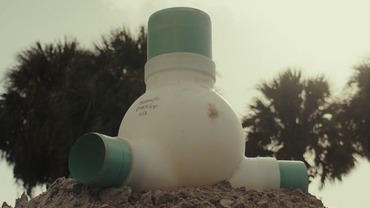
The City of Melbourne’s Wastewater Collection team is testing out a new type of manhole that is so far proving to be much easier to install and maintain – potentially leading to major cost savings and improved safety for our employees.
The new manhole, playfully named the “Poo Pit” by its manufacturer, is smaller and significantly lighter than traditional manholes that are made of concrete and can weigh thousands of pounds. Because it is so much lighter, one or two employees can install it, whereas a traditional manhole requires heavy equipment and a crane for installation. Another advantage of the Poo Pit’s size is that it requires a smaller footprint for installation in deep underground applications compared to traditional manholes. This results in less disruption to our residents and enhances safety for our employees during installation.
The City of Melbourne’s wastewater collection system services residents and businesses across 51.5 square miles. Wastewater collection staff inspect and maintain this vast system via manholes which are strategically located roughly every 400 feet and at every change in flow direction.
The concrete used in traditional manholes can degrade over time due to the hydrogen sulfide gasses generated by raw sewage within the system. To prevent structural damage, each manhole must be recoated with an epoxy or cementitious coating once every 12 to 14 years.
Because they are made of PVC, the Poo Pit devices should be resistant to corrosion and require less ongoing maintenance. To test this out, Wastewater Collection employees have installed three Poo Pits at different points within the system to see how they perform. Staff will inspect and monitor them over the coming months and years to see how well they hold up within the harsh environment. If they prove to not require ongoing coating and maintenance in the future, the cost savings could be significant.
To learn more, check out the manufacturer’s video featuring an interview with City of Melbourne Wastewater Collection Foreman Butch Burke.
|
|
|
November 2025 Data
WATER DISTRIBUTION
|
WASTEWATER COLLECTION
|
METER SERVICES
|
- Main breaks: 12
- Service line repairs: 38
- Service line replacements: 10
- Hydrants serviced/repaired: 22
- Water line locates: 1,010
|
- Feet of sewer lines cleaned: 45,510 ft.
- Feet of sewer lines inspected: 8,368 ft.
- Sewer line locates: 1,045
- Reuse locates: 311
- Manhole inspections: 47
|
- Regular water turn ons: 297
- Low pressure complaints: 8
- Misc. calls/checks: 57
- Check leaks: 48
|

Tips for Going Green Over the Holidays
|
‘Tis the season to be eco-conscious! From mindful decorations to recycling, it’s never been easier to celebrate with the environment in mind. After all, who says you can’t be festive and earth-friendly at the same time?
Follow these tips to spread eco-friendly cheer:
-
Instead of buying new decorations every year, reuse or repurpose old ones. Don’t forget to donate what you no longer need!
-
Recycle Christmas lights at the Florida Wildlife Hospital, Brevard Zoo or anywhere that takes metal, like Sarno Metal Recycling. Christmas lights contain copper, so they can be recycled as metal.
-
Save boxes, gift bags, paper, ribbon and bows to reuse next year.
-
You can recycle some holiday wrapping paper but not if it’s metallic, has glitter or includes velvety material.
-
Plain holiday cards go straight into the recycling cart. Shiny cards on photo paper and those with lots of metallic embossing or glitter go into the trash.
-
If you think they’d appreciate it, make a donation to a charity on behalf of your loved ones.
-
Support local artisans and businesses when shopping.
-
Recycle boxes but remember to break them down flat. They will take less room in your cart and in the recycling truck that picks them up.
- Gift an experience, like a cooking class, concert tickets, or even a museum pass.
-
Use reusable plates, cups, and utensils at your parties instead of disposable ones. If you don’t have the time or capacity, at least choose compostable options.
- Living Christmas trees can be placed curbside and will be picked up as
part of the regular yard waste collection service. Remove any tinsel or other decorations first.
ECO Division Curb Contamination Monthly Summary
November 2025 Data
Monthly Total Inspections
|
Contaminated Recycle Carts
|
Uncontaminated Recycle Carts
|
| 116 |
39 |
77 |
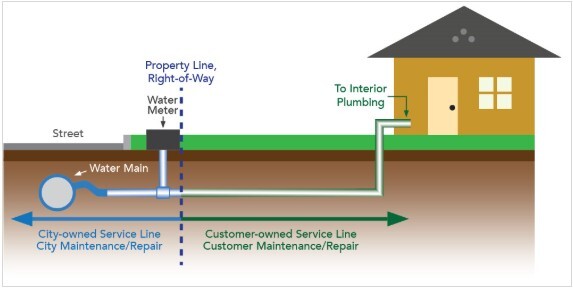
Recent revisions to EPA regulations require water utilities nationwide to create an inventory of the materials used in water service lines throughout their entire water system—including both the city-owned portion (from the water main to the meter) and the customer-owned portion (from the meter to the home). The City of Melbourne is proactively developing a comprehensive inventory of our entire water distribution network, which encompasses more than 60,000 residential and commercial service lines.
Additionally, the city is required to notify customers annually if they are served by a lead, galvanized-requiring replacement, or “unknown” service line. On December 1, letters began mailing to the 20,334 customers that have service lines currently classified as "unknown."
Receiving an "unknown" letter does not mean the line is made of lead—it simply means the city does not yet have records confirming the material. The inventory can be viewed on the City’s website www.melbourneflorida.org/lead.
City of Melbourne service line inventory summary as of November 12, 2025
- Total number of service lines: 60,629
- Non-lead: 40,295
- Lead: 0
- Galvanized Requiring Replacement: 0
- Unknown Material: 20,334
Why this matters:
- Water leaving the treatment plant is lead-free.
- Lead can enter drinking water when older service lines or plumbing materials that contain lead corrode.
- A fully developed inventory will help identify any legacy lead service lines outside the home and expedite their removal.
What the City is doing:
- Maintaining corrosion control standards designed to prevent leaching of lead from interior plumbing and lead service lines.
- Developing a comprehensive inventory database of more than 60,000 service lines.
- Reviewing all available historical records, conducting field investigations from test pits and collecting data during routine field work.
- Exploring additional inventory methodologies in close coordination with State regulators.
How property owners can help:
- If you know the material of your service line and can provide documentation such as a plumber’s invoice or photos that confirm the material, please email us at leadandcopper@mlbfl.org. This information will help us build a complete inventory.
|
|
|
Wastewater Treatment Operational Summary and Reuse Statistics
November 2025 Data
D.B. LEE
WATER RECLAMATION FACILITY
|
- Treated this month: 123.30 million gallons (MG)
- Treated daily: 4.11 million gallons/Day (MGD)
- Reuse production - total monthly flow: 55.99 MG
- Reuse average daily flow: 1.87 MGD
- Reuse number of days run: 30
- Plant efficiency, BOD removal: 99.20 %
- Committed capacity: 1.925 MGD
- Remaining capacity available for development: 0.425 MGD
- Rainfall: 0.72 inches over 4 days
|
 |
|
FPL commercial demand reduction credit: $5,439.96 (10/17/25 - 11/15/25) |
GRANT ST.
WATER RECLAMATION FACILITY
|
- Treated this month: 100.04 MG
- Treated daily: 3.33 MGD
- Reuse production - total monthly flow: 18.65 MG
- Reuse average daily flow: 0.62 MGD
- Reuse number of days run: 30
- Plant efficiency, BOD removal: 97.64%
- Committed capacity: 0.606 MGD
- Remaining capacity available for development: 0.264 MGD
- Rainfall: 0.25 inches over 1 day
|
|
|
FPL commercial demand reduction credit: $3,863.16 (10/21/25 - 11/18/25) |
 |
|
A total of 74.64 million gallons of reclaimed water was produced during October, representing 33% of total plant flows. |
|
|
ECO Division featured in Melbourne Minute
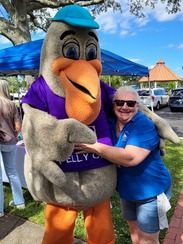
Indian River Lagoon Day was recently featured in the December Melbourne Minute. View this story to learn more and to view more pictures from Indian River Lagoon Day.
Also featured in Melbourne Minute was the Melbourne Fire Department's first-ever heavy rescue truck and the Stone Magnet Middle School Safe Routes to School Sidewalk Improvements project which is the latest effort by the City of Melbourne to improve pedestrian and bicyclist safety citywide.
|
Save the date on your calendar for the popular 2026 Florida Friendly Landscaping Seminar! This is a free event, geared towards adults will be held on Saturday, March 21, 2026, at the Melbourne Auditorium from 9 a.m. to 2 p.m. Doors open at 8:15 a.m. There will be a plant sale, garden and landscape-related vendors, field expert presentations and free coffee. Topics will range from bats and pollinators to container gardening and an update on the Indian River Lagoon. This is a sustainable event. Please bring a reusable bottle for water and coffee. All food, plates and silverware will be composted by Eaton Worms.
More information will follow in future newsletters and on the City's website and social media as planning and details get finalized.
|

|
WATER PROJECTS
|
WATER RECLAMATION/SEWER PROJECTS
|
STREETS & STORMWATER PROJECTS
|
Under Construction:
|
Under Construction:
|
Under Construction:
|
- Filter drain improvements at the SWTP, $21,911,000
- Pineda Booster Station chemical feed and storage, $1,423,700
|
- Lift Station No. 42 rehabilitation/replacement, $697,525
- Lift Station No. 17 replacement, $860,856
- Biosolids improvements at D.B. Lee & Grant Street WRFs, $28,247,000
- Force Main Replacement for Lift Station No. 11, $212,157.51
|
|
Under Design, Study or in Bid Process:
|
Under Design, Study or in Bid Process:
|
Under Design, Study or in Bid Process:
|
- RO water treatment plant expansion
- Water main from Lake Washington to the distribution system
|
- Engineering services for the design and construction of the Grant Street WRF improvement project
- Force main replacements associated with Lift Station No. 63
- Gravity sewer inverted siphon elimination
- Western force main, phase 2
- Western force main, phase 3A
- Force main from Lift Station #6 to Mosquito Ditch phase 1
- Lift Station No. 55 Replacement
|
- Spring Creek baffle box
- Espanola Way baffle box
|
|
|
|
For more information about this newsletter, please contact the Melbourne Environmental Community Outreach Division at (321) 608-5080 or send an e-mail to megan.ruben@mlbfl.org
|
|
|
|
|