|
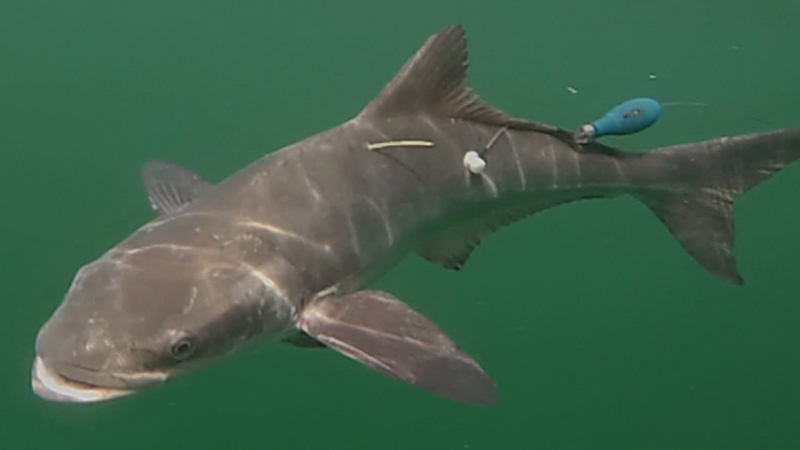
A new project aims to give fishery managers important data on Cobia and Tripletail. These species are popular with Florida anglers, but they move across state and federal waters throughout the Gulf. That requires coordinated research and management among Gulf states. Researchers have been tagging cobia and tripletail using dart, acoustic and satellite tags. They are also collecting biological samples from both species. The goal is to learn more about their movements, fishing pressure, population connections and key biological traits. Anglers can help by reporting tagged fish or donating carcasses to local researchers.
Researchers in Florida and across the Gulf will be tagging Cobia and Tripletail with two types of tags: a white external dart tag and an internal acoustic transmitter that is surgically inserted into the abdomen. These tags will provide biologists with long-term movement data over multiple years.
If you catch a Cobia or Tripletail with one (or both) of these tags and follow the steps to report and return the tag, you could receive a $250 reward!
 Happy World Animal Day
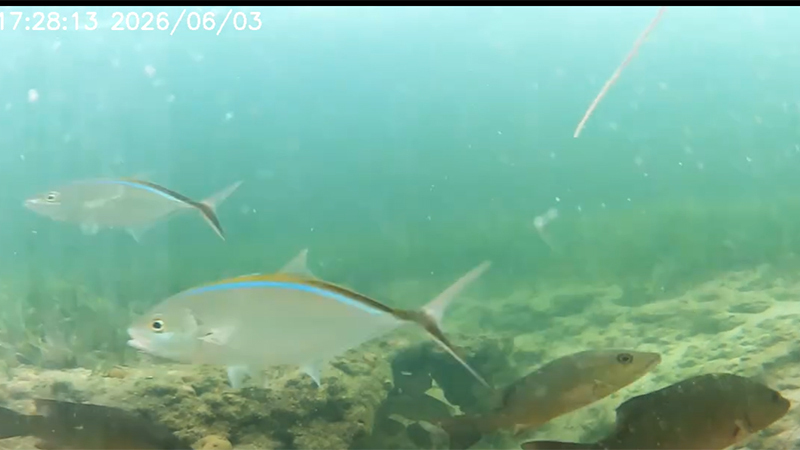
Beneath Florida’s surface is a diverse marine community worth celebrating. Every species plays an important role in supporting Florida’s unique coastal ecosystems. With about 1,350 miles of coastline and thousands of fish and other marine life that call Florida waters home, it’s hard not to want to celebrate these animals every day. As we celebrate world animal day, here’s a glimpse into Florida’s underwater world and the incredible species that call these waters home. How many species can you name in this video?
 Underwater Acoustic Receiver Installation
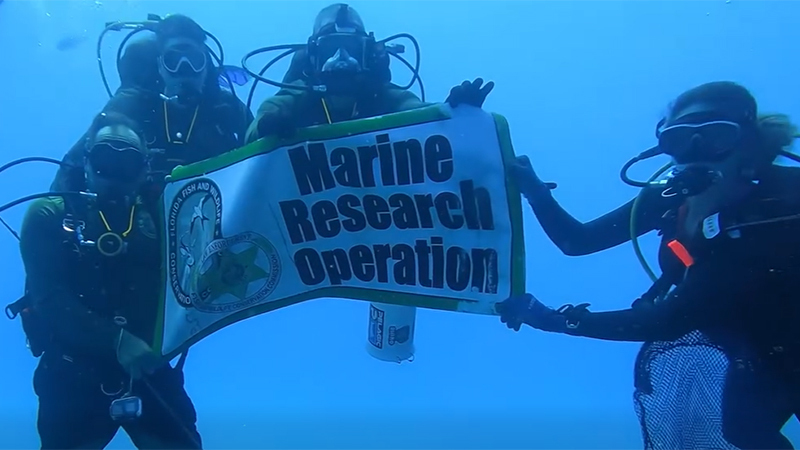
Scientists from FWRI’s Movement Ecology & Reproductive Resilience (MERR) Lab teamed up with FWC Law Enforcement for a two-day mission to install underwater acoustic receivers between Naples and the Dry Tortugas. Dive teams traveled offshore to fish aggregation sites, where receivers detect and log tagged animals that swim within range. These detections help scientists better understand how marine species move, interact and use important offshore habitats.
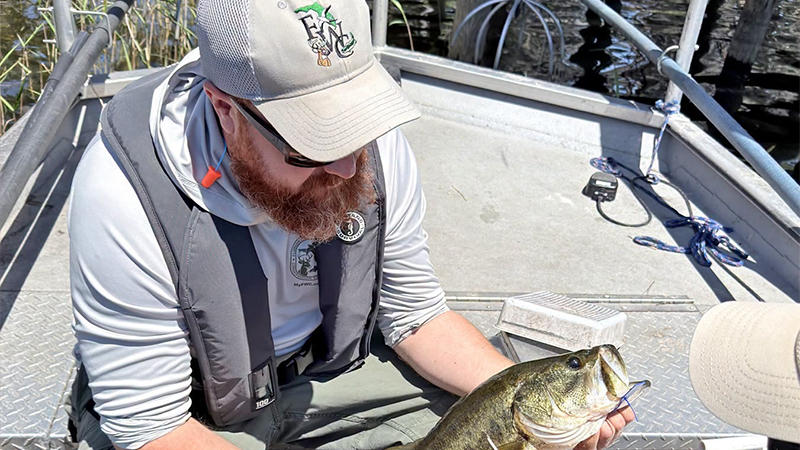 How Old Are Lake Santa Fe Bass?
In Lake Santa Fe, FWC biologists examined the otoliths (ear bones) of 202 Florida Bass to determine their ages. The oldest bass in the sample was an 11-year-old male. Biologists also collected a small fin clip from each fish for a different study. The DNA from those clips will be analyzed for patterns in the DNA that may be linked to age. If successful, this approach could provide a future non-lethal method for estimating the age of Florida Bass. By comparing traditional otolith aging with information from fin clips, researchers are exploring new ways to understand Florida’s bass fisheries.
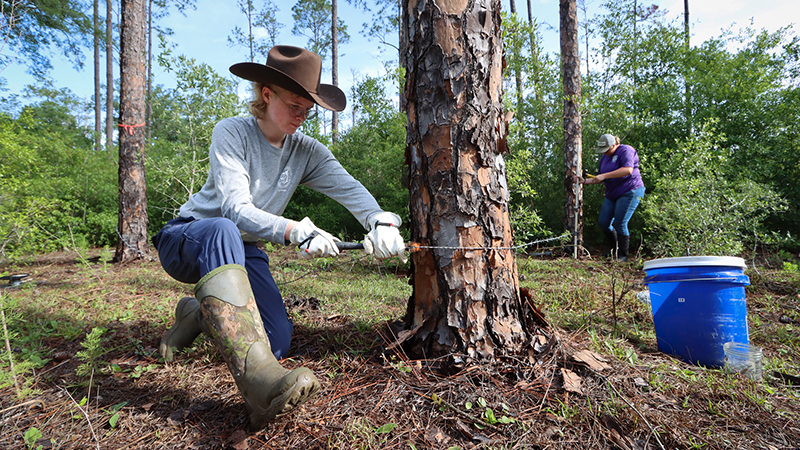 New Flickr Album: Bear Hair Corrals for the 2026 Ocala Abundance Estimate
This project is part of a larger, multi-year effort to update estimates of abundance, density, and genetic diversity in the 6 larger black bear (Ursus americanus) subpopulations in Florida (Apalachicola, Big Cypress, Eglin, Highlands/Glades, Ocala, and Osceola). In 2026, FWC conducted fieldwork for the Ocala subpopulation, which extends from Clay to Orange counties.
Technicians built barbed wire hair corrals throughout the study area and left bait and bear scent lure at each one. As bears entered and exited the corrals, their hair became snagged on the barbs. Technicians collected the hair and rebaited the corrals weekly during a six-week period from June through July. The collected hair samples will then be genotyped to identify individuals, and a statistical technique called spatially explicit capture-recapture (SECR) will be used to produce estimates of abundance and density which allows FWC researchers to investigate subpopulation trends over the past decade. These samples will also be used during a later genetic diversity portion of this study that will look for admixture with neighboring subpopulations.
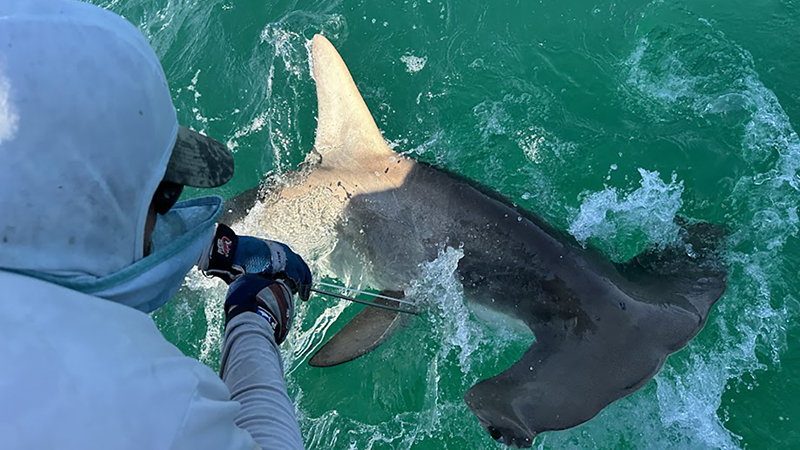 Publication Spotlight: Genetics Reveal Strong Nursery Ties in Scalloped Hammerheads
A new study using genetics is helping scientists better understand how scalloped hammerheads use nursery areas in Florida and across the southeastern United States.
Scientists analyzed genetic samples from 472 young scalloped hammerheads collected from five nursery areas between South Carolina and Texas, including Florida’s Tolomato River, Cape Canaveral and the Florida Panhandle. By comparing their DNA, the team identified siblings and examined whether related sharks were found in the same or different nurseries.
Of 45 sibling pairs identified, 91% were found in the same nursery. Some siblings were collected several years apart, suggesting female hammerheads returned to the same areas to give birth in different years.
New on MyFWC.com/Research
We hope you enjoy these articles that have been recently added/updated on our website:
Our Mission
Through effective research and technical knowledge, we provide
timely information and guidance to protect, conserve, and manage
Florida's fish and wildlife resources.
|