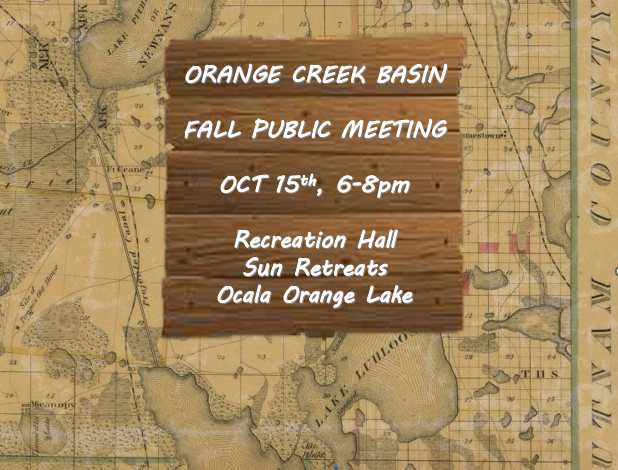
Our next public meeting is scheduled for the evening of October 15, from 6-8pm at the Sun Retreats Ocala Orange Lake (formerly Grand Lakes) Recreation Hall. FWC will be presenting updates on lake conditions and activities. A meeting announcement with complete details will be sent in the coming weeks. These meetings are an excellent opportunity to talk with FWC staff, who would like to hear about what you are seeing on these waters, share information, and answer questions.
 DROUGHT CONDITIONS:
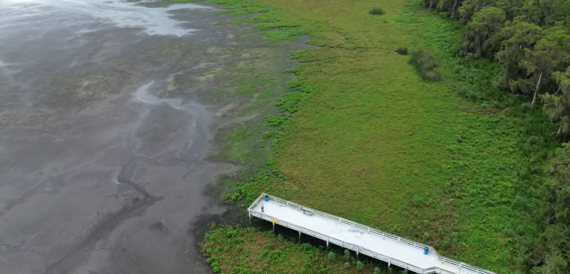
We are currently experiencing a severe drought and the lowest water levels in the OCB since 2013. Water levels have been steadily dropping since late 2024. The picture above, taken in July, shows the fishing pier at Earl Powers Park at Newnans Lake (credit: Mark Hoyer). This drought is the leading driver of conditions on the OCB lakes right now and many lakes in the area have become difficult if not impossible to access. Extremely low water levels combined with high temperatures are known to reduce oxygen levels and create stressful habitat conditions for aquatic organisms, especially in lakes that are as naturally highly productive as Newnans, Orange, and Lochloosa lakes. Low water concentrates nutrients already in these systems, which can result in extensive algal blooms. These blooms initially produce large amounts of dissolved oxygen; however, oxygen levels drop as the bloom dies off. If the bloom dies off very quickly, which can happen when multiple days with cloudy weather/thunderstorms occur in a row, oxygen will plummet and fish kills can occur. These specific combinations of events, while typically infrequent and short-lived, are more likely to occur in shallow, naturally productive lakes experiencing severe droughts. Major fish kills were observed during the 2011-2013 drought. So far this summer, FWC has observed two minor fish kills in Orange Lake (late June and mid-August), and a major fish kill in Newnans Lake in mid-August. Other effects of drought include aquatic vegetation and algae piling up on shorelines and becoming extremely thick in shallow waters. You might see mussel and snail shells on the shore which is a common sign that a River Otter, Racoon, Limpkin, or Snail Kite had a good meal, but some may also be a victim of the drought.
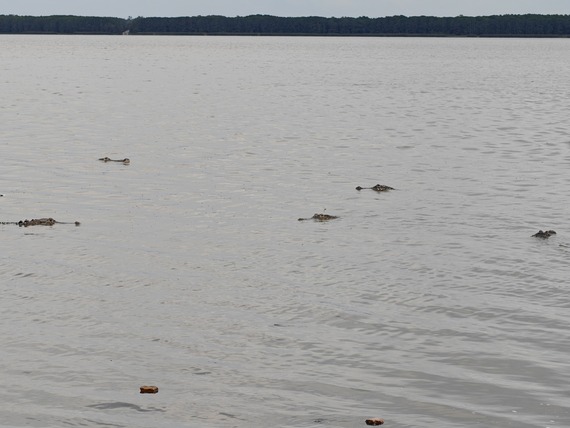
While drought conditions can stress aquatic life and look concerning, Florida's ecosystems are adapted to this natural drought-flood cycle and there are benefits that these cycles can provide. Droughts expose the lake bottom, allowing organics to decompose and reducing muck. Plants grow in new areas, habitats shift, and wildlife responds. Alligators are becoming concentrated wherever water is left (see below). Some birds are being negatively impacted by the drought, but some are taking advantage (see further below). Fisheries are often extremely productive when lakes refill after droughts due to abundant high quality habitat. In fact, the excellent fishing and hunting conditions on Orange Lake the past several years were due in large part to the last drought from 2011-2013. Black Crappie in Newnans and Lochloosa lakes had a strong spawning event during flood conditions after a drought in 2017, producing excellent speck fishing every 3-4 years thereafter. In the long run, regular water level fluctuation helps maintain the health and diversity of lakes and creates excellent outdoor experiences.
See a fish kill? Report it to the FWC Fish Kill Hotline: 1-800-636-0511. If you see an injured, sick, orphaned or dead panther or bear, contact the FWC Wildlife Alert Hotline at 888-404-FWCC (3922). Report suspected harmful algal blooms through the FL Dept of Environmental Protection Algal Bloom Dashboard. The FWC also has information on what to do if you encounter injured or orphaned wildlife.
Interested in how you can help protect our water supply and improve water quality? Check out the Alachua Co Environmental Protection Department's My Yard Our Water Initiative for incentive programs and best practices, as well as the St. Johns River Water Management District website. The FL LAKEWATCH Educational Circulars are another excellent resource for information on the various components of water resource management. More details about the drought occurring in our area and throughout most of Florida can be found through the National Integrated Drought Information System.
If you want to check on water levels from home, check out the St Johns River Water Management District Hydrologic Data Search Tool. Water levels are in elevation (feet) above sea level. Having a good reference point for a station on your favorite water body can help you plan your trip. For additional water levels to the north and west, here is the link for River and Lake Levels for the Suwannee River Water Management District. Check out water levels on these websites a couple of days after big rains to look for changes. Visit the FWC Boat Ramp Finder Website for statewide ramp information. See below for OCB ramp updates.
UPCOMING FWC SAMPLING EVENTS:
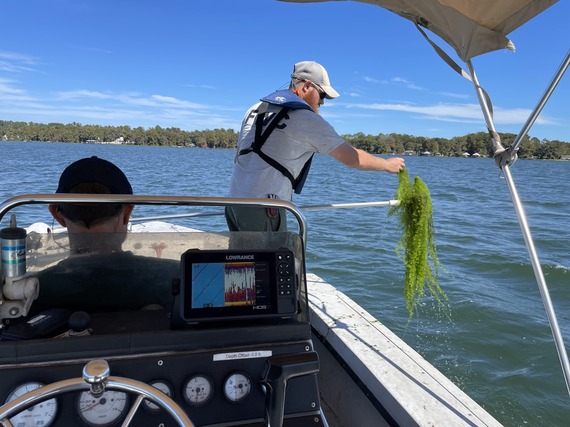
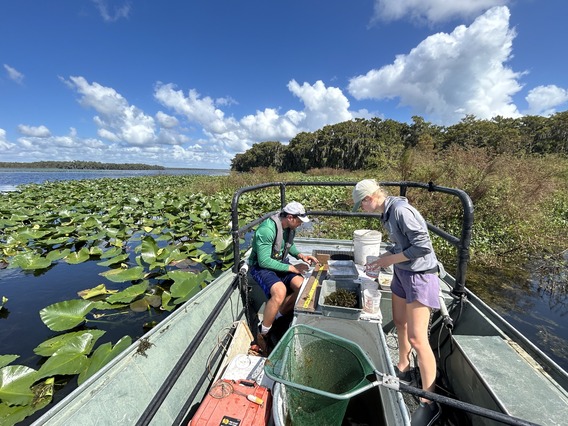
Just in case you see a bunch of FWC boats at the ramp soon, annual aquatic plant monitoring will be conducted in the north central region in September. This effort requires several vessels, including multiple airboats, to collect data at evenly spaced stations throughout the entire lake and typically takes 1-2 days to complete per lake. Annual fish community sampling will also take place this fall, which takes 1-4 days per lake depending on the size. FWC conducts this sampling by electrofishing at defined sample stations around the lake, typically along the shoreline. FWC biologists do their best to not disturb recreationists and move through areas quickly. These efforts follow strict protocols to consistently collect large amounts of high-quality data. You can contribute to these efforts by sharing your observations with FWC. Biologists compile and analyze all available data to determine lake conditions and consider management actions. This is the type of information that is shared at the OCB public meetings.
 |
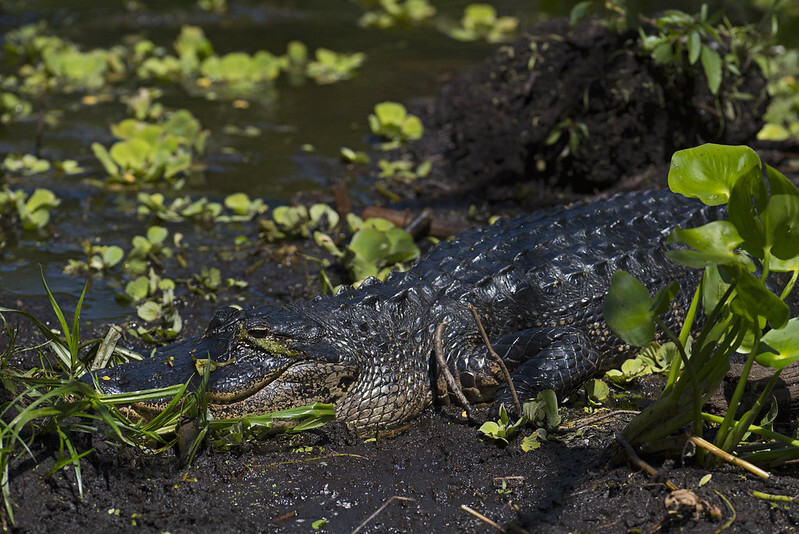 LIVING WITH ALLIGATORS:
Drought and low water conditions can force alligators into deeper pools or open bodies of water making them much more concentrated and visible. As their normal wetland habitats dry up, they may leave the comfort of thicker vegetation in search of deeper water pockets. Below are some safety tips for living with alligators, especially during a low water event.
Alligator Safety Tips
- Be aware of your surroundings and the possibility of alligators when you are in or near fresh or brackish water.
- Keep pets on a leash and away from the water’s edge. Pets often resemble alligators’ natural prey.
- Swim only in designated swimming areas during daylight hours and without your pet. Alligators are most active between dusk and dawn.
- Observe and photograph alligators only from a safe distance. Remember, they are an important part of Florida’s natural history as well as an integral component of aquatic ecosystems. State law prohibits killing, harassing, or possessing alligators.
- Never feed alligators. It’s illegal and dangerous. When fed, alligators can lose their natural wariness and instead learn to associate people with the availability of food. This can lead to an alligator becoming a nuisance and needing to be removed from the wild.
- Call our Wildlife Alert Hotline at 888-404-3922 to report fish and wildlife violations, such as individuals feeding an alligator. Callers can remain anonymous.
- Nuisance alligators are at least 4 feet in length and pose a threat to people, pets, or property.
- If someone is concerned about an alligator, they should call FWC’s toll-free Nuisance Alligator Hotline at 866-FWC-GATOR (866-392-4286), and we will dispatch a contracted nuisance alligator trapper to resolve the situation.
 RARE CONDITIONS = RARE BIRDS:
The Orange Creek Basin provides habitat for many non-game avian species across all seasons. During the spring and summer months, multiple wading bird species form nesting colonies across Orange Lake, take advantage of ideal foraging conditions and “island” areas where water provides a protective barrier from terrestrial predators. This breeding season, lower water levels led to reduced wading bird nesting activity, likely due to low water levels increasing predator access to historical rookeries. However, while the drought has created less suitable conditions for some species, it has benefitted others.
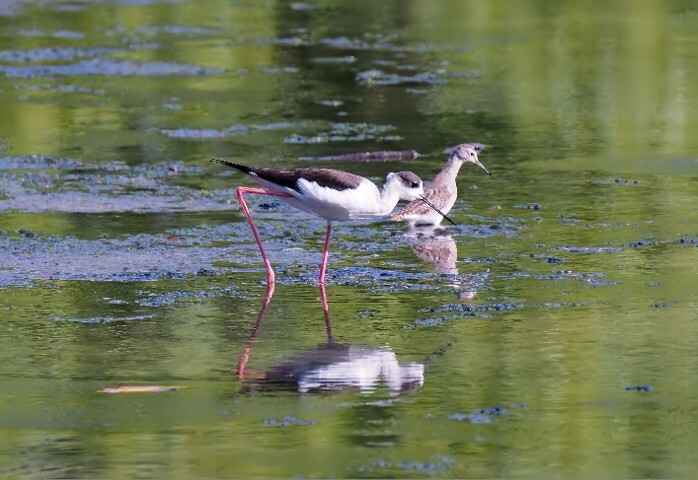
During spring migration, exposed mudflats attracted many birds that are less commonly spotted across the basin, including Lesser and Greater Yellowlegs, Dowitchers, Solitary and Spotted Sandpipers, and Black-Necked Stilts, who all took advantage of the shallow waters to forage. FWC biologists conducting a wading bird survey of Orange Lake in June were then pleasantly surprised to observe Black-Necked Stilt chicks foraging with their parents on the mudflats around the lake. This unique wetland species builds solitary nests on the ground adjacent to shallow waters, meaning that the drought conditions had led to water levels low enough for these ground-nesting birds to find suitable (and successful!) nesting and chick-rearing habitat. For many birders, these birds are a treat to spot, with their long, thin bills and – as the name suggests – stilt-like pink legs.
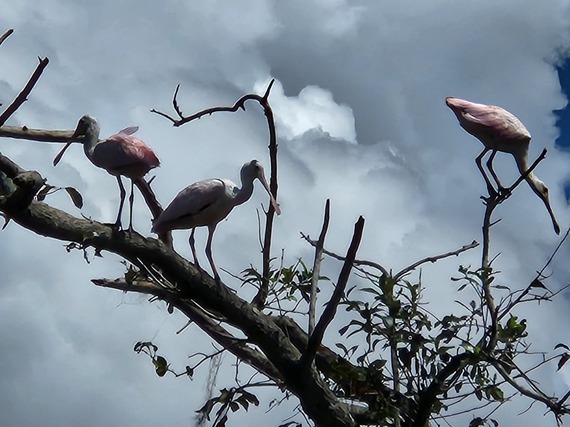
The basin does often attract birders, but this year provided some unique birdwatching opportunities created by drought conditions. Newnans Lake is known to be a birding hotspot and low water levels allowed for even better access for birdwatching, particularly at Palm Point. This season, these birders were able to get out beyond the trees to observe the mudflats more closely and spot some of these unique species that chose the basin as their temporary home. There was a large flock of Roseate Spoonbills at Newnans Lake for weeks!

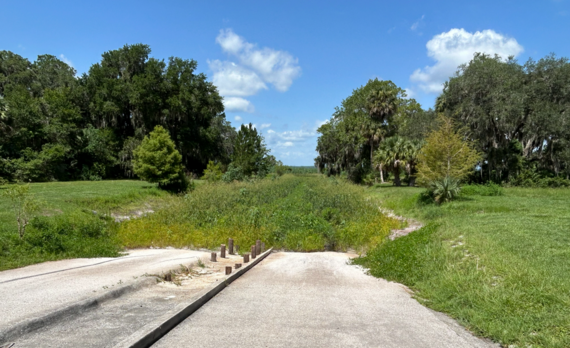 The Kate Barnes Boat Ramp at Marjorie Kinnan Rawlings State Park (above) is dry, overgrown, and not usable. The new Heagy Burry Ramp on Orange Lake still has plenty of water to launch (water was still 40” deep at the end of the ramp on August 10). Cross Creek is also almost completely dry and you should not try to get through until water levels rise. The lake level is currently down about 5 feet since Jan 1, 2025.
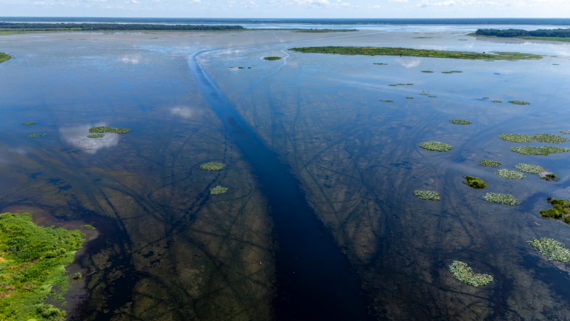
If you have been to Orange Lake recently you have seen how thick the aquatic plants have become, dominated by Hydrilla. Hydrilla has grown to the surface (becoming "topped out") throughout much of the lake due to high growth and low water levels. In late summer, topped out hydrilla can become sun-bleached and covered with algae. No large scale Hydrilla treatments have been conducted in Orange Lake in over 15 years. FWC has helped maintain boater access by establishing a buoy trail through the thick Hydrilla from the Heagy Burry Ramp to the main lake, visible in the drone photo below (credit: Marion Co.). Routine maintenance of small patches of floating vegetation—including water lettuce, hyacinth, and Cuban bulrush—were performed most recently in May-June 2026.
Before the drought really took hold, bream fishing in Orange was the best in the area and anglers are still having success. There are easy limits of Florida Bass to be caught right now, and plenty of giants concentrated by the drought. Anglers can help manage overcrowded bass populations and help create and maintain trophy bass fisheries by keeping small bass and releasing large bass. Make sure to follow the Freshwater Fishing Regulations where you are fishing and use best handling practices to make sure large bass survive after release. This is especially important during the dog days of summer. Report any bass caught over 8 lbs to the TrophyCatch program for a chance to win prizes! Don’t forget to report other big fish species you catch to the BigCatch program!

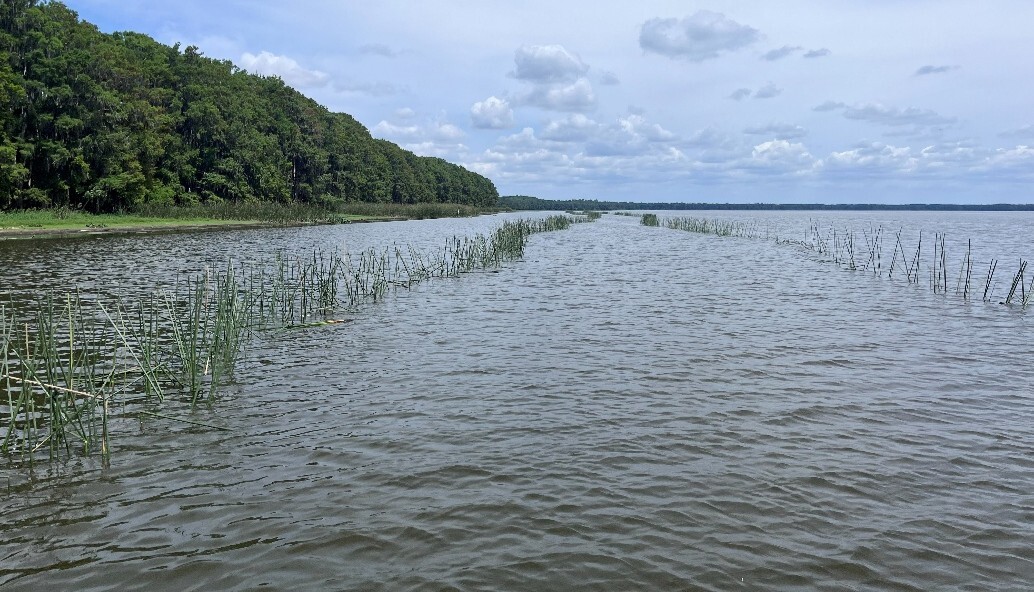 Currently, the boat ramp at Owen Illinois Park (Windsor) is almost completely dry and not useable until water levels rise. The ramp at Earl Powers Park is still useable by mudboats and airboats. The water levels are low enough that mudflats are exposed for several hundred yards out from the cypress trees around most of the lake. The lake level is currently down about 3 feet since Jan. 1, 2025. Newnans Lake water levels tend to rise faster than the other OCB lakes after big rains, so keep a lookout!
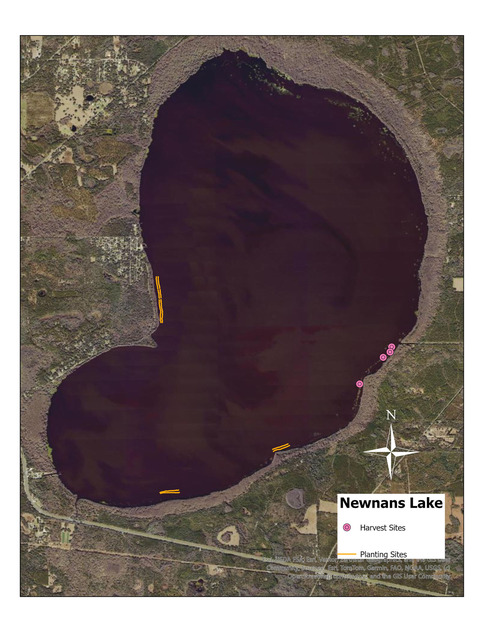
In April 2026, the FWC’s Aquatic Habitat Conservation and Restoration and Section (AHCR) completed a transplanting of Giant Bulrush (Schoenoplectus californicus) from dense areas in Newnans Lake to areas lacking in vegetation (shown above). Over 21,000 Giant Bulrush plants were transplanted from the east side of the lake (pink icons on the map below) to three separate sites (indicated by orange lines). By conducting the project during a low-water period, the likelihood of success increases by allowing planted vegetation to become established farther from the existing shoreline.
This planting project will increase the amount of deep and shallow marsh habitat on Newnans Lake. Both habitat types are currently below their desired target ranges. The revegetation of emergent plants like Giant Bulrush will help to reach the habitat goals established in the Orange Creek Basin Habitat Guidelines document. Emergent vegetation stabilizes sediments and reduces wave action, helping to prevent shoreline erosion. Additional benefits include nutrient uptake, increased native aquatic vegetation growth, and improved fish recruitment and angler catch rates. These aquatic habitat improvements have the potential to benefit a wide variety of fish and wildlife, including migratory birds, wading birds, waterfowl, and many other aquatic and wetland species.
 |

 Boat ramps on Lochloosa Lake are still useable but are getting shallow. Large mudflats are present on the west side of Little Lochloosa. Cross Creek is almost completely dry, and you should not try to get through until water levels rise. Water levels are currently down almost 4 feet since Jan. 1, 2025.
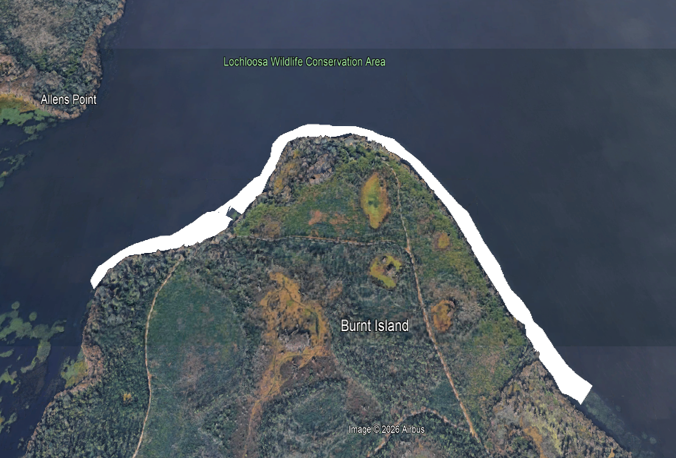
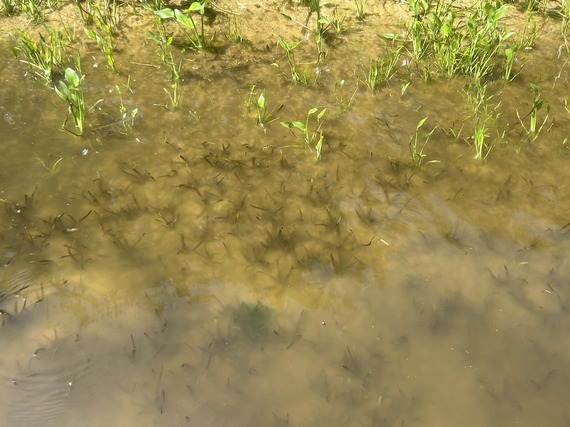
On April 22, 2026, FWC completed a 34-acre hydrilla treatment in the Burnt Island area (shown on the map above), or about 8 percent of the lake shoreline. The goal was to support the expansion of native eel grass and protect the native submersed plant communities. Since the treatment, multiple follow-up surveys have been conducted, and new eel grass growth has been observed on the shoreline within the treatment zone (dark plants below). Avoiding disturbance to this area (boat and foot traffic, etc.) will help protect this new growth while the plants become more established. If you have any questions or concerns regarding this or any other invasive plant treatment on the Orange Creek Basin, please feel free to contact Leila Agoora Leila.Agoora@myfwc.com.
|