|
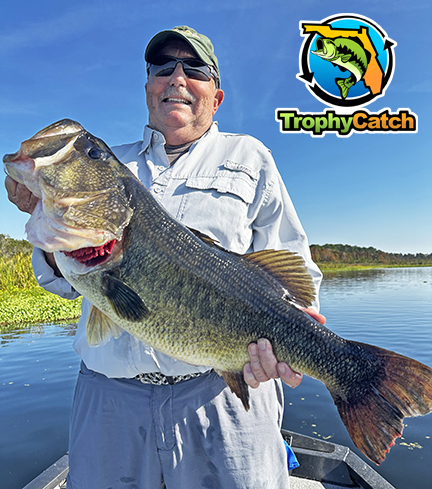
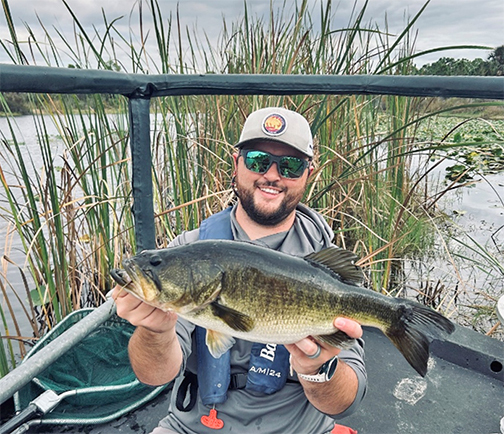
TrophyCatch angler John Shores is the current Season 14 leader with this 14 lbs. 11 oz. Lake Rousseau monster!
TrophyCatch Season 14 is in full swing as Florida's best bass fishing is expected to take place this quarter. Historically February and March produce the most trophies as large female bass move inshore to spawn so prioritize your vacation time accordingly! So far this season, the three top-producing water bodies have been Rodman Reservoir (NOTE: Currently in drawdown), Lake Rousseau/Withlacoochee River, and Fellsmere Reservoir so check those linked fishing forecasts for the most recent reports from FWC biologists.
The latest tallies since the TrophyCatch program was launched in 2012 include:
- 13,182 Lunker Club (8-9.9 lbs.) bass
- 3,313 Trophy Club (10-12.9 lbs.)
- 172 Hall of Fame (13+ lbs.)
- 16,667 TOTAL approved bass submissions to date
If you've participated in TrophyCatch, your data is included here!
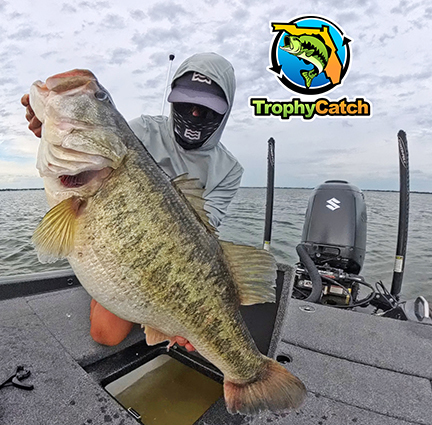
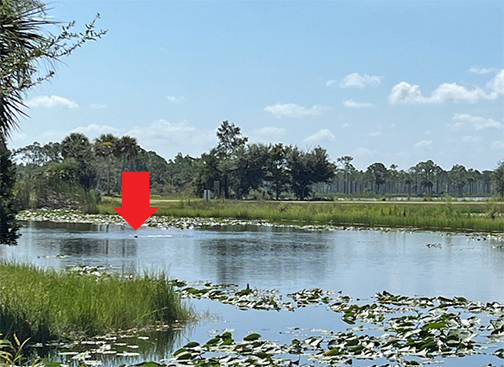
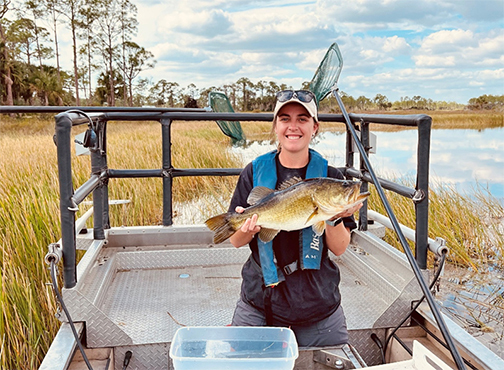
Angler Robert Matsuura caught-and-released this 15.125 lbs. behemoth during Season 13. Only an incredibly small percentage of anglers ever have the opportunity to hold a bass this big!
Robert Matsuura recently submitted this massive 15.125 lbs. Highlands County catch, though this bass was caught during the previous Season 13 and registered after the season closed so was not eligible for prizing. However, that takes absolutely nothing away from this lifetime catch and this extremely rare and valuable data! This fish is 1 of only 9 bass ever approved at this size or bigger for the TrophyCatch program. The last catch this size or heavier was approved into the program in 2020 — half a decade ago! We truly appreciate Robert sharing his awesome catch of a lifetime with TrophyCatch.
Register for TrophyCatch or view approved angler catches to help plan your next fishing trip at TrophyCatch.com. Follow TrophyCatch on Facebook and Instagram for featured big bass, program updates and partner highlights.
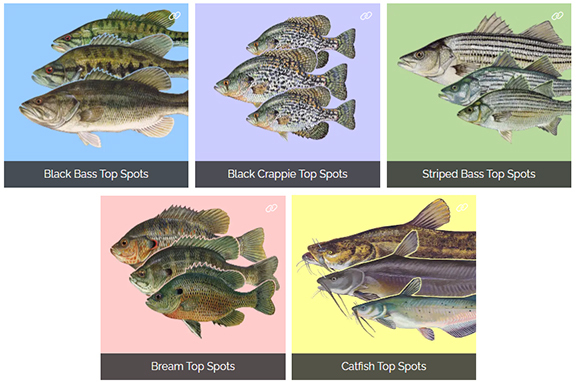 Fishing Forecasts for nearly all of Florida's major freshwater sites are updated quarterly. In addition, Sport Fish Top Spots with the best picks for Florida's favorite freshwater species are updated annually and have just been posted for 2026. Check these lists for a new fishing spot or a top location near you!
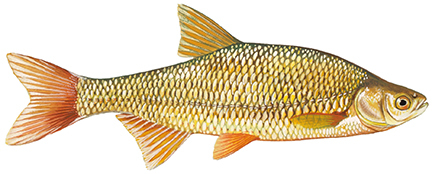
Size: This popular minnow can grow to a foot in length. Neither the FWC nor IGFA maintains records on this species, as it is sought after primarily as bait and not for sport.
Identification and similar species: The golden shiner is a deep-bodied and extremely compressed (flat) fish; also note the down-curved lateral line. A scaleless keel (ridge) is present on the bottom of the belly. The golden color for which the fish is named can be helpful in identification, but is not always present.
Small triploid grass carp might possibly be mistaken for the shiner, but the down-curved lateral line and keel set the shiner apart. Threadfin and gizzard shad possess a distinct black spot near the operculum that is absent in the shiner, and also lack the keel (see the Minnow and Bait Fish Identifier below for details).
Angling qualities: This fish is the best all-around live bait for both largemouth bass and butterfly peacock bass. Shiners can be taken legally with a cast net (see the Florida Freshwater Fishing Regulations for details, and be sure to immediately release any sportfish taken in this manner). Experienced cast-netters will often chum an area with uncooked oatmeal, laying mash, bread, or similar baits to attract and concentrate schools of these fish before throwing the net. For more tips on netting your own see the Bait Net Basics article below. Shiners can also be easily caught on hook-and-line with a tiny size 10-12 Aberdeen hook baited with a small doughball and fished under a tiny bobber.
Shiners, although not nearly as delicate as live shad, should still be kept in an aerated livewell or in a ventilated bait bucket placed in the water. This bait is usually hooked below the dorsal fin or through the lips. Use a float that is just large enough to keep the shiner from pulling it under; small balloons are also popular as shiner bobbers because they do not hang up in surface vegetation as easily as hard plastic or foam bobbers. Alternatively, shiners can be freelined around promising looking cover with no bobber or weight at all for a more natural presentation.
Where to catch them: Golden shiners are common to abundant throughout the state. They are usually found near vegetation.
Interesting facts: When spawning golden shiners release adhesive eggs that stick to nearby vegetation. Their chief food includes freshwater plankton and insect larvae.
|
Fish images by Duane Raver, Jr. and/or Diane Rome Peebles
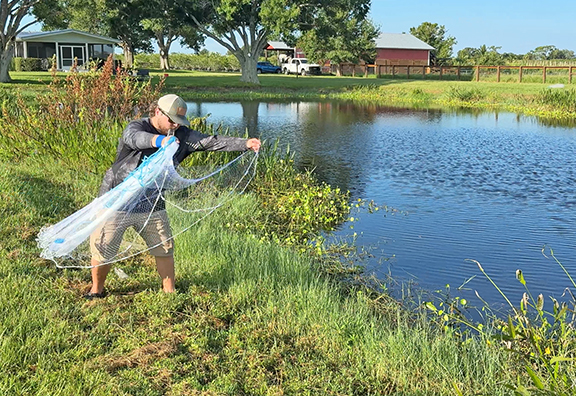
Cast nets are a very popular way to catch bait in Florida.
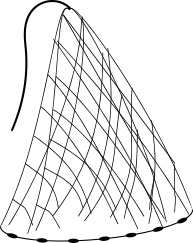
Nets provide a great way to collect bait like the golden shiner featured above. With a small investment and some knowledge you can catch your own bait — which can provide its own fun!
Cast net - A cast net is probably the most widely used net in Florida. It has the advantages of a long reach and wide coverage. However, a cast net is also the hardest net to learn to use, although some bait and tackle shops will provide demonstrations and there are also plenty of videos and books that cover the subject.
Cast nets are ideal for taking shiners and shad. Shiners (featured above) can be baited to a particular area with bread, uncooked oatmeal, or chicken laying mash (check your local feed store for the latter). A good place to start up a “shiner hole” needs to have some open water with vegetation close by. If you’re willing to put in some extra effort and cash, you can chum shiners to a particular area at least weekly (twice a week or more is better) and have a semi-guaranteed supply of bait whenever you want it. In such a situation, you can chum your “shiner hole” and start tossing your cast net within five or ten minutes to collect your bait. If chumming “cold” (you haven’t been baiting the area previously), you may need to chum for fifteen to twenty minutes before throwing your net. In either case, make your first cast count because the sound of the net hitting the water will scare the baitfish and, while you can still catch them, your chances diminish with subsequent throws. For keeping your shiners alive, an aerated livewell or cooler is best. However, anglers can also make do with a plastic five-gallon bucket with half-inch holes drilled in it for circulation; throw on a bait lid available at any tackle shop and keep the bucket in the water on a rope until you need your next bait.
|

Shad (see below) are a different story — their occurrence in most waters is much less predictable. They are schooling fish constantly on the move, and are usually found in open water instead of orienting reliably to vegetation. This also means that they’re often found farther from shore than shiners are, sometimes putting them out of reach unless you’re throwing your net from a boat. Your best bet for a steady supply of shad is to keep a sharp eye out for the distinctive ripple of schools on the surface, or for bass crashing shad on the surface. Shad are also much more delicate than shiners — you’ll need a well-aerated baitwell to keep them alive, the bigger the better. Shad schools are usually denser than shiner schools, though, and one lucky cast is all you need to fill a baitwell.
|
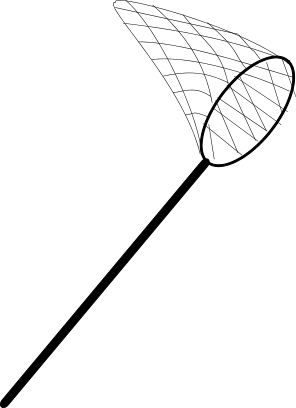
Dip net - Dip nets are simpler in every respect, as well as cheaper. You’ll seldom catch a shiner or shad in one, but if you want some grass shrimp or minnows for bream fishing this is all you’ll need. If you’re using a dip net you’ll be restricted to shore, but then that’s where you’ll want to be using this net anyway. Try scooping the net through shoreline vegetation, and pass the net through the same path several times. Good vegetation to “beat” includes any grass, shallow hydrilla, or peppergrass. After “sweeping” a couple of spots, stop and pick through the vegetation in the net for bait. (Note that most emergent vegetation worked this way will spring back up in a few hours, but be careful not to damage any desirable plant species.) Grass shrimp usually announce themselves by jumping all over the place inside the net bag, and are a great bait for bream and the occasional bass. Minnows aren’t quite as fantastic a bait for bream, but are still good and large bluegill in particular have a preference for mosquitofish. Better dip nets have a sturdy wooden handle about six feet long and a heavy-duty wire net frame with a 1/4” mesh bag. Don’t go any bigger on the mesh size, or most of what you want to catch will be able to get through it.
Minnow seine - Minnow seines are not as effective or convenient for shiners as a cast net, and are more cumbersome for shrimp or minnows than a dip net. You also can’t work one solo — it takes two for this one. They do have the advantage of being capable of covering a lot of territory, however. And seines make great educational tools, if you want to see (or teach your kids about) the variety of life in your local pond. If you’re going to use a minnow seine, do yourself the favor of attaching five- or six-foot broom handles or one-by-twos at the ends. This will make the net much easier to work, and make it much easier to keep the lead line on the bottom. They also make the net easy to roll up for storage — but make sure it's completely dry first. To work the net properly, choose a path that will run the net through promising-looking water a few feet deep and then up onto the bank. A gently-sloping bank without much vegetation or brush on it is best if available. Both team members should grasp the broom handles upright and try to keep the lead line on the bottom as they work. There will be a deep bow in the net as you both walk forward in unison. Move as fast as you can to prevent fish from escaping, and do keep that lead line on the bottom or fish will also escape under the net. Run the seine right up onto the bank to inspect your catch, giving priority to releasing any game fish first.
Staying safe - Obviously, you should exercise the same caution when netting as you would when shoreline fishing or wading, watching for deep spots and for wildlife. See FWC's Living with Alligators page for more information.
"Netiquette" - There are some final etiquette points every net-toting angler should consider that have nothing to do with catching fish. First, don’t trespass. Respect the space around other resource users nearby. Also, don’t leave a trail of weed piles along the shoreline behind you. Some people, even including other anglers, don’t like seeing people with nets, so be polite to anyone that asks you what you’re doing. Take a moment to explain how much fun it can be to catch your own bait, and maybe even show them some of the interesting creatures you come across doing it.
The full Florida Freshwater Fishing Regulations rules summary for methods of taking bait is available online.
|
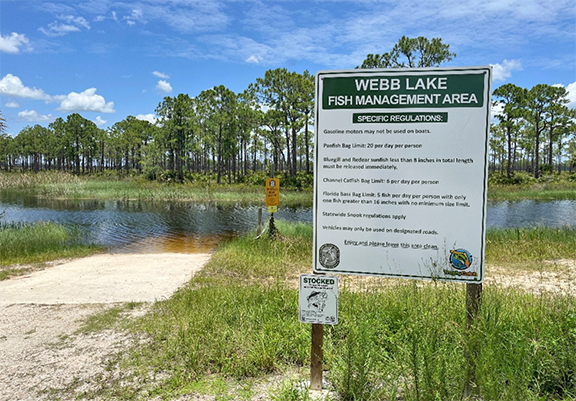 |
Webb Lake and the Marl Ponds are located on the Babcock-Webb Wildlife Management Area in Charlotte County.
Location: Charlotte County
Description: Webb Lake (395 acres), Marl Pond 1 (3.5 acres), Marl Pond 2 (3 acres) and Marl Pond 3 (2 acres)
Webb Lake and the Marl Ponds are FWC-supported fish management areas located on the Babcock-Webb Wildlife Management Area in Charlotte County. The management area entrance is located on Tuckers Grade Rd, less than 1 mile from the I-75 exit. Marl Ponds 1 and 2 are located just inside the main entrance on either side of Tuckers Grade Rd. Marl Pond 3 is located just past the hunter check station. Webb Lake is a long and narrow waterbody with 3 public boat ramps, the first of which is located just south of the hunter check station. Both Webb Lake and the Marl Ponds provide ample bank fishing access and are stocked annually with sportfish by FWC. Although vessels are allowed on Webb Lake, gasoline motors may not be used while on the water.
This fine 4-pound Florida bass was sampled in Marl Pond 3.
The lakes at Babcock-Webb were used for fill-dirt when I-75 was constructed. Webb Lake has an average depth of around 5 feet, while the Marl Ponds reach depths greater than 10 feet away from the bank. To enhance the fishery, lake aeration systems were installed at Marl Ponds 1 and 2. These systems maintain oxygen levels in the lake, as well as provide areas for forage fish to congregate.
Lake aeration diffusors like this one on Marl Pond 1 oxygenate the water and can be reached with a well-placed cast from the bank.
Florida bass, bluegill, redear sunfish (shellcracker), black crappie (specks), and catfish can be caught in all four lakes and are stocked annually by FWC. Catch rates for Florida bass remain very high in all four waterbodies. Although trophy-sized bass are not very common at Babcock-Webb, anglers can expect to catch plenty of bass in the 1-3 pound range.
Webb Lake and the Marl Ponds offer a variety of fishing opportunities like this nice 4-pound Florida bass.
You may be familiar with anything that might bite on the end of your line, but do you know your minnows? Shown below are some of the species you’re most likely to come across in Florida, including the most important bait species. How many have you seen? (Note: Drawings are not to scale; check text for actual sizes.)

Mosquitofish or Gambusia (2 ½”) — Probably the most common freshwater fish in Florida, this rather plain fish can be identified by the one or two broken, vertical stripes on its tail. Female is easily told by the distinct black spot on the belly. Melanistic (dark-pigmented) forms may have black spots sprinkled over the body or even appear entirely black. Derives its name from its preferred food of mosquito larvae. A fair bait for bluegill and small bass.
|
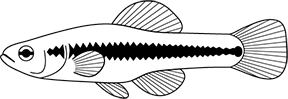
Bluefin killifish (2”) — This common minnow is easily told by the brown back and the bold, black stripe down the side which ends in a black spot. The blue fins referred to in the name are visible only on the male during the breeding season. A fair bait for bluegill and the occasional small bass. Do not confuse with largemouth bass fry which also possess a dark line along the body but have a divided dorsal fin; bass fry must be released immediately if netted.
|
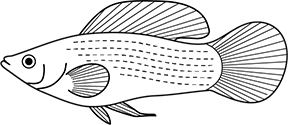
Sailfin molly (5”) — The male of this aptly-named species is easily recognized by the very large, elongated dorsal fin which may be edged in orange; the male’s tail may also be bright orange and blue. However, both sexes can be identified by the five to eight finely dotted lines along the body. Mollies are noticeably larger and less slender than most of our other common minnows. They provide a good bait for bluegill and crappie, with larger individuals useful for tempting bass.
|
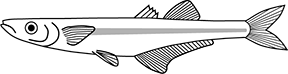
Brook silverside (5”) — This elongate and streamlined fish has a beak-like snout and a very distinct silver stripe along its side. Differs from most of these other minnows (except for shad) in that it roams in open water rather than associating with shoreline vegetation. A schooling minnow that can be abundant.
|
Has the habit of swimming just under the surface and occasionally skipping along the top of the water, especially when chased. Not very hardy and therefore a poor bait.
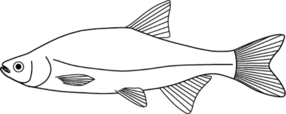
Golden shiner (12”) — The golden shiner is a deep-bodied and extremely compressed (flat) fish; also note the strongly down-curved lateral line. A scaleless keel (ridge) is present on the bottom of the belly. The golden color for which the fish is named can be helpful in identification, but is not always present. This species is well-known to most anglers and is the best all-around bait for largemouth bass and peacock bass. Shiners can be cast-netted or caught on hook-and-line using tiny size 10-12 hooks and doughballs.
|

Threadfin shad (To 9” though rarely exceeds 6”) — An extremely compressed (flat) fish with a distinct dark shoulder spot, long dorsal fin ray, and pointed snout. The body is bright silver, with a dark back. The scales are large in relation to the size of the fish and easily rub off. The threadfin can be told from the gizzard shad because it possesses black specks on the chin and floor of the mouth and yellow fins. A less scientific but nevertheless helpful test is to “scratch” the nose of the shad with a fingernail; if the nail catches and pulls open the bottom jaw it is likely a threadfin. (The threadfin’s lower jaw extends out farther then the gizzard shad’s.) Although the threadfin shad is an excellent forage and bait for largemouth and sunshine bass, the gizzard shad (below) can quickly grow too large to be preyed upon and may overpopulate a lake. Anglers should therefore not transplant any shad to other waters.
|
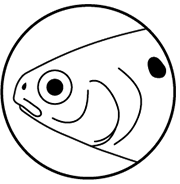
Gizzard shad (To 20” though rarely exceeds 12”) — Note the lower jaw which does not extend past the snout (as well as the other features mentioned above) to distinguish this from the threadfin shad. Small gizzard shad can provide good bass bait, but this species quickly grows too large for even the biggest bass and if it overpopulates may become a serious lake management problem. Again, never transplant any species of shad to other waters.
|
NOTE ON OTHER SPECIES: American shad, hickory shad, and blueback herring live in the Atlantic Ocean and enter the St. John's and St. Mary's rivers in northeast Florida in winter and spring to spawn. Alabama shad and skipjack herring occur in gulf coast rivers; skipjack herring are limited to the panhandle, and Alabama shad occur as far east as the Suwannee River. Alabama shad, American shad, hickory shad, and blueback herring may only be taken with hook and line gear and have a bag limit of 10 (individually or in total). See the Shad FAQ for additional information.
FWC fish species images.
To contact The Florida Freshwater Angler, email John Cimbaro. Fish illustrations by Duane Raver, Jr. and Diane Rome Peebles.
|