|
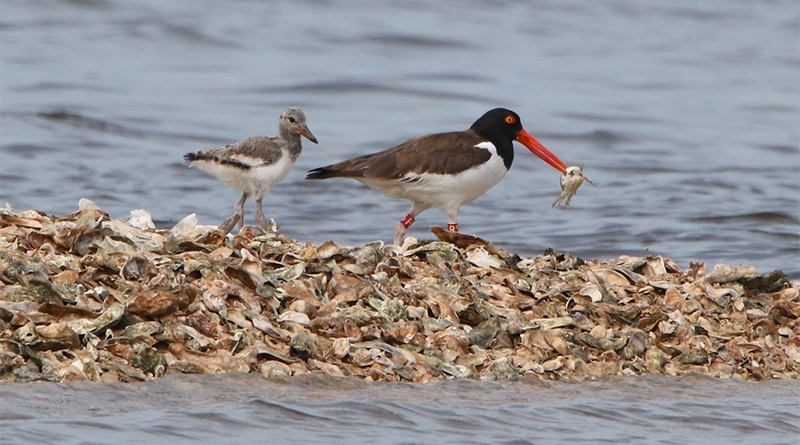
Banded as a chick in 2008 near the Amelia River, Red R5 has quite the story. After a short stint in North Carolina, she settled along Florida’s Tolomato River in 2010… and she’s been there ever since!
At 17 years old (a senior by oystercatcher standards!), Red R5 has nested on the same shell rakes for 15 years with her partner. Even though high tides and storms often wash out the site, her strong site fidelity keeps her coming back.
Red R5 is just 1 of only 419 breeding oystercatchers in Florida. Tracking her journey helps us learn more about these vulnerable shorebirds and highlights why conserving every nesting site matters, given their low numbers and strong site fidelity.
Thanks to dedicated staff and our Florida Shorebird Alliance partners we’re able to keep track of Red R5 and many others like her.
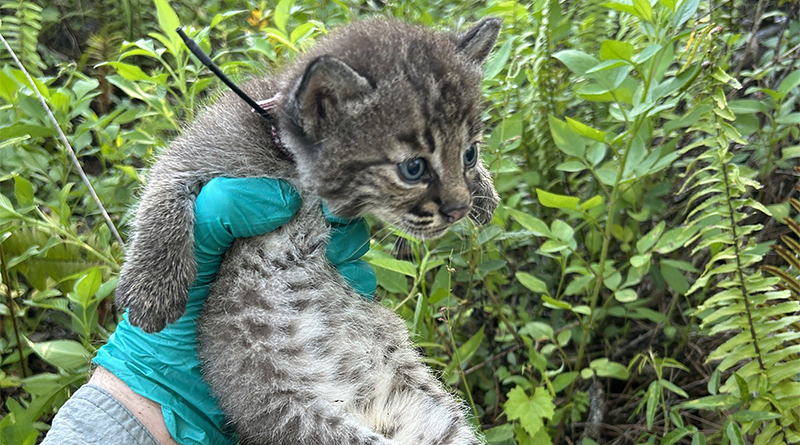 Bobcat BOB107 Becomes a Mom!
On March 12, 2024, BOB107 was released back into the wild after rehabilitation at Naples Zoo at Caribbean Gardens for a fractured leg. Before her release, she was fitted with a GPS and VHF tracking collar so researchers could monitor her movements.
Last month, our FWC Panther Team documented that she had denned, and inside were two healthy female kittens. Each bobcat kitten received a health check and an expandable radio collar. These collars allow us to track their movements, study habitat use, estimate kitten survival, and monitor for Feline Leukomyelopathy (FLM), a neurological disorder that affects both bobcats and Florida panthers.
These collars will continue collecting data for 1 year. After that, it will either be replaced during recapture or fall off naturally as the collar material expands and wears down. The kittens’ mom is still collared as well, which provides another valuable link to help locate the kittens in the future if their collars come off early.
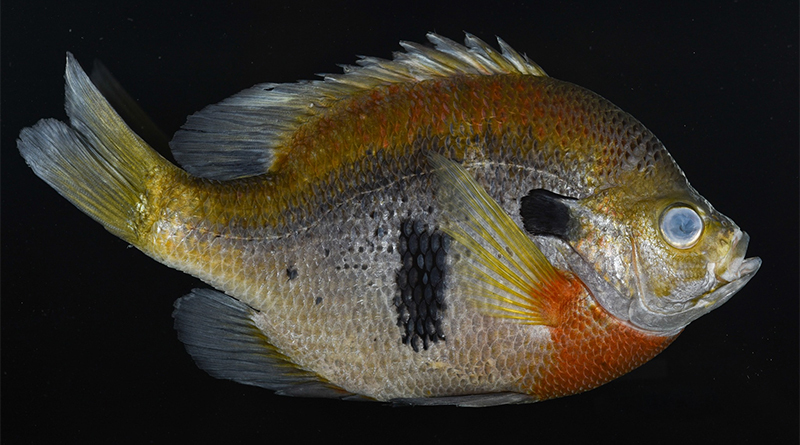 New Arrival to FBC: Hand-Painted Bluegill
We’re excited to welcome a striking new addition to the Florida Biodiversity Collection: a hand-painted bluegill (Lepomis macrochirus).
This color morph of dark blotches along the sides of the fish is very common for bluegill in the Apalachicola and connecting waterbodies including Dead Lakes and the Chipola River. Often called “painted bream” by local anglers, these fish are truly beautiful.
What makes them special?
- Native to the Apalachicola River drainage in the Florida Panhandle
- Typically only seen in sexually mature males
This particular specimen was collected by our fisheries staff in Apalachicola and is the first of its kind to join the FBC.
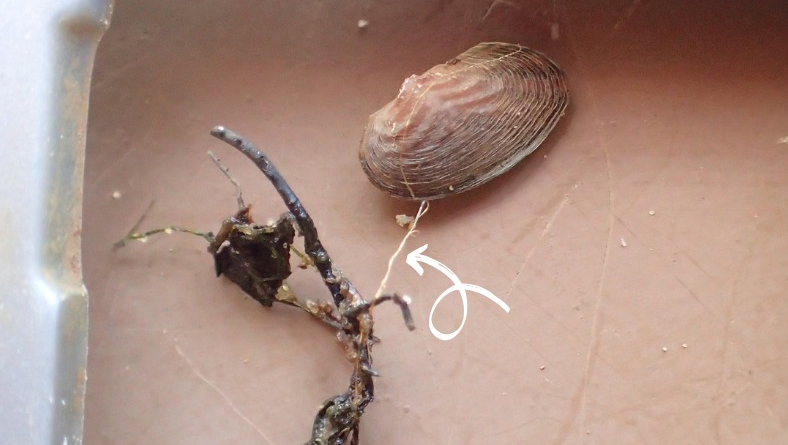 Happy World Beard Day!
Not all beards belong to people, and we’d like to submit a strong contender: the byssal beard of a mussel.
These hairy, fibrous filaments (a.k.a. byssal threads) may not win any style points, but mussels spin them from proteins to create a natural anchor that keeps them firmly attached to rocks, docks, and other surfaces.
Think of byssal threads as nature’s original Velcro, perfected by mussels millions of years ago. While some estuarine mussels use their byssal threads to stick together in dense colonies, freshwater mussels are solitary creatures and only have beards when they are young...call it the Benjamin Button effect.
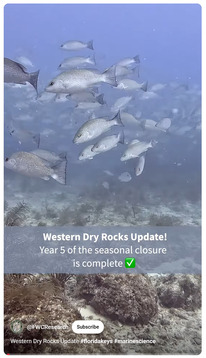
Western Dry Rocks Update
As of August 1, 2025, Year 5 of the seasonal closure at Western Dry Rocks has officially wrapped up! Each year from April 1 to July 31, this closure helps protect fish like mutton snapper and gray snapper during their peak spawning season. It’s part of a 7-year effort to support sustainable fish populations in the Florida Keys.
This year, during the closure, FWC researchers conducted 618 dives to monitor how these protections are working.
The collected data will shape future conservation efforts, but you also play a big role!
|
|
 |
New on MyFWC.com/Research
We hope you enjoy these articles that have been recently added/updated on our website:
Red Tide Current Status
Red Tide-Related Hotlines and Information Sources
2025 Manatee Mortalities
Annual Rescue Summaries [Manatee]
New Publications
New World Screwworm
HAB Publications
HAB Task Force Meeting Information
Stone Crab Catch Data
Internship Opportunities
MarineQuest 2026
Our Mission
Through effective research and technical knowledge, we provide
timely information and guidance to protect, conserve, and manage
Florida's fish and wildlife resources.
|