 Mark your calendar for October Big Day, part of Global Bird Weekend and coinciding with World Migratory Bird Day on Saturday, October 11. Whether you’re a long-time birder or new birder, every bird observation counts. Submit your sightings from wherever you are, even your backyard, using the free eBird app. Last year, tens of thousands of people contributed checklists, and nearly 7,700 species were observed globally.
Join in as an individual or a team, and help set new records, learn new birds and celebrate the avian diversity around us.
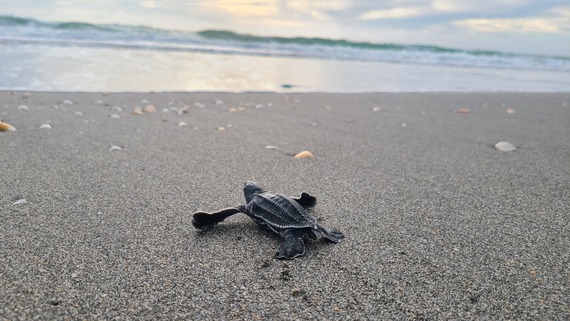
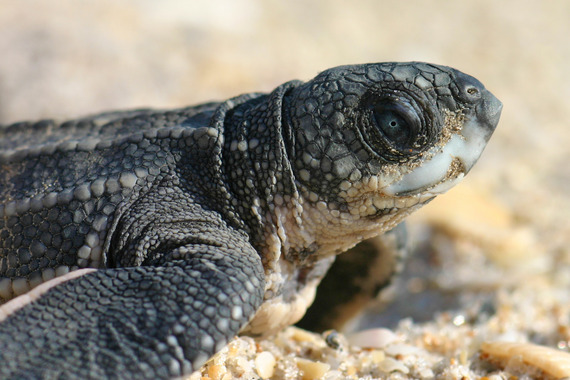 A newly hatched leatherback sea turtle. Photo by FWC.
In a typical year, about 1,000 to 1,500 leatherback sea turtle nests are documented along Florida’s coastline. This year, however, has been extraordinary. Preliminary counts as of late August recorded 2,021 nests, making 2025 a record-breaking season.
The World's Largest Sea Turtle
There are seven species of sea turtles found throughout the world, with five found in Florida. Leatherbacks are the largest in the world, weighing between 700 and 2,000 pounds and measuring 4–8 feet in length. They are the third most common sea turtle that nests on Florida’s beaches, after loggerheads and green turtles and before the rarer hawksbill and Kemp’s ridley sea turtles.
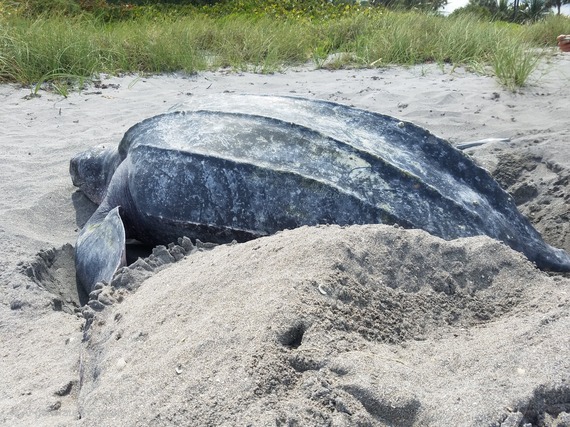 An adult female leatherback sea turtle digging a nest. Photo by Tonya Long.
Unlike other sea turtles, they do not have a hard shell. Instead, their shell is flexible and leathery. This unique adaptation makes them superb deep divers, capable of plunging thousands of feet below the surface. A hard shell would crack under such intense pressure, but the leatherback’s body compresses safely, allowing it to pursue its jellyfish prey in the open ocean where it spends nearly all its life.
Leatherback sea turtles are found worldwide, but Florida’s leatherbacks are part of the Northwest Atlantic Distinct Population Segment, which ranges across the Caribbean, northern South America, the eastern Atlantic near Africa, and parts of Europe. Florida’s beaches represent the northern limit of this population’s nesting range, making the state an essential stronghold for the species.
Females lay eggs every two to three years. They mate in distant waters and store sperm from multiple males, using it gradually to fertilize successive clutches over the nesting season, which runs from March through July in Florida. Females return to shore to lay anywhere between four to nine clutches during a nesting season, with intervals of roughly nine to 10 days between each clutch. While leatherbacks and other sea turtles do not nest in the exact same spot each time, the nests are usually spread over a relatively small geographic area, often across adjacent counties.
Unlike green turtles and loggerheads, juvenile leatherbacks don’t linger in nearshore habitats. After hatching, tiny turtles head straight into the open ocean. Their juvenile life is largely a mystery until they return 15 to 20 years later as adults to breed. Adults then resume their immense migrations between foraging, mating and nesting grounds, traveling thousands of miles across the globe.
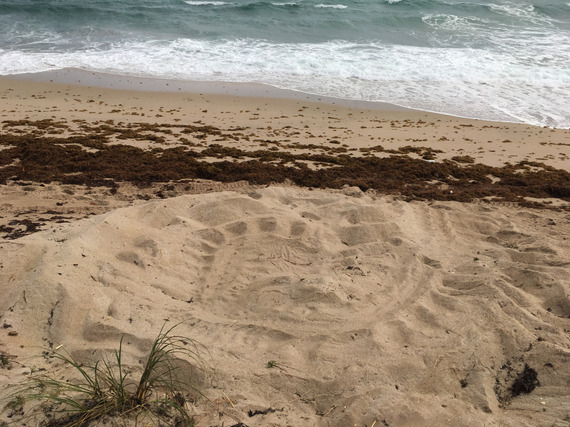 A leatherback sea turtle nest. Photo by FWC.
Where Leatherbacks Nest in Florida
Most leatherback nesting occurs between Brevard and Broward Counties, with roughly half of all nests found in Palm Beach County. Smaller numbers are seen in Volusia and Miami-Dade Counties with occasional nests throughout the rest of the state. This stretch of central and southeast Florida has historically been a nesting epicenter, possibly due to the area’s distinct geography. The continental shelf comes closest to shore here, creating deep-water approaches that suit a deep-diving species.
On the beach, leatherbacks prefer wide, sandy stretches with soft, deep sand and minimal obstructions. Unlike green turtles, which often nest among vegetation, leatherbacks nest lower on the beach in open areas below the dunes. Their large size and extensive nesting process require space, making narrow, rocky, or vegetation-heavy beaches, such as those in the Florida Keys, less suitable.
Why Leatherbacks Matter
Leatherbacks play an important ecological role by consuming large numbers of jellyfish, which can prey on the larvae of commercially valuable fish. By keeping jellyfish populations in check, leatherbacks support healthy fisheries and benefit both ecosystems and economies.
Because they traverse entire oceans, leatherbacks also serve as indicators of ocean health. Changes in their populations can signal shifts in marine environments.
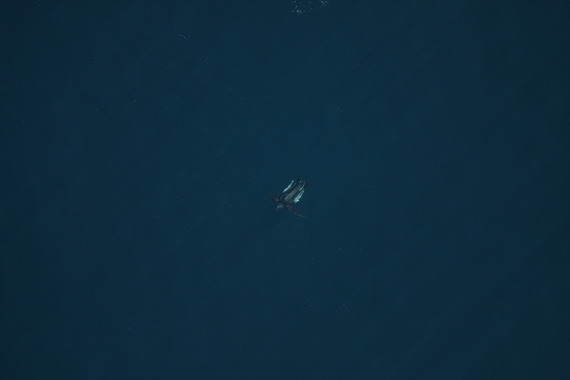 A leatherback sea turtle swims in the open ocean.
How FWC Monitors Nesting Leatherbacks
Monitoring such a wide-ranging species requires coordinated effort. The Florida Fish and Wildlife Conservation Commission works with over 150 marine turtle permit holders, supported by roughly 2,000 trained personnel and volunteers who survey Florida’s coastline during nesting season.
These dedicated teams survey the beaches daily at sunrise, recording turtle tracks and identifying nests. Many nests are marked and monitored throughout the season. If storms, predators, or other disturbances affect the nest, the event is documented. After hatching, monitors inventory the nests, counting hatched shells and unhatched eggs to assess nesting success.
All collected data are sent to FWC, where they serve multiple purposes. They inform federal and international population assessments, guide recovery plans, and help create maps that agencies rely on for disaster response, such as knowing where turtle nests might be at risk during an oil spill. Locally, the data are also critical for reviewing coastal construction permits, beach nourishment projects, and seawall proposals to ensure that development accounts for nesting turtles.
 How You Can Help
Like all sea turtles in Florida, leatherbacks face significant threats, primarily habitat loss and degradation. Healthy, unobstructed beaches are essential for nesting. Coastal development, artificial lighting, marine debris, and beach litter can all interfere with nesting females and hatchlings.
Fortunately, there are simple steps the public can take to make beaches safer:
-
Remove trash and belongings and fill in holes in the sand. Leftover beach chairs and debris can entangle turtles, holes can trap them, and trash can be accidentally ingested.
-
Reduce lighting. Bright lights can deter nesting females and disorient hatchlings. If light is necessary, red lights are less disruptive than white or yellow lights.
-
Give turtles space. If you encounter a nesting female or hatchlings, stay back, stay still, and never shine lights on them. Visit the FWC’s Sea Turtle Viewing Opportunities page to find a facility near you that offers opportunities to view sea turtles safely and responsibly.
Even small actions can have a large impact when multiplied across thousands of beachgoers. Each nest laid on Florida’s beaches represents a hopeful step toward the future of leatherback sea turtles.
|