|
 View this as a webpage
 The Commission met last week in Miami. Some of the actions taken include:
New panther license plate features famous female and her kitten
FWC honors Julie Carta as inaugural Sonya Rood Volunteer of the Year
FWC Commissioners approve rule changes to two fish management areas
FWC Commissioners approve rule establishing designated anchoring areas in Monroe County
FWC approves rule changes to Atlantic greater amberjack
FWC suspended discussions on goliath grouper spawning aggregation site protections
FWC proposes changes for snook management
FWC appoints Colonel Roger Young as executive director
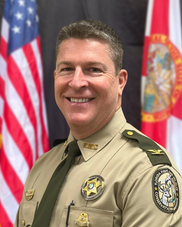
On May 10, Commissioners voted to appoint Col. Roger Young to the position of executive director. Col. Young replaces former Executive Director Eric Sutton who retired last December.
Col. Young grew up in Miami where he spent a lot of time on the water fishing and enjoying the outdoors. He attended Florida State University receiving his degree in social science with an emphasis in environmental studies. Col. Young then returned to south Florida where he realized he could do something he loved while also protecting the resources that were important to him and he applied with the Florida Marine Patrol. Shortly after the FWC was created, Col. Young continued to promote through the ranks in the Southwest Region where he served as Regional Commander for six years before becoming Colonel in 2021.
Col. Young has served a total of 27 years in the Division of Law Enforcement and has had a remarkable career. He is a graduate of the FBI National Academy, the National Association of Conservation Law Enforcement Chiefs Academy and the FDLE Senior Leadership Program.
We welcome our new Executive Director, Roger Young!
|
Updated Letterhead
Due to the change in leadership, be sure to use the updated agency letterhead with the name ending in 051523, updated May 15.
The Rodney Barreto FWC Employee of the Year Award and the Louise Ireland Humphrey FWC Lifetime Achievement Award are granted to outstanding FWC employees each year. The Fish & Wildlife Foundation of Florida awards individuals who epitomize what it means to protect wild Florida. This year’s awards were announced at the Commission meeting on May 10.
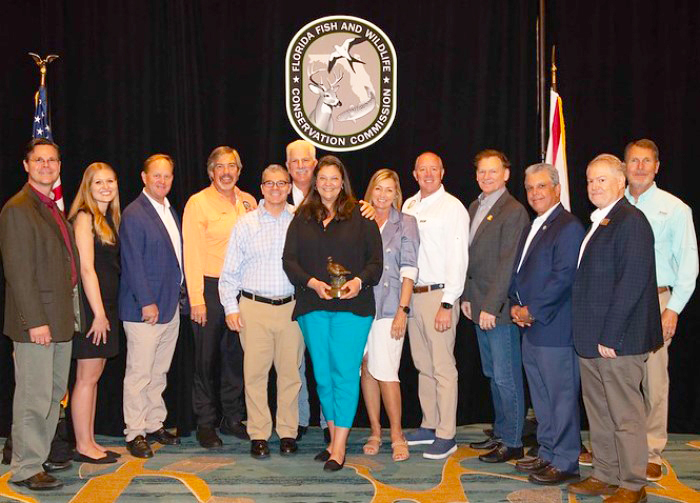 Kathy Guiden Wins Louise Ireland Humphrey Award
Dr. Kathy Guindon recently concluded a very impactful and successful 27-year career with the FWC. She spent much of her career with FWRI in the Marine Fisheries Research program where she contributed substantially to our body of knowledge on economically valuable inshore fish such as redfish, snook and seatrout. At FWRI Kathy was well known as an energetic scientist whose enthusiasm for fisheries positively impacted her coworkers and colleagues.
In 2016, FWC opened its newest additional to FYCCN in Apollo Beach, the Suncoast Youth Conservation Center, the first FYCCN facility focused on coastal and marine environments. It was critically important that the right leader be found for this new center; someone with a unique combination of scientific expertise, exceptional communication skills, collaborative spirit and a commitment to educating young people about science. No one fit the bill better than Kathy.
Under her leadership the staff at the Center has positively impacted the lives of thousands of children from surrounding communities through field and classroom-based science education. Over the years, the countless letters, emails and phone calls from children, and especially parents indicating how meaningful even just one day at the Suncoast Center was to a child is fitting testament to Kathy’s positive impact on so many.
Nominees for this award were AnnMarie “Ginger” Clark, Dr. Kathy Guindon, Don Fox and Jennifer Fitzwater.
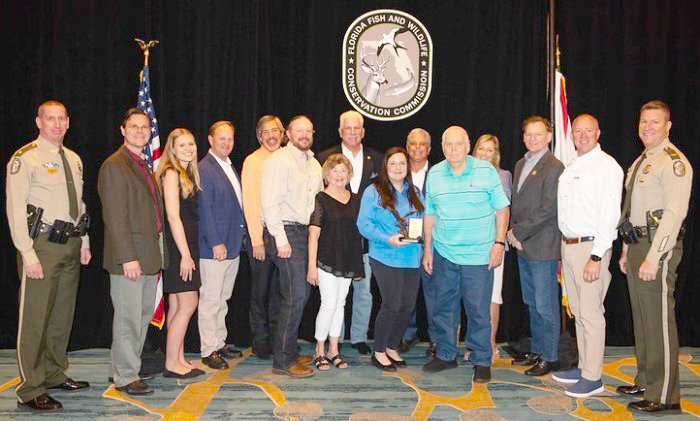 Jessica Pfohl named the Rodney Barreto Employee of the Year
Jessica has been the Statewide Intelligence Supervisor for the LE since 2017 and has supplied law enforcement officers with essential information to identify and prosecute criminals. In the past year, Jessica and her team have responded to more than 1,700 requests from law enforcement personnel for information related to identifying subjects, groups and businesses involved in illegal resource activity. They have created and posted 77 FWC Safety Bulletins that share vital public safety information with our agency members and outside partners. More than 600 tips have been received by the Intelligence Section via social media and the tip line, and just as many requests for information related to FWC employment applicants, both sworn and non-sworn. Jessica completes many of these tasks herself, and all of them are reviewed by her for validation and approval.
Her work supports not only LE, but the agency. Jessica spends hours monitoring and analyzing social media sites for threats to Commissioners, officers, biologists and contractors. During commission meetings and other high-profile events, Jessica receives information requests at all hours of the day and night and works to quickly provide the best information available.
Jessica’s professionalism is known throughout the law enforcement community. Federal and state law enforcement partners regularly rely on her expertise, and she serves as a member on a variety of committees and boards around the state focused on information sharing and the power of group thinking. Whether it’s vetting individuals highlighted in FWC publications, ensuring the hiring of the best qualified candidates, connecting the missing links in criminal cases, or protecting the FWC and its staff from outside threats, Jessica is a force behind the scenes and an often-overlooked key to protecting Florida’s natural resources.
Nominees for this award were Mindy Workman, Jessica Pfohl, Shelby Stanley, Devin Resko and Charlotte Jerrett.
|
|
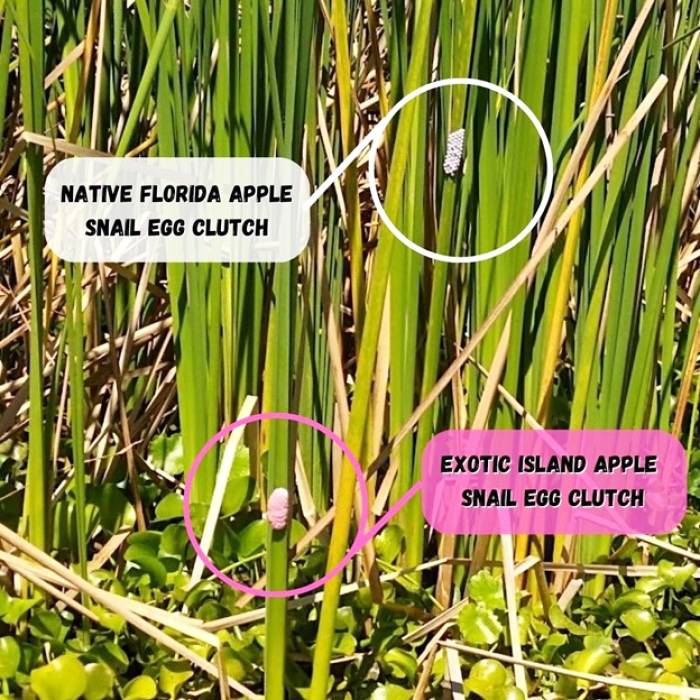 Ever been out on your boat or walking along the bank of a lake and noticed a clutch of eggs perched just above the water’s surface? They likely belong to snails! While conducting fish surveys, our freshwater fisheries biologists came across two clutches of apple snail eggs: one native and one invasive and exotic species. But, which is which?
The larger white eggs (approximately pea size) belong to the native Florida apple snail, which has around 20-80 eggs per clutch.
The smaller pink eggs (approximately pinhead size) belong to the exotic island apple snail, which are more densely packed and can have up to 2,000 eggs per clutch.
Remember to NEVER release aquarium species in the wild, especially in Florida where many exotic and invasive species succeed due to their rapid reproduction rate and high fecundity in our opportune climate.
Learn more about apple snails.
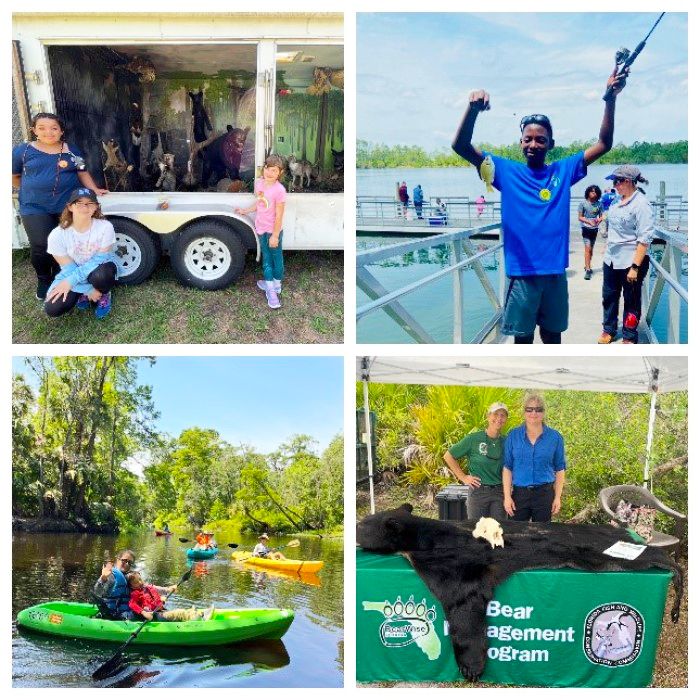 By Jean Marie Conner
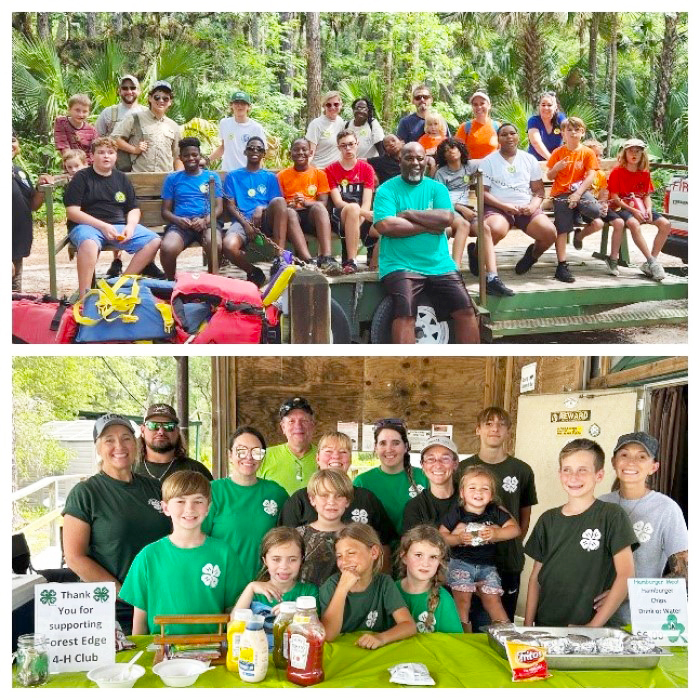
The 25th Annual Welcome to the Woods Event at Seminole Forest WMA was held on April 29. This event was created to introduce the public to the WMA and guide them through a variety of recreational opportunities to experience. For 25 years the FWC and the Florida Forest Service have been making this event a huge success. We move four groups of approximately 20-25 people each, between several different stations that give them an opportunity to try fishing, archery, hiking a section of the Florida National Scenic Trail and taking an Ecobuggy tour (with scrub jays seen along the way) up to Blackwater Creek where they get to canoe/kayak. They also see a variety of displays and exhibits including our FWC helicopter and how/why we use prescribed fire as a management tool to keep our forest healthy.
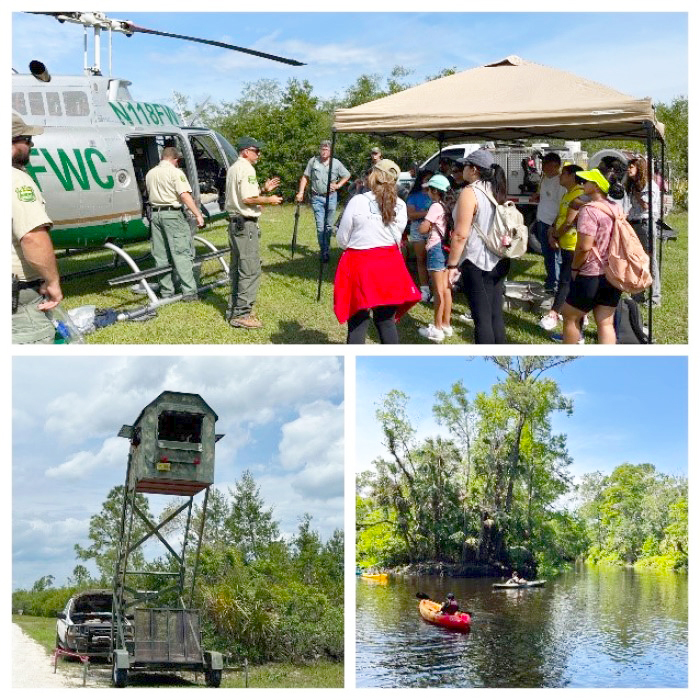 This year, I would like to thank FWC employees that help make this a success: Lt. Don Dougan (LE Pilot), Lt. Whitney Chase (LE), Officer Brandon Scrambling (LE), Earl Lundy (FWRI), Susanna Harrison (FWRI), Dave Turner (HSC), Alonso Reyes (HSC), Amy Orlando (Bear Response Contractor), Michael McDaniel (OED) and Call Center Staff for their assistance year after year with event registration.
|
|
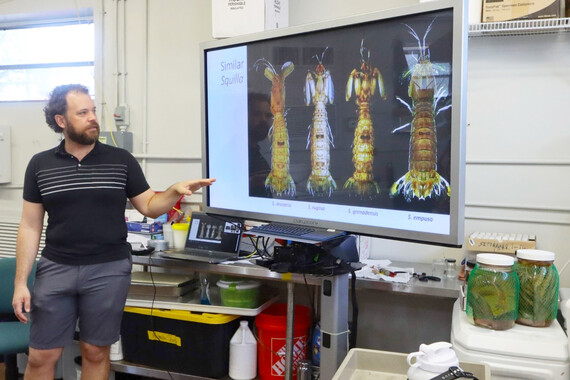 Crabs, sea cucumbers, urchins and more! Recently, the Florida Biodiversity Collection hosted the SEAMAP 2023 Invertebrate Workshop at FWRI Headquarters in St. Pete. Over five days, SEAMAP staff, partners and our team met to focus on the morphological differences of invertebrates commonly collected by the SEAMAP program from the western and northern shelves of the Gulf of Mexico. To compare the structural and morphological differences between species, attendees reviewed hundreds of dried, frozen and preserved specimens from our marine invertebrate collection.
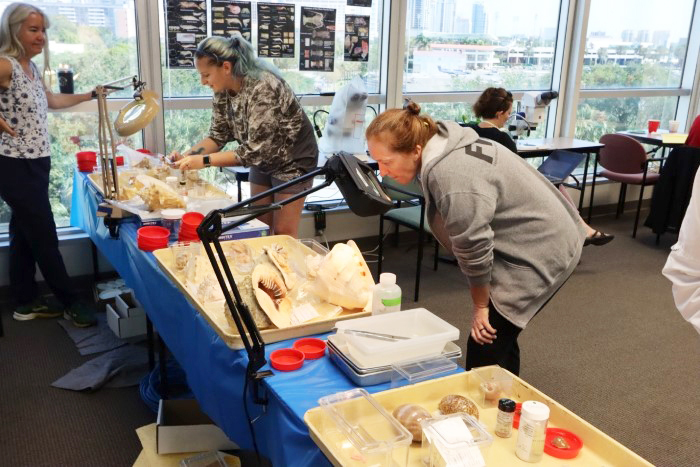 The FBC’s marine invertebrate collection contains over 136,000 cataloged lots of preserved specimens and tissues, and each specimen represents a unique record of the vast diversity of invertebrate marine life associated with Florida’s complex marine and estuarine environment. Learn more about the Florida Biodiversity Collection and the Marine Invertebrate Collection.
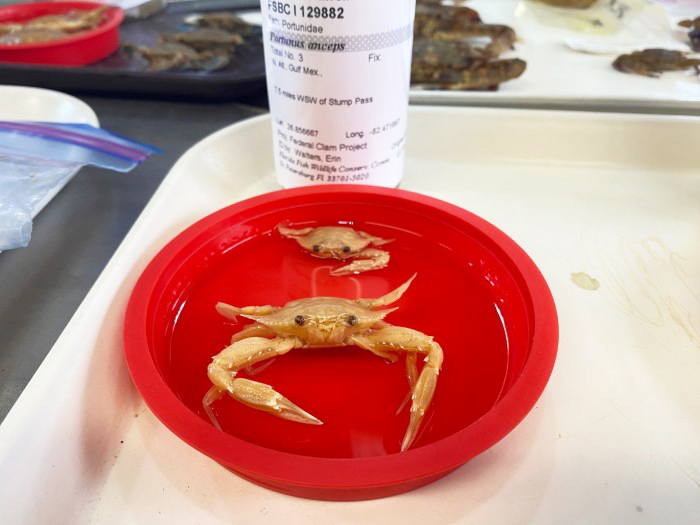 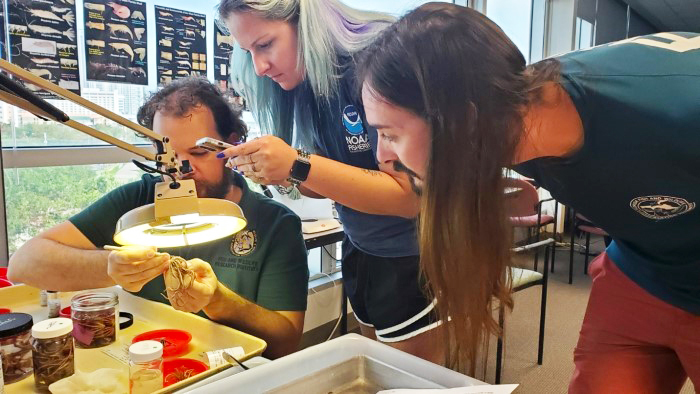
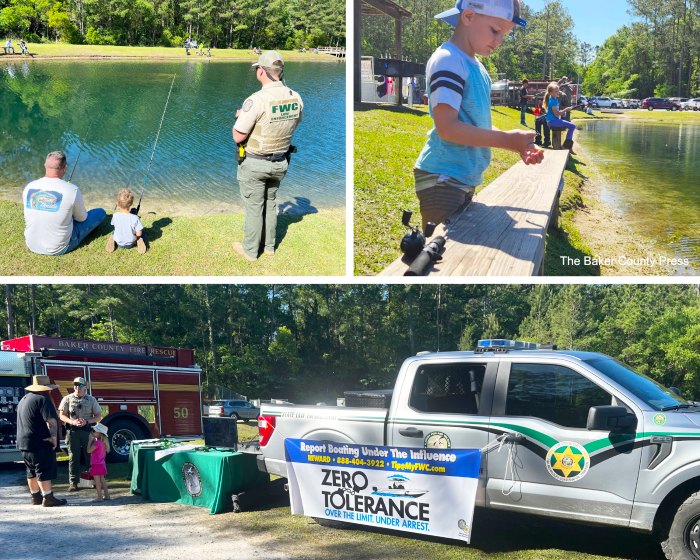 On April 15, the Baker County Veteran's Council hosted its annual Youth and Senior Fishing Derby at Veterans Memorial Park in Glen St. Mary. The pond offers excellent access to bank-bound anglers, with a few benches around the edges and four small docks to fish from. With help from FWC Officer Collin Waychoff, FFM Biologists Trevor Phillips and Scott Coerver stocked the pond with large, catchable-sized bass, bream and catfish collected from Bee Haven Bay, in Hamilton County. Bee Haven Bay is an 1,800-acre, highly productive lake with excellent numbers of large fish. This large system provided staff the opportunity to stock catchable-sized fish and enhance both the derby experience and future fishing experiences at Veteran’s Memorial Park.
FWC Officer Collin Waychoff was at the event and educated participants and guests about boating safety, freshwater fishing regulations, and ethical fishing practices. There were over 60 entries in the fishing derby and the top three winners received a trophy.
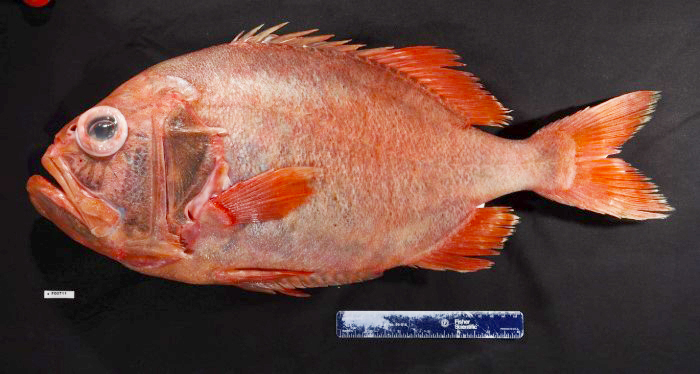
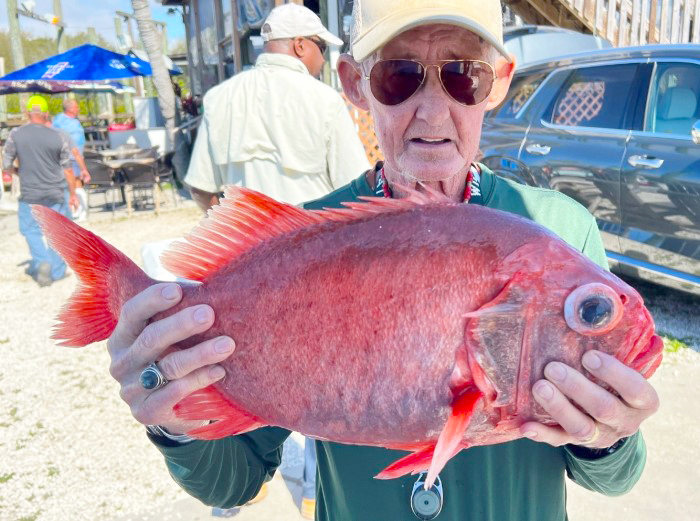 The big roughy, also known as Darwin’s slimehead (Gephyroberyx darwinii), is a deep-sea species found in the Atlantic and Indo-Pacific oceans. It is known for its interesting appearance with a reddish-brown color, rough and tough skin, and spines for camouflage and protection, and large eyes that help it see in the depths of the ocean.
The species is mainly found at depths of 200 to 500 meters (600 – 1,640 feet) but this specimen was caught at a depth of approximately 400 meters. The otoliths, ear bones that help determine the age of fish, were pulled and it was aged at 25-27 years old by our staff. We will be sending a tissue sample from this specimen for DNA barcoding and the results will be uploaded to the online Barcode Of Life Database. This is the fifth big roughy specimen in the Florida Biodiversity Collection but only the second for which we have tissue samples. Thank you to our staff member, Charlie Gardner, for assisting in the collection of this difficult-to-find deep-sea species!
Learn more about the Florida Biodiversity Collection and access the database.
|
|
|
This spring marks the 10th anniversary of the launch of the Gulf Environmental Benefit Fund. Over the past 10 years, working closely with partners, National Fish and Wildlife Foundation has awarded over 90% of the funds received under the terms of the criminal plea agreements involving BP and Transocean. In recognition of this important milestone, we are pleased to share a short video and a more comprehensive story map highlighting many important conservation outcomes these funds have helped to achieve across the Gulf Coast. The FWC's leadership, expertise and spirit of collaboration have been instrumental to the efficient and effective use of the $2.3 billion awarded under GEBF to date.
Video: https://vimeo.com/818396844
Story Map: https://storymaps.arcgis.com/stories/23cc310a859446b5bc431f5b85c4df55
We could not have gotten to this important moment without your strong support. On behalf of the NFWF Board and especially the staff, we wanted to express our appreciation for your partnership and hope you too share in a sense of great accomplishment these projects represent.
While our work continues, we didn’t want this milestone to pass without expressing our gratitude for your partnership.
Thanks again,
NFWF Gulf Team
|
|
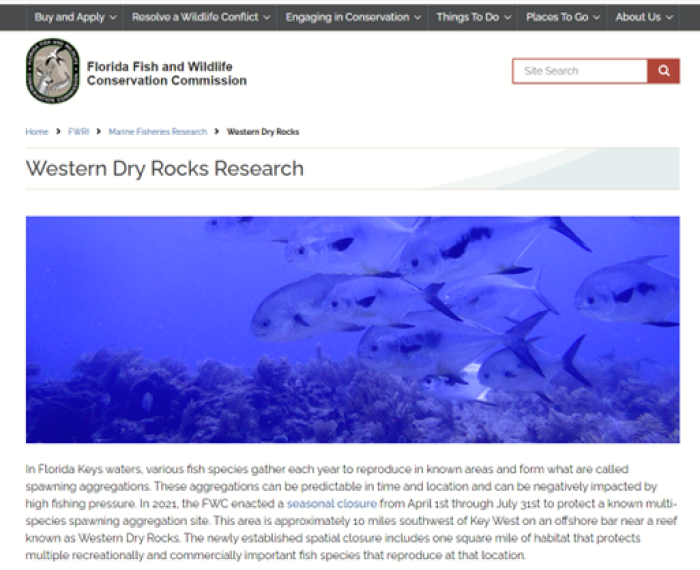 To learn more about our research efforts at Western Dry Rocks, head to our new webpage for more information on our objectives and methods. View regulations.
In 2021, the FWC enacted a seasonal spatial closure from April 1 to July 31 on an offshore bar near Western Dry Rocks to protect the fish species that aggregate there to spawn. The scientists on our Finfish Research Team are monitoring how reef fish communities change over time due to this spatial closure and using a variety of tools and methods to inform managers and stakeholders about the effects of this management decision. As part of these efforts, scientists have placed black acoustic tags in the belly of mutton and grey snappers near this area to track fish movements. When filleting harvested fish from this area, be on the lookout for these tags and report your findings to 786-647-8908 or keys.fish@myfwc.com to receive your reward!
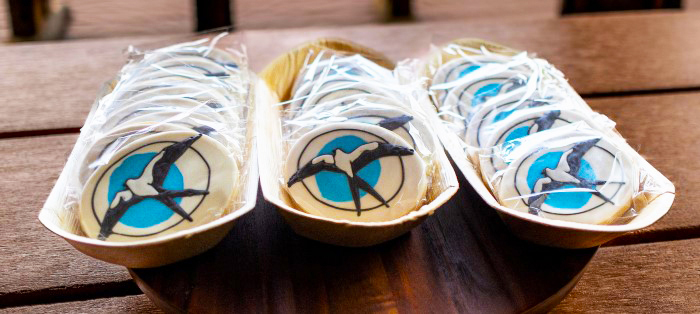
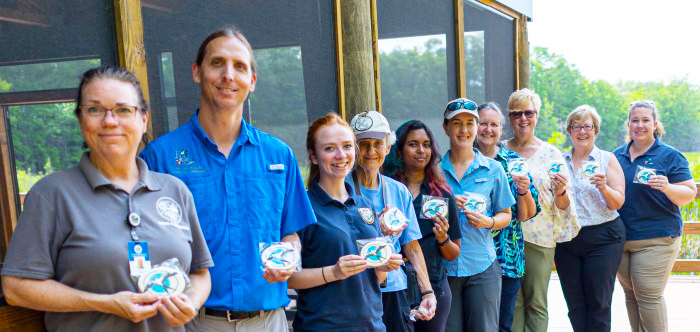
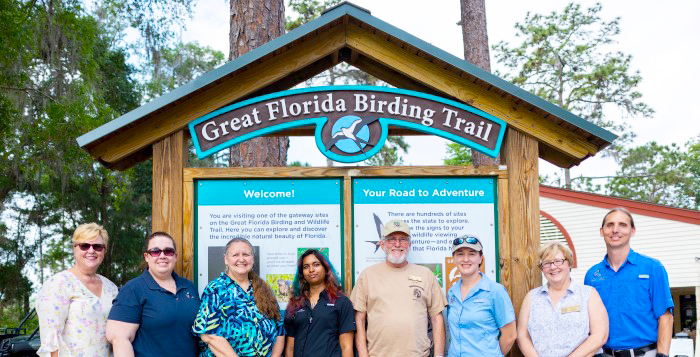 On Saturday April 15, PASO’s Wildlife Viewing Section welcomed Chinsegut Wildlife and Environmental Area as its ninth gateway site on the Great Florida Birding and Wildlife Trail. The GFWBT is a collection of more than 500 sites around the state that have been recognized as excellent places to view birds and wildlife. Gateways provide an entry point for the public to get involved with the GFWBT and wildlife viewing, and are selected in part for the superb wildlife education and interpretation programs offered by their visitors' centers and staff.
 Chinsegut WEA was acquired by the FWC in 1973, and Chinsegut Conservation Center opened in 1986. Today Chinsegut offers numerous opportunities for residents and visitors to get involved with outdoor activities, experience local wildlife and to unwind, rest and recharge in a natural setting.
Speakers at the event included Allie McCue, FWC Southwest Regional Director, Tammy Heon, Manager of Tourism Development for Florida’s Adventure Coast, Bev Hansen, head of Hernando County Audubon, Lauren Ali, coordinator of the GFBWT, and Hana Brinkley, head of Chinsegut Conservation Center.
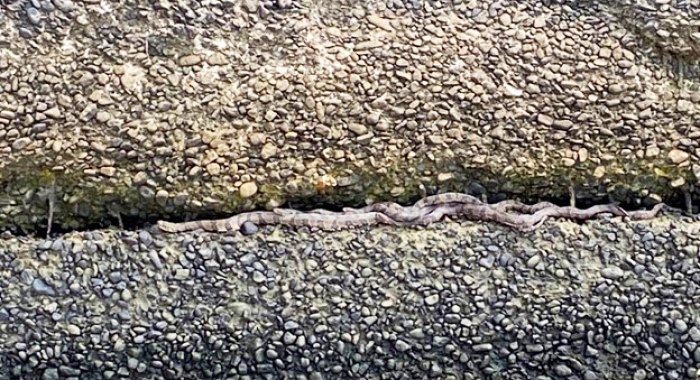 Our FWRI Freshwater Fisheries biologists recently observed a breeding congregation of brown water snakes (Nerodia taxispilota) along the concreate spillway of the Jackson Bluff Dam in Leon County. Brown water snakes are the most common water snake along rivers in Florida and can be found throughout the state except for the Keys.
These snakes are native and nonvenomous, and are light brown in color with darker square-shaped markings, have a light-colored belly with dark blotches, and a narrow and pointed head. Brown water snakes can grow up to 4.5 feet in length and are good climbers that often bask on tree limbs. Ever seen a snake fall from overhanging branches into the water or maybe even into your boat? There’s a good chance this may have been the culprit.
There are several species of water snakes that call Florida home, learn more about them.
|
|
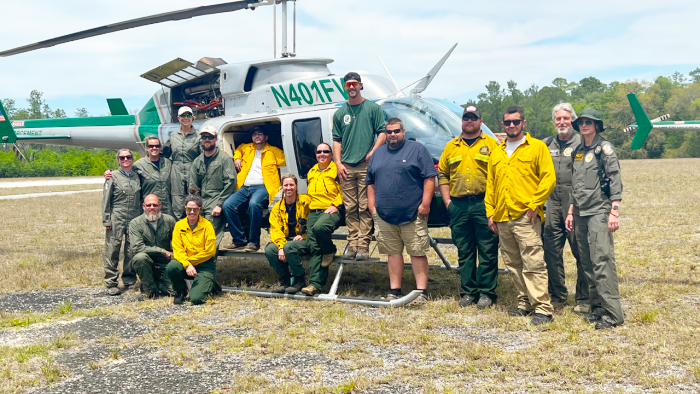
 Red Dragon, Aerial Burn Training
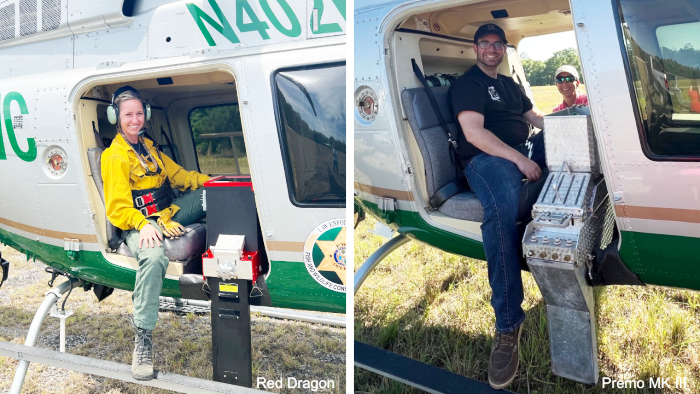
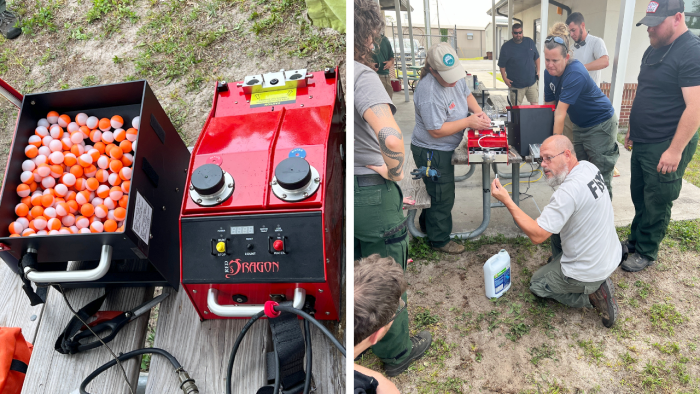 On April 18-19, Allan Hallman, HSC Wildlife and Habitat Management Biological Scientist, hosted FWC's first Red Dragon training together with the Premo Mk III AID (aerial ignition dispenser) training at Camp Blanding. Both machines are helicopter-mounted devices used to strategically dispense aerial spheres that ignite controlled or prescribed burns.
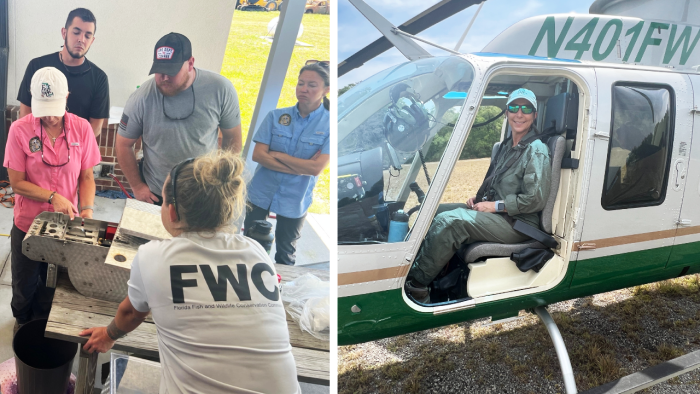 The training was a cooperative effort with Camp Blanding Environmental staff and FWC Law Enforcement Pilots Lt. Cara Cain and Todd Tolbert. Jean-Marie Conner (HSC-WHM) and Jeff Ginter (DMA) assisted as instructors for seven HSC staff and three partner agency personnel to complete the training.
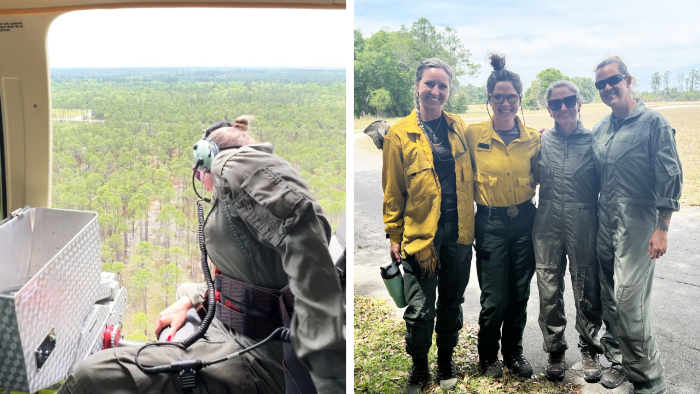
 Prescribed fire is one of our primary land management tools and aerial ignition is essential for large areas such as Big Bend WMA or Camp Blanding. However, another factor that is becoming more important is smoke management.
"A well-planned and executed aerial burn allows us to burn acreage quicker so that our smoke gets up into the air and dispersed earlier in the day, which helps mitigate any lingering smoke issues in the evening," said Scotland Tally, an HSC-WHM Biologist.
 This training is vital to retain a larger pool of certified staff so FWC can continue utilizing aerial burns. Currently, our agency uses both machines, but the Red Dragon will soon phase out the Premo MK III because it is smaller, lighter, less complex, lower cost and facilitates better fire behavior.
Ahoy, Safety! NASBLA Boat Accident Class Makes a Splash at Polk State College
FWC Officers and Law Enforcement Agencies Come Together for an Action-Packed Week of Learning and Collaboration
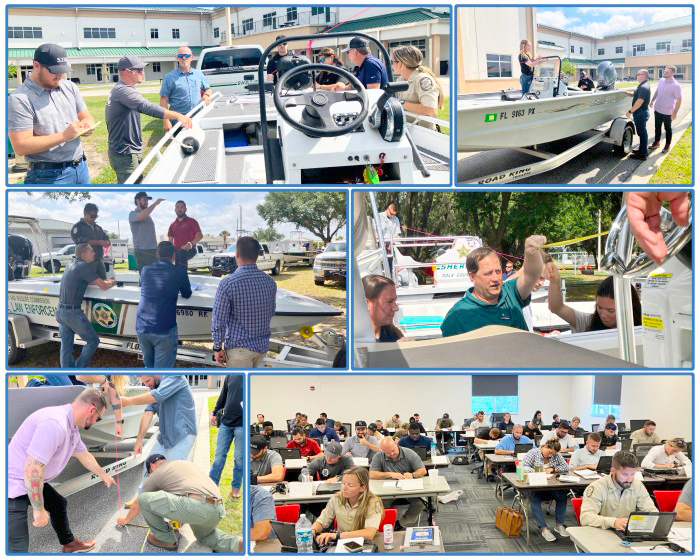
Ahoy, readers! Between April 24 and 28, Polk State College made waves as the host of a National Association of State Boating Law Administrators boat accident class. The event drew 44 students from across Florida, including FWC officers and representatives from Polk County Sheriff's Office, St. Johns County Sheriff's Office, Auburndale Police Department, and Clearwater Police Department.
Throughout the week, participants engaged in various activities designed to enhance their boat accident investigation skills. One such activity involved officers practicing baseline offset measurements, a crucial component of accident reconstruction. With camera in hand, attendees captured their progress, providing photographic evidence of their commitment to mastering the art of accident investigation.
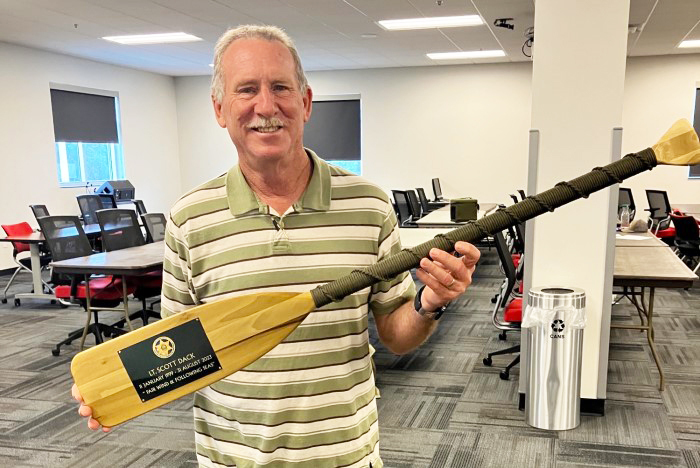 The event also served as a celebration and farewell to a beloved figure in the boat accident investigation community. Lt. Scott Dack, who has been a dedicated instructor with the program for 13 years. As he prepares for retirement in August, Lt. Dack's expertise and passion for boating safety will undoubtedly be missed by many.
The NASBLA boat accident class at Polk State College provided a unique opportunity for officers and law enforcement agencies to learn from one another, fostering camaraderie and collaboration. The skills and knowledge gained throughout the week will no doubt contribute to improved boating safety for everyone on the water.
Fair winds and following seas to Lt. Scott Dack and all the participants in the NASBLA boat accident class! Your commitment to boating safety is an inspiration to us all.
 Thank you, building owners, for hosting rooftop-nesting shorebirds
Congratulations, youth artists! FWC announces winners of the Florida State Fish Art Contest
  UF|IFAS Natural Resources Leadership Institute Award Winners
The NRLI is a specialized leadership training program geared toward natural resource professionals.
In Florida, time-consuming and expensive disputes often emerge over issues such as endangered species, land use, coastal and marine resources, and water quality and quantity. Effective leadership in managing such issues requires a specialized set of skills, tools, and strategies to build trust and promote collaboration among competing interests. In recognition of this need, the Florida Natural Resources Leadership Institute was founded in 1998. Its mission is to bring together professionals from sectors that impact or are impacted by natural resource issues and provide them with the training required to find inclusive solutions to seemingly intractable problems.
NRLI is an eight-month professional development program. Each intensive three-day session is held in a different part of the state and focuses on a specific and contentious natural resource issue.
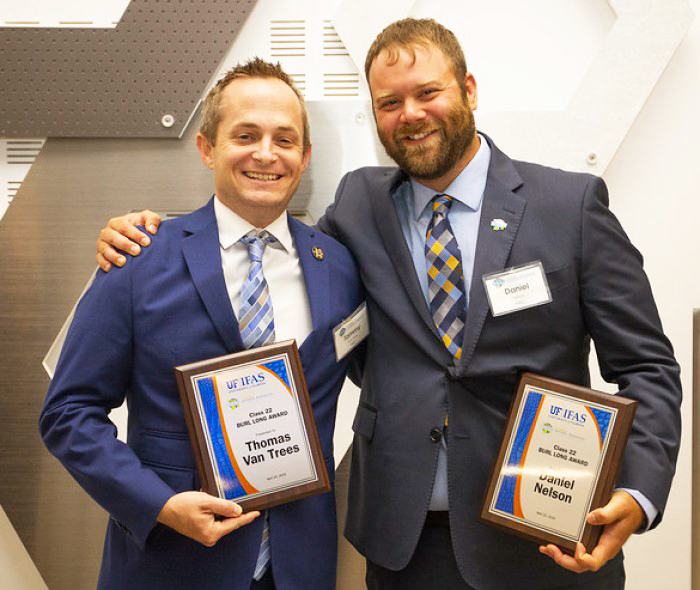
This year, Class 22 included two FWC employees, Daniel Nelson and Capt. Tommy Van Trees. Tommy and Daniel were awarded the Burl Long Award at graduation. The Burl Long Award recipients are chosen anonymously by their peers and there is rarely a tie but this year there was not only a tie but it was for the two Fellows from FWC!
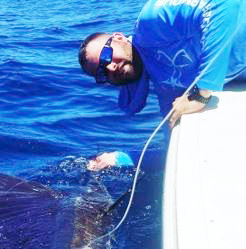
Daniel Nelson, Biological Scientist IV, Freshwater Fisheries Research
Daniel grew up in central Wisconsin, enjoying the outdoors, generally with his grandfather by his side. He started volunteering with the Wisconsin Department of Natural Resources in high school, then pursued a B.S. in Fisheries Science at the University of Wisconsin-Stevens Point and a M.S in Wildlife and Fisheries Science at South Dakota State University.
Since graduation, Daniel has worked with FWC, within FWRI. He currently is the Project Leader of the Long-Term Monitoring project, which allows him to work in all corners of Florida. He and his team collaborate with multiple divisions within the FWC and with external agencies and organizations to monitor freshwater fish populations statewide.
Daniel is also active in the American Fisheries Society and is the current Past President of the Florida Chapter of the American Fisheries Society.
Daniel enjoys hunting, fishing, traveling, and finding a good craft beer.
|
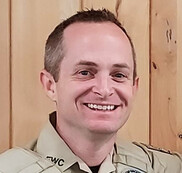
Capt. Tommy Van Trees
Capt. Tommy Van Trees started his career in 2009 with the FWC in Collier County, which was his first duty station after graduating from the law enforcement academy. Tommy was then promoted to investigator in Collier County and then to the rank of patrol lieutenant in his hometown of Tampa. After serving as a patrol lieutenant and the investigations lieutenant in Tampa Bay, Tommy became the investigations captain for the Southwest Region.
His most recent move has been to Tallahassee where he is now the captain of Statewide Operations. This position has him coordinating statewide programs for FWC including the Special Operations Group, K-9 Program, Offshore Patrol Vessel Program, Drone Program, Unusual Mortality Events and the Emergency Operations Center.
Tommy has a bachelor’s degree in criminal justice from Indiana University. He is a huge Tampa Bay Lightning Hockey fan but his greatest love of all is his wife Sarah and his small daughter Sylvie.
|
 Citizens and FWC customers were so impressed by the following employees, they told us about it through email on the "Praise an Employee" page of MyFWC.com/Contact. When your coworkers receive kudos, help share the good news by contacting Kelly.Broderick@MyFWC.com.
Lt. Jim Fillip
Jim goes above and beyond for the community. He cares about people and works hard. Jim has great morals and integrity.
|
|

|
FWC employees have some of the most interesting jobs ever! Here are some of our employees doing what they do best. Send your photos of FWC employees in the office and in the field to Kelly.Broderick@MyFWC.com.
|
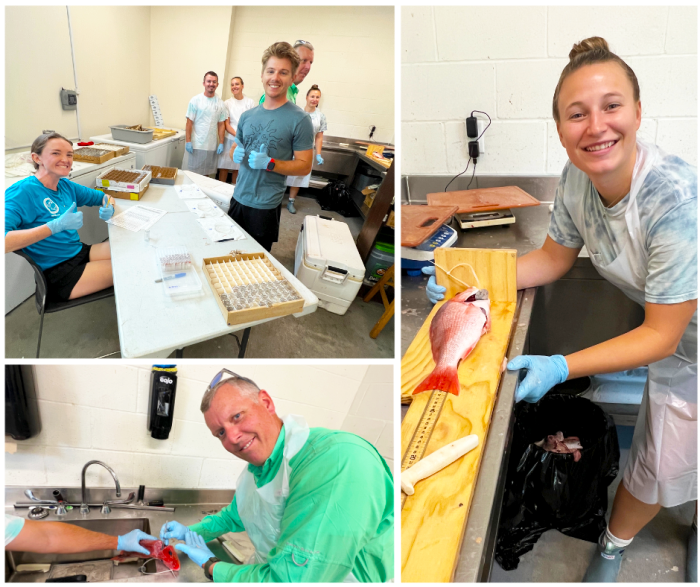 On April 28th, Regional Director Chris Wynn and Public Information Coordinator Ashley Williams visited the Jacksonville University FWRI lab, where FWC biologists and JU interns collected biological samples from Atlantic red snapper. Each fish was measured, weighed, had one otolith extracted and a section of a fin was cut for genetic analyses. This biological information is essential to population assessments.
The FWC Southwest Division of Law Enforcement recently held its annual regional meeting. The event celebrated the exceptional efforts of various officers in the division and named the Southwest Dive Team as the Regional Team of the Year. Attendees were also introduced to the new drone program, which promises to enhance enforcement and conservation efforts in the region. The meeting showcased the dedication and achievements of FWC's law enforcement personnel and highlighted the importance of their work in protecting Florida's natural resources. Video about the drone program - https://gopro.com/v/MJBlKLqBn0DMq
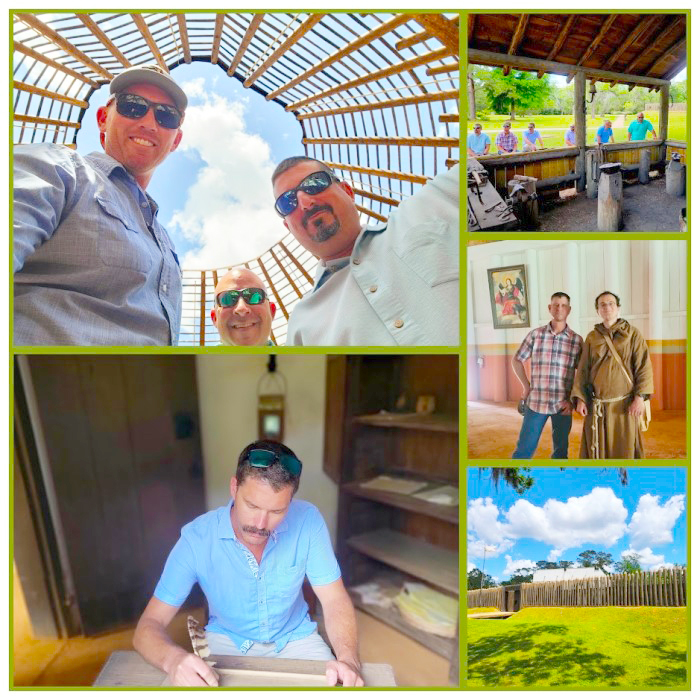
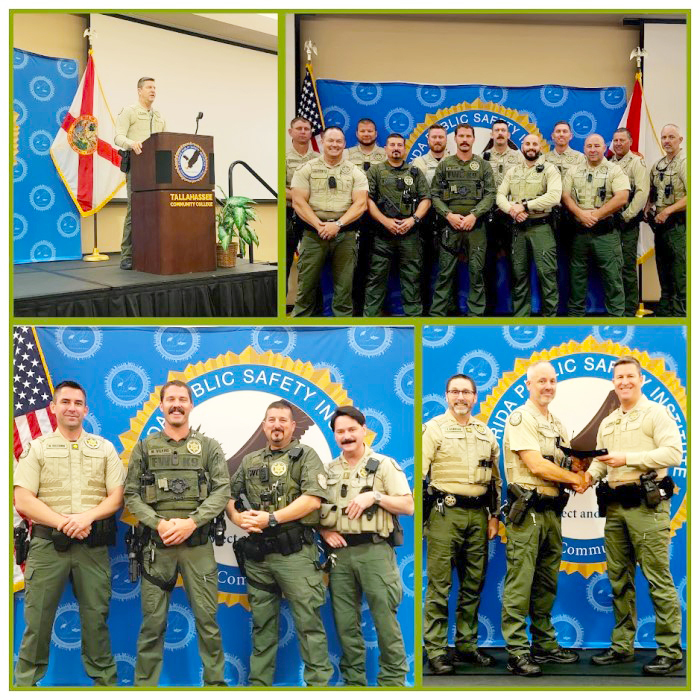 Class 4 of the Advanced Conservation Academy has wrapped up in Tallahassee. For the final leg of this journey, ACA members started by spending the day paddling down one of Florida’s most beautiful and pristine rivers, the Wacissa. That was followed by a tour of the Bryant Building and a meeting with FWC leadership and then a site visit to the historic San Luis Mission Park. On the final morning, ACA members attended a ceremony at the Pat Thomas Law Enforcement Academy in Havana, where they officially graduated. The 12 graduates of this year’s class included Dan Hahr, Matt Webb, Joey Burnsed, Matt VanNess, Chase Platt, Luis Merizio, Ben Norbrothen, Mike Janzen, Alex Piekenbrock, Joe Simpson, Adam Brown and Malachi Wilkins. The class was coordinated by Capt. Adonious Duhart.
Over the course of the last year, this group has been through a lot of highs and lows, but it is through this turbulence that formed a bond that will go well beyond their careers. Congratulations ACA Class 4!
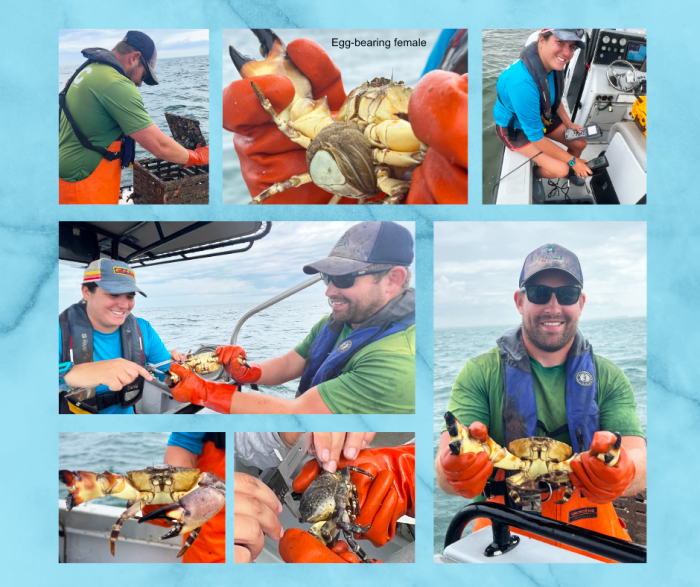 On April 24, FWRI Crystal River researchers Jonathan Brown and Tracey Vlasak traveled from Cedar Key to offshore stone crab trap lines to clean the traps and collect data on water quality conditions and stone crabs. The stone crabs were measured and checked for sex, reproductive state, molt condition and regeneration status of claws. Then the live crabs were released back into the water. Data collected during these projects provide new insights into the population biology of the stone crab and the stone crab fishery.
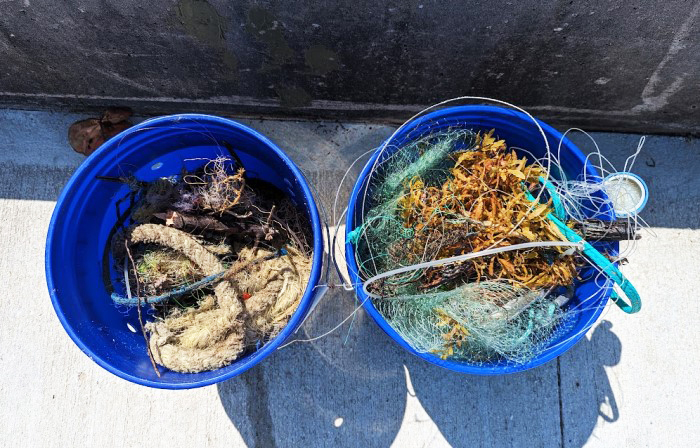
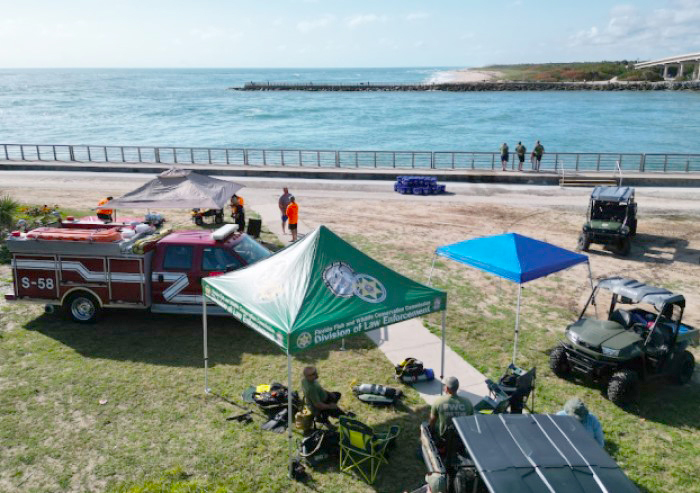 The FWC Division of Law Enforcement Northeast Dive Team hosted a three-day multi-agency event April 25-27, to clean the Sebastian Inlet and promote environmental conservation. The event marked the second annual clean-up, highlighting FWC's continued commitment to utilizing all of its divisions and resources to ensure clean and safe waterways along the pier.
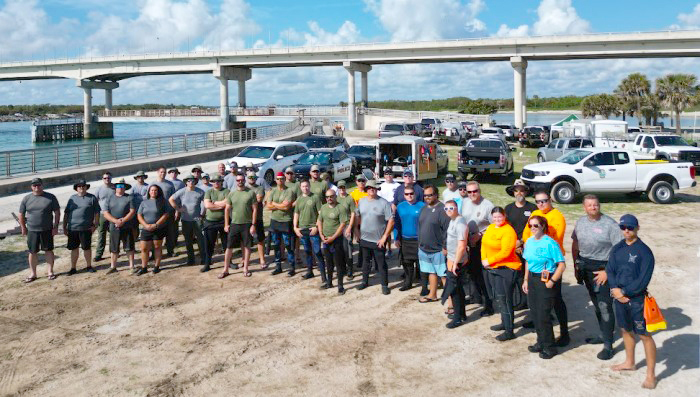 The focus of the event was to remove debris and litter from the inlet and surrounding areas while educating the public on the importance of protecting and preserving Florida's natural resources. Participants included members of FWC, U.S. Fish and Wildlife Service, Orange County, Lake County, the Sebastian Inlet State Park, local volunteers and more.
During the event, participants worked tirelessly to remove hundreds of pounds of debris and litter from the inlet and surrounding area, including plastic bags, bottles, fishing lines and other hazardous materials.
Regional Commander Jay Russell praised the joint cooperation between agencies, stating, "It's always encouraging to see different agencies come together to work toward a common goal. Events like these are not only important for the conservation of our natural resources but they also support Florida's eco-tourism efforts, which are vital to our local economies."
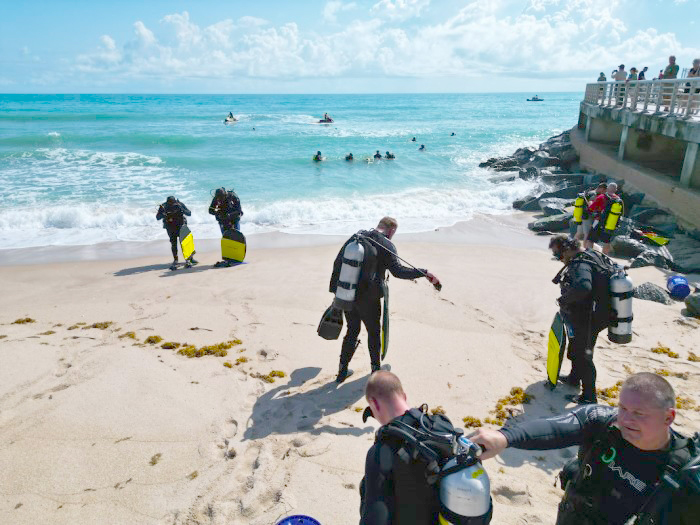 This event is just one example of FWC's ongoing efforts to promote conservation and stewardship of the environment. Through partnerships with other agencies and organizations, FWC is able to utilize all of its resources to protect Florida's natural resources and ensure they remain healthy and thriving for generations to come.
See video clips and additional photos: photos.app.goo.gl/xwVNtwSQce2MXSWE8
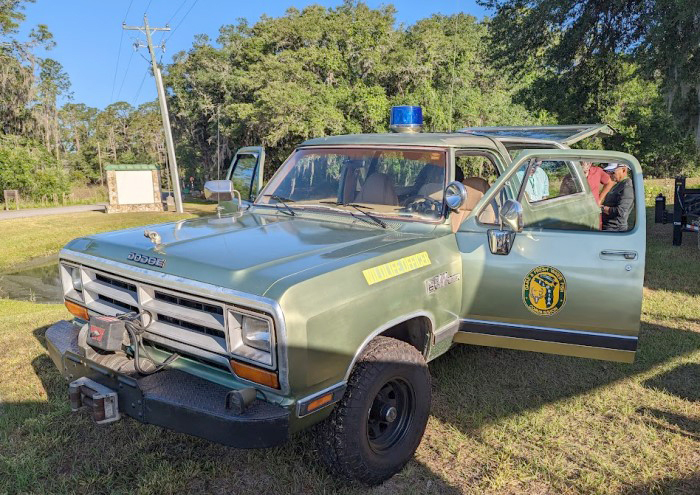
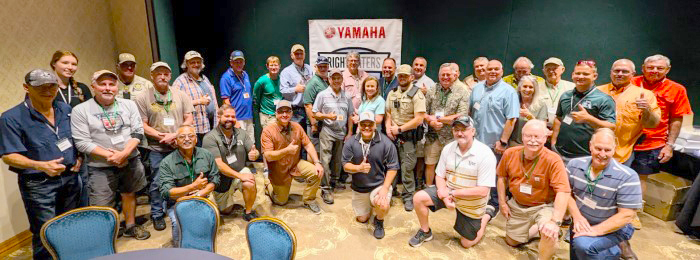 The FWC Officer Association recently hosted its second Annual Retired Officers Appreciation Outing, a two-day event filled with camaraderie, friendly competition and recognition of the retired officers' contributions to the FWC. The event began at the Mission Inn Resort, where attendees enjoyed lunch, fellowship and a round of golf. The following day, participants gathered at Richloam Fish Hatchery for a fishing tournament and a turkey shoot, along with another delicious lunch prepared by the Northeast and North Central cook teams.
 This year's event was made even more special with the raffle of a 25 HP Yamaha outboard motor. The 2023 Retired Officers event was a resounding success, with attendees already looking forward to next year's gathering.
Winners of various competitions were announced, including Mark Warren for the longest drive, Rob Gerkin for the closest to the pin, and Team FMP Class 13 for the golf tournament. Humberto Navarro, Kevin McKinney and Mitts Mravic took the top three spots in the turkey shoot, while Rob Gerkin, Steve Wayne and Chris Harris won the fishing tournament. Mitts Mravic was the lucky winner of the outboard motor raffle and is now shopping for a new boat to complement his prize.
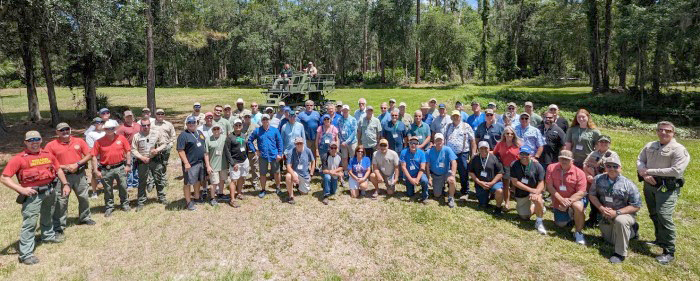 The event's success was made possible by the hard work and dedication of many individuals who contributed their time and effort. The FWC Officer Association looks forward to hosting an even better event in 2024, celebrating the commitment and achievements of its retired officers.
Google Album from the two days: photos.app.goo.gl/qgxrHwaLH88ZqAbo9
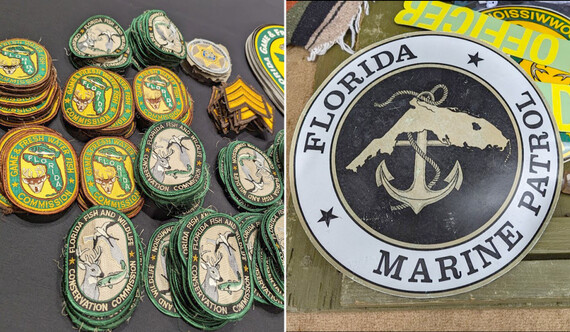
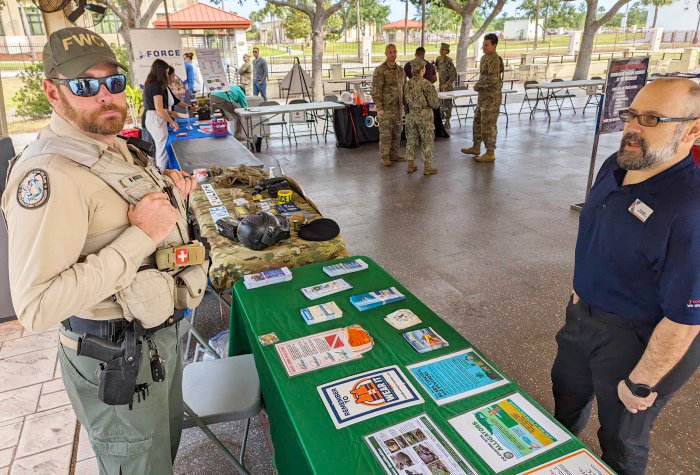
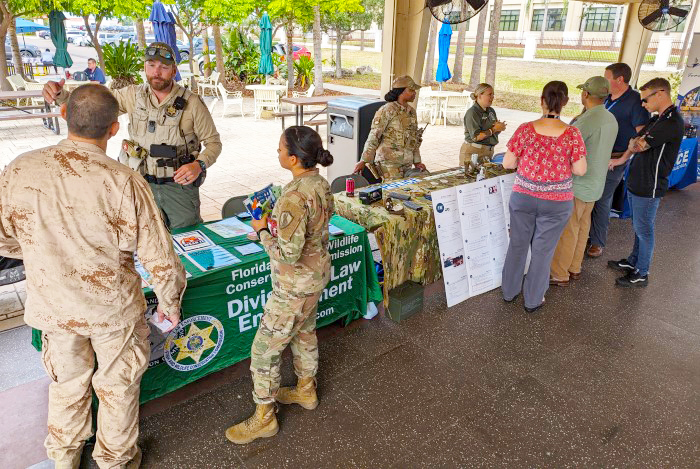 FWC Officer Rivard and PIO Rothchild recently attended MacDill's Safety & Readiness Expo, an event aimed at promoting safety and preparedness among the community. The officers were there to represent the FWC and to raise awareness about wildlife conservation and safety.
Throughout the expo, Officers Rivard and Rothchild engaged with attendees, discussing the importance of wildlife awareness and responsible interactions with Florida's diverse animal species. They provided valuable information on how to maintain safe and respectful relationships with wildlife, as well as how to respond in case of encounters with potentially dangerous animals.
By participating in MacDill's Safety & Readiness Expo, FWC Officer Rivard and PIO Rothchild demonstrated the FWC's commitment to promoting a safe and harmonious coexistence between people and wildlife in Florida. Their presence at the event not only helped educate the public on the importance of wildlife conservation but also reinforced the FWC's role in safeguarding the state's natural resources for future generations.
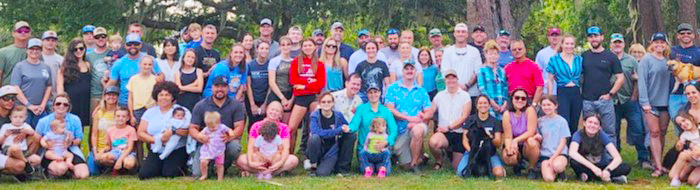
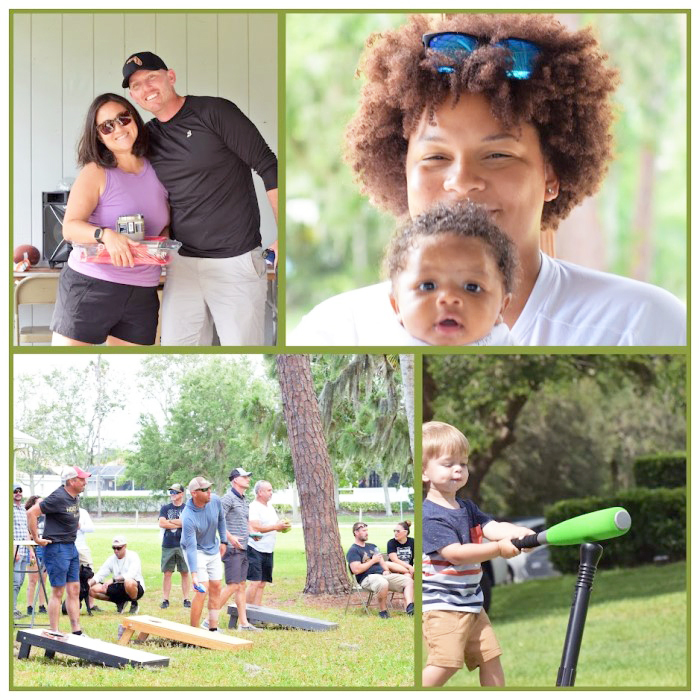
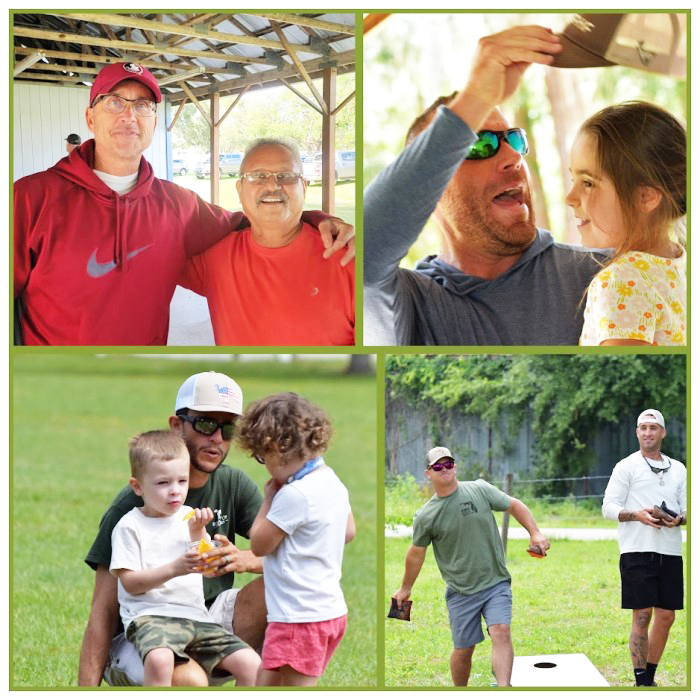 Southwest Regional Lt. Steve Stasko recently organized the first South Coastal Family Barbeque in Sarasota. This event was specifically for FWC officers and staff out of the Fort Myers area to bring their families and enjoy some much-needed fun and fellowship. The event was catered by Capt. Tracy Bontrager and was supported by the FWC Officer’s Association. Prizes for “best mac ‘n cheese dish, best cookie and of course cornhole brought out the competition. Nearly 80 people attended this inaugural event and it was such a success that the planning has already begun for the next one!
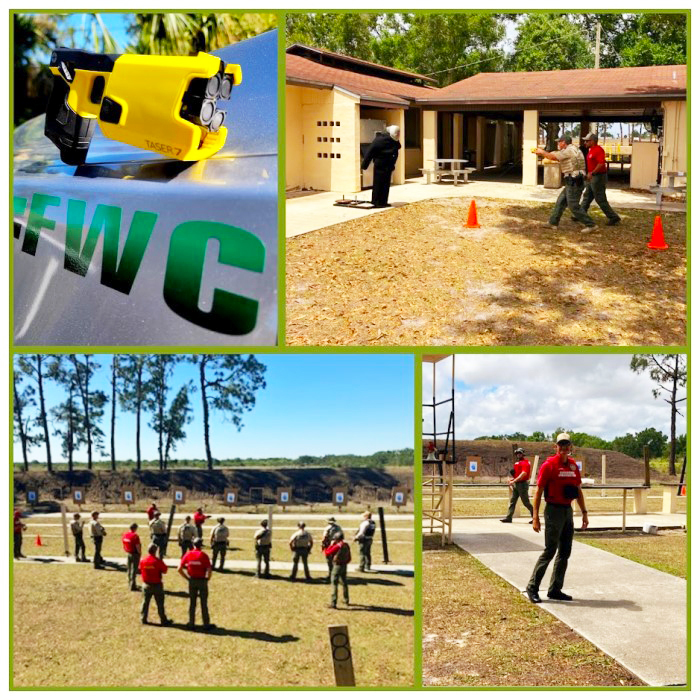 Southwest Regional Training Lt. Aaron Franks, and his team are in the process of transitioning FWC officers from the Taser X2 to the new and improved Taser X7. This is a more user-friendly platform, which allows our officers to cycle between short and long distances when assessing a threat and provides them with a more advanced tool to keep them, along with members of the public, safe during patrol. The training for this transition consists of online, classroom and practical exercises that are very thorough and realistic, and, when complete, will produce better prepared and equipped officers representing the agency.
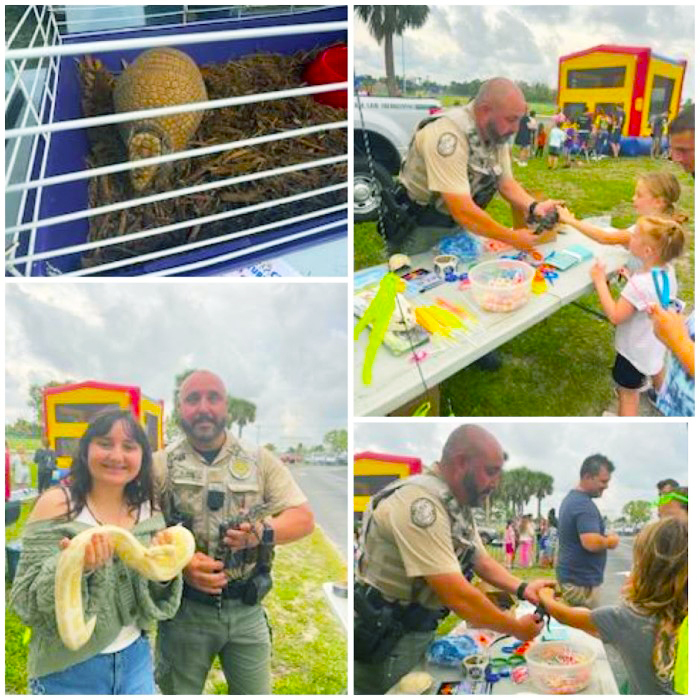 Southwest Region’s Senior Officer Brad Bell stole the show at this year’s Gulf Elementary School Spring Festival in Lee County. In partnership with the Shell Factory in Fort Myers, Brad displayed several animals to students, family and staff, talking about wildlife safety, conflict avoidance and responsible pet ownership. Nearly 700 people attended this year’s event. Great job representing FWC, Brad!
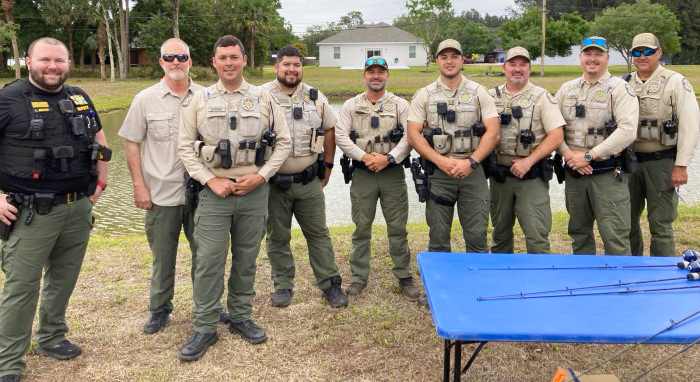
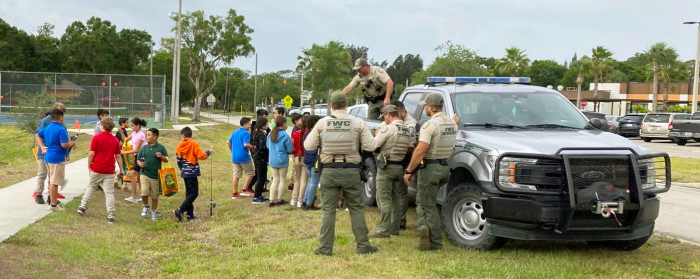
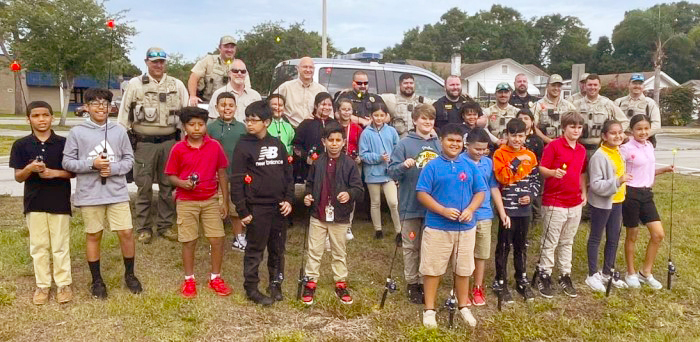
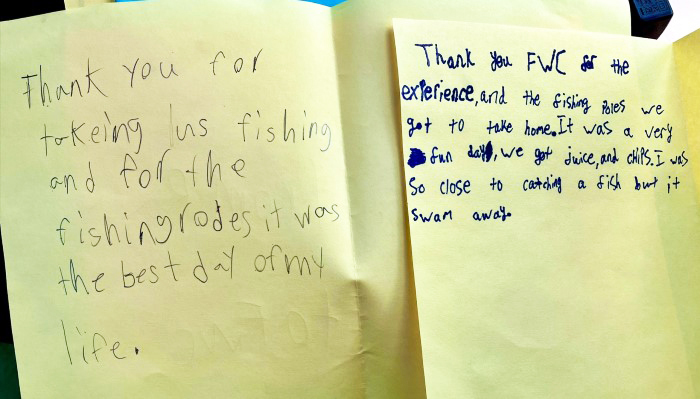
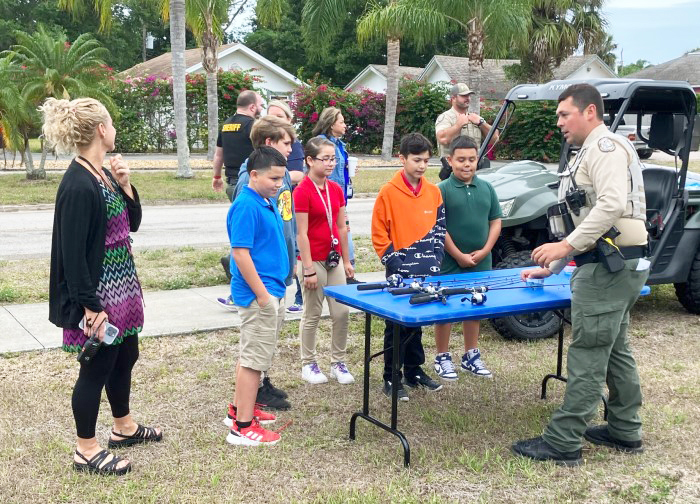 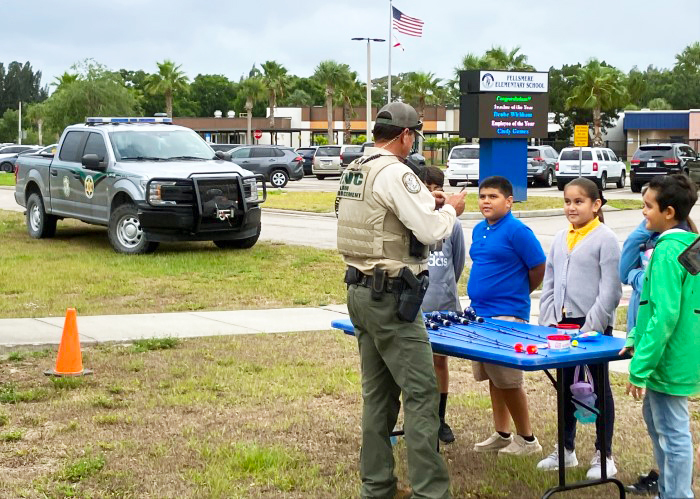 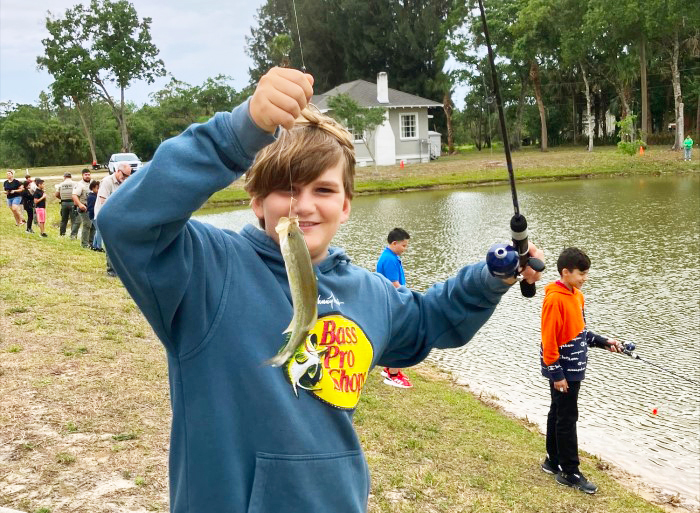 Officers in Indian River County conducted a fishing clinic for fourth grade Fellsmere Elementary school students. This event focused on familiarizing the youth with the FWC’s mission, basics of being a responsible steward of the resource and catching fish! Twenty-two students received a fishing pole and goody bag with dual language regulations to take home to their families.
|
|
The deadline for the June 5 issue is Tuesday, May 30.
The Inside Job is a bi-monthly newsletter featuring
the employees and programs of the FWC.
Send your submissions, comments and questions to Kelly.Broderick@MyFWC.com.
|
|
|
|
|