|
 The FWC Employee eNewsletter
April 2022
Having trouble viewing this email? View it as a website.
 The next Commission meeting will be Tuesday and Wednesday, May 3 and 4, in Gainesville.
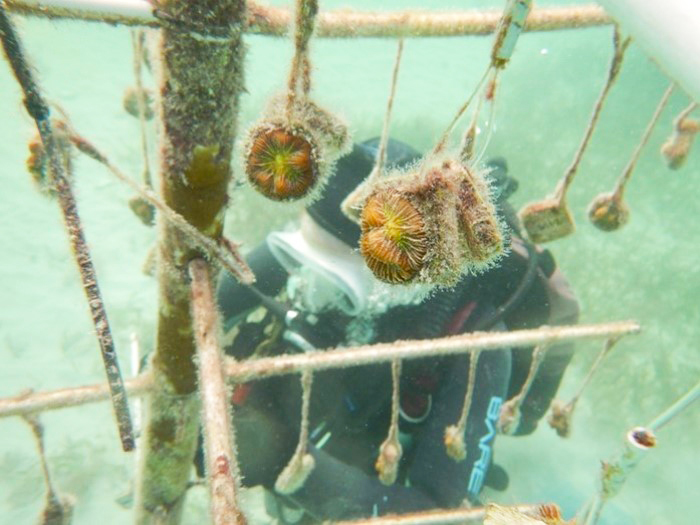
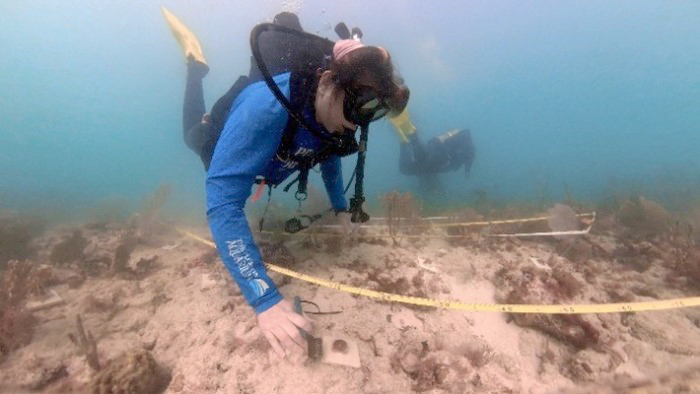 Scientists from FWC and the The Florida Aquarium are experimenting with outplanting offspring of rescued corals back into the wild!
Studies show stony coral tissue loss disease doesn’t seem to impact smaller corals but certain fish love to munch on newly outplanted baby corals. FWC is conducting experiments to find the best way to protect the corals from being eaten by fish. Will it be predator exclusion devices (our fancy way of saying “BBQ skewers arranged in a tent around the coral”)? Allowing the corals to acclimate in an in-ocean “nursery” to acquire natural chemical defense cues? Or have them lose some of their irresistible baby fat first? Stay tuned as the data comes in!
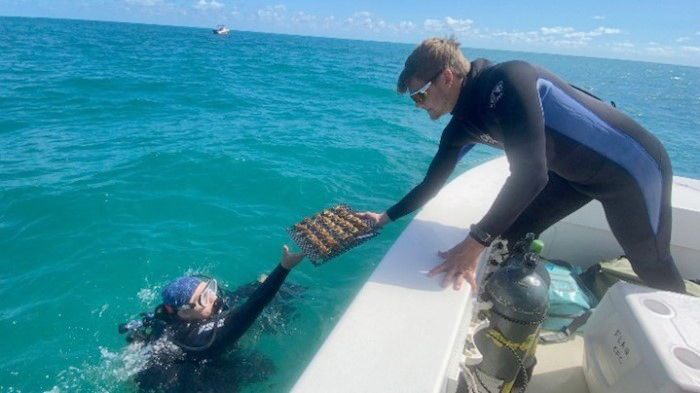 After finding suitable areas on the reef, creating the monitoring plots, mapping out the sites and epoxying ceramic tiles to the reef that the coral outplants would be attached to, the experimental plots were ready for their corals. In early February divers braved the 68 degree waters and outplanted 463 corals of two species – boulder brain coral and grooved brain coral - onto two study reefs in the Middle Keys. Corals will be routinely monitored to document survival and predation rates between acclimated and non-acclimated corals and corals with and without predator exclusion devices.
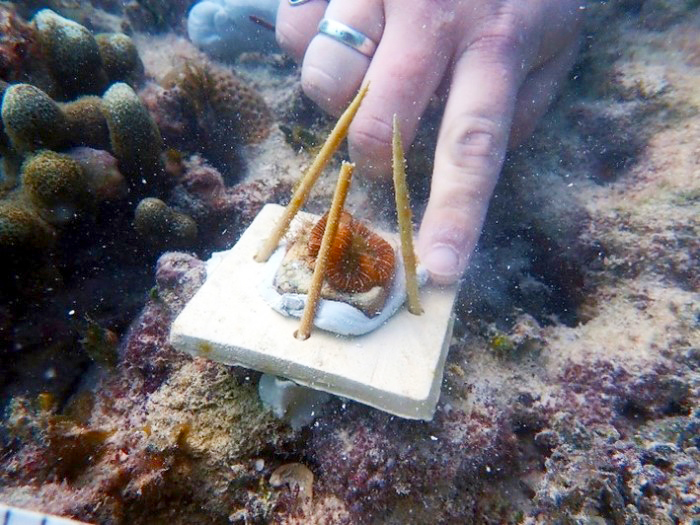 Experiments such as this are the next phase of the Coral Rescue Project – Propagation and Restoration. In areas of Florida’s Coral Reef where the disease has abated, the time may be right to start restoration efforts. Only experiments like these will tell us for sure.
All work done under NOAA Permit FKNMS-2021-224. Nails were installed in bare areas and will be removed at the end of the experiment.
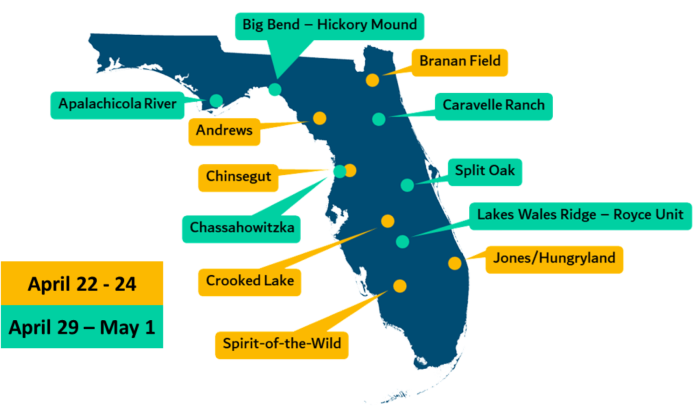
 Join us for Florida WildQuest 2022! FWC employees, friends and family are encouraged to grab their mobile devices and go on a wild adventure to complete scavenger hunt missions and discover some of Florida’s best spots to see animals and enjoy the outdoors. This year’s event will take place on 12 wildlife management areas across the state during the weekends of April 22-24 and April 29-May 1. Visit FloridaWildQuest.com to learn more!
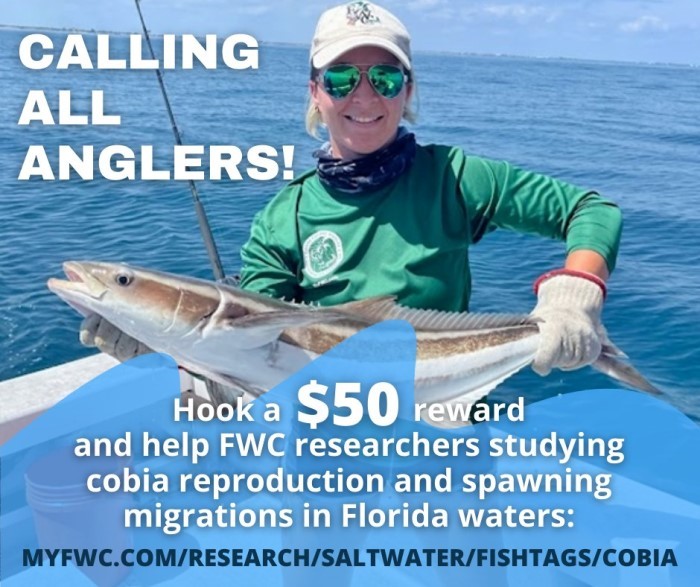 FWC researchers are using surgically implanted acoustic transmitters to monitor the movements of Florida cobia and learn more about their spawning migrations. Scientists are also working with the public to sample reproductive organs of harvested cobia. This data will determine if and where cobia spawn along Florida’s coasts.
How can you help and earn $50?
- Harvest a cobia between March and September, donate the carcass to receive a $50 reward!
Keep the cobia whole or filleted (WITH ORGANS INTACT) on ice.
Call for a biologist to meet you and receive your $50 reward:
Atlantic Coast (Jupiter): 561-510-5620.
Gulf Coast (Charlotte Harbor): 727-220-7108.
- Catch a tagged cobia, release it in good condition, report it to receive a $50 reward and t-shirt!
Take a picture of the plastic dart tag (near dorsal fin).
Record the tag number, fork length, date, and general location of catch.
Release the fish in good condition with tags intact.
Call 561-882-5975 to report the cobia and get a reward and t-shirt.
*If you accidentally harvest a tagged cobia, report all information listed above and return BOTH the internal acoustic transmitter (inside body cavity) and external plastic dart tag (near dorsal fin) to:
Attn: Jim Whittington
Florida Fish and Wildlife Conservation Commission
Tequesta Field Laboratory
19100 SE Federal Hwy
Tequesta, FL 33469
|
|
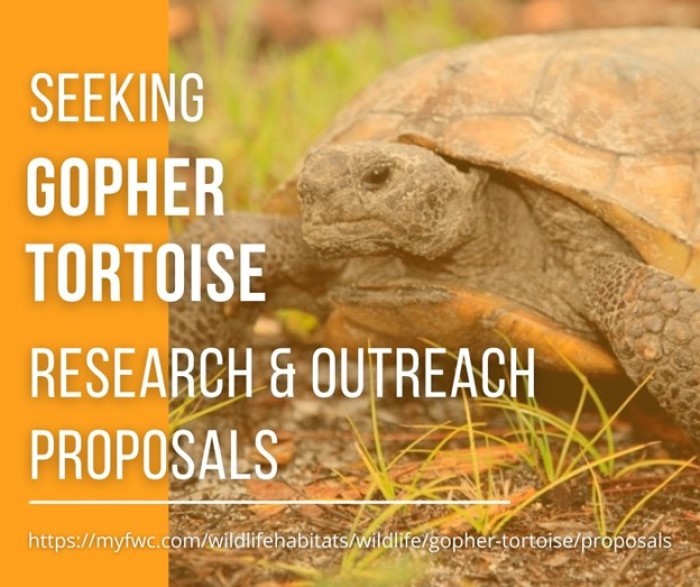 The FWC is funding scientific research and outreach projects on an annual basis using mitigation contributions. Mitigation contributions are financial contributions used to offset impacts to tortoises and their burrows from permitted development activities. Funded projects will help address knowledge gaps and inform policies and practice for the agency’s gopher tortoise conservation efforts. The deadline for submission of Proposals for FY 21-22 is April 15, 2022.
|
|
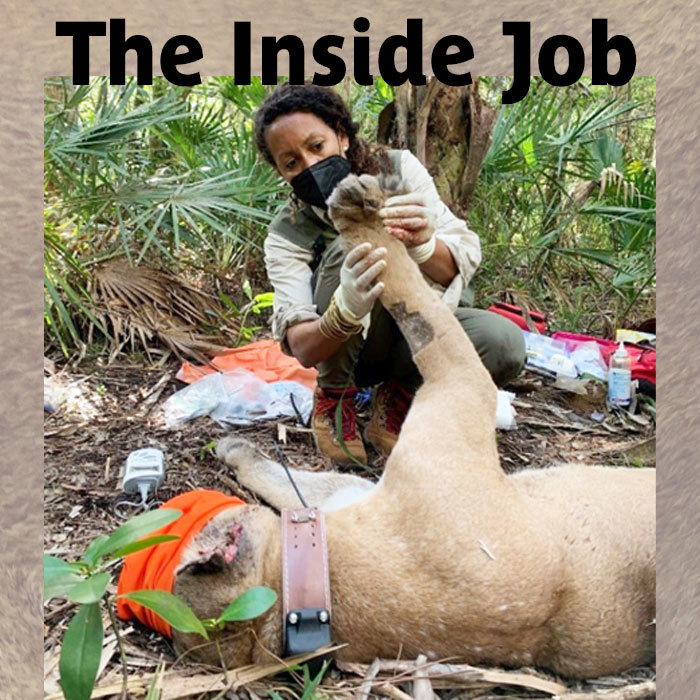
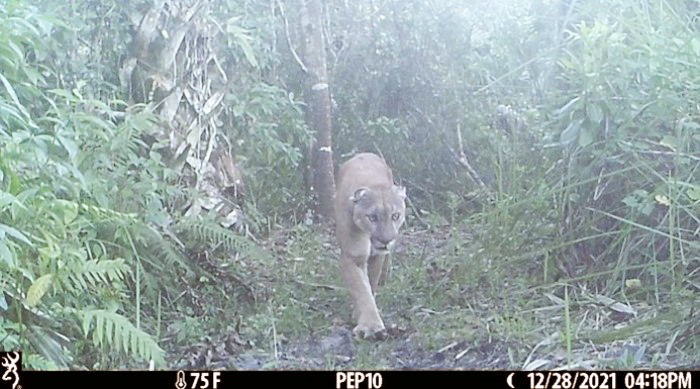
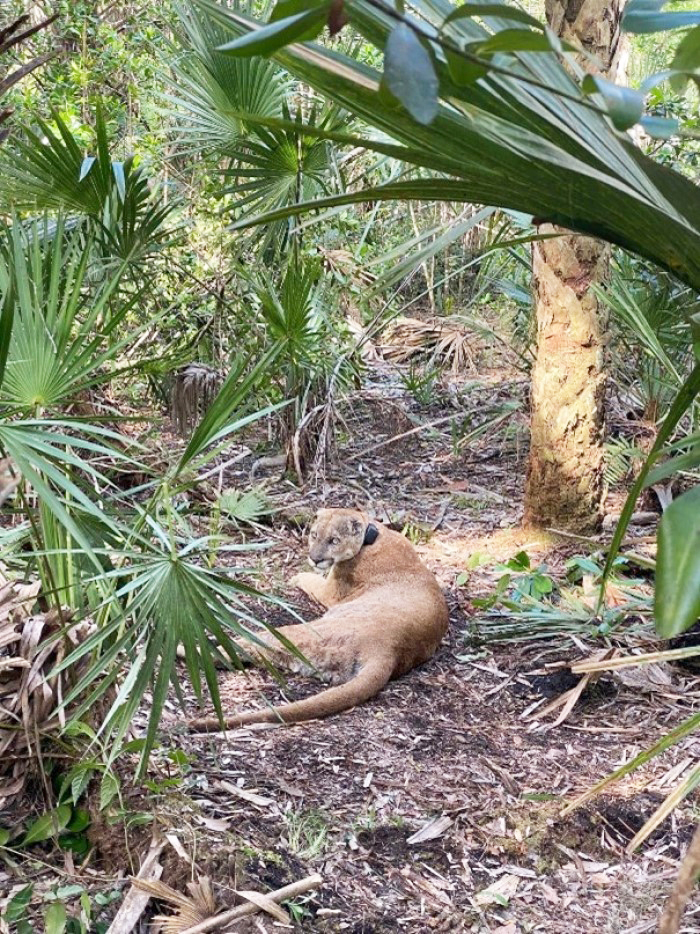 Florida panther FP263 was first spotted on trail cameras in southwest Florida around the Cypress Dome Trails at the CREW Wildlife and Environmental Area in 2018. He was dubbed “No Ears” by a citizen scientist due to the panther’s distinct tiny ears that are easy to identify on trail cameras. It’s speculated his mangled ears were likely caused by old injuries from fighting with other male panthers.
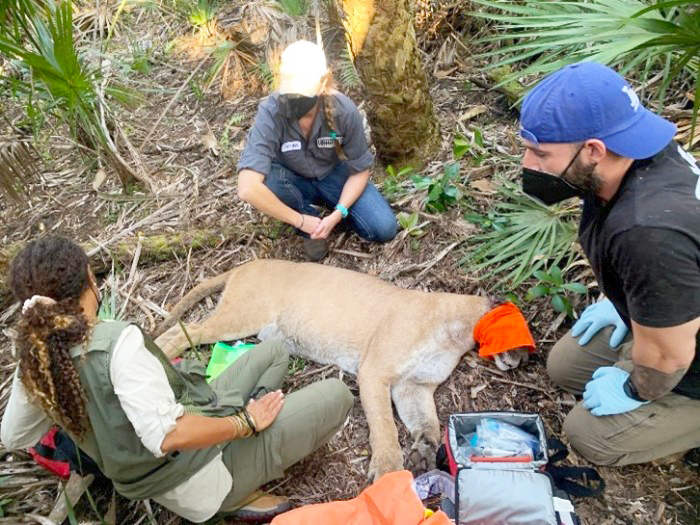 FP263 was recently radiocollared by FWC’s panther research team. A full veterinary physical exam was performed including routine bloodwork and infectious disease screening. Biologists also collected body measurements along with hair and skin samples for genetic testing. Learning about an individual animal’s health is important not only for the well-being of that animal but also as part of an assessment of the health of the population.
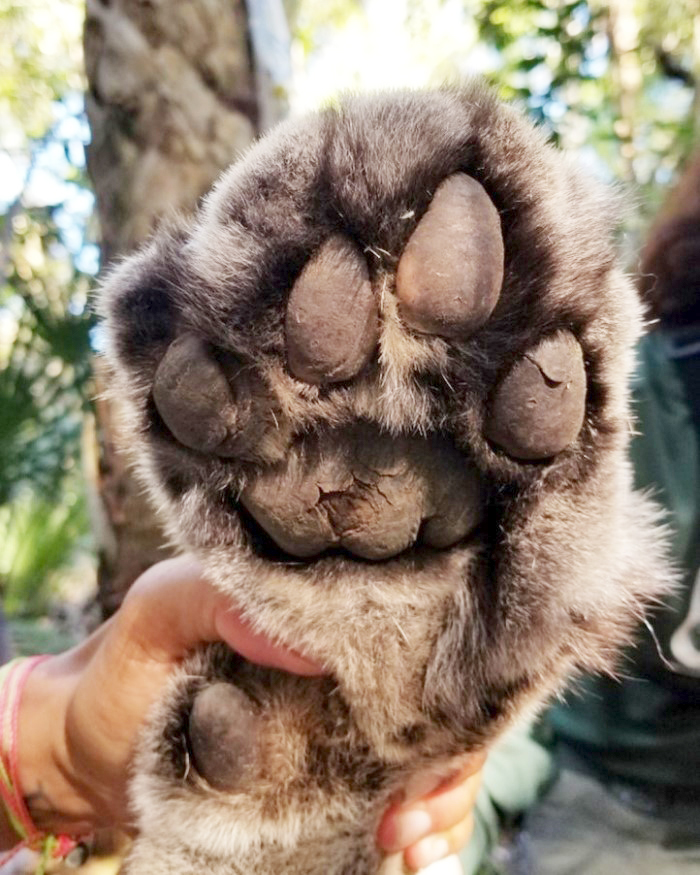 Estimated at around 8 years old and still ruling his territory, “No Ears” and his movements have been somewhat of a mystery to our researchers. Now wearing a radiocollar, biologists will learn more about his home range, habitat preferences and movement patterns.
Support panther conservation by purchasing a "Protect the Panther" license plate or donate directly to the Fish & Wildlife Foundation’s Florida Panther Fund.
Night photo courtesy of: Tom Mortenson
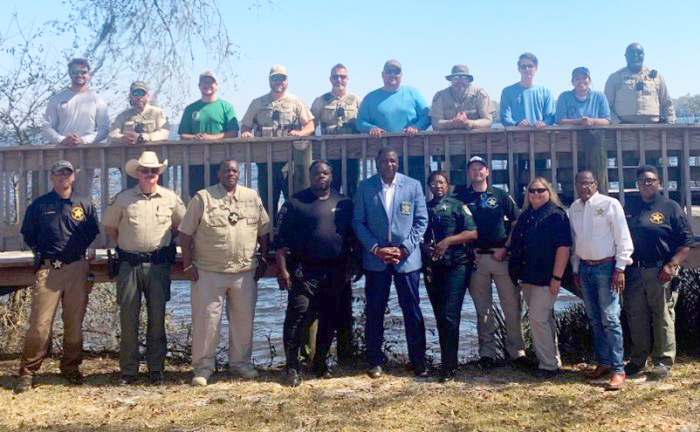
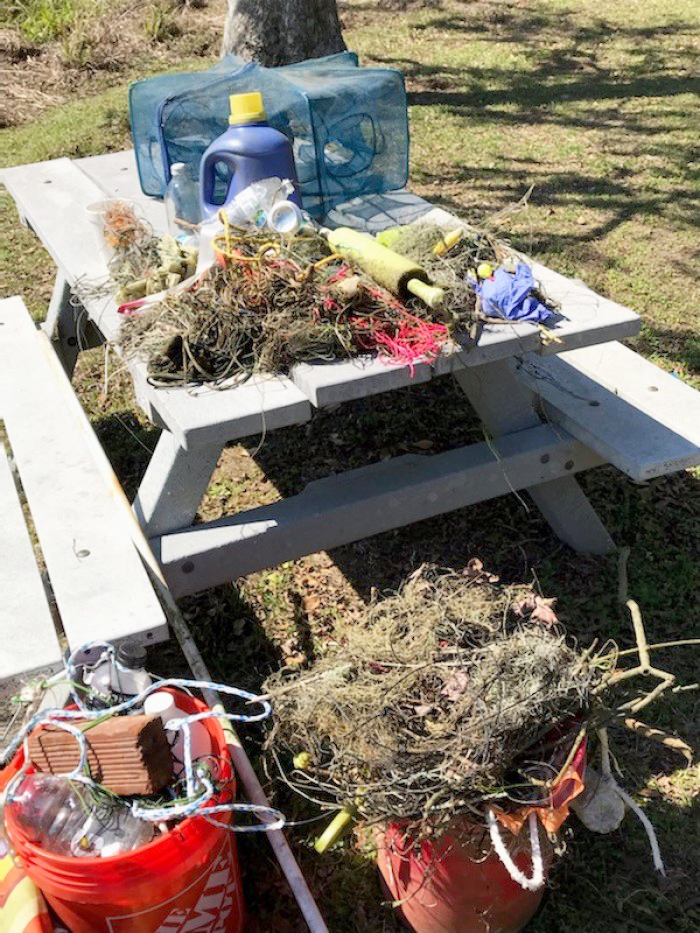
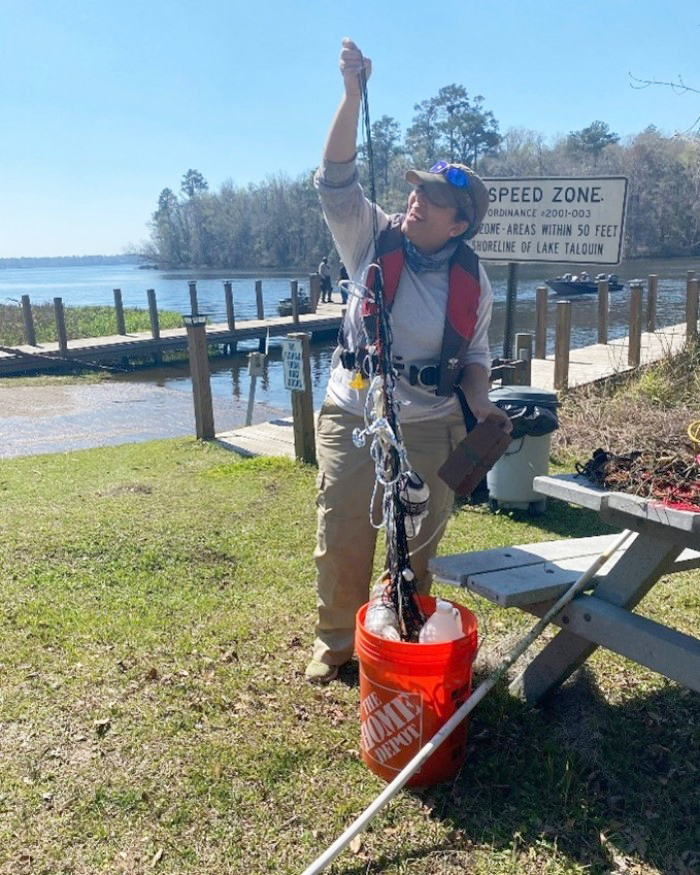 Biologists from FWC’s Fisheries Research (FWRI), FFM and HSC teamed up with FWC LE and the Gadsden County Sheriff Office earlier this month for “Operation No Hook Left Behind” on Lake Talquin. This effort resulted in the removal of around 65 pounds of abandoned bush hooks, trot lines, and various pieces of debris. A total of 11 vessels and 25 people participated in the lakewide effort.
Learn more about regulations for the use of bush hooks and trotlines in state waters.
|
|
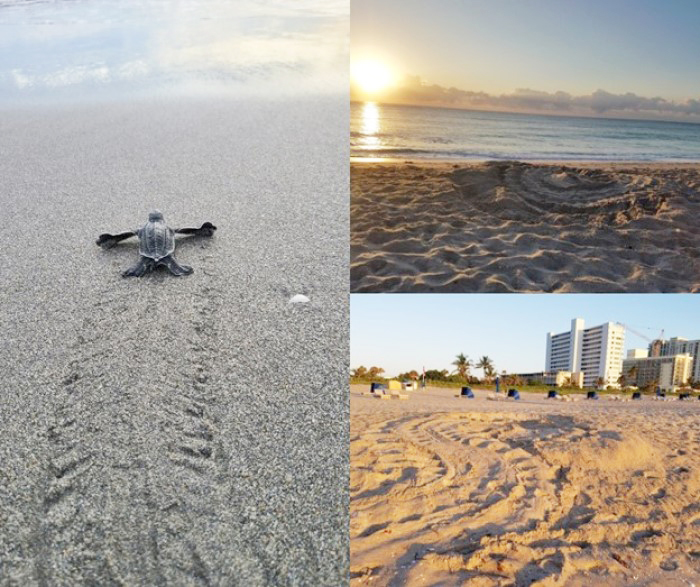 Leatherbacks and loggerheads have already begun nesting on Florida’s beaches and green turtles will begin nesting soon. From now until the end of October, thousands of sea turtles will come ashore to nest around the state.
Here’s how you can help them have a successful nesting season:
- Keep the beaches dark to prevent nesting and hatchling sea turtles from disorienting.
- Clean up trash, remove beach furniture, and fill in holes at the end of the day.
- Respect sea turtles and their nests – stay 50 feet away from any turtle you encounter on the beach and keep out of marked nest areas.
For more: MyFWC.com/seaturtle
**UPDATE: The first green turtle false crawl of the season has been documented! The earliest green turtle nest ever recorded in Florida was laid on March 29 – will this turtle break the record when she comes back to nest?
|
|
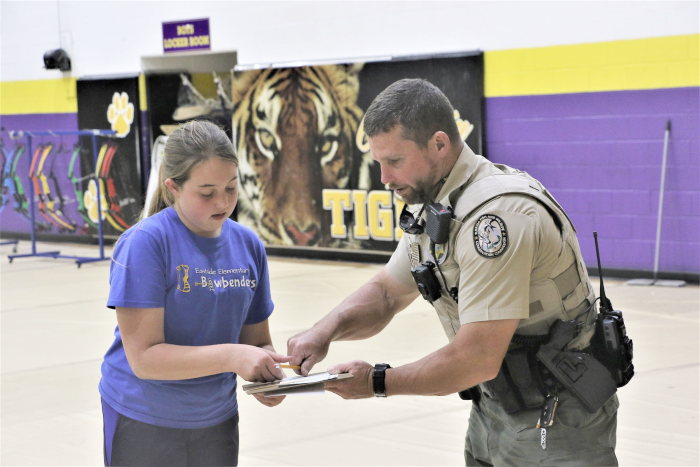
 Florida’s National Archery in the Schools Program state tournament, held March 12 at the Easton Newberry Archery Center in Gainesville, hosted over 400 elementary, middle and high school participants from across the state. The top three male and top three female archers received $20,000 in scholarships, thanks to generous support from the Fish & Wildlife Foundation of Florida and the National Archery in the Schools Program.
HGM, which administers NASP, sends a big thank you to the volunteers and FWC officers for their continued outstanding support of this tournament. In addition to assisting with scoring, security and serving as lane judges at the state tournament, FWC volunteers and officers also provided their support at multiple regional tournaments.
See state tournament results, including top schools and learn more about NASP.
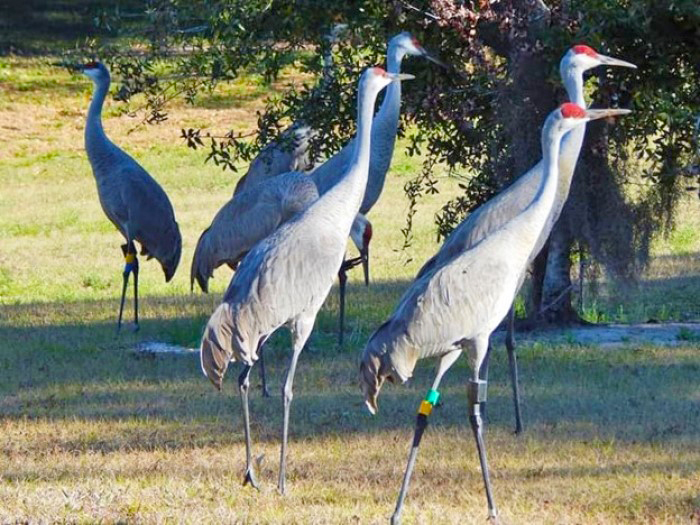 Where do juvenile sandhill cranes go when they’re old enough to leave their parents? That’s what our avian biologists are finding out!
#41704 is a young Florida sandhill crane that’s part of a tagging project to examine how sandhill cranes are using urbanized areas. This chick was radio banded in September 2021 with a GPS transmitter that sends our biologists 48 data points each day, showing them exactly where each tagged bird has travelled. From this, biologists can better understand where Florida sandhill cranes go once they leave the nest, their survivorship, productivity and habitat use in the urban landscape. #41704 is now on its own and doing well. The adolescent sandhill crane is still in the same general area where it was raised and is now hanging out with other youngsters!
Watch the tagging of #41704 and learn more about the Florida sandhill crane tagging project.
|
|
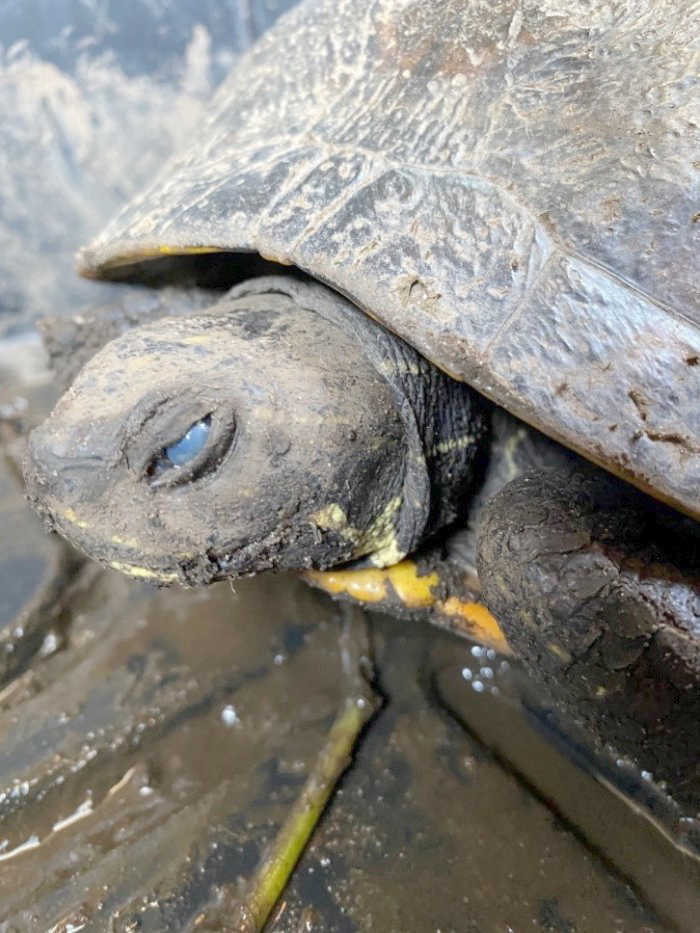 FWC is investigating a virus called Turtle fraservirus 1 (TFV1), previously referred to as Turtle bunyavirus (TBV), detected in multiple species of Florida’s native and nonnative freshwater turtles.
To reduce the spread of TFV1 and lessen potential impacts of this virus, FWC enacted Executive Order #21-19 that prohibits the take and transportation of the following species: Florida softshell turtles (Apalone ferox), smooth softshell turtles (Apalone mutica), spiny softshell turtles (Apalone spinifera) and yellow-bellied sliders (Trachemys scripta scripta). Additionally, the virus is known to infect Florida’s cooter species (genus Pseudemys) and common snapping turtles (Chelydra serpentina) that are already prohibited from being removed from the wild, along with red-eared sliders (Trachemys scripta elegans) that are a conditional nonnative species.
To help assess the geographic distribution of the virus, FWC is encouraging the public to reports of sick, dead and strangely acting freshwater turtles to FWC’s Freshwater Turtle Hotline: 352-339-8597, or via the FWC Reporter App. Contact FWC before handling sick or dead turtles.
|
|
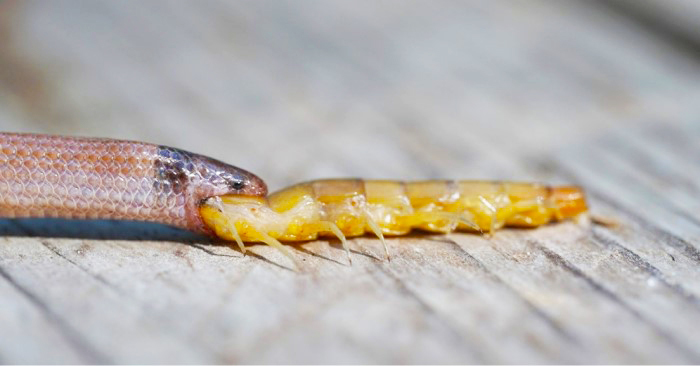
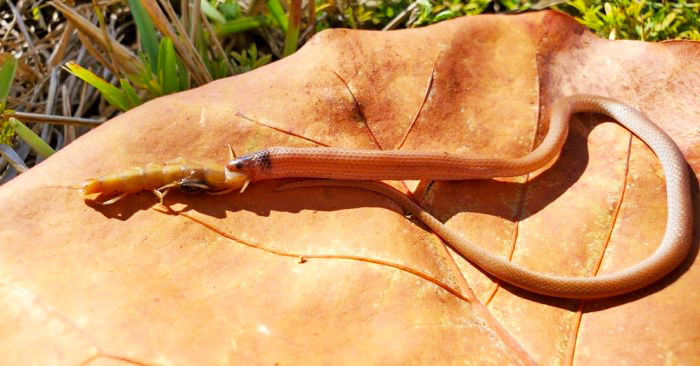 A rare snake found at John Pennekamp Coral Reef State Park died while eating a large centipede. The state-threatened rim rock crowned snake (Tantilla oolitica) lives in pine rockland and hammock habitats in eastern Miami-Dade County and the Keys. This burrowing species, typically only 7-9 inches long, is seldom seen because it lives under debris, rocks or in cavities in underlying limestone.
A visitor to the park observed a small, dead snake on a trail with the rear portion of a centipede protruding from its mouth. Other species of crowned snake often eat centipedes but this specimen represents the first food record of any kind for the little-known rim rock species. Crowned snakes immobilize their prey using mild venom but are unable to bite humans because of their small size. The prey item appears to be a juvenile Keys giant centipede (Scolopendra alternans) that can reach the size of a crowned snake as an adult. Crowned snakes are usually immune to the venom of centipedes, whose bites are painful to humans, but something went wrong during this encounter. This snake, along with the centipede, will be deposited in the Florida Museum of Natural History collection.
|
|
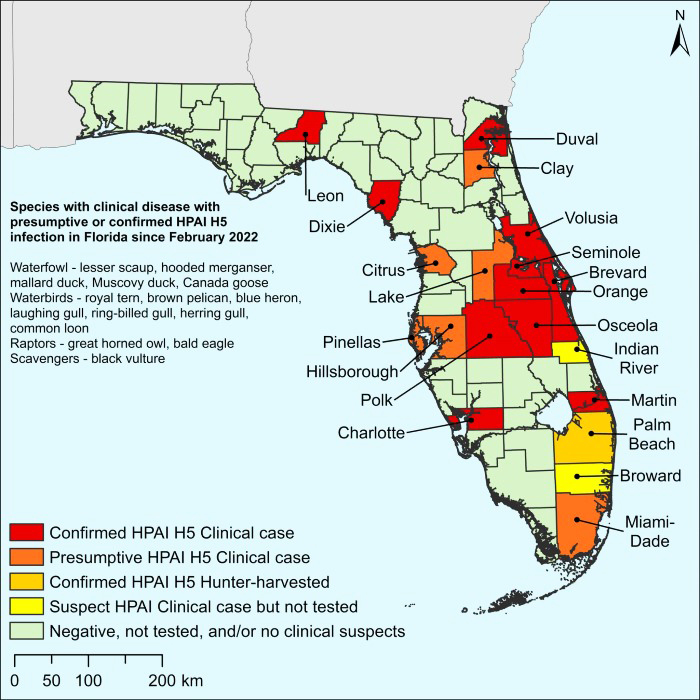 FWC continues to investigate the deaths of various bird species believed to be caused by Highly Pathogenic Avian Influenza “Bird Flu.” See our updated map and find answers to HPAI questions.
To prevent the spread of HPAI, the public should avoid handling sick or dead wildlife, prohibit the contact of domestic birds with wild birds and report wild bird mortalities so die-offs can be investigated.
There is a low risk of HPAI transmission to humans and, to date, there have been no known human infections in North America. The H5 2.3.4.4 strain has been documented in the U.S. since 2021 and was detected in Florida in January 2022 from a hunter-harvested blue-winged teal. Please be advised that because HPAI is very contagious and not treatable in wild birds, some wildlife rehabbers may not be accepting these animals at this time.
|
|
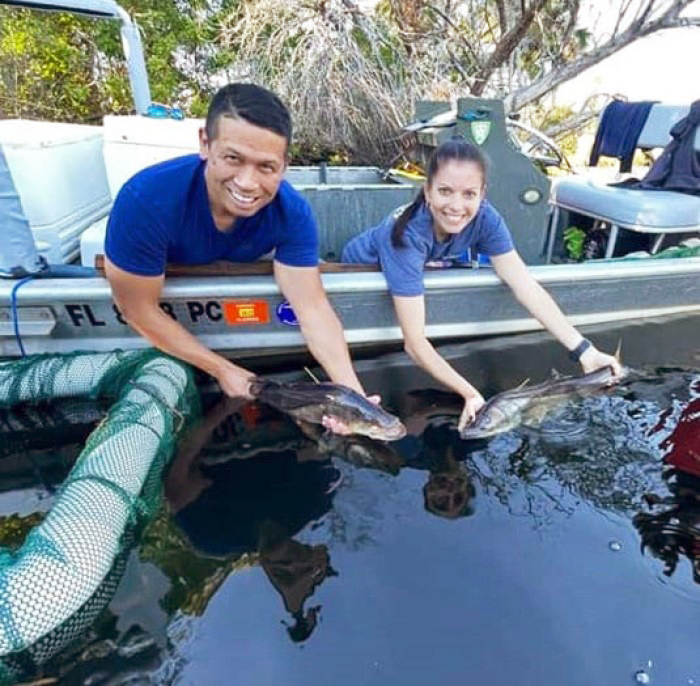 Common snook and gray snapper have been observed using freshwater springs in rivers to keep warm during winter, much like manatees. As their range expands northward, these thermal refuges are critical for survival but we have limited information on how snook and snapper use the rivers and springs over time and space.
Recently, FWRI’s Fish Biology and Fisheries Independent Monitoring sections partnered with Southwest Florida Water Management District, UF IFAS Nature Coast Biological Station, Florida Sea Grant and UF IFAS Tropical Aquaculture Laboratory to tag snook and snapper in rivers along the springs coast. During a 3.5 day blitz, biologists tagged 70 snook and 30 snapper in the Crystal, Chassahowitzka and Pithlachascotee (Cotee) rivers. Acoustic tags (which ping a unique ID recorded onto a receiver) were surgically implanted in each fish and an array of acoustic receivers was deployed within each river. This work will document how fish use the rivers year-round and specifically how much area fish use to congregate around springheads during cold snaps.
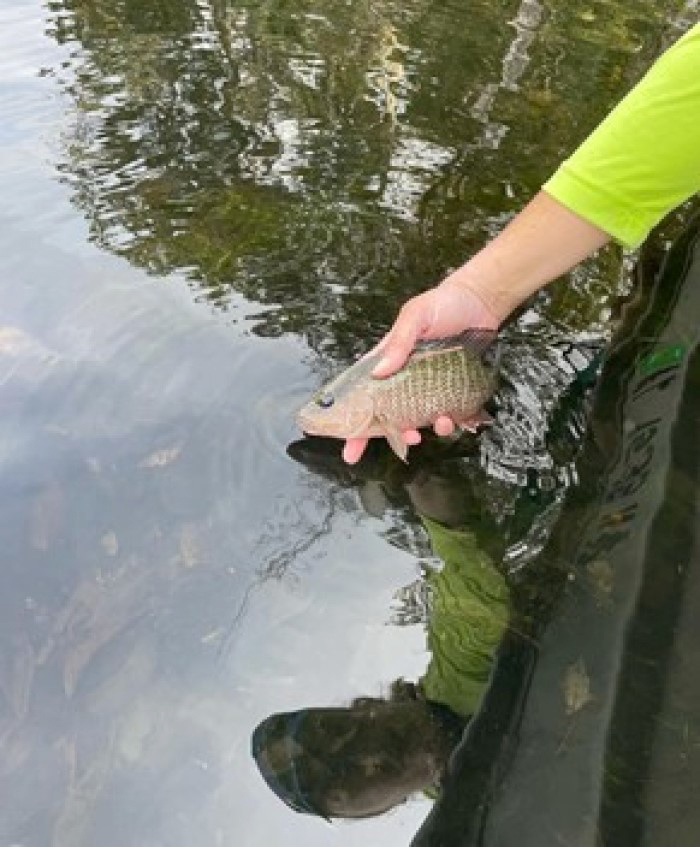 How Can You Help?
Each fish has an external tag (yellow or orange) by their dorsal fin. If you catch a tagged snook or snapper and plan to release it, leave the external tag in place and report the tag number, date, location and total length to our Tag Return Hotline at 1-800-367-4461 or tagreturn@MyFWC.com.
If you catch and keep a tagged fish, please retrieve the acoustic tag from the body cavity and call 1-800-367-4461 with the same information. A biologist will arrange to collect the acoustic tag, which can be implanted in another fish.
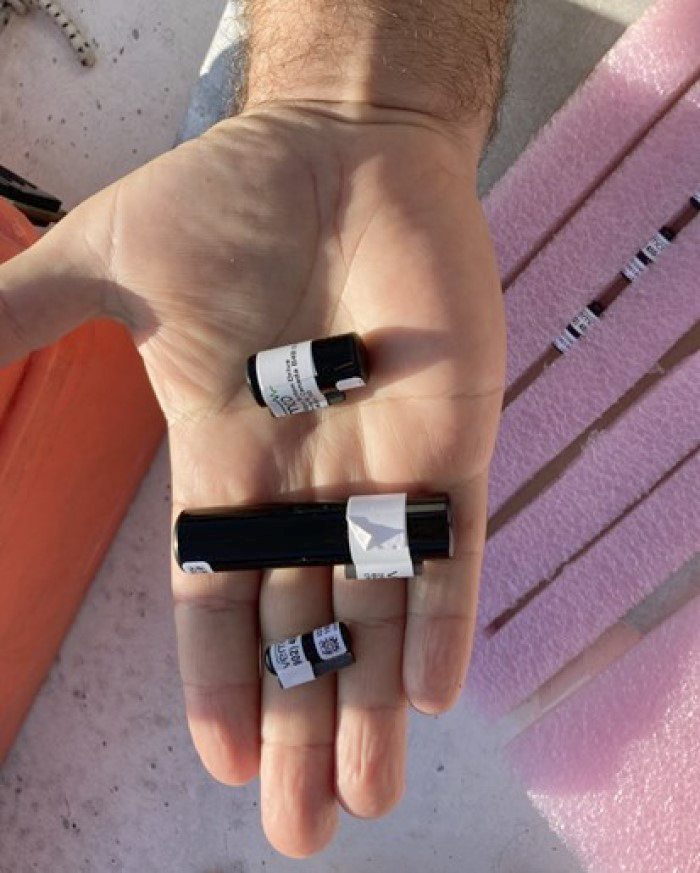
By Paul Miles, RCW Biologist at J.W. Corbett WMA
Until recently, red-cockaded woodpeckers in southeast Florida were limited to only two populations. The J.W. Corbett Wildlife Management Area population had dwindled to nine potential breeding groups until intensive habitat work and translocations of yearling birds from larger populations further north began in 2003 (Figure 1). DuPuis Wildlife and Environmental Area had zero RCWs remaining on the property despite having remnant historic cavity trees on site. In 2006, DuPuis WEA began translocations and nest cavity provisioning work, thus adding to the growing metapopulation across these two properties. Individual birds have now dispersed over 10 miles between these populations, enhancing genetic diversity and eventually growing to a U.S. Fish and Wildlife Service established recovery goal of 40 potential breeding groups combined.
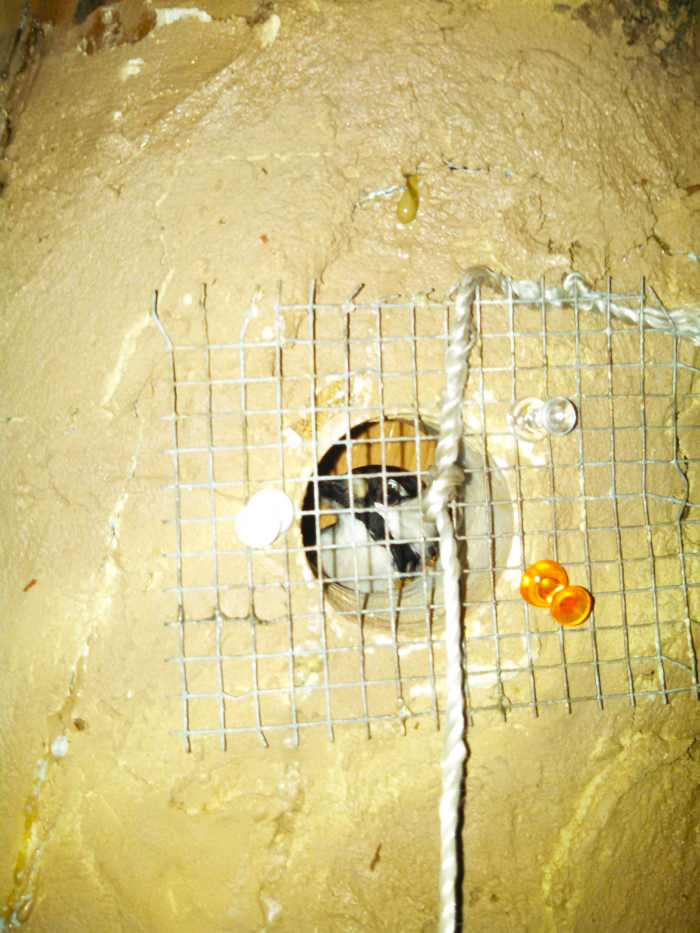 RCW in cavity awaiting release.
In fall 2020, RCWs were reintroduced to the John C. and Mariana Jones/Hungryland WEA, just northeast of Corbett, as well as Jonathan Dickinson State Park (further east) (Figure 2). Within the first year of installing artificial cavities and the first translocation event, one bird each from Dupuis and Corbett became breeders at Hungryland, moving almost 15 miles. Two of the birds translocated to Hungryland dispersed to Corbett and became breeders (Figure 3). This suggests that RCWs have been foraging and attempting to disperse to find open breeding opportunities across this landscape all the while. The installation of artificial cavities along with some focused mechanical fuel treatments and application of prescribed fire were all they needed to establish new potential breeding territories. RCWs at DuPuis and Corbett have occasionally become breeders in their neighboring populations and the newly installed cavities at Hungryland and JDSP will afford new opportunities for dispersal and increase the resilience of the metapopulation against stochastic events.
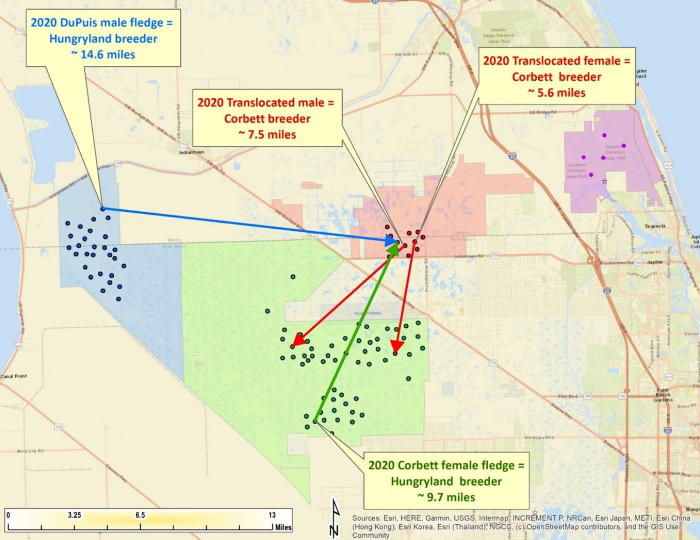 RCW movements across the landscape: DuPuis WEA (blue), Corbett WMA (green), Hungryland WEA (pink), Jonathan Dickinson State Park (purple). Map credit: Pam Boody.
FWC proposed downlisting the RCW from endangered to threatened due to successful restoration efforts; however, FWC biologists, in collaboration with many other agencies, will continue translocation and restoration efforts to supplement the population of RCWs in southeast Florida and RCWs will remain protected. The RCW is a management-responsive species that can be an indicator of properly managed pine flatwoods. This species is often considered an umbrella species as many other wildlife species benefit from management designed for RCWs and from cavities created by them. As with many imperiled species, habitat degradation and destruction are the greatest threats to the long-term viability of the population. One way to mitigate those threats is the development of protected habitat corridors. There is nearly contiguous pine flatwoods habitat between Lake Okeechobee and the Atlantic Ocean and much of it is managed with prescribed fire and exotic plant control. In addition to FWC, lands in this corridor are owned and managed by South Florida Water Management District, Department of Environmental Protection, Palm Beach County and Martin County. Continued cooperation between all agencies will further enhance and protect the habitat this species depends on.
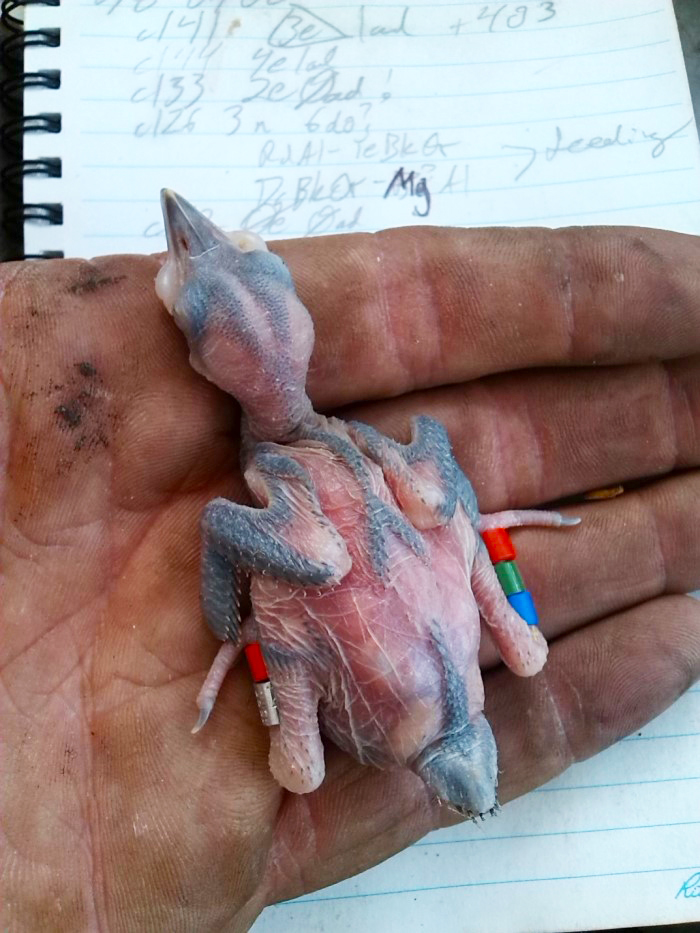
Freshly banded RCW nestling.
|
|
 Operation “Not Your Average Marine Stadium” – FWC SOG team members from SRB and SRA joined with Miami/Dade land and marine units to enforce boating safety rules and regulations, livery regulations, and resource regulations in the Miami/Dade County waterway known as Marine Stadium. FWC Lt. Jeffery Hart was the operational supervisor during this very busy Spring Break weekend. In all, over 25 FWC officers participated in the detail. Below are the impressive results from their effort.
Operation Members:
SRB SOG: Capt. Randy Yanez, Lt. Mark Mahoney, Investigator Milton Osorio, Investigator Nelson Landa, K-9 Nathanial Matir-Negron, Officer Matthew Rubenstein, Officer Jason Rhoda and Officer William Thompson.
SRA SOG: Investigator Brian Sierra, Officer Matthew Nasworth, Officer Ryan Ames and Officer Michael Rea.
SRB Marine/Land: Lt. Anthony Padilla, Officer Miguel Despian, Officer Steven McKinley, Officer Alex Bruder, Officer Keith Hernandez, Officer Jesse Whitt, Officer Tyler Dunn, Officer Oscar Saavedra, Officer Timothy Hedgepeth, Recruit Hanna Hayden, Recruit Corin Smith, Recruit Emily Whitty, Recruit Alex Viaud and Recruit Daniel Marshall
Operation Results:
-
166 Uniform Boating Citations (UBCs) reference Boating Safety Violations.
-
36 Misdemeanor Arrests (NTAs) reference Livery Investigations.
-
3 Misdemeanor Physical Arrests reference Livery Investigations.
-
4 Misdemeanor Arrests (NTAs) reference Resource Investigations.
-
2 Misdemeanor Arrests (NTAs) reference No Vehicle Registration.
-
1 Misdemeanor Physical Arrest reference Bench Warrant/Boating Safety.
Approximately 275 Users checked.

 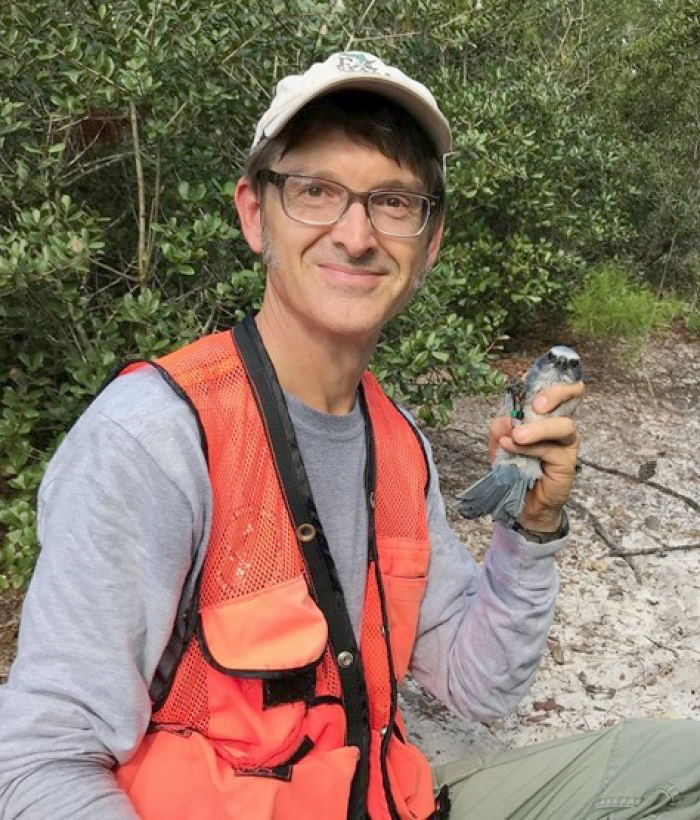 This year FWRI's top Excellence in Science recipient is Karl Miller, an Avian Associate Research Scientist at our Gainesville field lab. During the nearly 20 years Karl has been with FWC, his research has contributed to the conservation of several of Florida’s most imperiled birds. His foundational work on methods for translocating federally threatened Florida scrub jays created an important conservation tool that will likely be this species’ ticket to carry on for decades to come. Showing no signs of slowing down, last year Karl published eight manuscripts while submitting two more. Karl frequently collaborates with other state agencies, serves as editor for Southeastern Naturalist and is a courtesy professor at University of Florida. Go Karl!
 Citizens and FWC customers were so impressed by the following employees, they told us about it through email on the "Praise an Employee" page of MyFWC.com/Contact. When your coworkers receive kudos, help share the good news by contacting Kelly.Broderick@MyFWC.com.
Maj. Alberto Maza
He and his officers deserve public recognition for catching a suspect with 2,711 pompano fish OVER limit, who should be punished to the highest degree. Gluttony, waste of natural resources, undersized fish, monofilament gill nets, restricted Federal waters. 3rd degree felony isn't severe enough! His boat and gear should be sold to the highest bidder with proceeds going to the FWC. He shouldn't EVER be allowed to fish in his lifetime. Punishment for many crimes isn't enough to deter felons. This makes me extremely ANGRY!
Officer Luis Merizio
Officer Merizio saw that I was changing a trailer tire on an exit ramp. He stopped and happily completed the job. We chatted about a few things, including our wives' superior fishing skills and trailer backing abilities. Thank you, Officer Merizio!
Palm Beach County Shooting Sports staff
It’s more than just one guy here who deserves praise. I’ve been to Palm Beach County Shooting Sports three times now, and it’s my absolute best shooting experience. Your RO’s are exceptionally professional. They are firm with the rules but aren’t obnoxious or condescending. They maintain a safe and orderly operation without making people feel like they will get their head bitten off. They are exceptionally helpful. I have witnessed them help several shooters with all sorts of issues, and they have helped me sight in rifles and optics, grabbed tools to break free a stuck case which otherwise would have ended my day and given me advice on shooting. If there is ever an issue they come over and help freely. They have always been friendly and yet maintained professionalism. Excellent all around.
Tony Young, HGM
While attempting to wade through Floridas website at home, I thought I was limited to hunt in Big Cypress (failed to register for a qouta WMA). My vacation led me to Brandenton, so my search changed. So after much confusion on my part, I called and was forwarded to Tony. He understood my dilemma and explained my options along with access information into the WMAs I though was too late to apply for. (Not explained in detail on the site). After a number of contacts, he was able answer and explain all of my questions and then some.
 Congratulations to the following employees for reaching 5-year milestones of employment with the FWC.
|
|
35 Years
Laurie Luher, LE
25 Years
Andrea Mosier, FWRI
20 Years
Scott Van Buren, LE
Mark Clements, LE
Jared Cloud, LE
Robby Creech, LE
Bradley Givens, LE
Robert Lentz, LE
Heath Nichols, LE
Scott Olson, LE
Jedidiah Parisoe, LE
Pete Rockwell, LE
Thomas Shipp, LE
Joseph Simpson, LE
John Templin, LE
Seth Wagner, LE
John Wilke, LE
Shelby Williams, LE
|
15 Years
Jill Izsak, LE
10 Years
Ann Marie Bailer, IT
Jason Polk, FWF
5 Years
Corey Anderson, HSC
Melissa Bitgood, LE
Rachel Massey, SW Region
Ashley Scruggs, HSC
Joshua Ringer, FWRI (April 2021)
Mckenzie Keightley, FWRI (February 2022)
Retired!
Major Craig Duval, LE – 27 years
Beth Morford, HSC – 31 years
|
|
(The FWC has a great many non-FTE employees, and they deserve recognition for reaching 5-year milestones too. Unfortunately, the system doesn't keep track of such statistics; but we don't want that to stop us. If you know of a non-FTE employee about to reach a 5-year milestone, please notify the Inside Job by email.) |
|

|
FWC employees have some of the most interesting jobs ever! Here are some of our employees doing what they do best. Send your photos of FWC employees in the office and in the field to Kelly.Broderick@MyFWC.com.
|
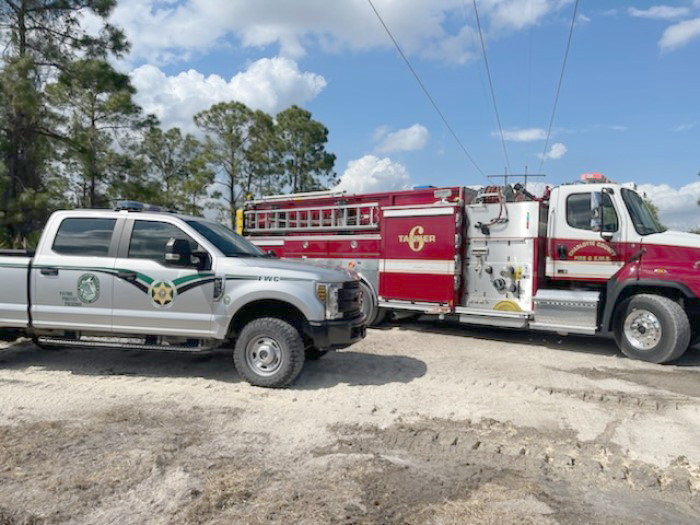
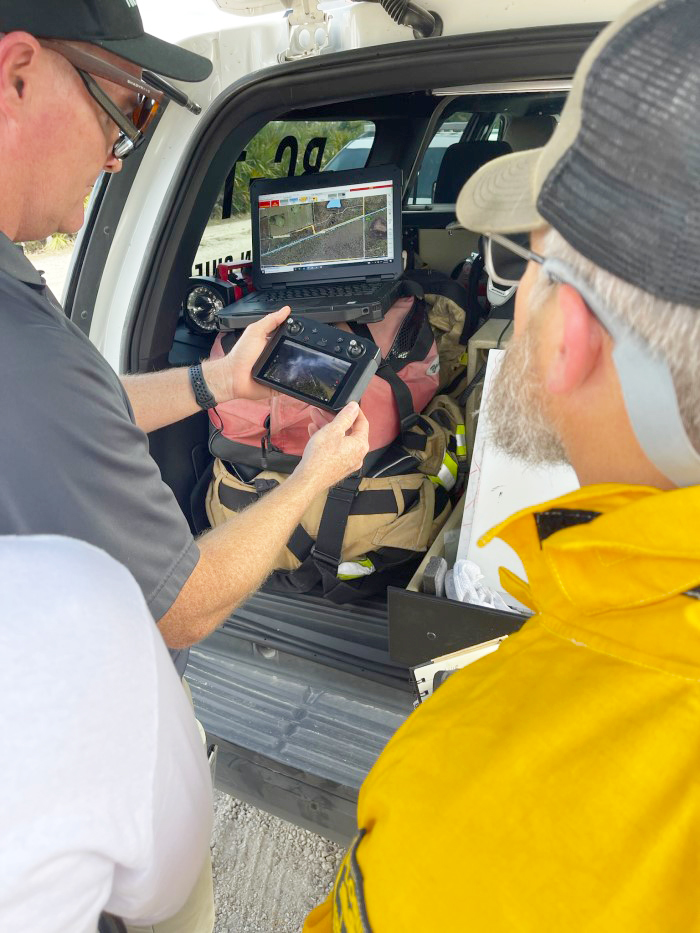
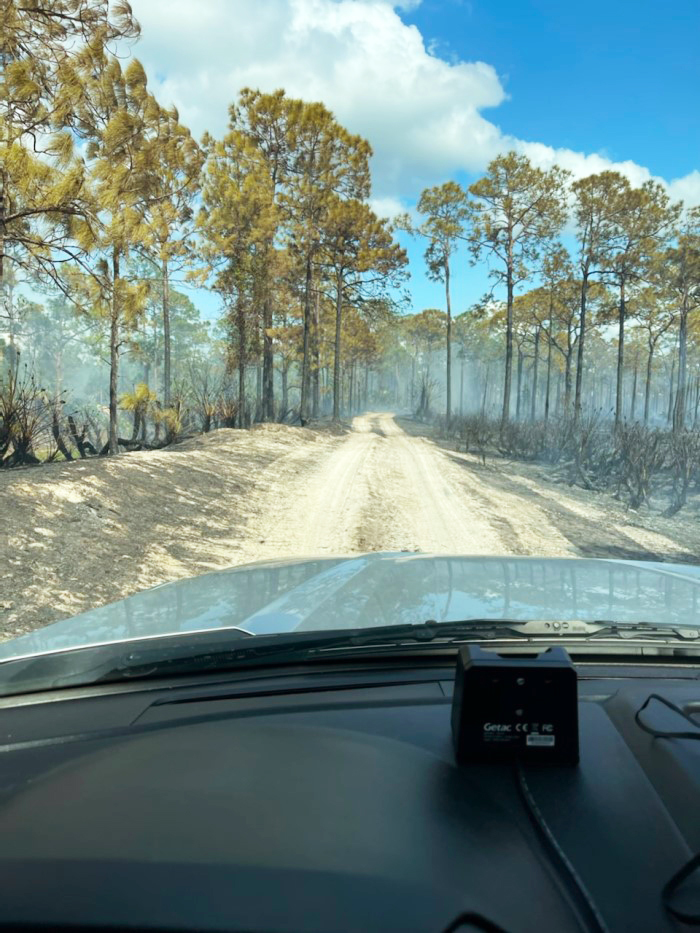 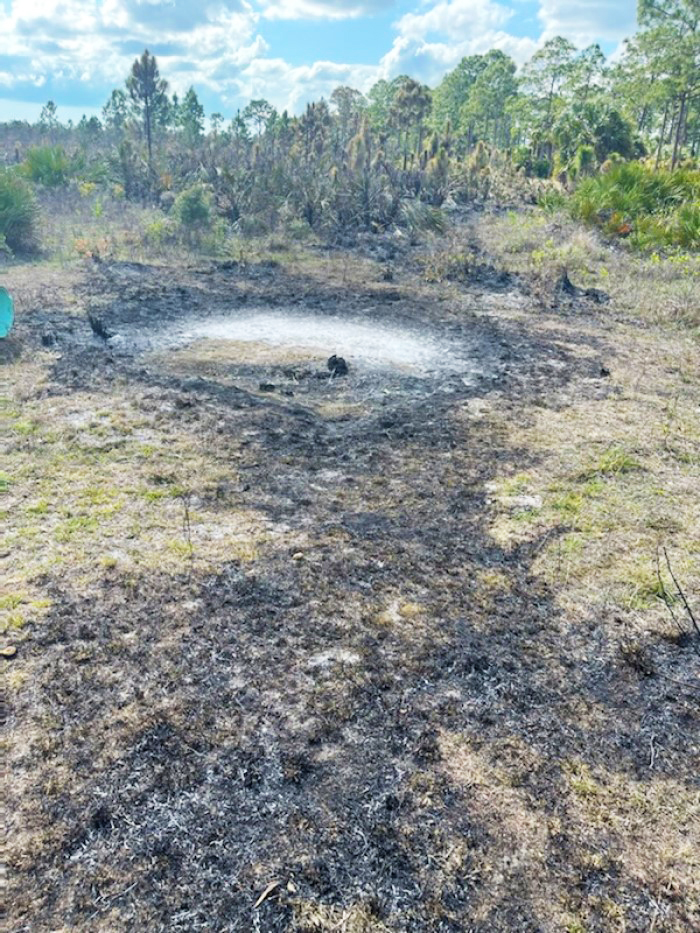 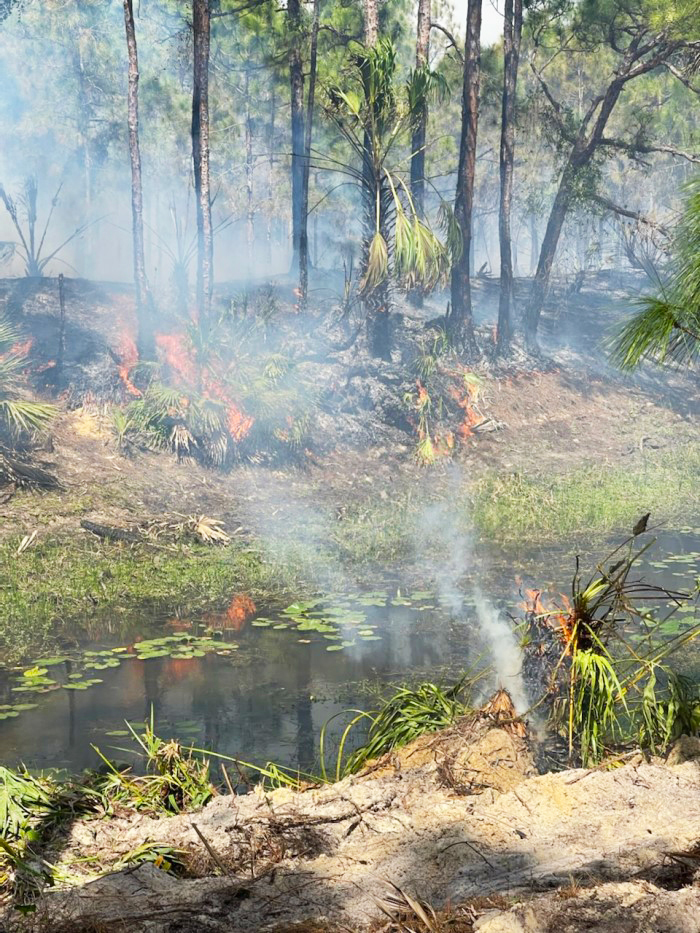 Southwest Region LE was called regarding a wildfire within the Yucca Pens WMA in Charlotte County. FWC officers assisted the Division of Forestry, Charlotte County Fire and Charlotte County Sheriff’s Office in containing the fire, which consumed over 100 acres of state land. It appears to have started from a portable toilet that was vandalized at a contractor’s construction site and an arson investigation is ongoing.
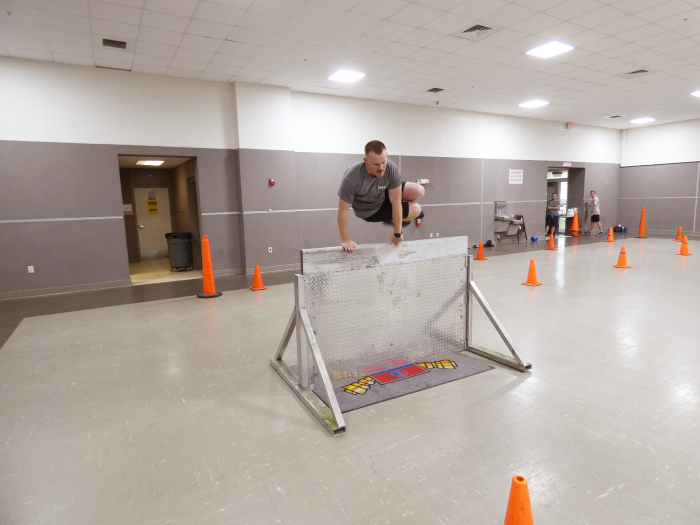
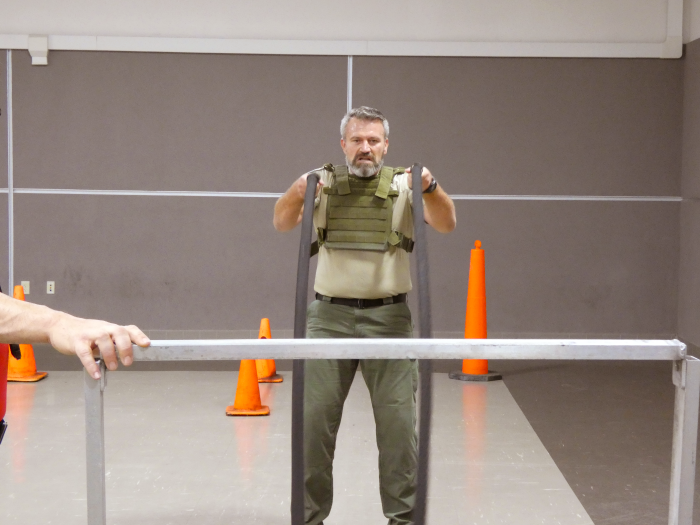 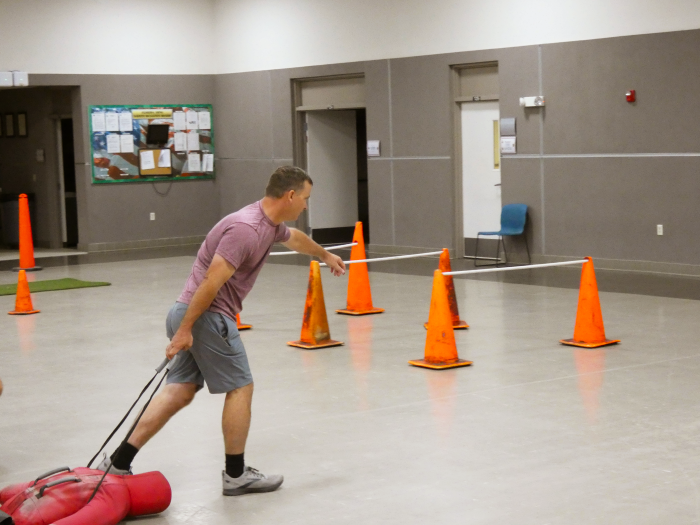 The Southwest Regional Fitness Coordinators completed the 2022 PAT assessment. Maj. Rob Rowe (top) led the region by running the course in uniform with a weighted vest! A special thanks to our hard-working coordinators Lt. Jeff Goggin, Officer Justin Price, Officer Sean Karr, Officer Zach Hoppe and Officer Miros Petru.
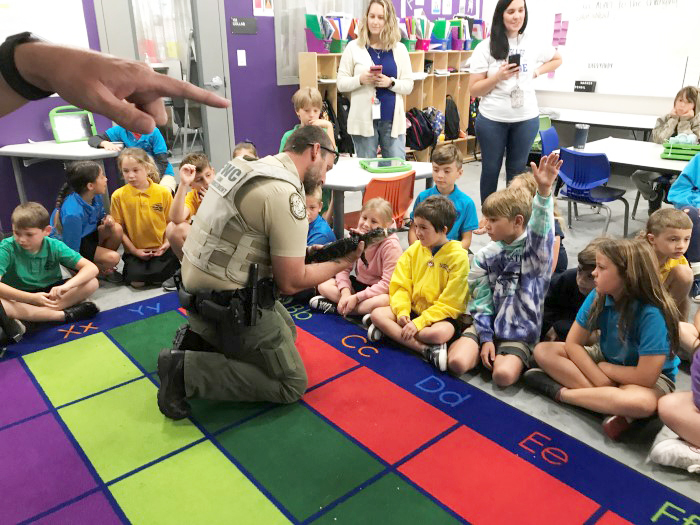
 Southwest Officers Kelly Zenoniani, Jeremy Birchfield and PIO Adam Brown were asked to speak to the second-grade classes at The Babcock Ranch School in Charlotte County about ways to encourage habitat and wildlife conservation, outdoor safety, responsible pet ownership and reducing our impact on native populations. We discussed alligator safety, being bear-wise, the importance of controlled burning, boating safety, invasive species issues and much more. The students and teachers alike were engaged and enjoyed the talk – having ”Bitty”, the 2-year-old alligator to show didn’t hurt either 😊.
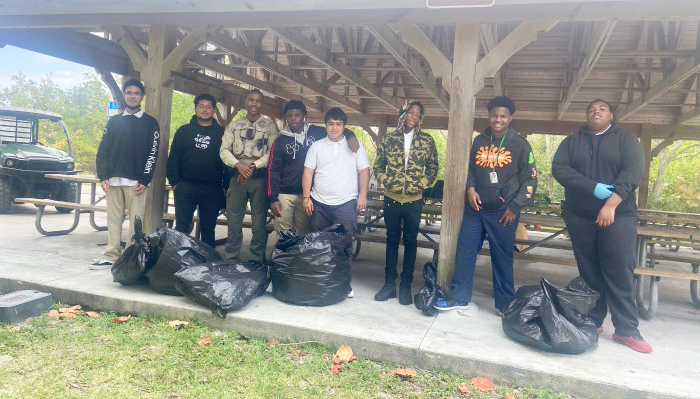 PIO Washington coordinated a beach clean-up at Oleta River State Park with students/mentees from Miami Jackson Senior High School. In two hours, they collected four trash bags of litter strewn in the beach dunes and around the shoreline. The students earned community service hours by worked diligently while learning first-hand the importance of environmental stewardship, teamwork and volunteerism. Thank you to Big Brothers Big Sisters of Miami for partnering with the FWC.
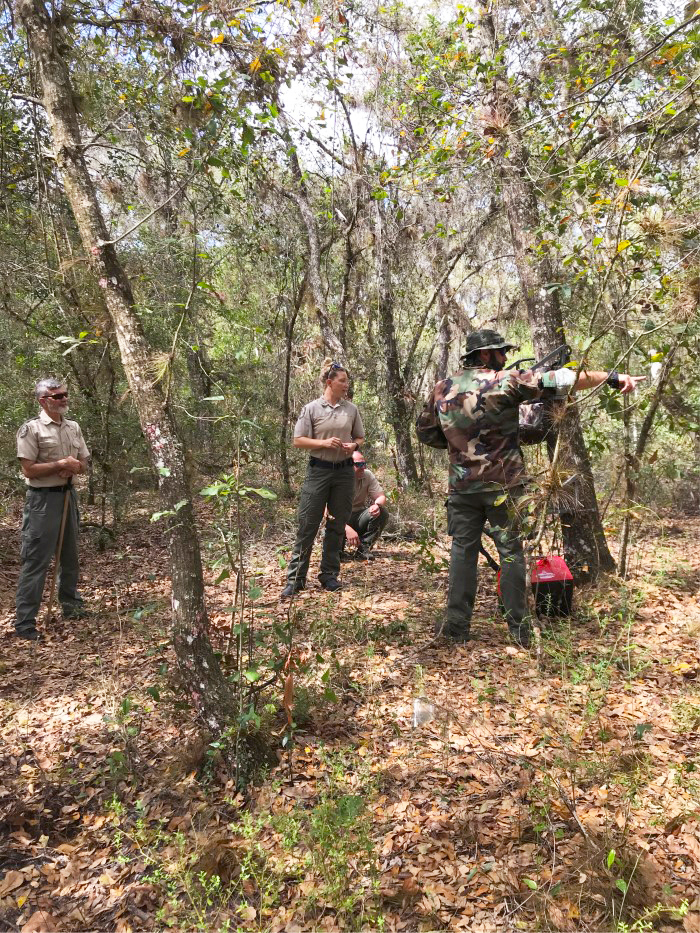
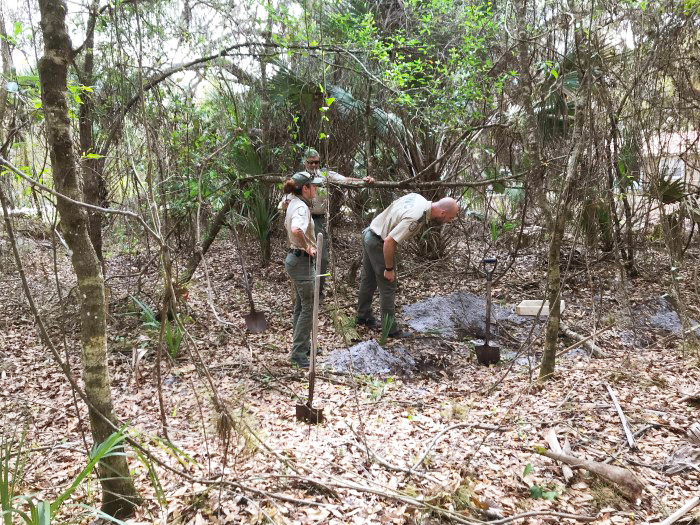
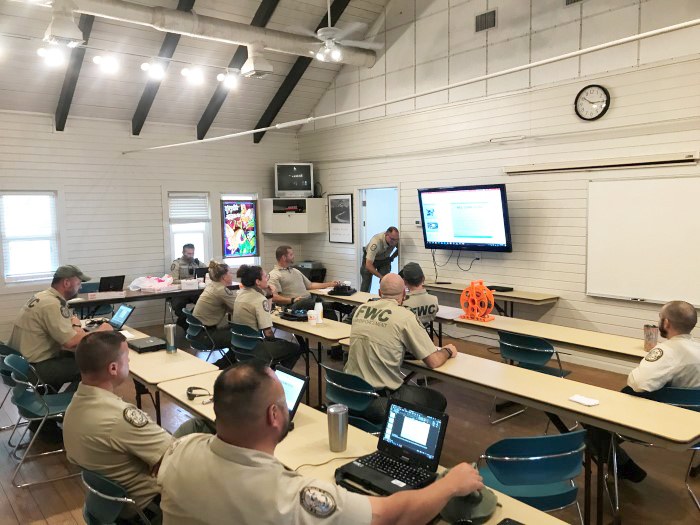 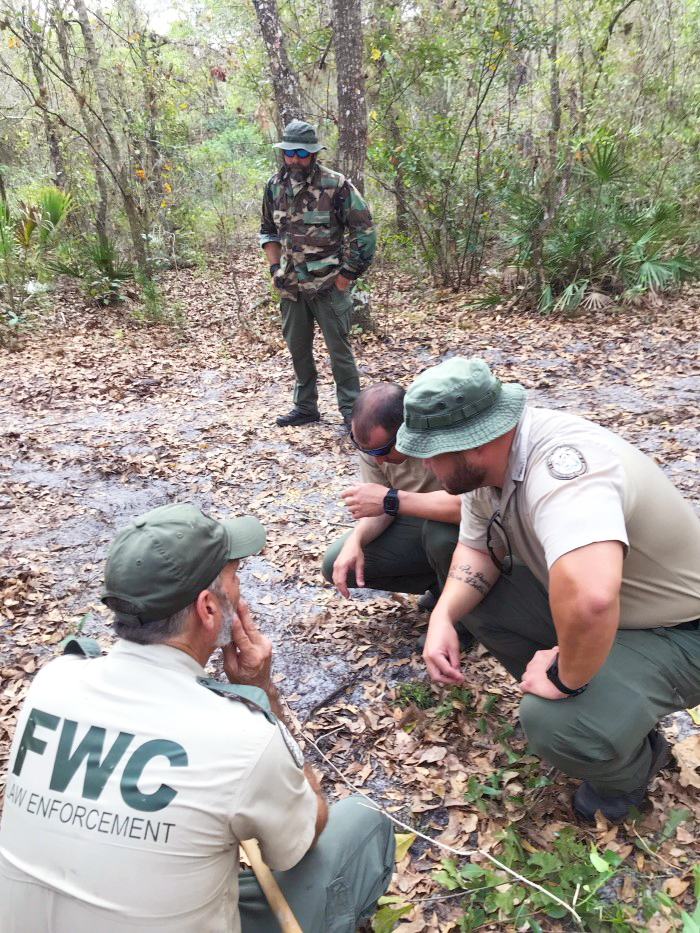 Southwest Regional officers, led by Lt. Dan Parisoe and assisted by local Senior Officers and Specialists, taught the State and Public Lands training at Myakka River State Park. Scenarios for damaging lands, fossil and artifact excavation, and illegal hunting were staged and officers tested their skills in identifying sign and evidence of criminal activity.
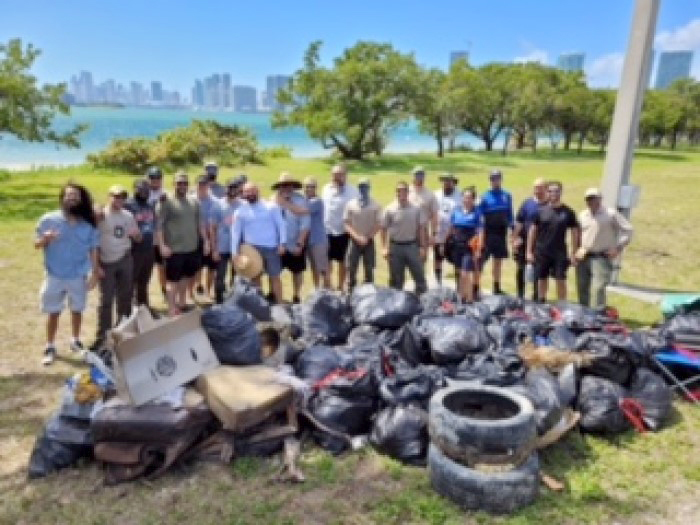
FWC, MDPD, MPD and DERM cleaned up the Southwest shoreline of the Julia Tuttle Causeway. There was a tremendous amount of miscellaneous litter and debris along this stretch of shoreline, much of which consisted of hundreds of cloth satchels and plastic bags ritually deposited in the waterways. Local and state officials came together to fulfill a shared mission, side-by-side to safeguard Miami-Dade’s marine environment.
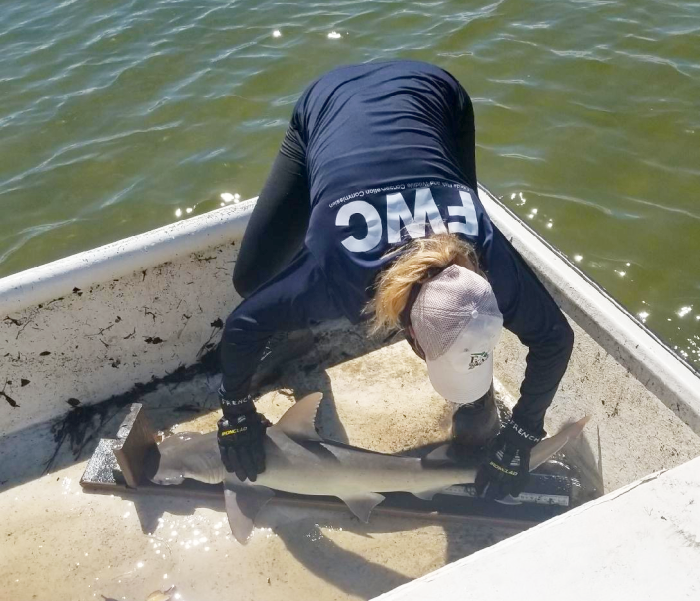 During one of FWRI's Stratified-Random Sampling trips, we caught nine smaller bonnethead sharks (Sphyma tiburo) with our 600-foot seine. We measured and threw them overboard, but before that, a coworker snapped this picture of me (Christina French) and I wanted to share. Hope it helps spread the word of what cool and important work FWC does!
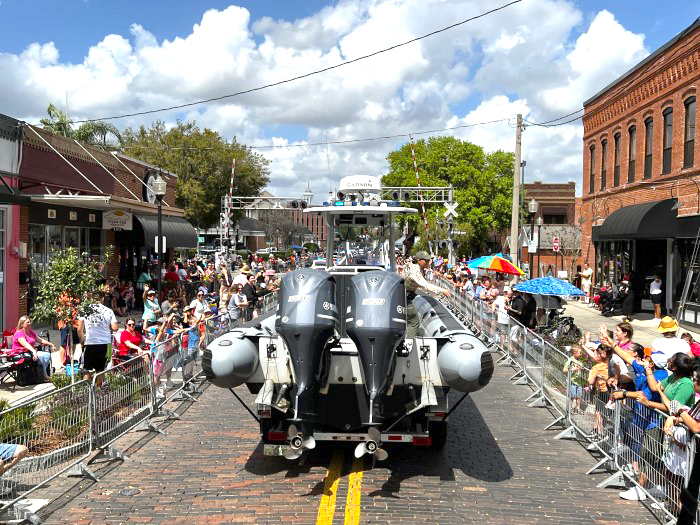
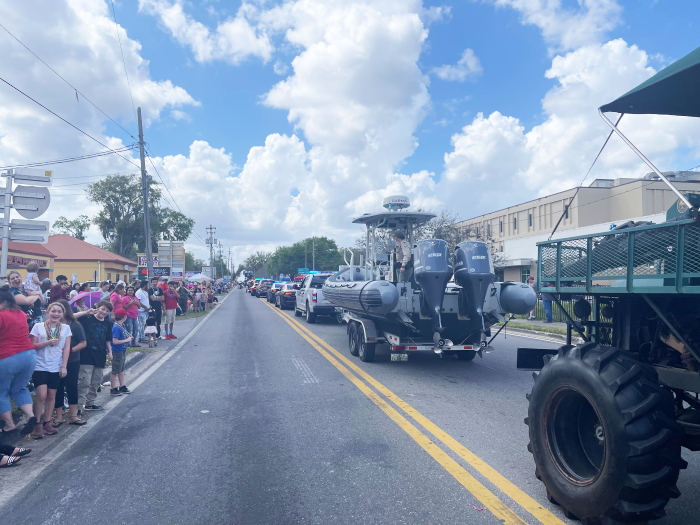
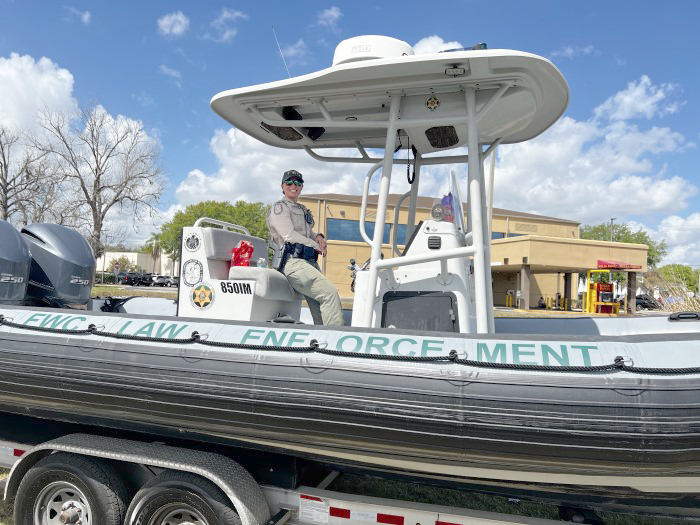  Southwest Region Officers Hunter Mitchell, James Pettifer, Bryce Phillippi and Forest Rothchild participated in the 2022 Plant City Strawberry Parade alongside our partner agencies that included the Florida Highway Patrol, Hillsborough County Sheriff’s Office and Plant City Police Department. The officers traveled the parade route in a patrol truck, patrol vessel and swamp buggy as they tossed giveaway items to the spectators.
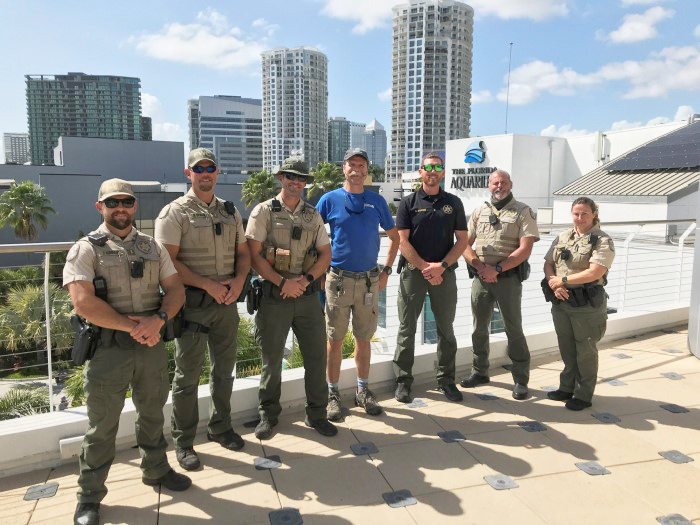
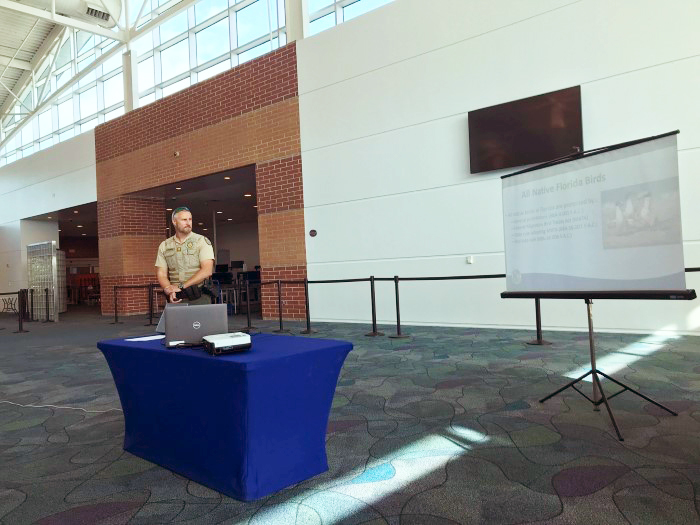 The Southwest Region hosted a shorebird interagency LE workshop at the Port of Tampa. FWC biologists, along with partners from Audubon Florida, presented information regarding shorebird protections, regulations and enforcement. Law enforcement partners from FWC, USFW, neighboring counties and local municipalities were invited to attend. SWR shorebird biologist Tyson Dallas and Capt. Evan Laskowski (above) both spoke for FWC. Afterward, a small group was able to able to attend a private tour of the Florida Aquarium next door to the Port.
Officers Richards, Foell, Boley and Allen, onboard FWC’s OPV Trident, were conducting inspections on commercial shrimp vessels anchored south of Key West. The officers inspected a commercial vessel, Sabastian’s Pride, out of Clearwater. While inspecting, the officers located a bag of stone crab claws, allegedly traded from another commercial fisherman. Eighteen of the stone crab claws measured less than the legal limit of 2 and 7/8 inches. The captain was cited for possession of the undersized claws.
A vessel was taking on water offshore of Key Largo. Officers Janzen and Ruiz and Lt. McDaniel responded by water and located the vessel with five people on board making its way toward shore at White Banks Dry Rocks. One of the people onboard continuously bailed water from the bilge while in transit to shore. FWC escorted the vessel to safety at the Key Largo Campground. Once back to shore, it was determined that the vessel had a bilge pump failure.
Officer Pablo Ruiz cited a Miami man who was in possession of seven mangrove snapper, which is two over the bag limit, and six of them were under the 10-inch minimum size limit.
 FWC Officer Jessica Diaz and FWC Lt. Paul Hien made multiple resource cases over one weekend. On Saturday, March 19, Lt. Hien was on foot patrol at Channel 5 Bridge when one of his fisheries inspections discovered 14 yellowtail snapper under the 12-inch minimum legal limit. Lt. Hien cited the Miami subject for the resource violation.
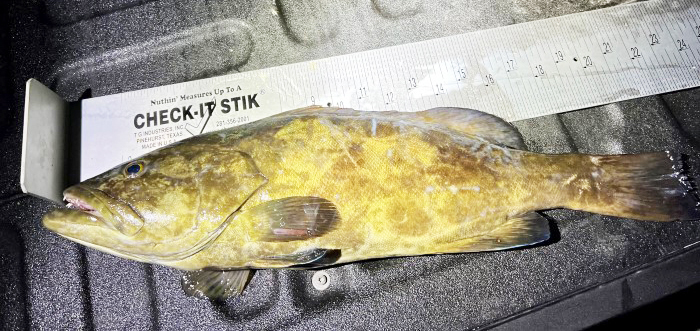
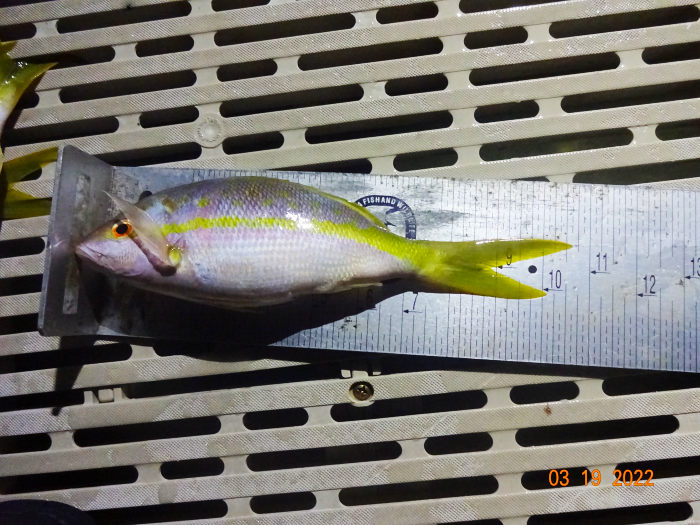 On Saturday, Officer Diaz made two undersized mangrove anapper cases in Key Largo. On Sunday, Officer Diaz was on foot patrol and performed a fisheries inspection. A Miami man fishing near a boat ramp was discovered to be in possession of an undersized and out-of-season black grouper. Resource Citations were issued for all violations.
|
|
Deadline for the May Issue is Friday, April 29
The Inside Job is a monthly newsletter featuring
the employees and programs of the FWC.
Send your submissions, comments and questions to Kelly.Broderick@MyFWC.com.
|
|
|
|
|