|
 The FWC Employee eNewsletter
April 2021
Having trouble viewing this email? View it as a website.
  I hope all of you are out enjoying this spring weather and all its offerings. As we celebrate this season of regrowth and regeneration, I would like to recognize some of the work our agency and partners are doing to improve the habitat for now and future generations.
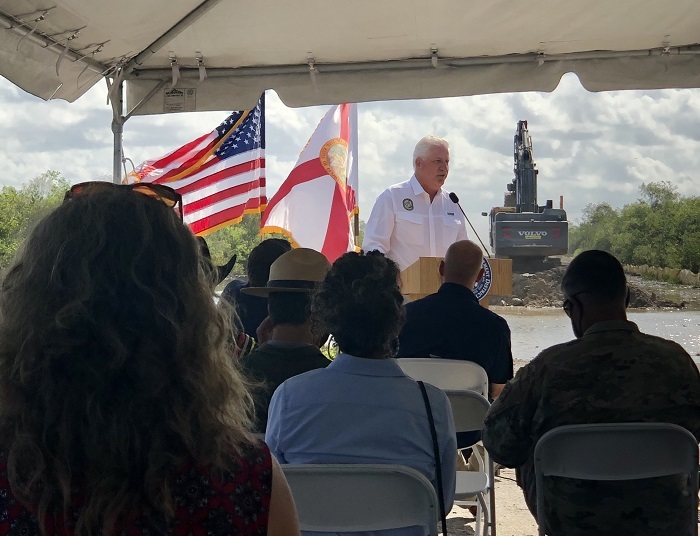
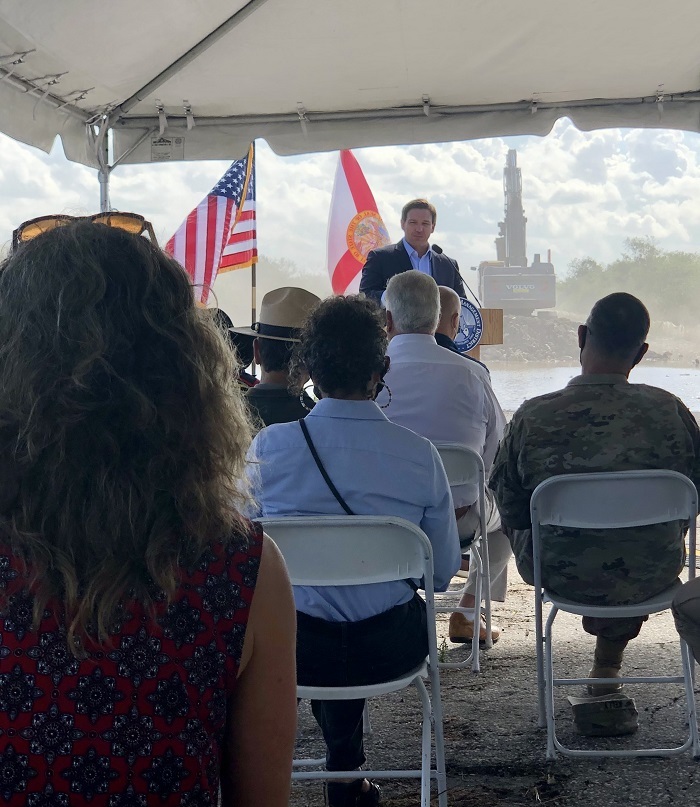
Last month I was honored to join Gov. Ron DeSantis, the South Florida Water Management District, U.S. Army Corps of Engineers, the Florida Department of Transportation, the Florida Department of Environmental Protection, National Park Service, Miccosukee Tribe of Indians of Florida and many others in commemorating the removal of the Old Tamiami Trail, a priority project for Everglades’ restoration.
I am proud that the FWC has contributed to this project from the very beginning and has participated in all phases of planning. Our Aquatic Habitat Conservation and Restoration Section contracted an engineering study to determine the makeup of the old roadbed and those findings were shared with our partner agencies and were key to removing the roadway in an efficient and ecologically preferable way.
This project improves the ability to move water south, minimizing damaging high water in the Everglades Wildlife Management Area and maximizing ecologically beneficial flows to Northeast Shark River Slough, Taylor Slough, and Florida Bay.
This is only one of the many important projects this agency is involved in throughout the state. I thank all of you for the great work you do every day for our habitats, fish and wildlife.
My fellow Commissioners and I will continue to prioritize management of our resources and strive to provide opportunities for residents and visitors to enjoy the fishing and boating capital of the world.
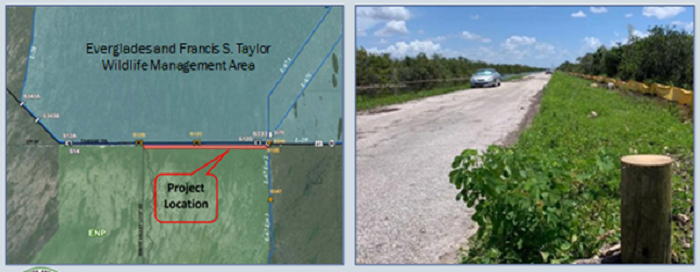
 The Old Tamiami Trail removal project removes a remnant section of the original 1929 road bed that was abandoned many years ago. The project location (left) and the actual roadway (right) are shown below.
  Then next Commission meeting will be held May 12-13 in Miami. See the agenda.
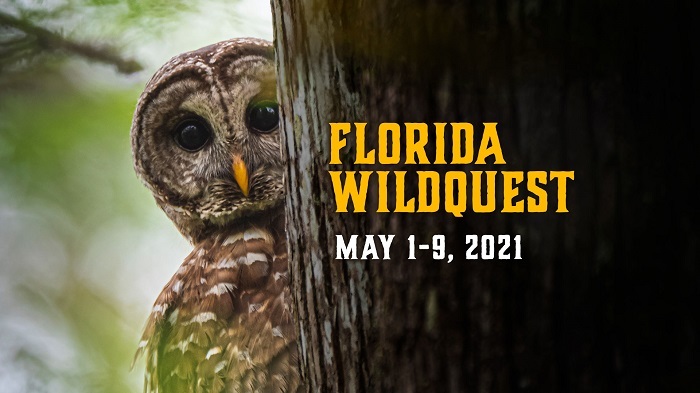 Florida WildQuest is coming to a WMA near you on May 1-9! WildQuest is an interactive scavenger hunt that will introduces participants to our wonderful, wild, Wildlife Management Areas! Explore an area with your family, friends, or as a solo adventurer. Utilizing your smart phone and the free, easy to use GooseChase app, complete missions and learn about the amazing wildlife and habitats found in Florida!
Search for animal sign, use your phone to ID a plant, take a selfie next to a landmark, or even do your best bird imitation to score points. You will see other participants entries and can watch the leaderboard in real time.
The Master WildQuest scavenger hunt can be played on any lead WMA. For an even more unique experience, players can head to one of seven featured WMAs near major population areas which will each host a custom scavenger hunt: Babcock/Webb, Big Bend-Tide Swamp, Chinsegut, Fisheating Creek, Guana River, L. Kirk Edwards and Tosohatchee. There is also a scavenger hunt designed for families with young children called WildQuest Jr! Check out the WildQuest web page to learn how to join a game and for info on prizes.
The Public Access Services Office developed WildQuest to increase awareness of the WMA system and its recreation opportunities. This first annual event targets audiences who have an interest in wildlife-based recreation but may not be aware of the WMA system: members of Great Florida Birding and Wildlife Trail community who don’t currently visit WMAs, families of elementary age kids, conservation-minded millennials and young adults, and Black and Hispanic members of these groups.
Through WildQuest, players will in engage in scavenger hunts statewide and at featured areas, exploring and discovering the WMA system and the many recreational opportunities offered on WMAs. After participating in a scavenger hunt, participants will submit a survey as part of their entry into the prize drawing, allowing us to gather their responses on what they learned and their attitudes toward the WMA system and the FWC’s management efforts.
All of the FWC is invited to join us on a WildQuest in May at your local lead WMA! Learn more by visiting the Facebook event page or the WildQuest website.
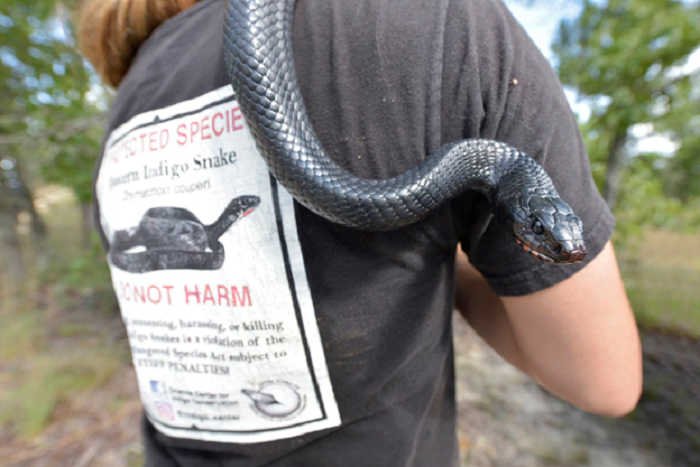 The eastern indigo snake has disappeared from many areas in the southeastern U.S. where it once occurred, largely due to the destruction, fragmentation and degradation of longleaf pine habitats. Working closely with partners, FWC is involved in the ongoing reintroduction of the eastern indigo snake to the Florida Panhandle and southern Alabama.
|
|
|
By Eric Suarez
The Florida Bonneted Bat (Eumops floridanus), endemic to Florida, is a federally endangered species that has one of the most restricted ranges of any bat species. Priority monitoring needs for this species include determining their distribution in Florida and continuing research to better understand their ecology. To help determine the southern extent of the Florida bonneted bat’s range, Susie Nuttall, FWC Florida Keys Wildlife and Environmental Area biologist, conducted a bat inventory from 2018-2020 throughout the Florida Keys. Although she detected five species, she did not detect the Florida bonneted bat (Figure 1).
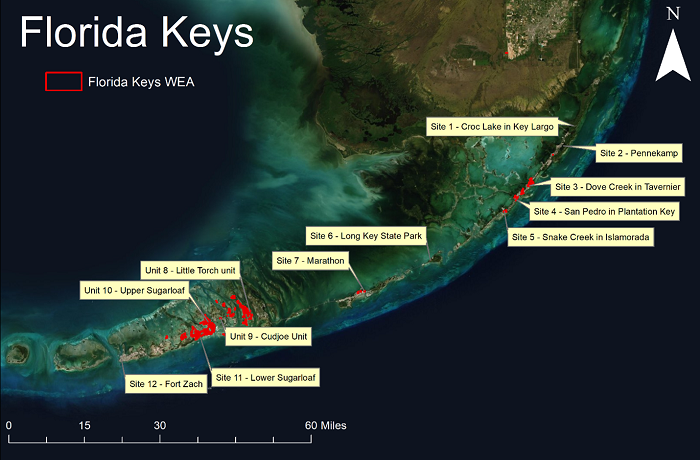 Figure 1. Bat inventory locations across the Florida Keys.
While Susie was conducting her survey across the Florida Keys, Bat Conservation International began a long-term monitoring study toward understanding the Florida bonneted bat’s distribution, roost site selection, diet, and how noise and light pollution impact bat populations in urban Miami-Dade County (Figure 2).
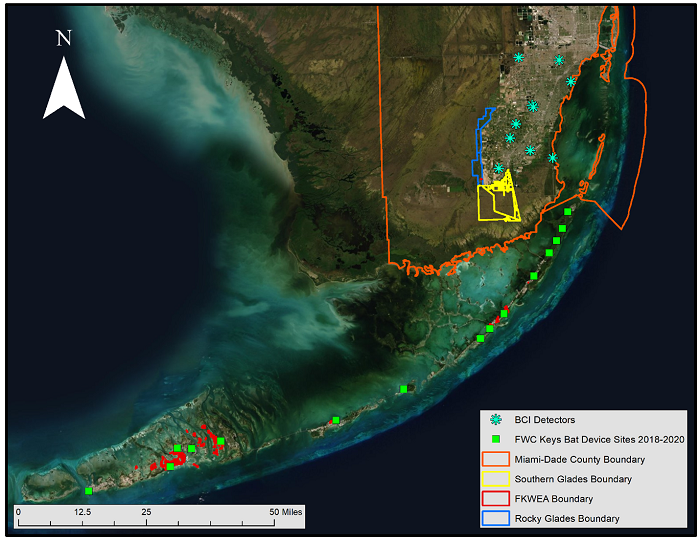 Figure 2. Bat survey locations across south Florida.
At the 2019 Florida Bat Working Group Meeting, Eric Suarez (FWC South Region Conservation Biologist) and Melquisedec Gamba-Rios (BCI Endangered Species Interventions Research Fellow) met and began discussing the potential to collaborate on an acoustic monitoring project in conservation areas adjacent to BCI’s work in Miami-Dade County. Due to her expertise and experience in southern Florida conservation areas, Susie Nuttall was brought in to assist. Two conservation areas were of interest: Rocky Glades Public Small Game Hunting Area and the cooperatively managed Southern Glades WEA. Because the South Florida Water Management District is the lead management agency on these two conservation areas, Brian Garret (SFWMD Operations and Maintenance Wildlife Coordinator) and Christina Stylianos (SFWMD Senior Scientist/Land Manager) were also brought on as collaborators (Figure 3). This began a great interagency collaboration effort to help fill in data gaps on this species’ southern distribution.
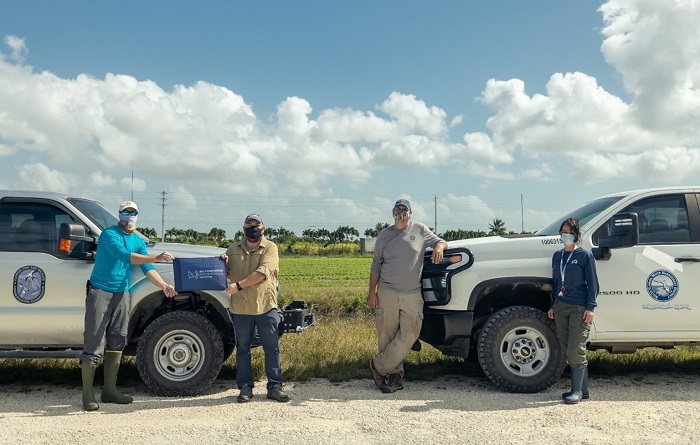 Figure 3. Multi-agency and entity (FWC, BCI, SFWMD) collaboration.
Also, in 2020, the U. S. Fish and Wildlife Service designated four critical habitat zones covering 1.5 million acres in 10 counties, including Miami-Dade, across south and central Florida. This new critical habitat zone designation, which included portions of both Southern Glades and Rocky Glades, added even more importance to the project’s original goal of determining the Florida bonneted bat’s southern extent.
In November 2020, the collaborative team of FWC, SFWMD and BCI staff set up seven acoustic recorders – five in Southern Glades and two in Rocky Glades (Figure 4). These acoustic recorders are monitored monthly and will collect data daily for at least one year. The project will not only provide information on if Florida bonneted bats are found in these areas but will also provide information on the seasonal occurrence of Florida bonneted bats in the critical habitat zone and will allow us to obtain occurrence data on other bat species using the areas. Prior to this study, no comprehensive bat monitoring had been conducted on either of these conservation areas. Data will be analyzed on a quarterly basis and shared by BCI on an online live dashboard available to the public.
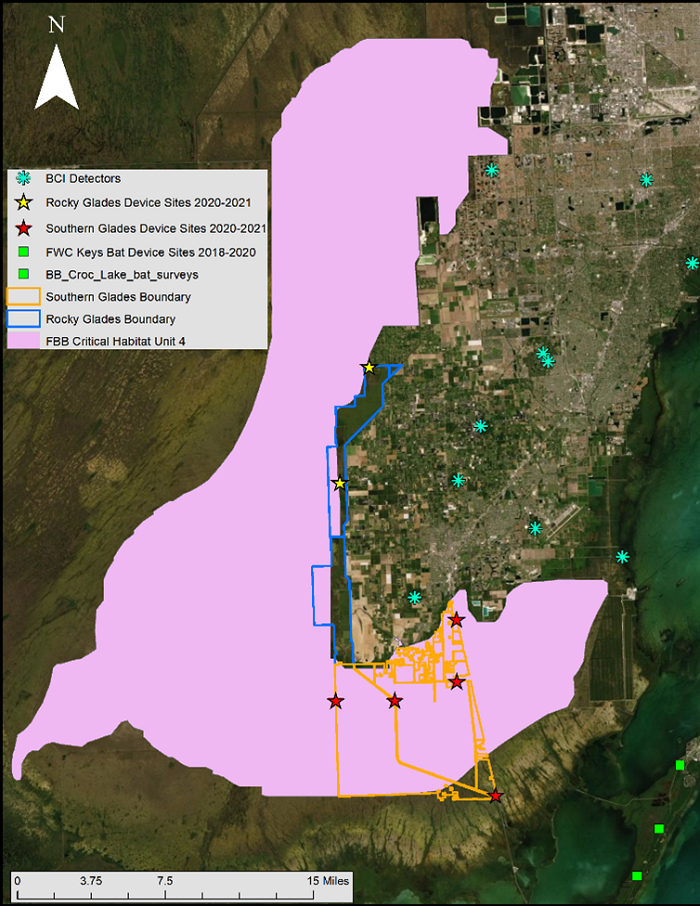 Figure 4. Left: bat survey locations in Southern Glades and Rocky Glades; Right: Susie Nuttall and Eric Suarez deploy a bat acoustic recorder.
Exciting preliminary results from November and December 2020 have confirmed the presence of Florida bonneted bats in six out of the seven sites in both conservation areas! Other bat species that have been confirmed in both areas are the Brazilian free-tailed bat (Tadarida brasiliensis), northern yellow bat (Lasiurus intermedius), Seminole bat (L. seminolus), evening bat (Nycticeius humeralis), Velvety free-tailed bat (Molossus molossus) big brown bat (Eptesicus fuscus) and tricolored bat (Perimyotis subflavus).
|
|
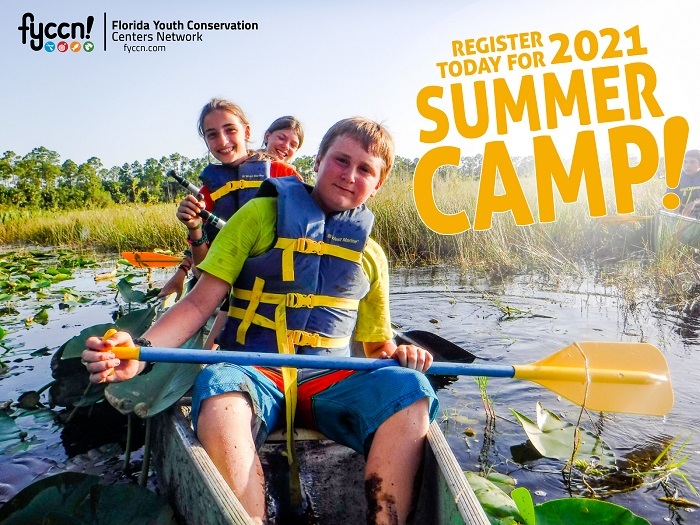 Three of FWC's summer camps are still accepting new campers for Summer 2021! Sign your child up for an amazing summer adventure they'll never forget! FWC's summer camps are everything you love about camp including hiking, swimming, storytelling, bonfires, and camp songs, PLUS conservation education. Your child will walk away with a working knowledge of fishing, paddling, shooting sports, wildlife identification and habitats, leave no trace principles, survival skills, and so much more. All camps are accredited by the American Camp Association and boast friendly, highly-trained and experienced staff. These camps are still accepting new campers for 2021: Everglades Youth Conservation Camp in West Palm Beach, Ocala Outdoor Adventure Camp in Silver Springs, and Joe Budd Youth Conservation Center in Midway Hurry, spaces are filling quickly!
|
|
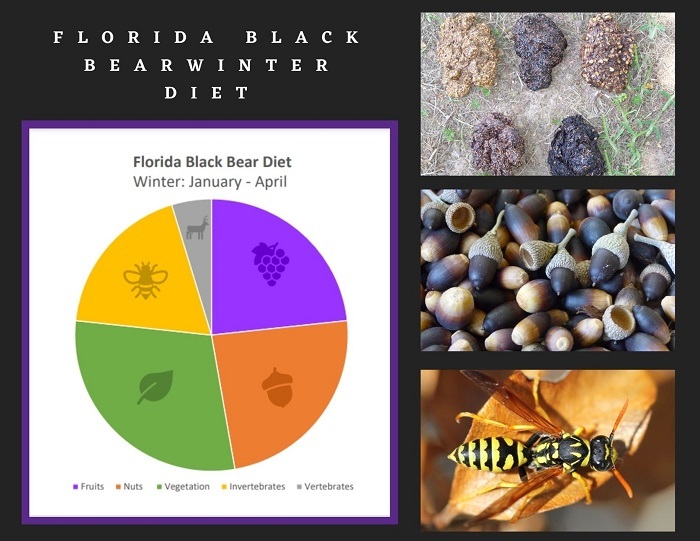 Florida black bears eat a variety of foods, making them dietary generalists. FWRI researchers investigate bear scat to identify foods the bears have eaten. Important food items for bears vary widely by region and by season. In winter (for bears, January-April), they eat vegetation including the heart of saw palmetto and pickerelweed, fruits from bitter gallberry and greenbriar, acorns left from the previous fall, plus insects including ants, wasps and beetles.
|
|
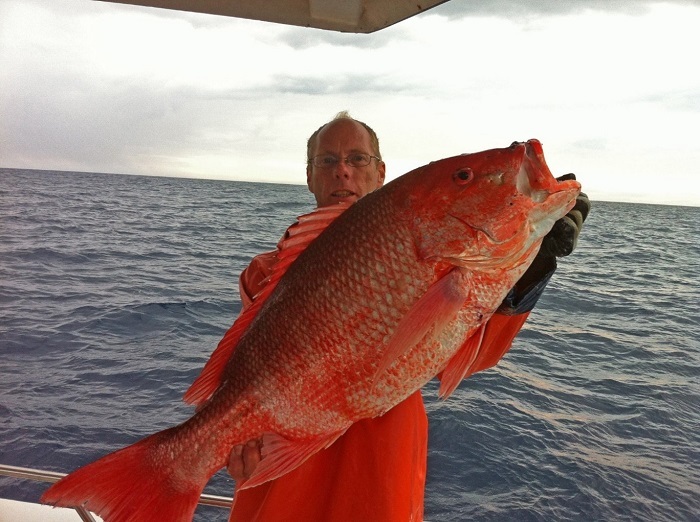 FWRI’s Fisheries Independent Monitoring biologists will be conducting a 3-year study off the east coast of Florida using a standardized hooked-gear survey to characterize the relative abundance and size/age composition of red snapper and other federally-managed reef fishes through time. Between April – July each year, the survey will be conducted from roughly the Florida/Georgia border to Melbourne, on identified hard bottom reef-fish habitats. This project is a continuation of a survey that has been conducted intermittently since 2012 and will allow biologists to determine how populations have changed over the past decade. Project results, which complement data from other ongoing fishery independent surveys, will be useful for upcoming stock assessments.
|
|
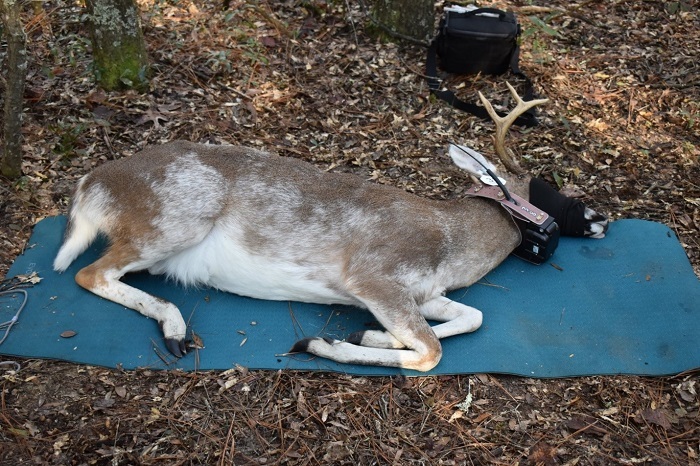 FWRI Researchers recently collared a piebald buck as part of FWC’s North Florida Deer Study. Piebaldism is rare, occurring in less than 2% of deer. It is a recessive genetic trait, meaning both parents of this buck had to carry the gene. Because the same genetic code for coat color impacts other traits, piebald deer may have issues, such as “roman nose,” shortened lower jaw, curved backbone (scoliosis) and short/deformed legs. This unique mature buck appeared to be a healthy, and no abnormalities were noted other than his unusual coat color. FWC’s North Florida Deer Study examines white tailed deer population dynamics in northcentral Florida. GPS collars and trail cameras provide data on deer survival, home-range & movement and help inform deer population management decisions.
|
|
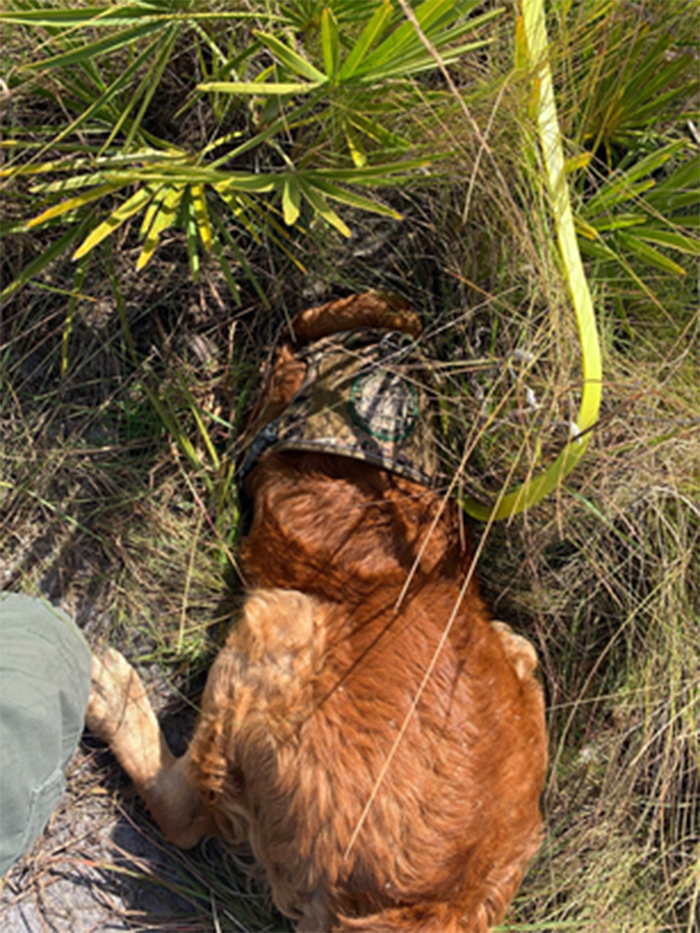
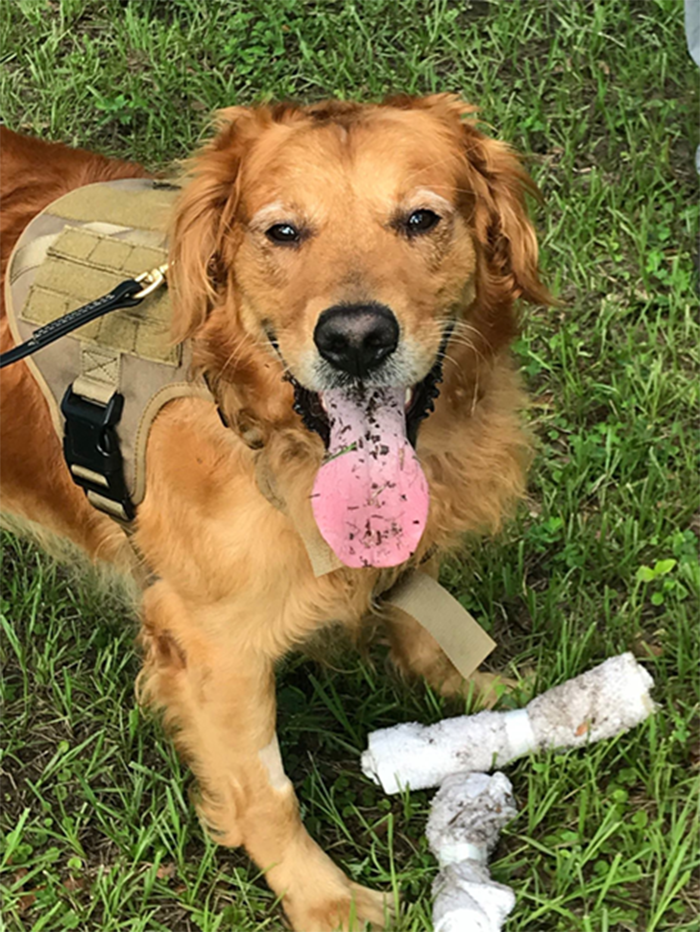 Cowboy, the scat detecting golden retriever, has been busy in the field helping FWRI biologists locate spotted skunks. Trained to detect scat of long-tailed weasels, Everglades mink and spotted skunk, Cowboy recently surveyed Three Lakes WMA. Not only did he successfully locate spotted skunk scat and active den sites, he also led biologists to the unexpected discovery of latrine sites, indicating that dens are being reused, a unique find outside of breeding season!
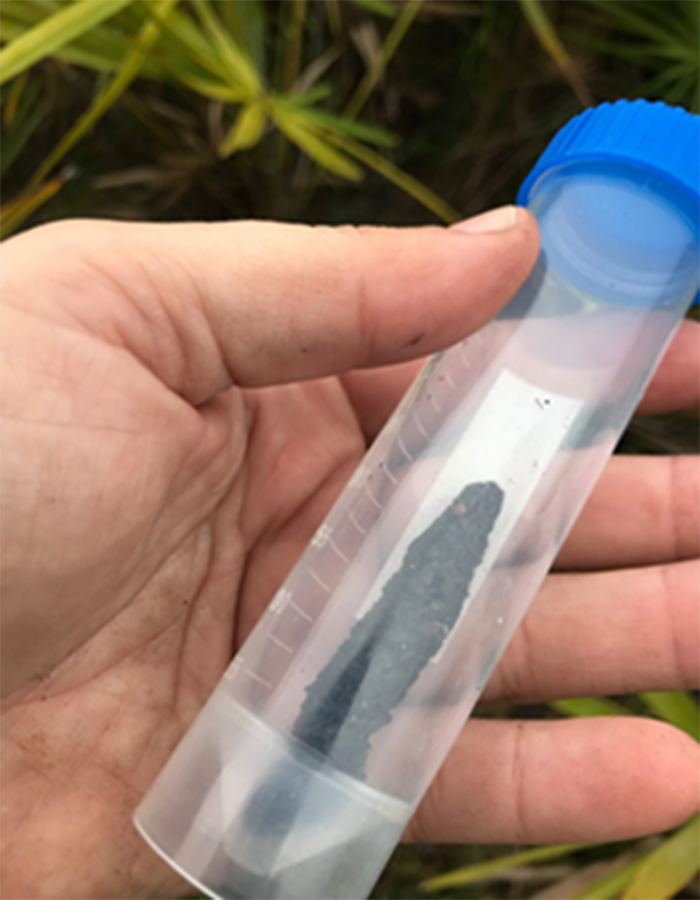 Biologists are currently working to learn more about the distribution of skunks in Florida. Scat detection dogs are an active form of survey and beneficial for locating species with large home ranges, that occur in low densities.
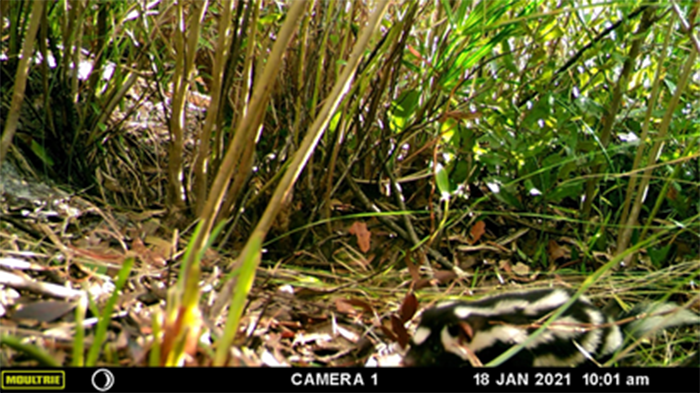 See a skunk? Report your sighting: MyFWC.com/SkunkSurvey
More info: https://www.facebook.com/FWCResearch/posts/4619534208062609
|
|
|
On Feb. 1, a video was posted to a Key West Facebook group of an individual, Robert Stortz, repeatedly allowing his dog to run free in front of the Key West Wildlife Bird Center and killing roosters. After the post went viral, the Florida Keys SPCA fined the dog owner.
On Feb. 24, Inv. Glen Way received a phone call from Key West Wildlife Bird Center Director Tom Sweets who stated that his team was responding to a call of a royal tern in distress. Upon arrival, they saw people yelling at a man with his dog who were quickly leaving the pier. The man and his dog were recognized as the ones from the viral post. Sweets learned that the royal tern had been attacked and eviscerated by the dog and, that prior to the attack, people were yelling at Stortz for not having his dog on a leash, especially after the incident with the roosters. Sweets was told that Stortz retrieved the dead royal tern from his dog, walked away from the crowd and stuffed it toward the bottom of a trash can. Sweets’ staff found and recovered the deceased bird.
Lt. Joshua Peters and Inv. Way conducted an investigation and, on Feb. 26, Lt. Peters obtained an arrest warrant for Stortz, who was charged with violating the Migratory Bird Treaty Act by capturing and/or possessing a migratory bird. The bond amount was $5,000 and, on March 5, Stortz was arrr44yyrested on an active warrant by the Miami-Dade Police Department.
|
|
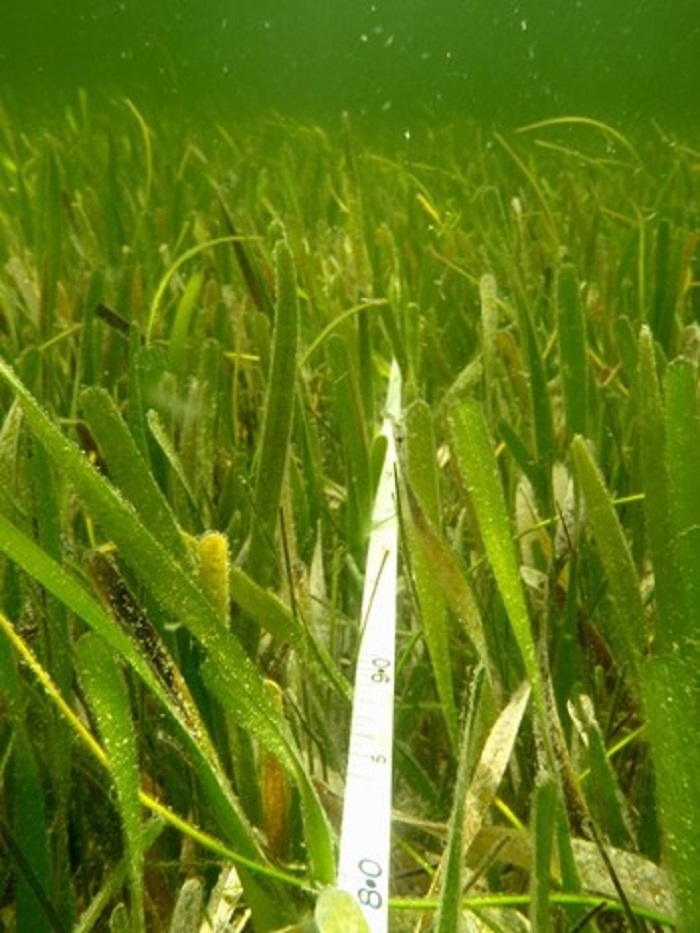 A new FWRI publication looks at the relationship between the immune status of host seagrass species Thalassia testudinum, aka turtlegrass, and the parasite that causes seagrass wasting disease, Labyrinthula spp. A survey of plants from across Florida Bay showed that where resources, such as sediment, nutrients and light were abundant, plants were larger and appeared to tolerate moderate parasite load without eliciting a vigorous immune response. Where resources were scarce, plants were smaller and attempted to resist infection by boosting their immunity; however, when these plants were physiologically challenged by an environmental fluctuation or stressor, the strategy appeared to fail, resulting in higher parasite loading. Correlative evidence suggests that hyposalinity stress could be one of several drivers of seagrass wasting disease in Florida Bay. This study highlights the complexity of the turtlegrass wasting disease pathosystem and raises important questions about how climate change and ongoing Everglades’ restoration might impact this foundational seagrass species. FWC relies on peer-reviewed science for its management; to access this full publication: https://www.frontiersin.org/.../10.../fpls.2021.612947/full
#SeagrassAwarenessMonth
In the March edition of Inside Job, there was an accidental typo - Jo Barnhart has worked with FWC for more than one year. She has actually been with the agency for 18 years! It's a tiny detail but Jo has worked so hard for HSC and should be recognized for her many years of contribution.
|
|
 FWC’s Coral Rescue Team has been collecting corals from an area known as the “endemic zone” - a region of the Florida Reef Tract where Stony Coral Tissue Loss Disease has been present for less than one year and is now maintained at baseline levels. Some of the recent corals collected are rare along the Florida Reef Tract and were not found in earlier collections ahead of the disease boundary, making endemic collections vital to preserving the species.
Surviving colonies of SCTLD-susceptible species from the endemic zone will provide potentially disease resistant genes to breeding activities in the Coral Rescue Project. Endemic corals will receive the same expert care as pre-invasion rescue corals but will remain biosecure and isolated to prevent any potential risks. Future collections are being planned at other coastal construction projects to preserve additional, genetically diverse, valuable corals from the Florida Reef Tract.
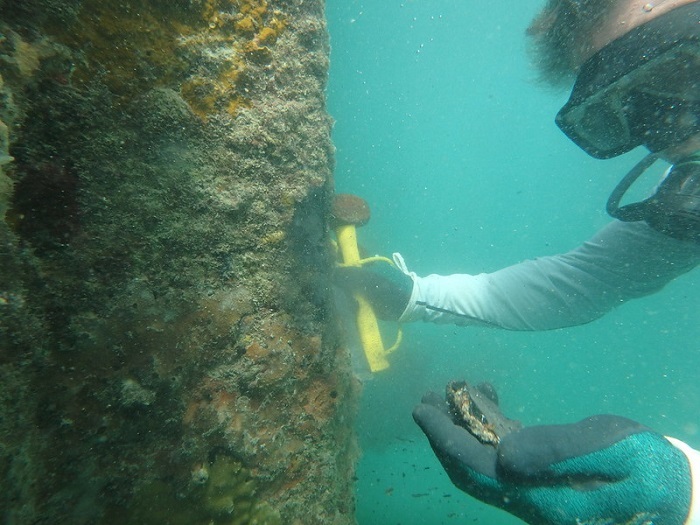 FWC coral research biologist, Allan Anderson, collects a golfball coral (Favia fragum) from Fisher Island.
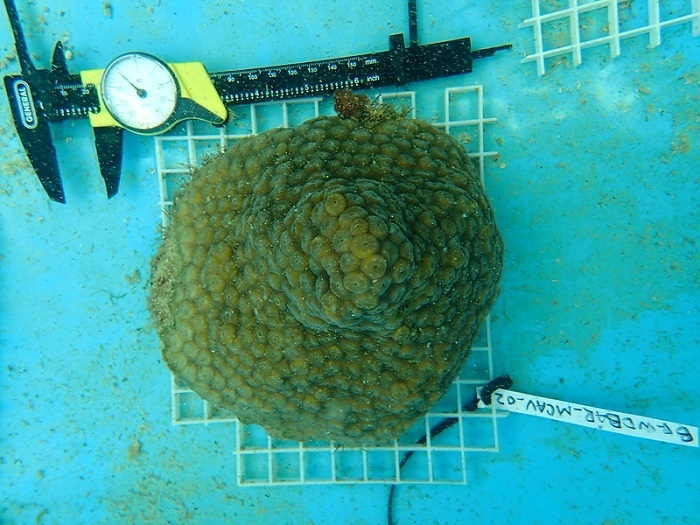 Great star coral (Montastraea cavernosa), collected from within the endemic zone in Broward County.
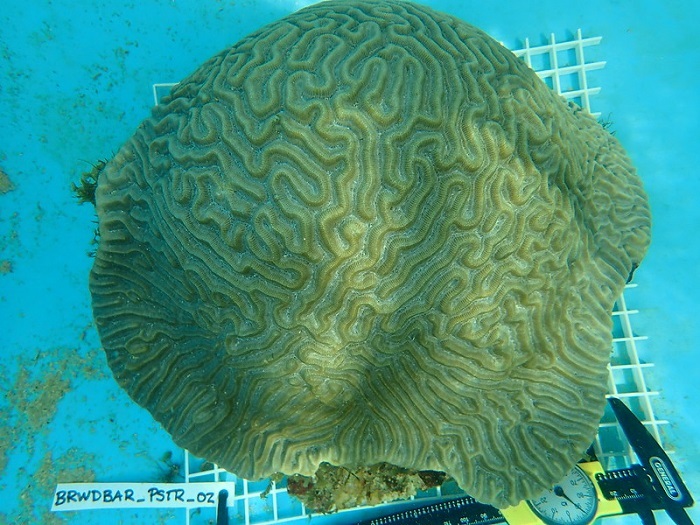 Symmetrical brain coral (Pseudodiploria strigosa), collected from within the endemic zone in Broward County.
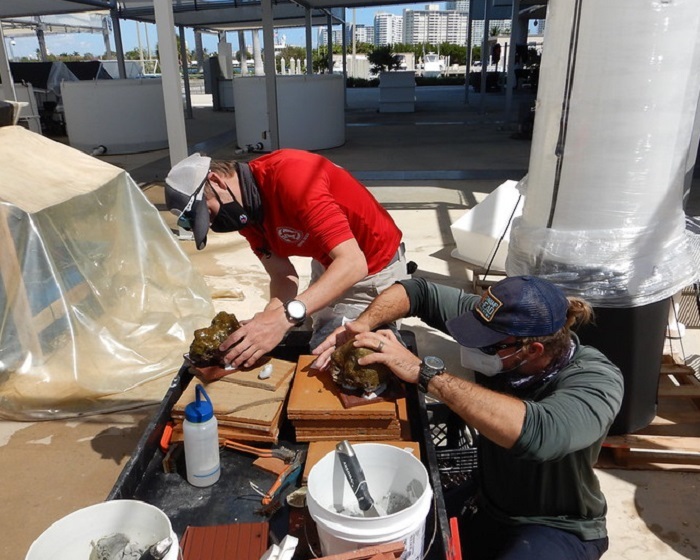 FWC Coral Rescue Team members, Allan Anderson and Devon Pharo, mounting corals recently collected from the Port Everglades jetty in Dania Beach.
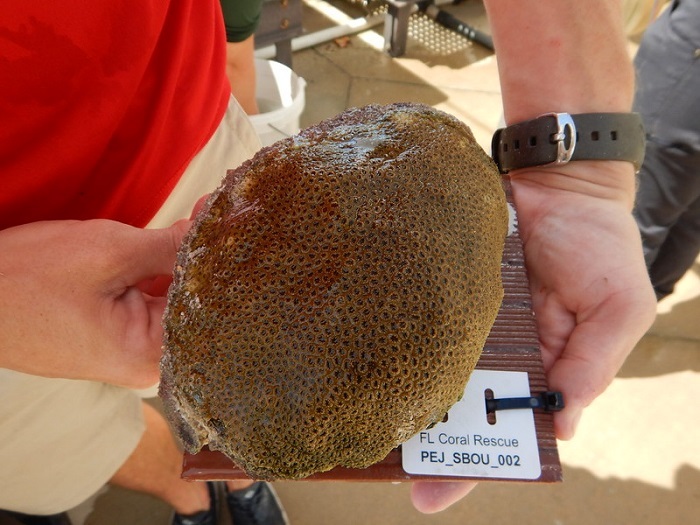 Smooth star coral (Solenastrea bournoni), collected from the Port Everglades jetty in Dania Beach, FL. Now mounted on a tile and given a unique coral identification number and tag.
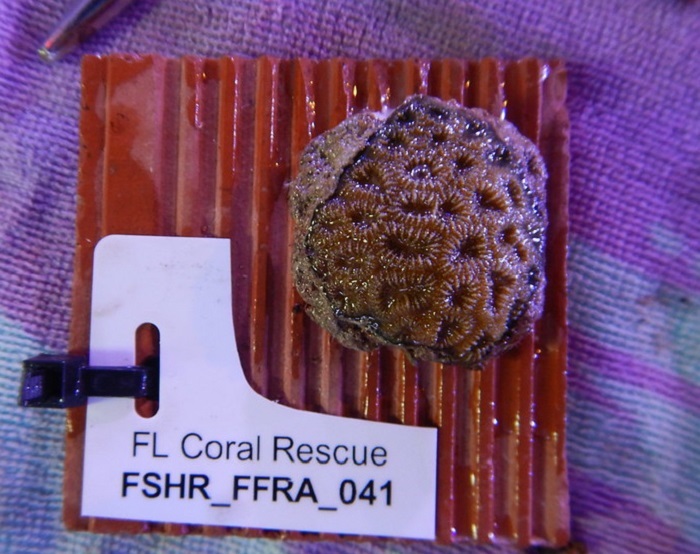 Golfball coral (Favia fragum), collected from Fisher Island in Miami.
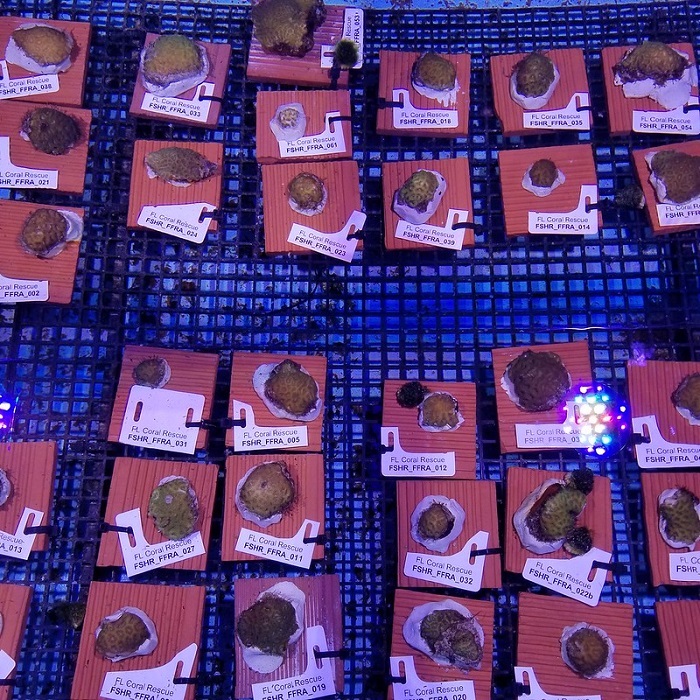 Golfball corals (Favia fragum), mounted and settling into their new home at The Reef Institute.
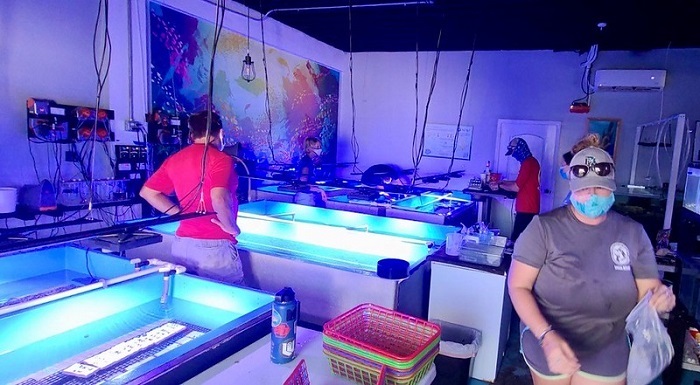
FWC Coral Rescue Team members Rob Ruzicka, Allan Anderson and Tanya Ramseyer at The Reef Institute in West Palm Beach
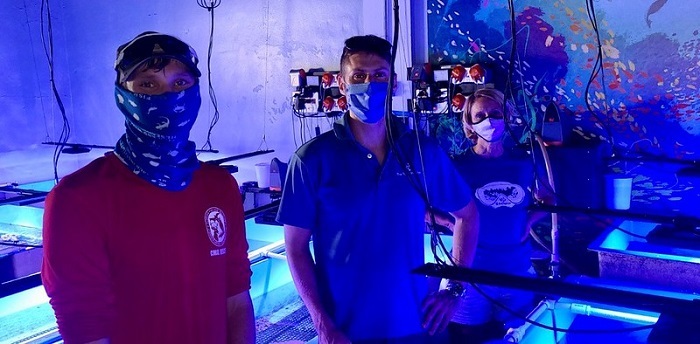 FWC coral research biologist Allan Anderson (left), with Dr. Charlie Gregory and Leneita Fix from the Reef Institute.
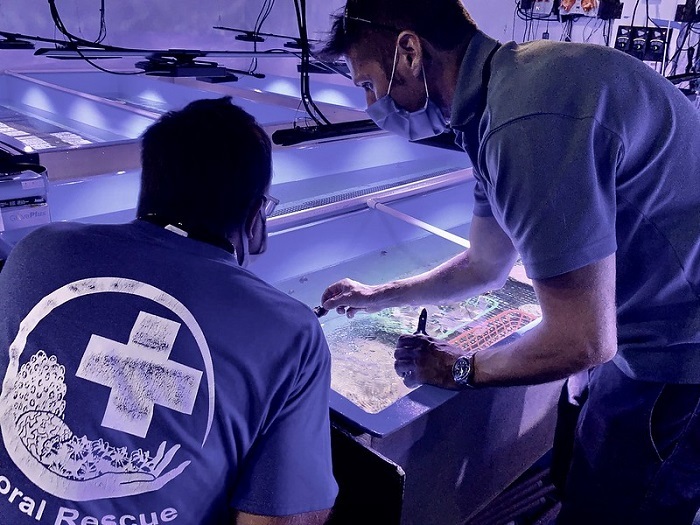 Rob Ruzicka (FWC) and Dr. Charlie Gregory (The Reef Institute) examine the newly collected corals at The Reef Institute.
 Some recent news releases include:
Celebrate Gopher Tortoise Day year-round with a tortoise friendly yard
FWC programs teach youth about conservation, hunting and other outdoor skills
FWC and UF extend deadline for Freshwater Stocking Angler Survey
FWC: Manatees are on the move! Go slow, look out below
FWC and FOLA announce $5,000 winner during the Lake Apopka Fish Challenge
SW Florida snook, redfish and spotted seatrout: FWC wants your input
Lights out, stash the trash. It’s sea turtle nesting season!
New protections for multi-species fish spawning aggregations near Western Dry Rocks effective April 1
TrophyCatch awards Season 8 Phoenix Bass Boat
Alexander Springs Run project at CR 445 bridge will benefit visitors and the environment
 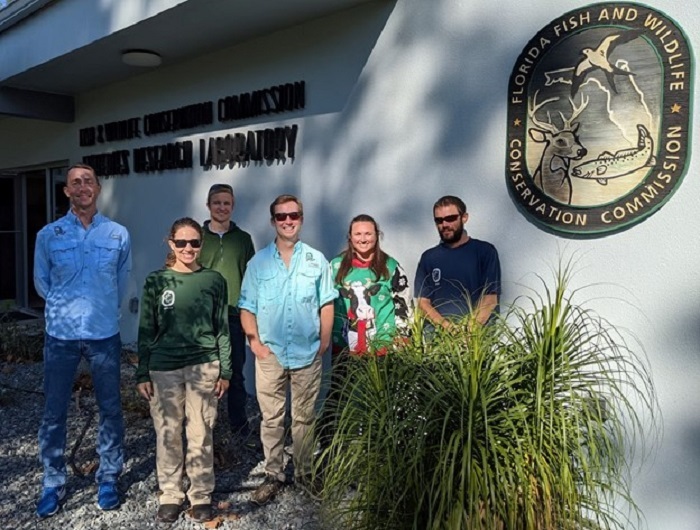 John Saxton, Jennifer Moran, Kirk Dunn, Chelsea McMullen, and Kyle Miller (Freshwater Fisheries Research Long-Term Monitoring Team)
The Long-Term Monitoring team is critical to FWC’s assessment of freshwater systems throughout Florida. Although the LTM team is housed at the Eustis Research Lab, they travel statewide, from the rivers and marshes in the western Panhandle to the canals and Everglades in south Florida. From some of the cold days bass shocking, to the hot windless summer days plant mapping and late-fall days counting hundreds of fish during community samples, the LTM team has a packed annual schedule. The team works closely with FWC freshwater research and management biologists throughout the state and, without their assistance, valuable fisheries and habitat data would be difficult to obtain. There are no offices within Freshwater Fisheries Research or Freshwater Fisheries Management that can say they have completed their sampling without the help of the LTM team. Without the LTM team, FWC would not be able to collect the variety and breadth of data we currently have, whichis necessary to inform important fisheries and habitat management decisions.
 DLE 2021 Annual Award Winners
We congratulate the individuals below on their commendable efforts leading to their award.
Officer of the Year
Kevin Kleis, South Region Bravo
Investigator of the Year
Scott Kirsch, Southwest Region
Boating Officer of the Year
Britton Corbin, Northwest Region
Team of the Year
Sanford RCC Team
OMC Manager Lois Jarvis DOS Magda Pereira
DOS Mike McDaniel LW Sandy Byrd
LW Lynne Gross DO Chip Paoletti
DO Scott Ancowitz DO Darbie Gibson
DO Robert Yanochko DO Shay Evans
DO Sousada Balgo DO Kelley Estes
DO Devon Davis DO Amanda Staller
DO Samuel Mayfield DO Cameron Goode
CT Hope Caplan
Duty Officer of the Year
Darbie Gibson, Orlando RCC
Employee of the Year
Kathy Grossman, North Central Region
Prosecutor of the Year
Special Counsels Kelly McKnight and Paul Dontenville, Tallahassee
Reserve Officer of the Year
Tim Miller, Northeast Region
Biologist of the Year
Chris Boyce, HSC, South Region Bravo
You can visit the Colonel’s Column to read about the hard work and dedication these members have demonstrated to the people and natural resources of Florida. They truly went above and beyond last year and are very deserving of this recognition.
 Citizens and FWC customers were so impressed by the following employees, they told us about it through email on the "Praise an Employee" page of MyFWC.com/Contact. When your coworkers receive kudos, help share the good news by contacting Kelly.Broderick@MyFWC.com.
Justin Bingham, HGM
I would like to express my appreciation for the recent help I received from Justin Bingham, Public Hunt Coordinator. He was able to explain the process of applying for returned spring quota turkey permits for WMAs. On multiple occasions I spoke to individuals at the Go Florida Outdoors! helpline and, although they were very nice and courteous, could never explain the process in sufficient detail to me to complete a reissue application. I believe Justin was better able to explain this process because he had applied for these permits in the past. Justin was also responsive to my other inquiries (several) as I tried to secure a place to turkey hunt on public or private land (unguided). He provided information about particular public areas, who else I might contact and turkey hunting advice. Although I was unable to secure a place to hunt in Florida this spring, I am still very grateful for Justin's efforts to help me. As a result of my experience, I am very impressed with him and your agency.
Carolyn Champion, OLP
This year I have just gotten back into trapping after 30 years. I am not good with computers. Ms. Champion walked me through every step of the way, from buying the boat license traps to having me get her the SPL number from the guy I was buying the boat from to make sure he was up to date and legitimate. There is no way I could’ve done this conversion without her! In another incident I was having to replace tags. Again she directed me to the right people for help. Right down to the officers needed to make it all work out. Lastly. I have to make the $5,000 minimum quota. Thought I had to send in and Ms. Champion gave me the phone number, the name to ask for and for that person to email to someone who could verify. My conversation ended with her saying, “I will be checking on this personally.” I just thought she should be recognized. Just the fact she does her job and makes you feel comfortable. When, quite frankly, it is very uncomfortable when you haven’t had to do this before! I personally say thank you to Ms. Champion as well as to everyone who has kept us all going in one of the most trying times.
Linda Collins, HGM
I had an alligator problem and the general manager of my park was hesitant to give permission to have it removed. Linda guided me through the necessary steps to get alligator removed. She was very professional and knowledgable and I believe the FWC is lucky to have her.
Lt. Bryan Lee
Thank you, Thank you, Thank you, to Lt. Lee and his crew for rescuing those kids off Brevard County Beach. I saw the video. What a relief it must have been for those children to see the helicopter and then the boat. Thank each and every member of the FWC for the job y’all do. I am a freshwater fishing guide in the N. Florida/S. Georgia area. And I fish off the Taylor County coast for recreation. Glad y’all are there. I know it can be a thankless job. But I appreciate y’all.
Officer Alton Rogers
Officer Rogers took the time to explain the situation of owls on my property and offered practical suggestions to protect them. He was very courteous and pleasant. I appreciate his time and professional insight.
Investigator William Stiffler
Officer Stiffler noticed a problem on an invoice for tropical fish on my last shipment. He immediately contacted me. He then worked with me to get the shipment squared away without delays and then came out to my place of business and advised me on how to solve in the future. It was a simple mistake but could have held up a large shipment and because Officer Stiffler took the time to call me and figure out what had happened, the shipment was released and all went well. I feel like he went above and beyond his normal day to work things out with me. He also sent me some great information for me to use in the future on shipments. DID A GREAT JOB!
Tony Young (three commendations)
After calling FWC main number I was directed to Tony Young. Tony took the time to text message me the links to what I needed. He then spent the time to walk me through the procedure. It was not only a pleasure speaking with Tony but he probably saved me a lot of frustration. I know he did. Can't say enough about how great it was to get someone on the phone that could help me. Tony is a great asset to FWC. I could also tell by his enthusiasm that he likes what he is doing and he does it well. You probably know all this because these kinds of employees don't go unnoticed. Many thanks to Tony Young.
I'm coming down to hunt the elusive Osceola turkey for my first ever hunt. I called the FWC and was referred to Tony for information I needed in order to be legal once there. To say the least Tony is a blessing. I had one particular area that was recommended by a friend. Upon speaking to Tony, he recommended three more areas that I didn't know anything about. I'm excited because these areas look amazing from satellite... can't wait to get there!
The agent returned my call in a very timely and professional manner. He’s very courteous and has administered quality assistance with the tools and knowledge that’s available to him. He went above and beyond to have my questions answered by not transferring me to someone else. He also sent links to further assist me so as to not be lost and become agitated. In all he has made the experience a very delightful one. He’s definitely an asset and also a perfect example for all others to follow so as to make this as simple as possible for people to call and be educated and not have issues.
 Congratulations to the following employees for reaching 5-year milestones of employment with the FWC.
|
|
40 Years
Jeff Ardelean, LE
35 Years
John Benton, FWRI
30 Years
Rod Bertelsen, FWRI
Angie Stoliker, LE
20 Years
Kathy Barnes, OLP
Rachel Bryant, LE
Jason Ender, LE
Monica Howell, OLP
Derrell Jones, LE
Byron Smith, LE
15 Years
Roger Hayes, LE
Carlos Llul, FWRI
Clint Peters, HSC
Michael Sowinski, HSC
Christopher Urban, LE
|
10 Years
Alicia Wellman, CR
5 Years
Matthew Barker, HSC-WHM
Jessica Bass, FBO
James Erskine, SI
Taylor Evans, FWRI
Jake FitzRoy, SI
Bryce Harvey, LE
Dan Kolterman, HSC
Dean Stoddart, HGM
Rigoberto Torres, FWRI
Morgan Wideroff, FWRI
Retired!
Investigator Chip Butler, LE
33 Years, 9 Months
Investigator Darral Thomason, LE
19 Years, 8 Months
|
|
(The FWC has a great many non-FTE employees, and they deserve recognition for reaching 5-year milestones too. Unfortunately, the system doesn't keep track of such statistics; but we don't want that to stop us. If you know of a non-FTE employee about to reach a 5-year milestone, please notify the Inside Job by email.) |
|

|
FWC employees have some of the most interesting jobs ever! Here are some of our employees doing what they do best. Send your photos of FWC employees in the office and in the field to Kelly.Broderick@MyFWC.com.
|
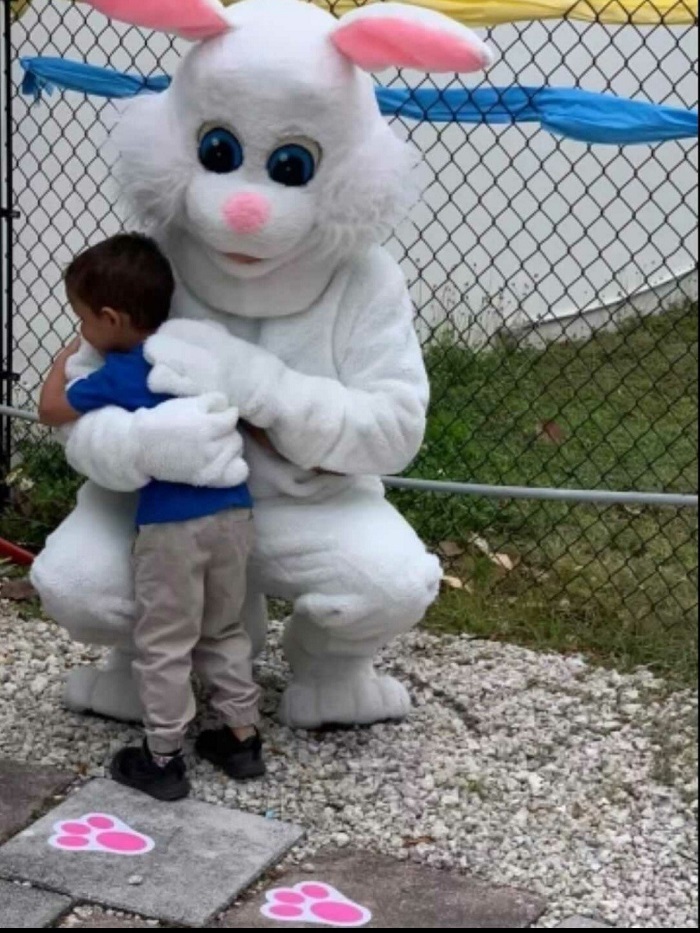 Investigator Chris Mattson helps out with the "Hippitty Hop Event” at the Tavernier Elks Lodge.
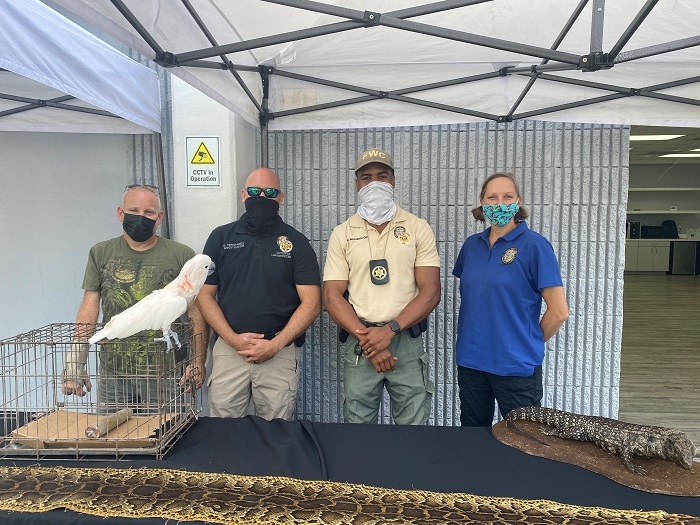
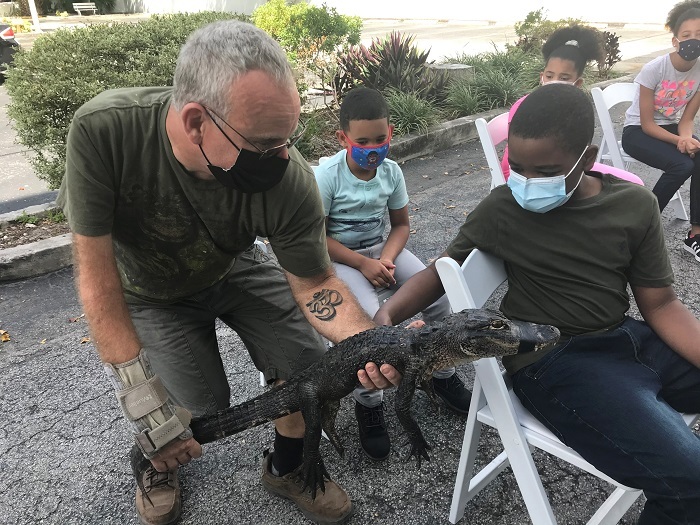
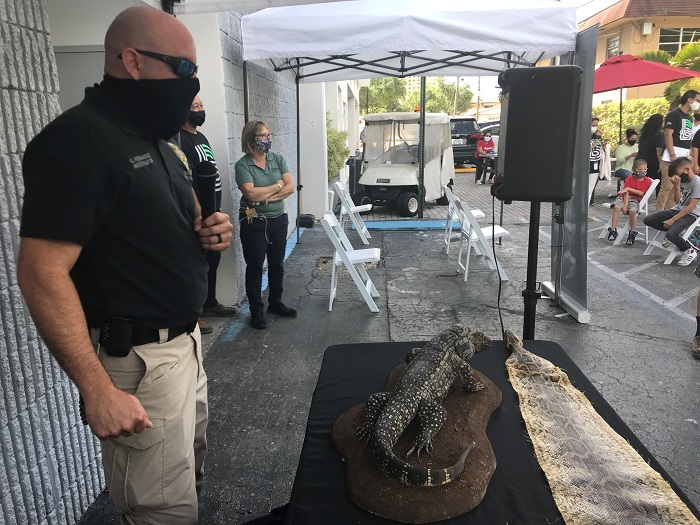 Inv. Gabriel Fernandez discusses rules about captive wildlife.
FWC employees in the South Region participated in a “Wild about our Littles” event hosted by Big Brothers Big Sisters of Miami. We fostered a learning experience and allowed youth between the ages of 9-15 years to become educated and experienced with native and nonnative animals. They also learned about not letting exotic pets into the wild and best practices for encountering wildlife. Jan Fore brought giveaways while Inv. Fernandez was our Ace Ventura Pet Detective and discussed rules about wildlife in captivity.
Bob Sonner with Inv. Fernandez, PIO Ronald Washington and Jan Fore.
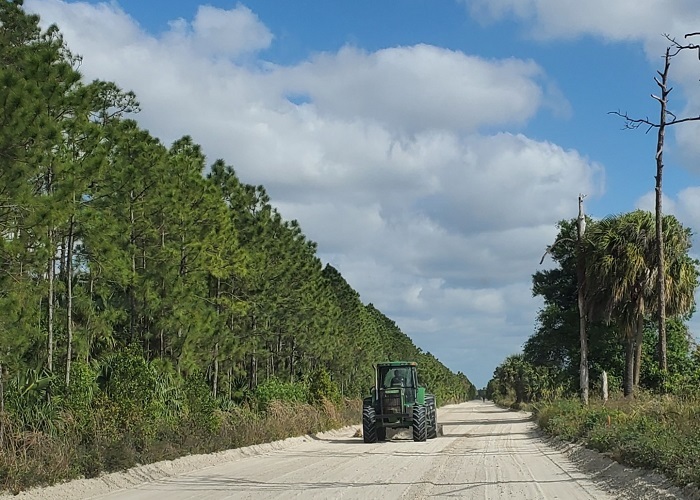 Darryl Sweetay, F&W Technician, grades Seminole Pratt Whitney Road – the access road to Corbett WMA, the Everglades Youth camp, and the Palm Beach County Shooting Range.
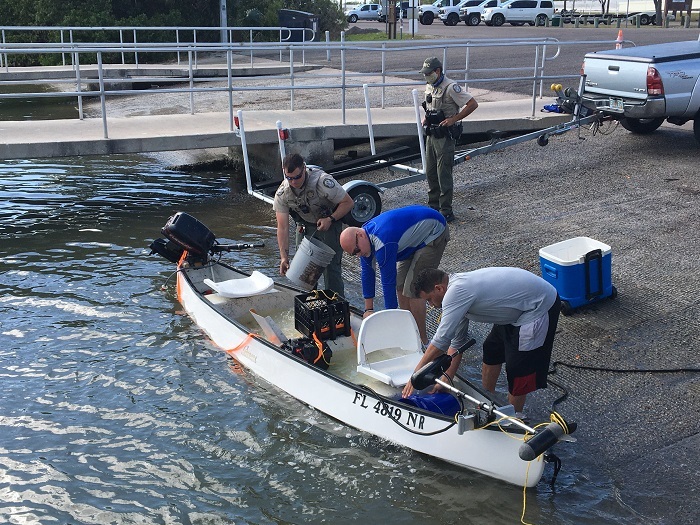
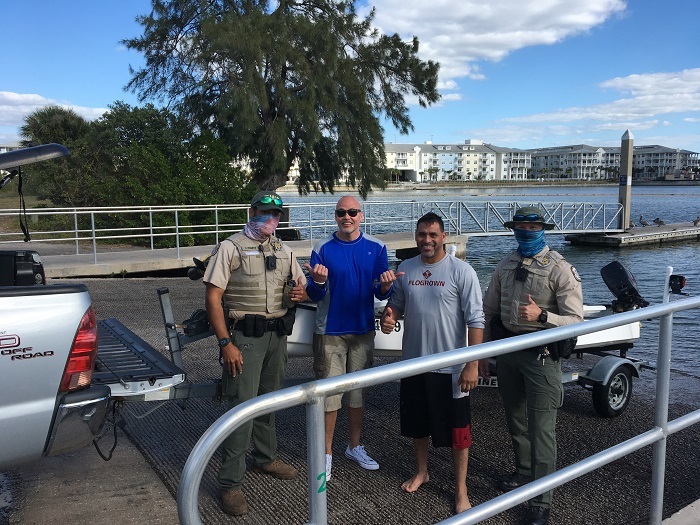
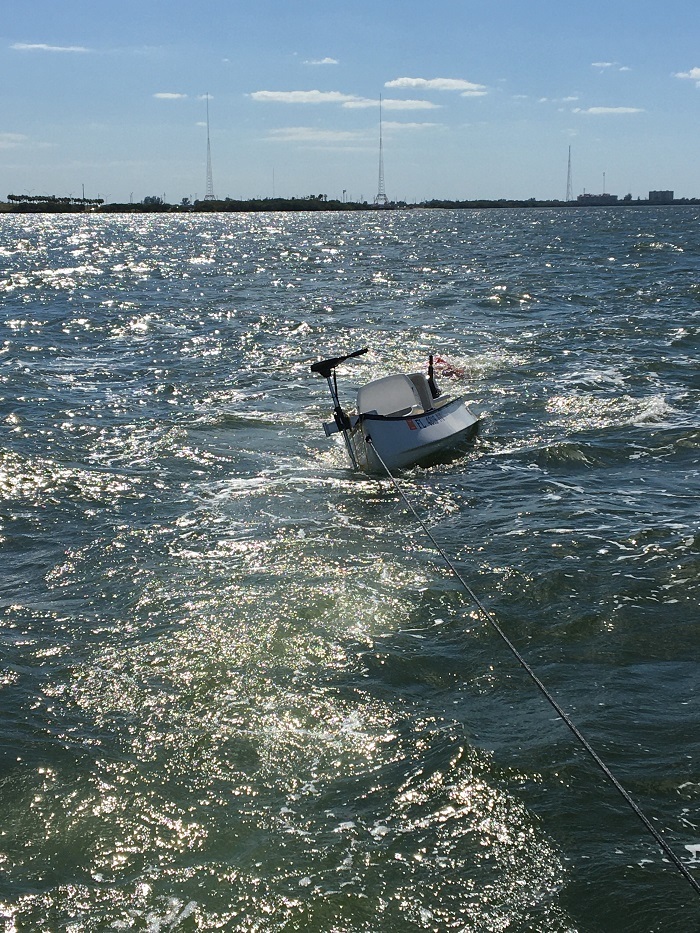 Southwest Region Officers Bryce Phillippi and Jamar Pigott were on water patrol in Old Tampa Bay when Officer Phillippi observed a partly submerged vessel in the distance. Upon arrival at the vessel, the officers immediately began looking for the boaters when they observed fire rescue on the Gandy Bridge attempting to rescue people from the water. The officers responded to their location and were able to get the two exhausted occupants onboard. Fortunately, both boaters had been wearing their personal flotation devices and were uninjured. Officers helped gather the floating personal items and towed the partly submerged vessel back to the boat ramp. Officers Ferguson and Alvis were waiting at the boat ramp and helped the boaters dewater their vessel so it could be loaded onto their trailer.
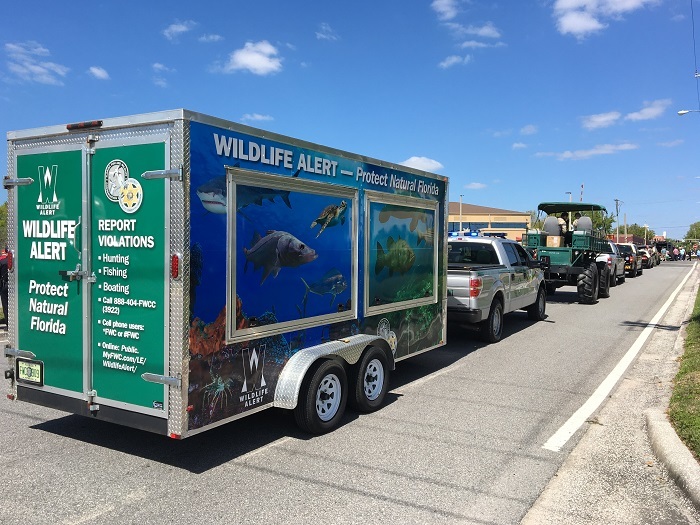
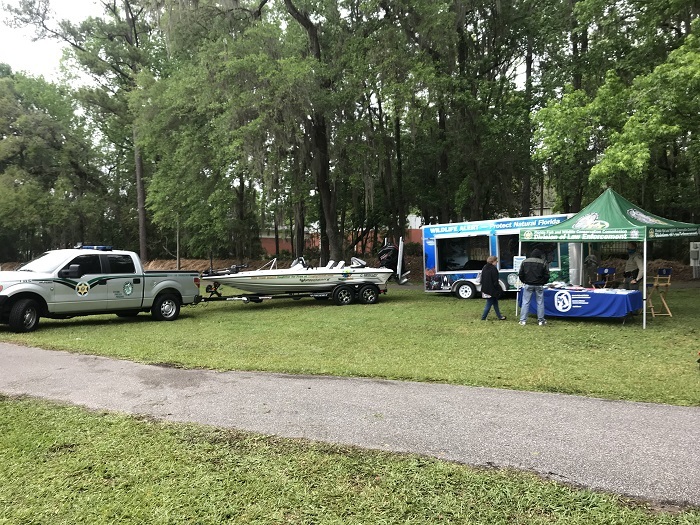 Southwest Region Gina Russo and Officer Bryce Phillippi attend the two-day Central Florida Sportsman in Hernando County. They generated a lot of interest and interaction at their display that included the Trophy Catch giveaway boat and Wildlife Alert outreach trailer.
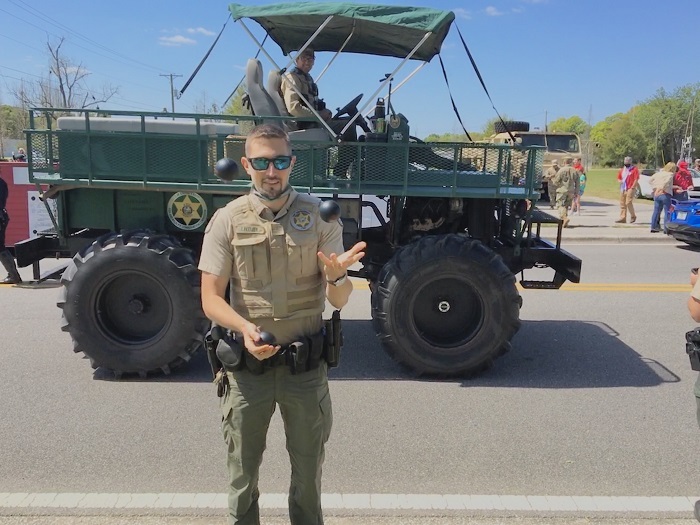
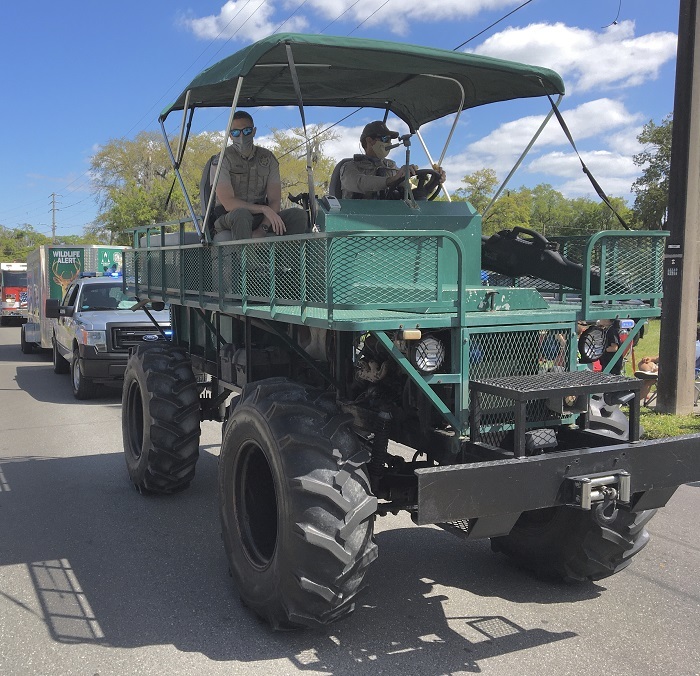 Southwest Region officers participated in the Plant City Strawberry Parade with patrol trucks, swamp buggy and Wildlife Alert outreach trailer. The parade route was full of excited spectators as officers tossed Wildlife Alert foam balls, Sport Fish Restoration key chain floats and life jacket save lives bracelets.
 Officer James Pettifer demonstrating his juggling skills before the parade starts.
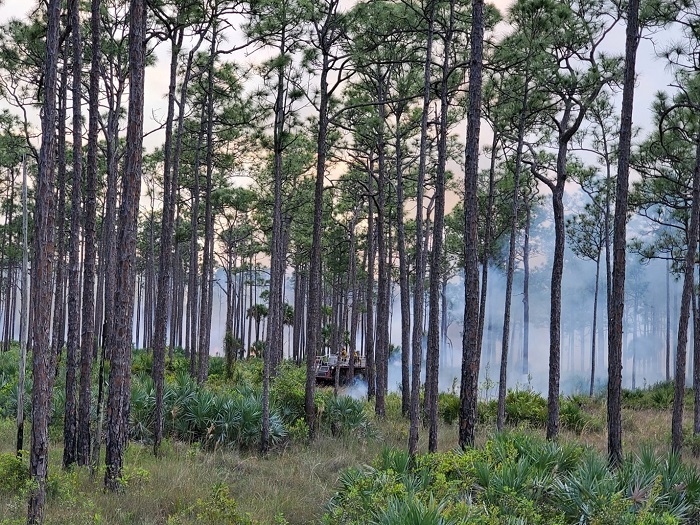 Darryl Sweetay, Danielle Devine and Hunter Stanford set a prescribed fire within a red-cockaded woodpecker cluster in Corbett WMA.
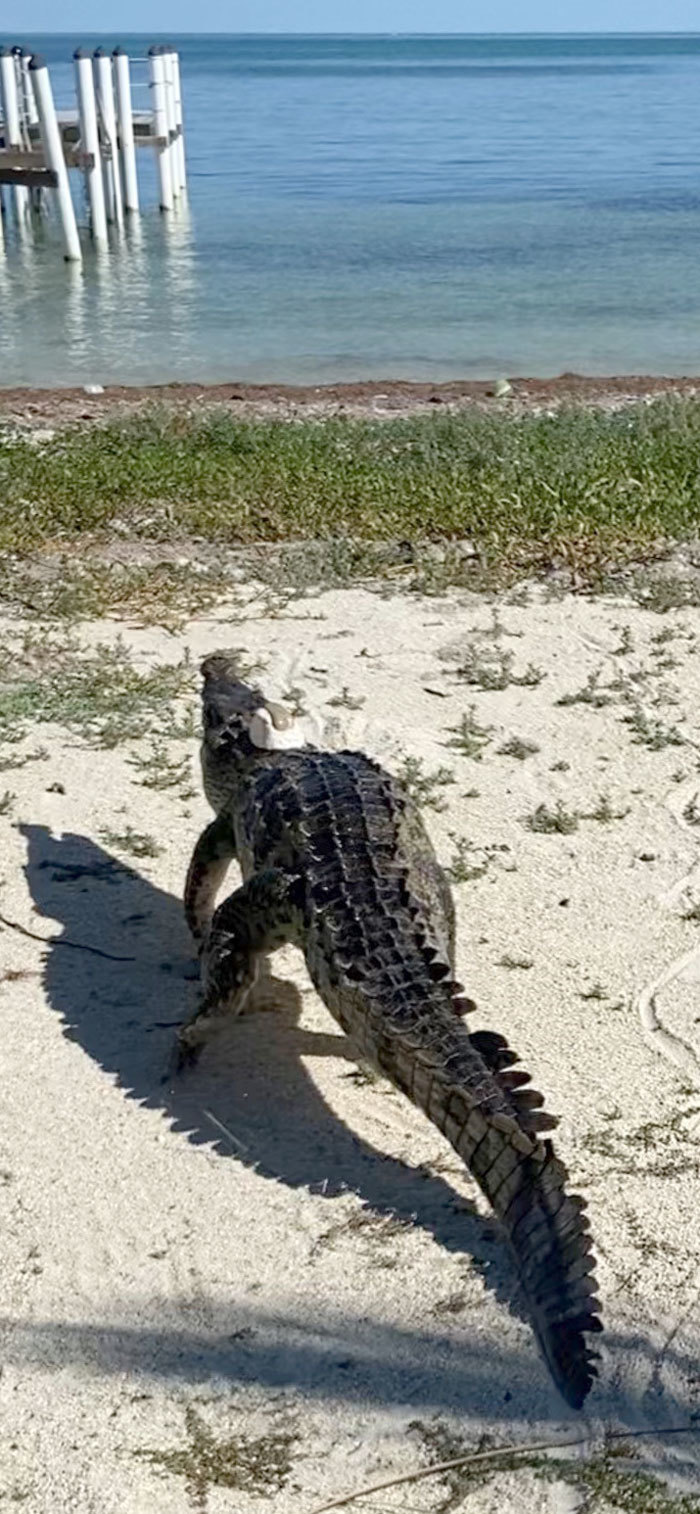
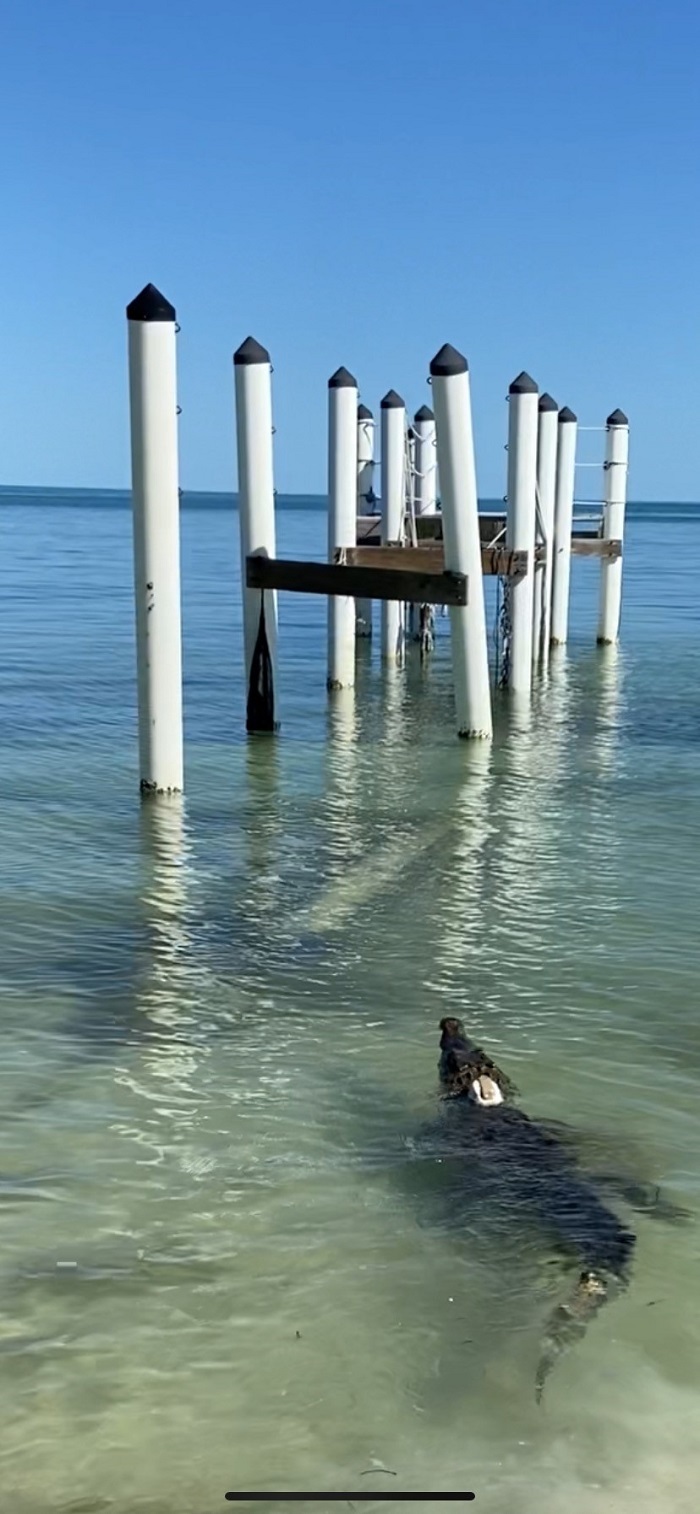
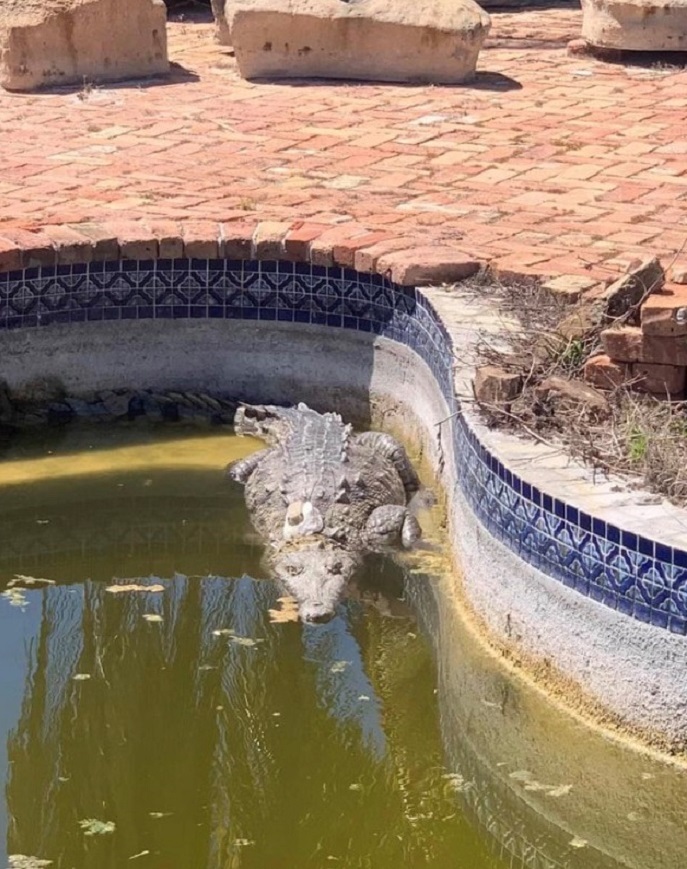 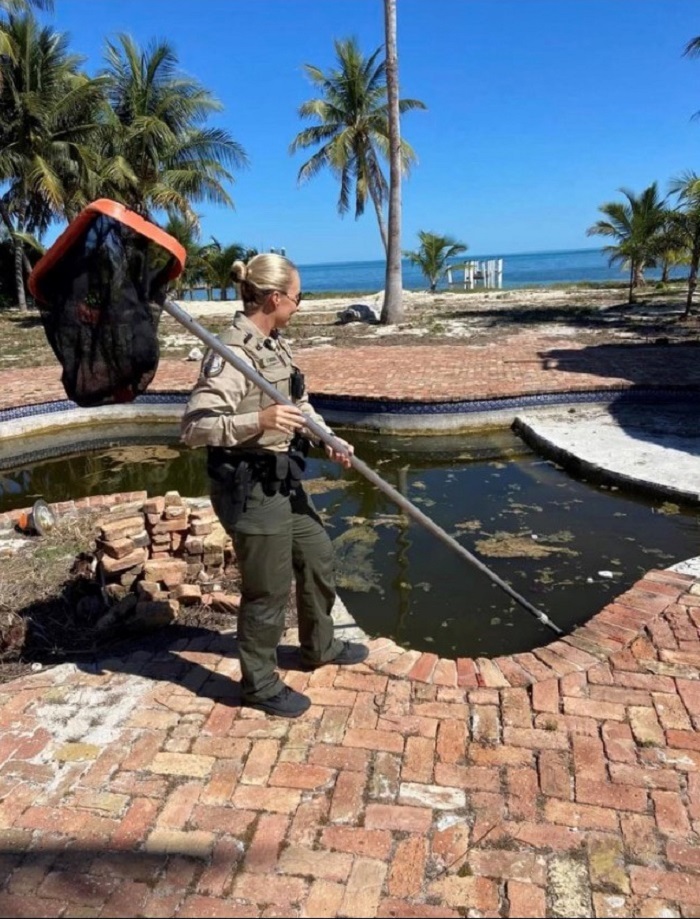 Officers Rafter, Carroll (above) and Weichhan responded to a report of a 6-foot tagged crocodile in a backyard pool of a vacant residence in Islamorada. The officers used catch poles to safely maneuver the crocodile out of the swimming pool. The crocodile was released and made its way back to the ocean and swam off the property.
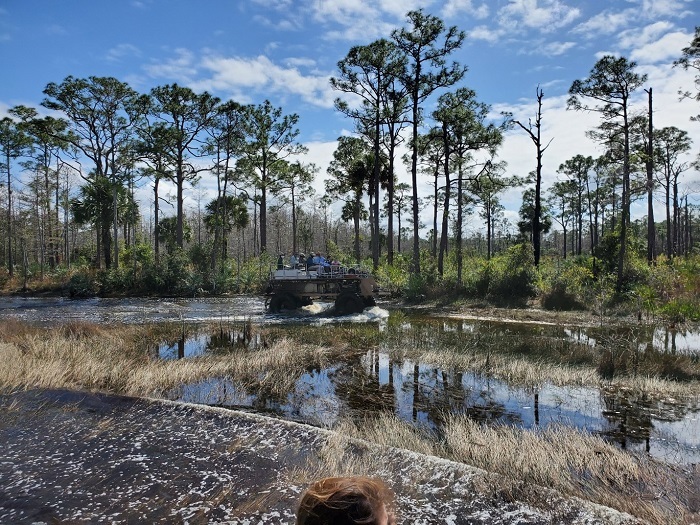 Paul Miles conducts a tour of Corbett WMA to Eric Suarez, Dan Sullivan, Scott Cooney, David Holmberg, and Olivia Rothberg who were participating in a WCPR (Wildlife Conservation Prioritization & Recovery) workshop.
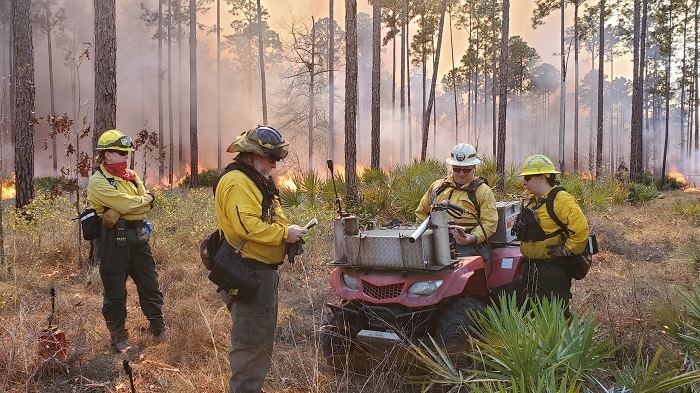 FWC staff assist Camp Blanding Joint Training Center environmental staff with prescribed burning. L-R: Rebecca Doane (FWC WHM), Scotland Talley (FWC WHM), Paul Catlett (CBJTC), and Cynthia Balboni (CBJTC). Photo by Jessica Baker (CBJTC).
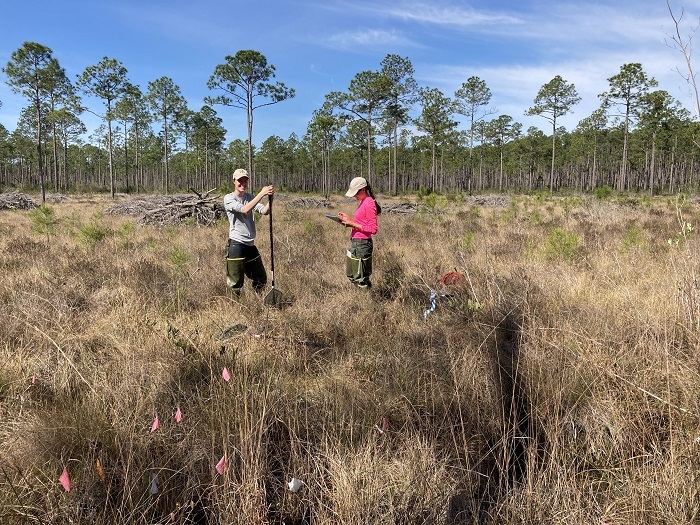
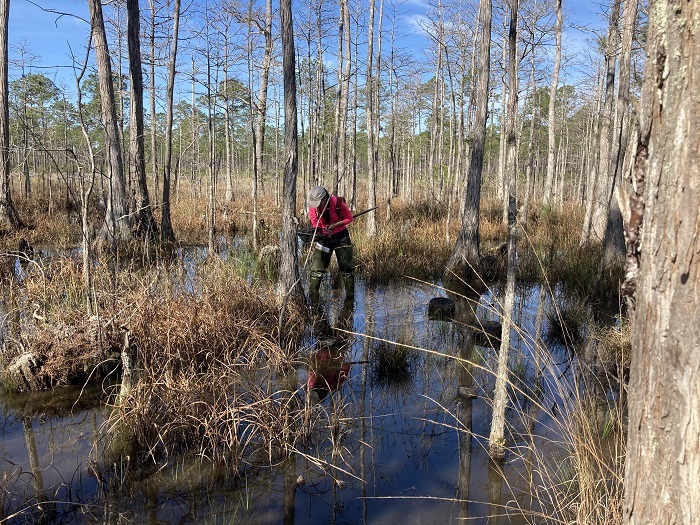 WHM staff dip net for flatwoods salamanders in Apalachicola National Forest. Masthead: Olivia Wilkes holding a flatwoods salamander. Above: Diane Alix, below: Olivia Wilkes and Diane Alix.
 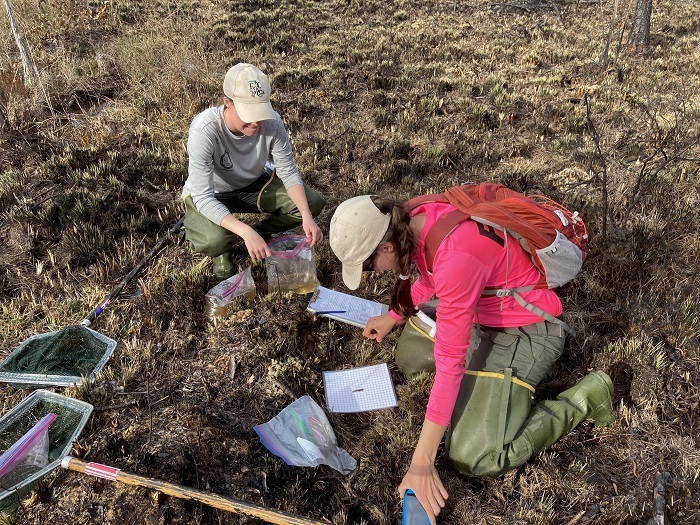 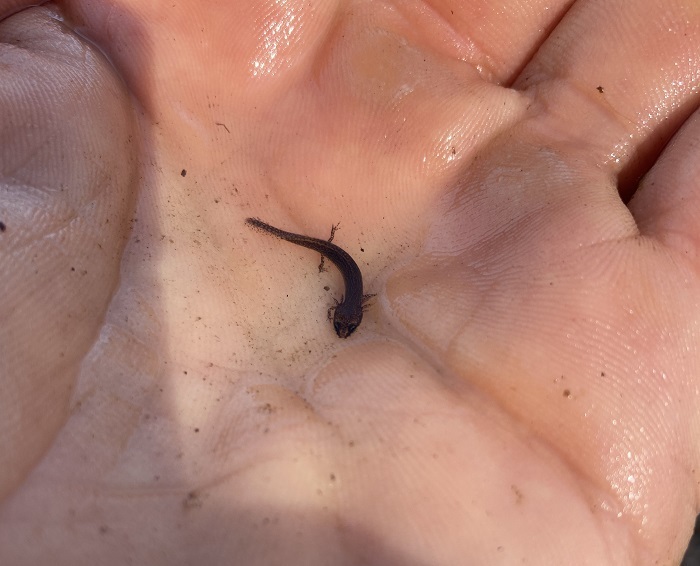 A dwarf salamander found during the survey.
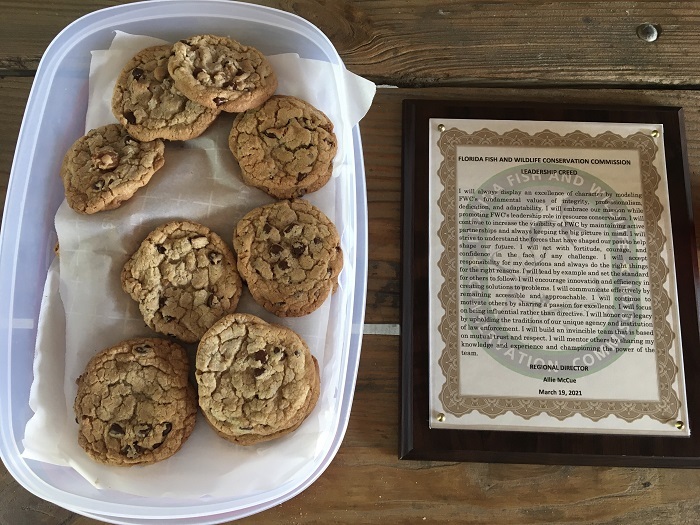
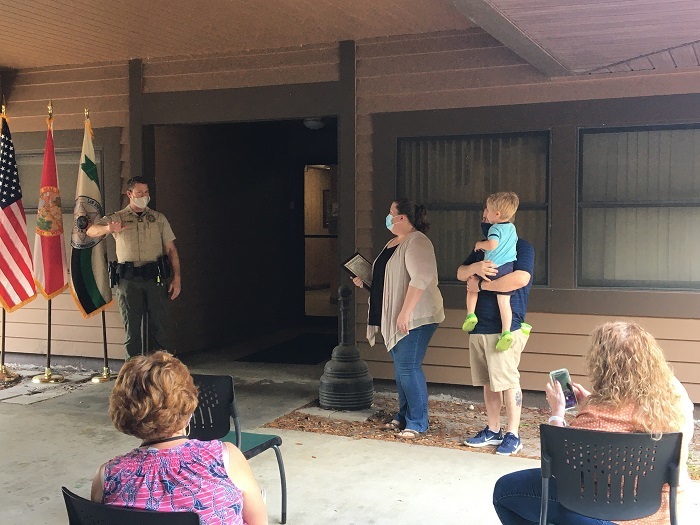 Southwest Region Maj. Young introduced new Regional Director Allie McCue and her family to the Southwest region staff at the Lakeland regional office. Maj Young awarded Allie with a leadership creed plaque to celebrate her future performance in her new position. Allie and staff met as they enjoyed her famous homemade cookies. Congratulations Allie!
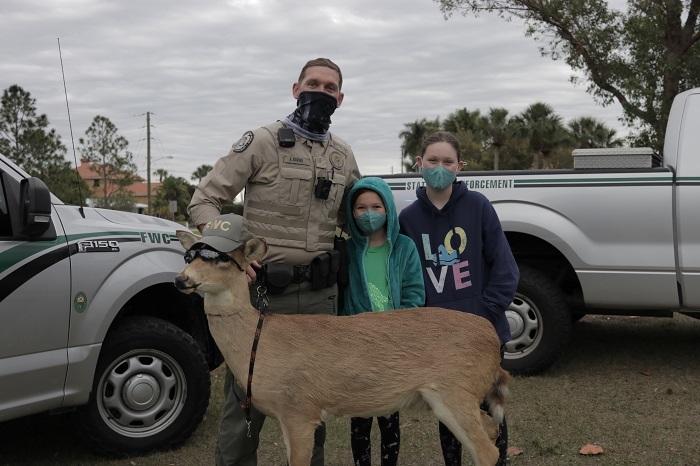
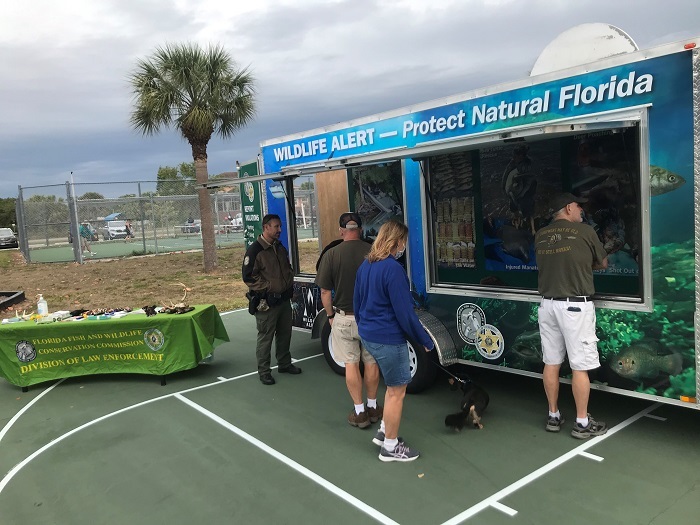 On March 6, Officer Specialist Jeremy Birchfield (above), Officer Kelly Zenoniani, and PIO Senior Officer Adam Brown (below) participated in the Charlotte County Centennial Fishing Derby outreach event. Robo-deer and the Wildlife Alert trailer were a big hit!
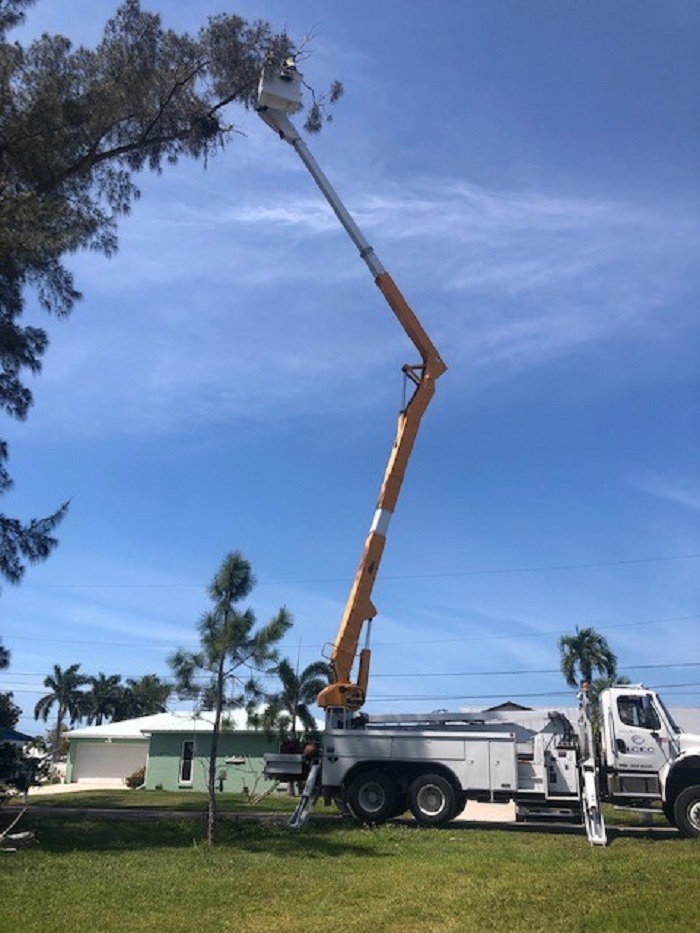
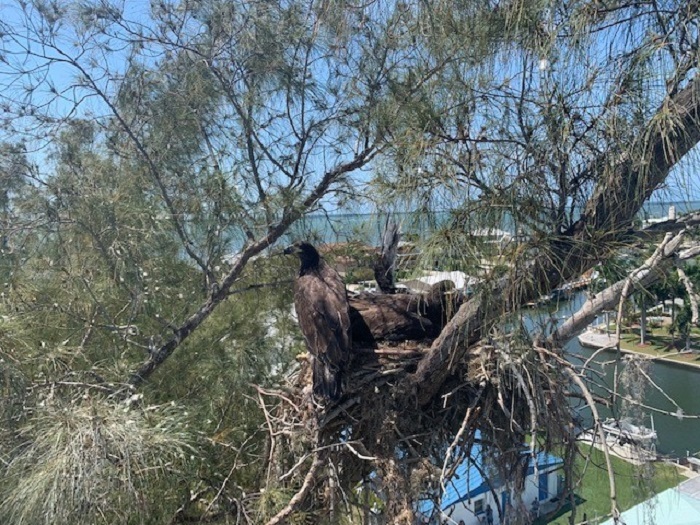 On March 26, the FWC received a report from the Clinic for the Rehabilitation Of Wildlife regarding an eagle fledgling that was entangled by something in its nest in Saint James City, Lee County. Our officers, led by Lt. Stuart Spoede (below), with help from the Lee County Electric Cooperative used a bucket truck to view the nest and determine the best course of action. After assessing the situation and working closely with FWC biologists, U.S. Fish and Wildlife and members from CROW decided to rescue the eagle and take it to CROW for medical attention.
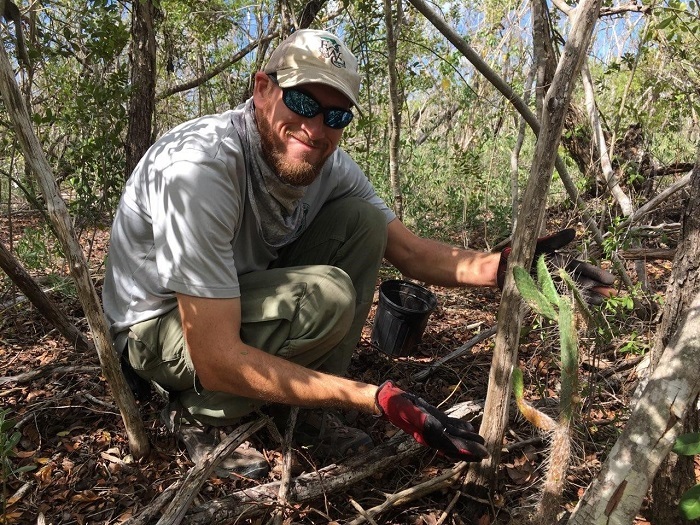 Kevin Christman, Florida Keys Wildlife and Environmental Area biologist, plants a semaphore cactus (Opuntia corallicola) in an attempt to re-establish this federally endangered cactus to its former historical range.
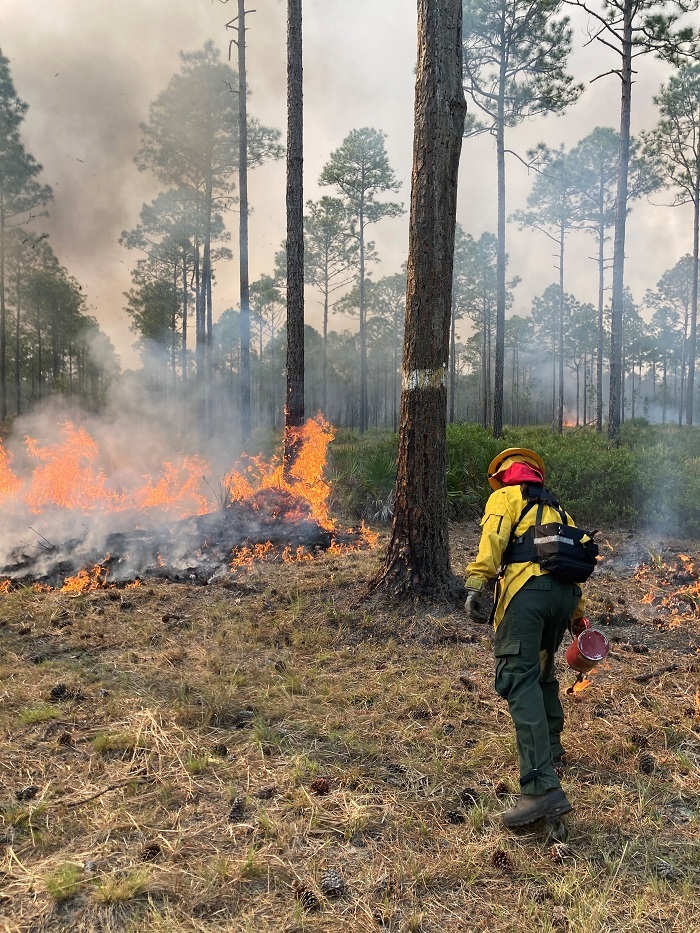 Diane Alix uses a drip torch to burn around red-cockaded woodpecker cavity trees on the Apalachicola River Wildlife and Environmental Area.
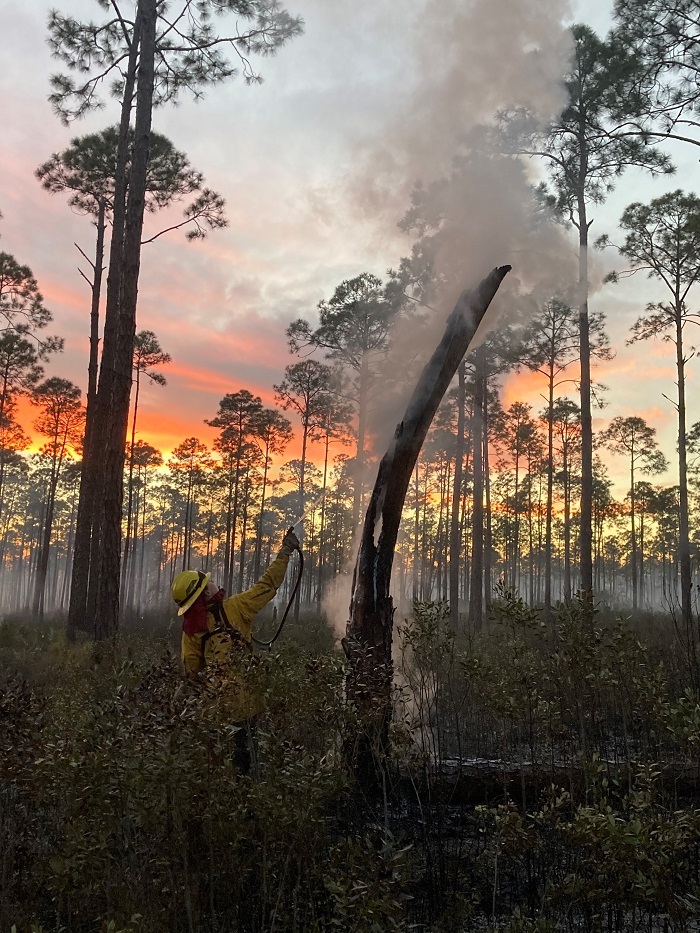 Diane Alix extinguishes a smoldering snag during mop-up after a prescribed burn at Box-R WMA.
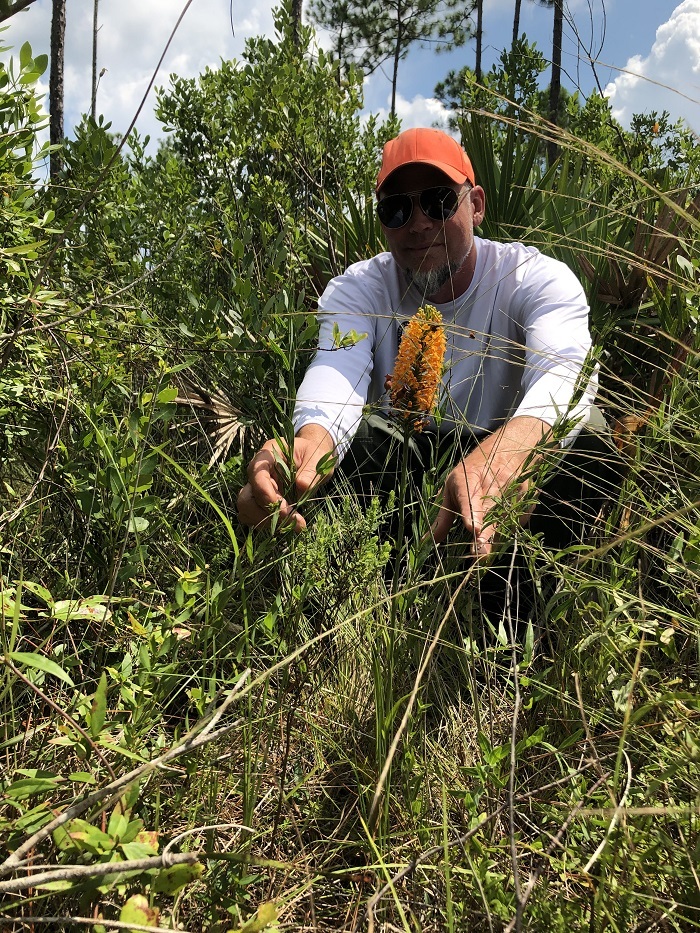 Scott Buchanan (HSC) with Platanthera chapmanii orchid he found on Aucilla WMA
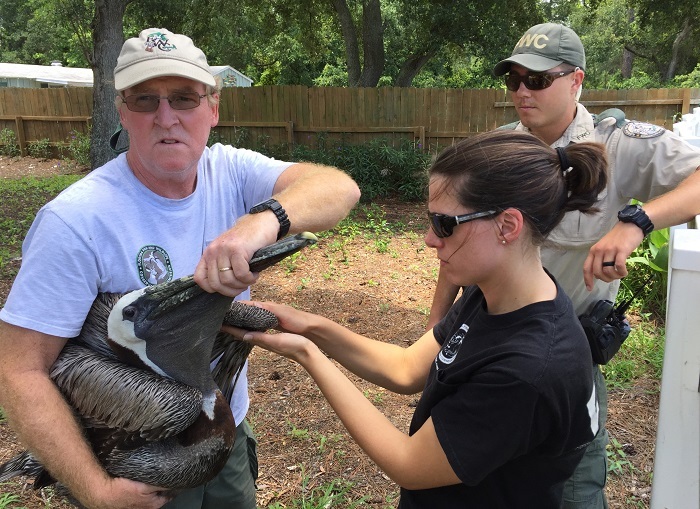 Diane Alix and Paul Wharton (HSC) and Lt. John Allen rescuing injured pelican.
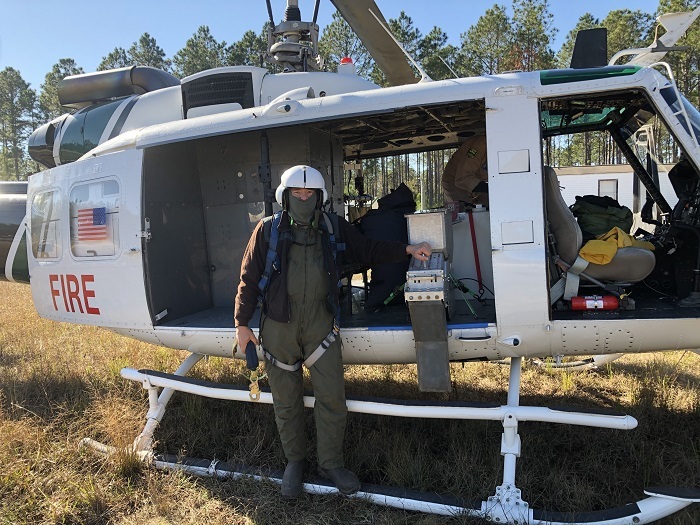 Joe Davis (DAIDS Operator) FFS Chopper prepping for aerial burn on Aucilla WMA.
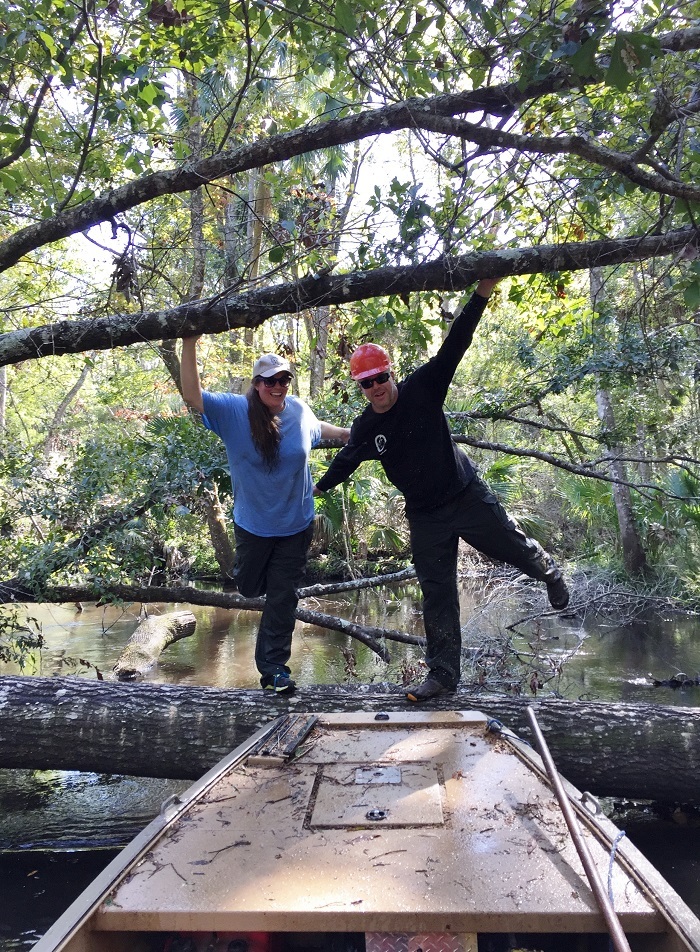 Amanda Smith (HSC) helps clearing a paddling trail on Aucilla WMA.
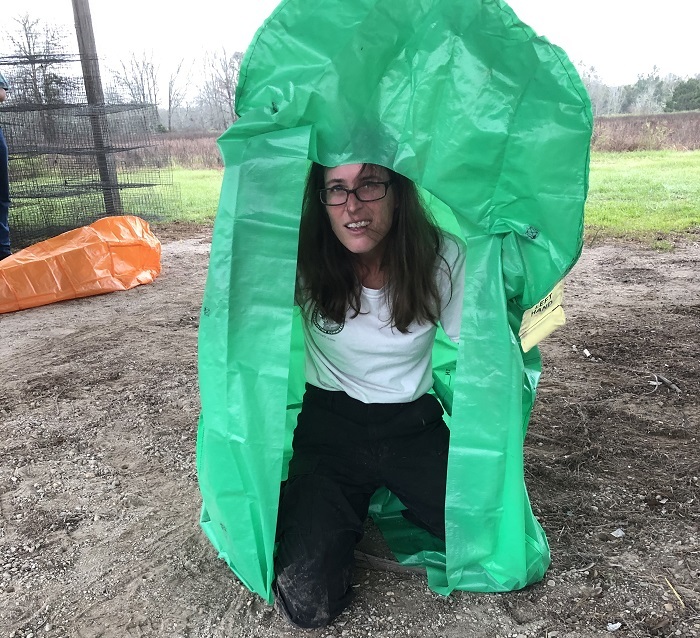 Cathy Ricketts (HSC) fire shelter training at ARWEA.
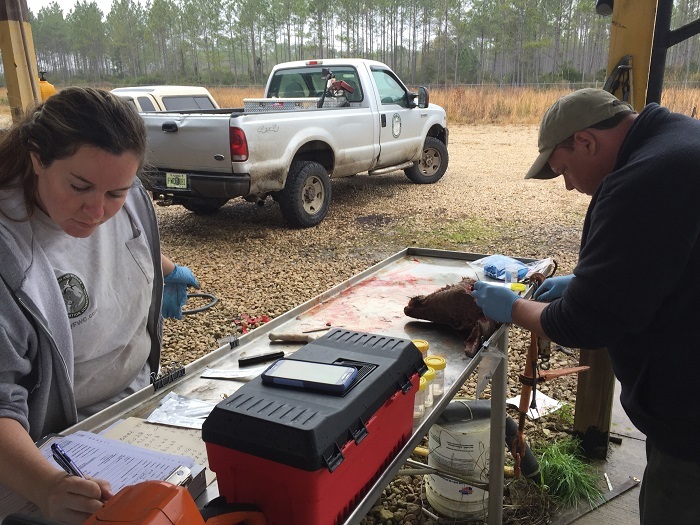 Amanda Smith and Morgan Wilbur (HSC) taking CWD samples on Aucilla WMA.
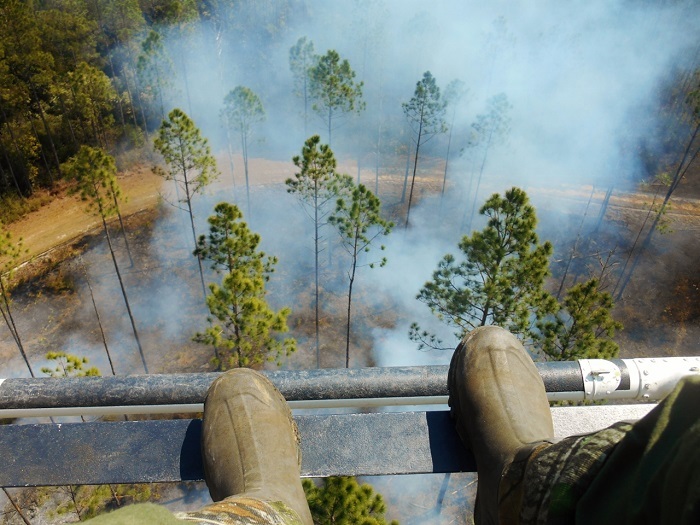 View of aerial burn by DAIDS operator on Aucilla WMA.
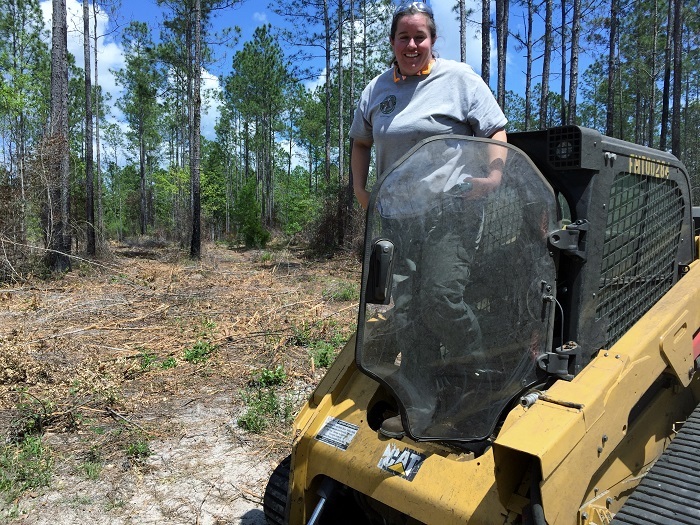 Amanda Smith (HSC) running skidsteer to knock down woody undergrowth for groundcover restoration on Aucilla WMA.
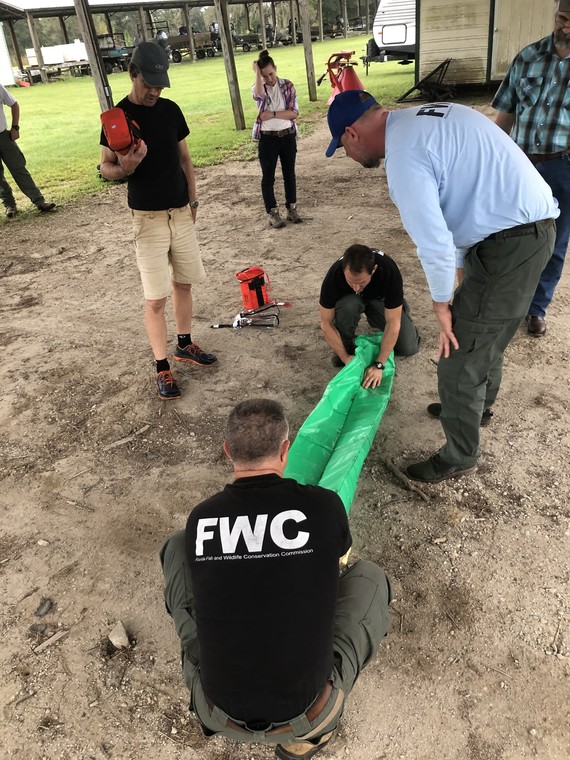 Scott Buchanan, Nate Bunting, Clint Peters (HSC), Greg Falstrom (HSC) fire shelter training at Joe Budd.
|
|
|
The Inside Job is a monthly newsletter featuring
the employees and programs of the FWC.
Send your submissions, comments and questions to Kelly.Broderick@MyFWC.com.
Deadline for the May issue - Friday, April 30
|
|
|
|
|