
Florida artificial reef news, notes and reminders
Florida Fish & Wildlife Conservation Commission sent this bulletin at 05/13/2019 01:29 PM EDT
(Having trouble viewing this email? View it as a Web page.)
Hello Florida Artificial Reef colleagues,
Please see below for Florida’s latest artificial reef news, notes and reminders:
- Register for the 2019 Southwest FL Artificial Reef Workshop, Palmetto, FL: May 15, 2019
- Save-the-Date: 2020 Statewide Florida Artificial Reef Summit, Melbourne, FL: April 8-10, 2020
- In Memory of Dr. Karl Havens, Director, Florida Sea Grant
- 6th International Symposium on Stock Enhancement and Sea Ranching, Sarasota, FL: Nov 11-14, 2019
- Recent Artificial Reef Publications and Reports
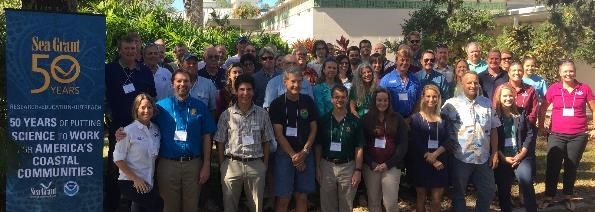
2019 Southwest FL Artificial Reef Workshop, Palmetto, FL: Wednesday May 15, 2019
Reminder to register for next week’s SW Artificial Reef Workshop in Palmetto, FL. This meeting will bring together about fifty artificial reef managers, scientists and others interested in artificial reefs to discuss new research, statewide initiatives and regional updates for Florida’s Southwest region. This one-day workshop will be held at the Manatee County Extension Office in Palmetto, FL. Doors open at 8 a.m., talks start at 9 a.m., and we’ll adjourn by 3:30 p.m. Breakfast, snacks, coffee and lunch will be provided.
To view the agenda and register for the workshop, please visit https://www.eventbrite.com/e/southwest-florida-regional-artificial-reef-workshop-tickets-59075076143
For those wishing to participate remotely, the workshop will also be broadcast live via Florida Sea Grant’s “Florida Artificial Reefs” Facebook during the workshop (https://www.facebook.com/floridaartificialreefs/).
For more information, please contact Angela Collins, abcollins@ufl.edu or (941) 722-4524 ext. 1826.


2020 Statewide Florida Artificial Reef Summit, Save-the-Date: Melbourne, FL: April 8-10, 2020
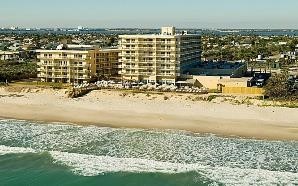
The 2020 Florida Artificial Reef Summit steering committee is pleased to announce that the location and dates have been selected for our next state-wide summit: the Crowne Plaza Melbourne Oceanfront (cpmelbourne.com): Wednesday April 8 – Friday April 10, 2020.
Special thanks to all who completed the planning survey. The survey is being used by the steering committee as an important planning tool to develop the program content. More details will be provided in the coming months for registration, call for abstracts, request for sponsors,
and other important information about the 2020 Artificial Reef Summit.
For more information about the Florida’s Statewide Artificial Reef Summits hosted by FWC and Florida Sea Grant (planned every 4-6 years), and to view the archived 2010 and 2015 programs, please visit the Florida Artificial Reef Summit web page: https://www.flseagrant.org/fisheries/artificialreefs/summit/
In memory of Dr. Karl Havens, Director, Florida Sea Grant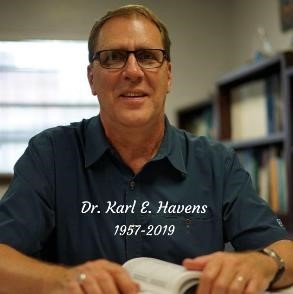
With great sadness we have learned that Dr. Karl Havens, Director of Florida Sea Grant program has passed away. Florida Sea Grant has been an integral partner in managing Florida’s Artificial Reefs, a partnership going back to the 1970s, when Florida Sea Grant published the first Atlas of Florida artificial reef locations. Dr. Haven’s continued Florida Sea Grant’s strong support for important science and educational programs for Florida’s artificial reefs.
Preserving and improving Florida’s marine resources was not just Karl’s job, but his passion. He has shared this passion through photography and teaching. By reaching a diversity of people, his message of protecting the environment continues.
To read the many touching memories of Karl from those of us who have worked with Karl over the years, please visit the Florida Sea Grant Facebook post from April 28, 2019: (https://www.facebook.com/floridaseagrant/photos/a.204240672946329/2099196746784036/?type=3&theater)
Karl’s wife, Pam, has indicated that in lieu of flowers, she and Karl would prefer donations to the Down Syndrome Foundation of Florida: http://www.dsfflorida.org/Donate_to_Down_Syndrome.html.
6th International Symposium on Stock Enhancement and Sea Ranching, Sarasota Florida, November 11-14, 2019
The organizing committee for this international symposium is requesting abstract submissions for oral and poster  presentations. The meeting is titled Developing and integrating enhancement strategies to improve and restore fisheries.
The meeting will be held at Mote Marine Laboratory in Sarasota Florida, and cover a diverse range of scientific themes dealing with fisheries ecology and fisheries enhancement (including artificial reefs, oyster reefs and habitat restoration) – details on the scientific program can be found at www.searanching.org. Abstract submissions close 17 July 2019.
Recent Artificial Reef Publications and Reports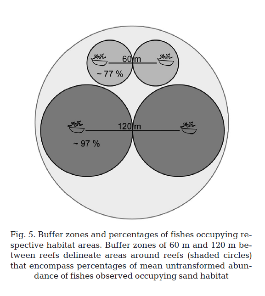
Rosemond, R. C., A. Paxton, H. Lemoine, S. Fegley, and C. Peterson. 2018. Fish Use of Reef Structures and Adjacent Sand Flats: Implications for Selecting Minimum Buffer Zones between New Artificial Reefs and Existing Reefs. Marine Ecology Progress Series, 587:187–199, doi:10.3354/meps12428.
ABSTRACT: Artificial reefs are deployed worldwide to enhance fisheries. Placement of artificial reefs relative to nearby existing artificial and natural reefs can influence fish use of these structures, yet no quantitative guidelines exist for selecting optimal distances between new and existing reefs. Here, we documented fish abundance, biomass, species richness, community composition, and key environmental variables on 24 artificial and natural reefs with adjacent sand flats to infer minimum buffer distances around existing reefs where placement of new artificial reefs should be avoided. At each site, we surveyed 4 transects: one 30 m transect across reef structure and 3 consecutive 30 m transects of increasing distance from the reef across sand bottom. Fish abundance, biomass, and species richness were highest on reefs and progressively decreased across adjacent sand flats. Environmental variables influenced these community metrics, but patterns of fish habitat use persisted. Fish community composition shifted gradually from reefs across adjacent sand flats, with fish communities on reefs most dissimilar to communities on sand bottom farthest from the reefs. A minimum buffer of 60 m (30 m around existing reefs plus 30 m around new reefs) or 120 m (60 m plus 60 m) between reefs would encompass 77 and 97%, respectively, of fishes utilizing sand-bottom habitat around each reef. Future artificial reef deployment should maintain these minimum buffer zones between reefs to more effectively enhance fisheries by minimizing attraction of fishes from existing reefs, while also maximizing food resource availability for reef fishes and area for routine reef fish behaviors.
Regards,
Keith Mille, Biological Administrator II
Division of Marine Fisheries Management - Artificial Reef Program
web: MyFWC.com/ArtificialReefs
office: (850) 617-9633
mobile: (850) 509-2974
email: keith.mille@myfwc.com


QUESTIONS? Contact the FWC
STAY CONNECTED:


SUBSCRIBER SERVICES:
Subscriber Preferences: Unsubscribe, Add/delete topics, modify your password or email address. Use your email address to log in.
Localize your news: Go to Subscriber Preferences, click "Questions" and select your region(s) of interest.
Help: For assistance with your login or subscription service.