 |
|
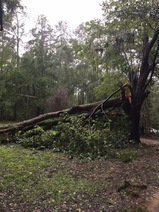
A Note about Hurricane Irma
Fires and floods have shaped Florida's landscape for millennia. This article about fire in Florida was written prior to Irma's impacts to our state. The wildlife management area system is still feeling the effects although we are working diligently to open our WMAs for public enjoyment.
|
By Peter Kleinhenz
I’ll never forget the first time I came face-to-face with
a wildfire. I was pulling into a gas station in Weed, California, when I heard
an unmistakable crackle. I turned around and was met with what I can only
describe as a scene from hell. A wall of flame was racing down a hillside
straight for me. I jumped back into my car, got back on the interstate and
drove away as fast as I could.
I
knew that something terribly wrong was happening when low-flying planes and
helicopters appeared overhead and I passed through an emergency vehicle
roadblock. I had just witnessed the beginning of the Boles Fire of 2014, a fire
that burned almost all of Weed to the ground. When coupled with the experience
of running out of my burning house at the age of 10, one would not be wrong to
assume that I greatly feared fire.
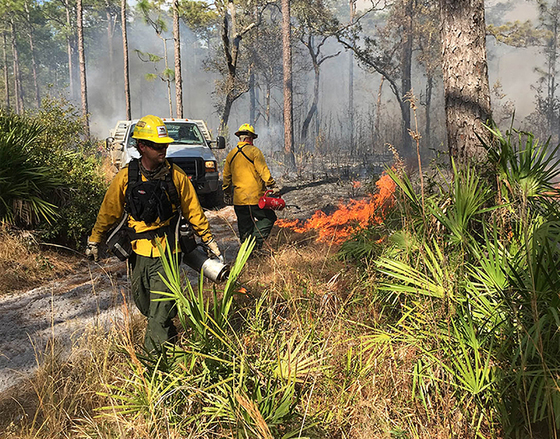 Prescribed fires are monitored by certified staff from beginning to end, FWC photo
And I did, at least until I moved to Florida last year.
You see, Florida is a fire state. Most ecosystems here, and the species that
live within them, have adapted to regular fires sweeping across the landscape.
I live to explore and, as I ventured into various wildlife management areas
throughout the state, the one theme linking them all was evidence of recent
fire. Jimmy Conner, assistant section leader of the Wildlife and Habitat
Management section of the Florida Fish and Wildlife Conservation Commission
(FWC) explained why.
“Our
habitats and our wildlife here in Florida were shaped by fire over time.
[Fires] weren’t what we think about as wildfires today. They mostly looked more
like what our prescribed fires are. We can’t mimic that completely because we
have roads and development and all kinds of other considerations. The best
thing we can do is apply a prescribed fire to an area to try to get as many
benefits as we can.”
|
And those benefits are…?
“[The
benefits] to focus on are managing the wildlife habitat and the wildlife
species themselves, including many threatened and endangered species who need
areas that have been burned regularly and also to reduce the risk of these
devastating wildfires that we see every five to 10 years, usually in the spring,”
Jimmy described. “By burning, we reduce a lot of that overgrown vegetation, we
reduce a lot of the dead vegetation that’s on the ground. And then, if a
wildfire does come through the area, it’s not as intense as it would be
otherwise.”
|
|
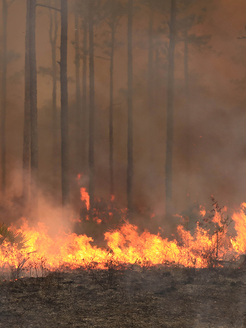 |
Carefully conducted prescribed burns reduce the threat of uncontrollable wildfires, photo by Chris Mack
The
wildlife biologists and land managers tasked with implementing prescribed burns
on the statewide network of wildlife management areas (WMAs) across the state
are, to quote the band Talking Heads, “fighting fire with fire.” FWC staff
strive to get their areas into “maintenance mode,” a status where the
application of fire at natural, two- to three-year intervals becomes the
primary way to revert habitats back to their historic conditions. To see this
in action, look no further than a pair of large WMAs in Osceola County,
Florida.
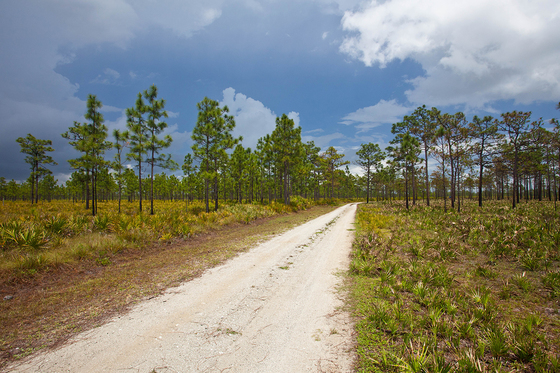 Triple N Ranch Wildlife Management Area today appears much as it did before European settlement, photo by David Moynahan
Three Lakes
WMA and Triple N
Ranch WMA both consist of wide expanses of prairie and flatwoods that, in
the words of district biologist Steve Glass who oversees the areas, “…are
representative of natural plant communities, in a condition that you might have
seen pre-European settlement.”
It’s
easy to see why, when the scale of prescribed burning there is taken into
account.
“At
Three Lakes, we burn about 40 percent of burnable acreage every year,” Steve
related. “So we average about 20,000 acres per year. And about 70 percent of
that is during the growing season, which we consider as between April 1 and
September 30. And then, at Triple N, we also burn just over 40 percent of the
burnable acreage and about 60 percent of that is during the growing season.”
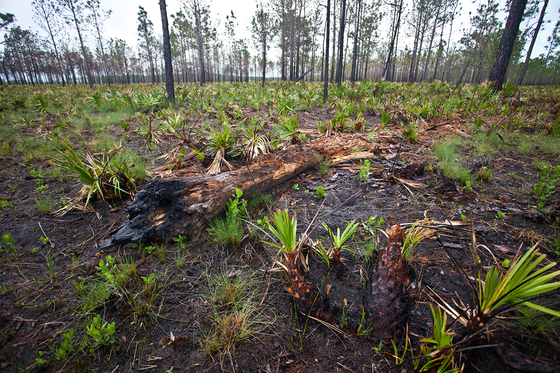 Prescribed fire enhances new, nutritious growth at Triple N Wildlife Management Area, FWC photo
Growing season burns, due to increased vegetation and
higher temperatures, can be challenging to accomplish, making the stats
outlined above all the more impressive. The benefits of growing season burns,
however, reward the effort needed to make them happen.
“You
just get a more herbaceous component to the understory, more grasses, less
shrub encroachment, less hardwood encroachment,” Steve Glass mentioned. “You
maintain open conditions.”
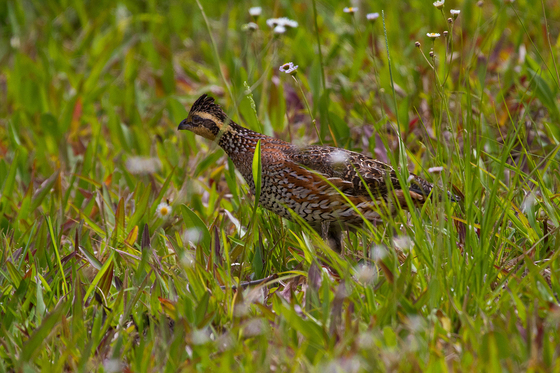 Northern bobwhite, seen here at Triple N Ranch WMA, depend on frequent fire for good foraging habitat, photo by David Moynahan
According to Jim Blush, area biologist for Triple N Ranch
WMA, these open conditions are critical for many of the species, including
imperiled species, found there and at Three Lakes WMA.
“We
have a very strong quail population here. Some people call them fire birds.
They’re dependent on frequent fire for good foraging habitat. We have
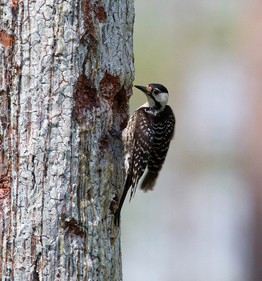
red-cockaded woodpeckers here and at Three Lakes, and that’s another bird that
requires frequent, growing season fire to maintain the open groundcover and
open mid-story for good foraging habitat. You’ll see gopher tortoises out here
and, again, the gopher tortoises need fire. They need that open groundcover in
order to move around and forage. If you don’t burn, and things get overgrown,
they can’t move around as easily.”
 |
|
The
value of these fire-managed wildlife management areas, in terms of their
offerings to a whole suite of species (including us), will only continue to
rise as wild places disappear. This is because burning, believe it or not, is
not always easy to accomplish in a state developing as fast as Florida.
Red-cockaded woodpeckers require frequent, growing season fire, photo by David Moynahan
|
“As we continue to develop, a big part of prescribed fire
is having that place to put your smoke,” Jimmy Conner revealed. “We call these
smoke corridors on our management areas. We have certain areas mapped out away
from major highways, away from airports, away from hospitals, away from urban
areas where we try not to impact people with our smoke. So we have these
corridors and we need certain wind directions to go in those corridors and, as new
developments come up blocking off those corridors, it’s going to be a huge
challenge to manage that smoke, to get the word out to people why we’re
burning, why they see and smell smoke.”
Jim
Blush put it simply: “Well, it’s not going to get easier.”
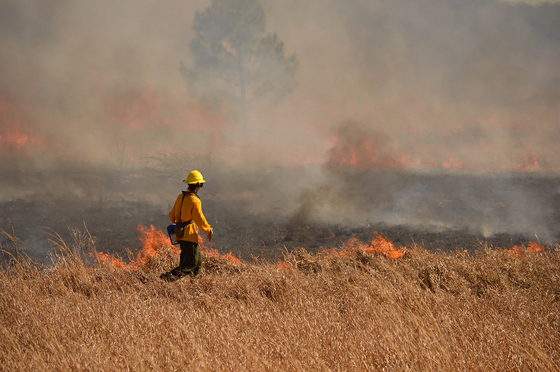 Smoke management involves igniting fires during favorable wind conditions, photo by Kyle Moon
Don’t be fooled into thinking that those managing these
wildlife management areas, and the dozens of others around the state, have
adopted a pessimistic attitude. On the contrary, these biologists take immense
pride in the work they’re doing and, particularly, in the areas they have been
tasked with managing.
“Our
district here has a total focus on prescribed burning,” Jim expressed. “It’s
kind of our mentality. Pretty much everything revolves around what we’re going
to be burning. We’ve just made that a priority and a focus here, and it really
shows when you go out in the area.”
Jim is right. The positive effects of burning do show, whether that’s in a gopher tortoise crossing an open patch of sand, a covey of quail taking flight as you walk by or even in the number of ticks and chiggers plunging their heads into your body. I unfortunately recognized this last fact after exploring an unburned forest last weekend. Yes, even pesky parasite populations are influenced by fire (tick populations have been shown to decline by up to two-thirds in the year following a growing-season burn).
Despite my checkered past with fire, I no longer
fear its presence. When it comes down to it, in terms of Florida’s natural
heritage (and my parasite load), I only fear its absence.
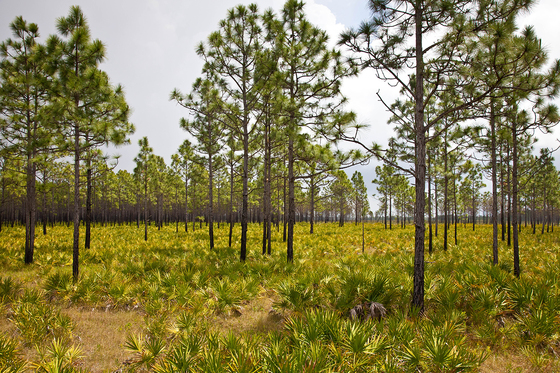 Fire shapes habitats for species ranging from gopher frogs to wild turkeys at Triple N Ranch WMA, FWC photo
Don’t
let the bugs and heat scare you! You can explore many of our wildlife management areas
from the comfort of your car or via the network of paddling trails that pass
through many of our areas. You’ll still be able to take photos for our 75th
anniversary photo contest or find the
hidden geocaches on each wildlife management area. Many species of butterflies
and wildflowers
may be seen this time of year. Be sure to document those using our Florida
Nature Trackers program. May the chiggers be minimal! See you out there!
|