|
By Peter Kleinhenz
Sunrise was still
an hour away when I set out from my apartment to go turkey hunting last
weekend. I drove out to nearby Aucilla
Wildlife Management Area and parked at the end of a gated road. The needles of
slash pines wiggled in the cool wind as I suited up in my camouflage outfit,
complete with dangling, leafy appendages. By the time I was finished and began
lumbering into the woods, I looked like a monster from a 1950s B-movie. I
didn’t care. I wasn’t at a fashion show. I was hunting turkeys.
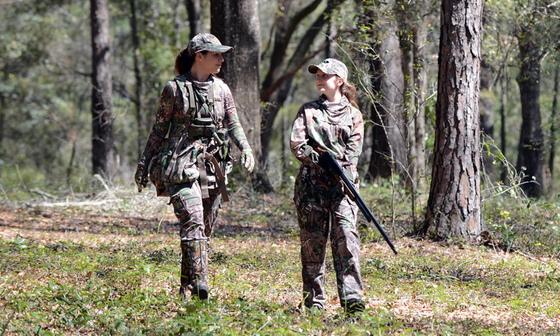 Wild turkeys and those who pursue them are benefiting from successful habitat work on public lands where wild turkey cost-share projects are conducted. This program is supported by cooperative funding from the FWC, Florida Forest Service and Florida State Chapter of the National Wild Turkey Federation. Tim Donovan
I leaned up against a tree, imitated a clucking hen
turkey a couple times with my artificial call and waited. Silence. As the sun
started to rise, the climbing trill of northern parulas began to punctuate the
stillness. The wildness crept into my mind, and I felt grateful to experience such
a feeling so close to where I lived.
I
closed my eyes and listened. There were no sounds of traffic and I thought
about just how rare that has become. Florida has one of the fastest growing
populations of any U.S. state. How will we prevent opportunities like the one I
was having from disappearing over time? The Florida Forest Service is one of
the many important partners in the Florida Fish and Wildlife Conservation
Commission’s Wildlife Management Area system and I recently posed this question
to their director, Jim Karels.
|
“We don’t want to give up the opportunity for somebody to go out there on a spring morning and hear a gobbler gobbling,” Jim told me.
“And, at the same time, I want that horseback rider to have a great opportunity as well as a hiker, a biker. So how do we intermix that, knowing that populations rise? Together, I think we’ve got an opportunity. Separately, it’d be tough.”
|
|
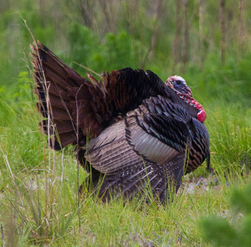 |
Wild turkey, David Moynahan
Jim was referring to
partnerships between conservation agencies. Here in Florida, they work together
closely to ensure that significant parcels of natural land are maintained for
proper ecosystem function. Managing these areas, after all, does not get easier
as the population grows.
“The state forests, the WMAs…they’re becoming islands in a sea of urban sprawl,” Jim expressed. “And it makes it tough when you think about trying to continue to manage that land for good forest health and ecosystem health, when you’ve got a continuous population around you.”
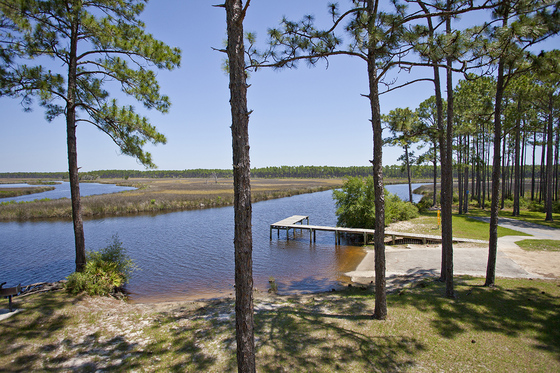 Tate's Hell WMA within Tate's Hell State Forest, David Moynahan
Even managing the areas buffered from population growth can prove challenging without partners. The three national forests in Florida
are massive, and buffered from development pressure more than many areas. The
Florida Fish and Wildlife Conservation Commission (FWC) assists in the
management of these forests, which are also categorized as state wildlife
management areas (WMAs).
Apalachicola National Forest/WMA, for example, contains over 576,000 acres and some of the richest wildlife diversity in the Southeast. According to John Dunlap, district biologist for the forest, such partnerships directly benefit the rare species found there.
“By partnering with FWC and others, we’re able to do very labor-intensive, costly projects that have direct impacts on threatened species that we otherwise wouldn’t be able to do,” John stated.
 |
|
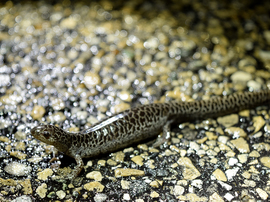
The projects include restoring wetlands for endangered frosted flatwoods salamanders, restoring longleaf pines to their native range and, you guessed it, enhancing turkey habitat. The completion of specific tasks, in turn, ties into the big picture sentiment that all partners I spoke to expressed. |
Frosted flatwoods salamander, Peter Kleinhenz
Ricky Lackey, district biologist for the National Wild Turkey Federation in Florida, said it best. “We all want to improve and conserve wild places where you can recreate however you choose. And without those wild places, we’re not as good of a society in my opinion.”
After two-an- a-half hours, my
back was getting sore and I was feeling lighter as a result of insect-related
blood loss. I picked up my shotgun and began the walk back to my jeep.
Then it happened. A turkey strolled out of the
bushes, walked onto the path and looked right at me. I had already unloaded my
gun and knew I had no hope. I watched as it casually walked along, pecking at
the ground intermittently. Sometimes, it’s about the hunt and not the harvest.
Besides, there’s always next time.
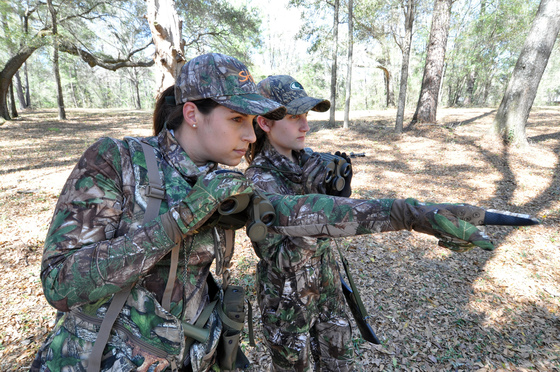 Wild turkeys are an amazing conservation success story. Thanks to science-based wildlife management, their populations are flourishing and provide sustainable hunting opportunities throughout the state. Tim Donovan
Whether
you also want to pursue
turkeys, view wildlife, search for
hidden geocaches or go
on a guided hike, a WMA is probably not far away. Be sure to take photos of
any species you find when you visit and submit them to our 75th
Anniversary photo contest, as well as our Florida
Nature Trackers program. Join us at our upcoming bioblitz
at Aucilla WMA for several opportunities to see and photograph some of the
rare and unusual species found there.
|