March 23rd, 2026
Welcome back to The District Fishing Report! The most exciting time of year is upon us as the spring spawning runs are getting ready to kick off. Water temperatures are rising, and our fish are getting more active, which will offer plenty of opportunities for anglers over the coming months. Several anglers have already hit the water in recent weeks and are reporting successful outings for a variety of different species. There are opportunities for anglers of all skill levels to catch fish such as blue catfish, flathead catfish, largemouth bass, crappie, American shad, hickory shad, striped bass, and many more. The weather has been all over the place this month, which is typical for this time of year, but when we get a stretch of warm days, that usually gets the fish more active. We have seen that pattern play out in a few recent fishing reports submitted by local anglers. Now is the time to start planning your fishing trips for the year, so let’s get into all the details you will want to know to get this fishing season started.
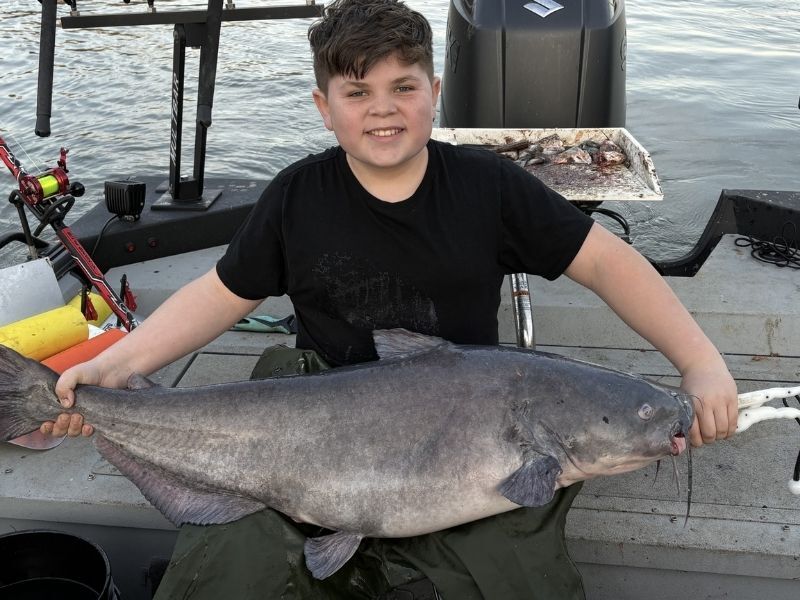 |
Thaddeus Eck set the D.C. youth record for blue catfish with a 37-pounder he caught on March 7th.
We have a new record fish here in the district! Last week, youth angler Thaddeus Eck caught a 37-pound blue catfish while fishing with his dad Josh Eck on the Potomac River near Georgetown. Josh brought the fish to the Aquatic Resources Education Center in Anacostia Park where DOEE fisheries biologists could confirm the catch and weigh the fish. When Josh and Thaddeus first landed the fish, the initial weight they measured was just over 40 pounds, but the blue catfish coughed up two hickory shad while in transport. This is a perfect example of the predatory nature of these fish, showing that they forage heavily on other species in our rivers. It also gives us a clue that the shad run is almost here. This fish qualifies as the youth record for the blue catfish category in our recreational angling records program. Congrats to Thaddeus on an amazing catch, and we hope that he and his dad can continue to break more records. Qualifying fish for the Angling Record division of our records program must be brought to the Aquatic Resources Education Center so that our fisheries biologists can weigh the fish on a certified scale. There are currently several vacancies for District Angling Records, so there are plenty of chances to claim a fishing record in the district. Right now is a great time of year to target big blue catfish on the Potomac River, especially along the stretch of river from Georgetown up to Chain Bridge. That section of river has deeper channels that are 30 to 60 feet deep and tend to hold very big fish. As shad and river herring start to show up for their spring spawning runs, the blue catfish will key in on them as a food source and feed more aggressively. Local charter captain Chad Koenig from Dog Days Fishing has already run a few trips on the upper Potomac for trophy catfish this spring, and he reports that the big ones are already active. On each of his trips so far this month, his anglers have boated fish over 40 and 50 pounds. Water temperatures on the river are fluctuating between the low to mid 50s, so catfish should become very active over the next few weeks. While the blue catfish bite has been good so far this month, flathead catfish should also start to provide more opportunities. These fish are concentrated in the upper stretch of the Potomac in D.C. where the bottom of the river becomes rockier. Flathead catfish are even more predatory than blue catfish and prefer live bait or artificial lures over cut bait. Many anglers target them by using light tackle jigging gear. Fishing for them from a boat or kayak is much easier than trying to fish for them from shore because of all the snags on the bottom of the river. Vertically jigging lures is a very effective method to catch them. We had a report from an angler who fished for flatheads last weekend and was able to catch a few fish in the five-to-10-pound range, but they said the bite was on the slow side. The bite should steadily improve as more shad and herring show up and trigger the flatheads to feed more aggressively. The flatheads are likely still in the deeper channels of the river right now, but as water temperatures rise, they will move shallower into depths of 10 to 20 feet. The United States Geological Survey flow gauge at Little Falls is a great resource to reference for current river conditions. This monitoring station continuously measures river height, discharge rates, temperature, and a few other variables that are valuable to assess when planning a fishing trip on the Potomac.
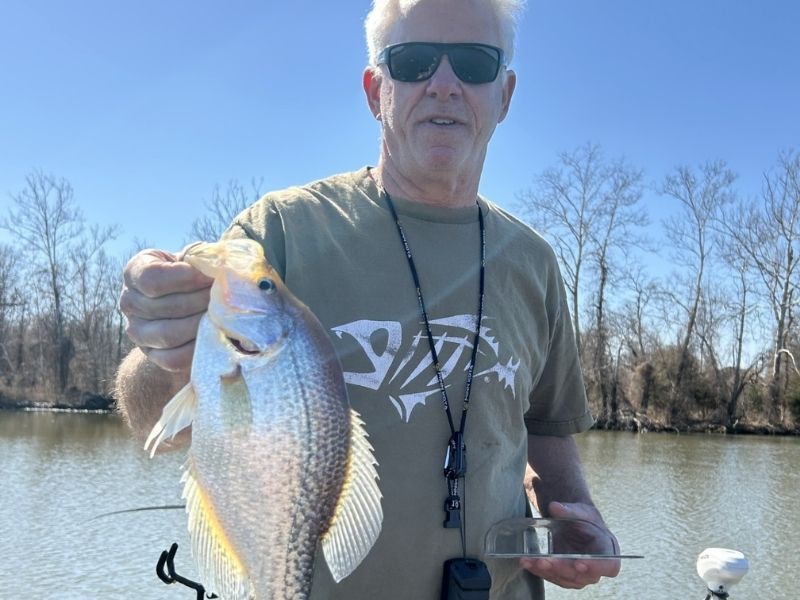 |
Dennis Fleming and friends caught several big crappie while fishing in Oxon Cove on the Potomac River earlier in the month.
A warm front earlier in the month brought temperatures in the 70s and 80s that warmed the waters enough to get some largemouth bass active in the Tidal Basin. Bass are in their pre-spawn patterns currently, and we typically see them move into the tidal basin and surrounding areas sometime in March. A few fish have already been caught, but more fish will move into the area when the shad, herring, and menhaden arrive. As these baitfish get funneled along the stone walls of the Tidal Basin, largemouth bass, along with other predatory fish, move in to get an easy meal. Local anglers Kasper Parfomak and Paul Parfomak visited the Tidal Basin on March 11th where they each caught a good-sized largemouth bass. Kasper was throwing a large glidebait and said he had a few fish follow his bait before he finally got a bite. Many anglers throw crankbaits and other sub-surface lures along the walls of the basin and near the outflow gates. While there are some bass in the area now, the bulk of the bass show up when the cherry blossoms peak, which also coincides with the arrival of shad, herring, and other anadromous fish. While we wait for their arrival, crappie are a species that is a popular target for anglers during the spring. Crappie can be found in both the Potomac and Anacostia Rivers. They are a schooling species, and usually congregate around cover such as docks, fallen trees along the shoreline, or submerged structures. We had a report from angler Dennis Fleming that he and a few friends fished Oxon Cove earlier in the month and had an excellent trip fishing for crappie. Dennis has a boat that is set up with spider rigs. Spider rigs are a specialized fishing technique involving multiple long fishing rods that are arranged in rod holders across the bow of a boat, resembling a spider's legs. Their crew was using live minnows for bait, which are arguably the best bait to use when fishing for crappie. They caught roughly 20 pre-spawn female crappie that were 12 to 14 inches, a 13-inch white perch, and one largemouth bass. Dennis mentioned that he has been fishing this area for crappies for over 20 years and is a former fishing guide. He can attest that the crappie fishing in D.C. is truly amazing and gives anglers an opportunity to catch a stringer of premium slabs.
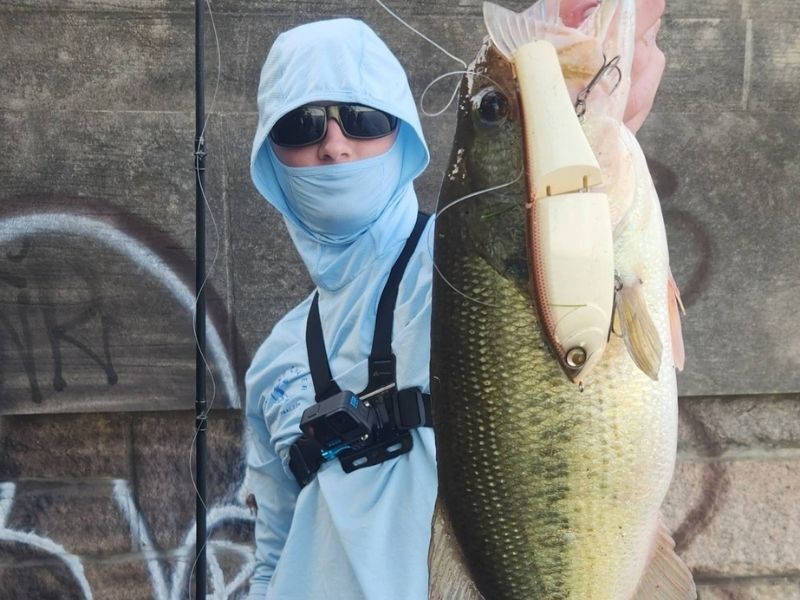 |
Kasper Parfomak took advantage of a warm weather day to fish for largemouth bass in the Tidal Basin.
One of the most exciting fishing opportunities of the spring is shad fishing. This is a catch and release only fishery because both American shad and hickory shad are under a harvest moratorium. The Atlantic States Marine Fisheries Commission Fishery Management Plan for shad and river herring prohibits the possession of these fish, but anglers can still catch and release them. The shad run on the Potomac is one of the most prolific in our region, and anglers travel from all over the country to experience the opportunity to fish for shad. This fishery is popular with both spin-cast anglers and fly-fishing anglers. The hotspot for shad fishing is on the Potomac River near Fletchers Cove. When choosing a spot for shad fishing, focus on areas where you can identify a seam in the current. This is where faster and slower water meet. These seams act as natural gathering points and are often the best visual cue for where fish will be staging. Once you’ve located a seam, cast beyond it, let your lure sink, and then retrieve it through the current break. Dialing in the correct depth is critical, as fish will often hold at a very specific level in the water column—and that depth can change by the hour. Start with a short three- to five-second sink, then gradually increase your count—10 seconds, 15 seconds, and so on—until you reach the bottom before retrieving. When you get a strike, repeat that same count on subsequent casts to stay in the strike zone. Shad are often called the “poor man’s tarpon” for good reason. They leap, thrash, and fight with surprising strength, and many anglers say they pull like fish twice their size. One thing everyone agrees on, though, is how picky they can be. It’s not uncommon for two anglers fishing side by side with different lure colors or styles to have completely different results, and those preferences can change from one day to the next. Shad will hit small spoons and shad darts, but their preferences can shift quickly. One day a red-and-white dart might be the hot lure, the next day a gold spoon may get all the action, and then suddenly silver is the only thing they’ll touch. To cover your bases, many experienced anglers use a tandem rig with two very different offerings. Once you start getting bites, you can fine-tune your setup to match what the fish want. These fish will be showing up any day now, so start planning a trip to the upper Potomac in D.C. over the next several weeks to experience one of the most exciting and well-known fisheries in the region.
The full set of regulated fishing activities for The District can be found on the Regulated Fishing Activities webpage. If you would like to buy a fishing license, please visit the Get a Fishing License webpage. Fishing licenses are sold on a calendar year basis. Anglers under the age of 16, or age 65 and older are not required to buy a fishing license to fish in The District. Washington D.C. has a Recreational Angling Records Program that allows anglers to check in eligible fish caught in D.C. waters for record fish awards and trophy fish awards. There are 29 different eligible species, and many categories currently have vacancies, so we encourage D.C. anglers to check in their fish. The full set of rules for the records program can be found on the Recreational Angling Records Program webpage. If you would like to submit information for the report, please email dillon.waters@dc.gov. If you would like to submit a photo to be included in the report, please send an email with photo attachments to fishandwildlife.photos@dc.gov. Tight lines everyone! 🎣
Volunteer Angler Creel Survey
The Department of Energy and Environment’s Fisheries Research Branch is conducting it’s annual creel survey and encourages local anglers to participate. The goal of the survey is to better understand recreational angling efforts, perceptions, and harvests within Washington D.C. The information obtained from the survey will be used to inform fisheries management decisions and regulations. To make it easier for anglers to participate, a QR code has been developed. To access the survey, just scan the QR code using the built-in camera on your mobile device and tap the banner that appears. Already reading this on your phone? Click here. The survey is voluntary, but we encourage anglers to fill out the form after every fishing trip. Good luck fishing and let us know how you do! |
|
 |
|